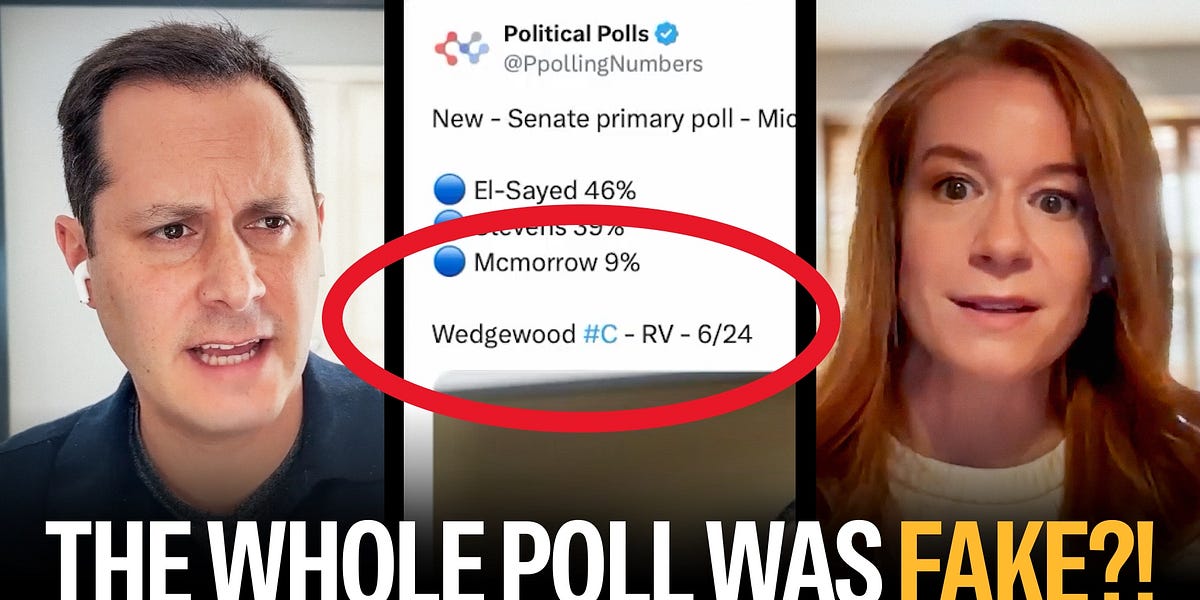
Photo via National Post

Fake pollsters and bogus polls becoming a real issue in U.S. midterms

Read the original at National Post ↗
Cite

AFP. (2026, October 23). Fake pollsters and bogus polls becoming a real issue in U.S. midterms. National Post. https://nationalpost.com/news/world/fake-pollsters-bogus-polls-us-midterms

Dated from the outlet's own feed. Check the original for its byline.

National Post · collected 2026-10-23 · by AFP

Quick Summary

A U.S. polling firm called Wedgewood Polls admitted to fabricating most of its data, causing significant controversy ahead of the midterm elections. The fake polls affected political campaigns, media coverage, and public perception; for instance, Michigan Senate candidate Mallory McMorrow experienced a drop in donations and morale following misleading poll results attributed to Wedgewood. Major polling aggregators and news outlets, including The New York Times, have removed Wedgewood’s data from their records. This incident highlights growing concerns about the use of AI tools to create fake polls, which are challenging to identify and can undermine public trust in election polling.
Written by AI on 2026-10-23, from this article's own text only (the story summary below draws on all the coverage).
See how they differ ↓

AI analysis

Story summary

A sham polling firm called Wedgewood Polls publicly admitted to fabricating data after being exposed by election analysts at FiftyPlusOne. The fake polls had a significant impact on Michigan’s Senate race, where Mallory McMorrow dropped out of the race following a fabricated poll showing her support plummeting into single digits. This revelation comes months after another polling firm, Median Strategies, was caught fabricating surveys in other elections. Wedgewood claimed their experiment aimed to highlight the ease with which fake polls can gain credibility and influence public perception. The scandal has raised concerns about the vetting process for polling data and its impact on election outcomes, especially as fast-evolving AI tools may facilitate easier fabrication of results.

Written for “Fake Polls In Elections” on 2026-11-21, grounded in this article and the 2 other(s) covering the same event.

How they differ

3 outlets covered “Fake Polls In Elections”.

What each outlet says

One AI summary per outlet of its latest article on this story, written from that article alone and checked against it. Open the article for the outlet's own words.

National PostThis outlet23 Oct

A U.S. polling firm called Wedgewood Polls admitted to fabricating most of its data, causing significant controversy ahead of the midterm elections. The fake polls affected political campaigns, media coverage, and public perception; for instance, Michigan Senate candidate Mallory McMorrow experienced a drop in donations and morale following misleading poll results attributed to Wedgewood. Major polling aggregators…

Fake pollsters and bogus polls becoming a real issue in U.S. midterms (this article)
New York Post21 Oct

Wedgewood Polls admitted to creating false data in a social experiment aimed at exposing weaknesses in how polling is verified and reported. The firm’s fake poll of Michigan state Sen. Mallory McMorrow was cited as contributing to her decision to drop out of the US Senate race, though the Democratic super PAC Senate Majority PAC denied relying on this data for its strategy. Wedgewood Polls stated their intention was…

Sick trolls fess up to making fake polls that helped Abdul El-Sayed  in Michigan: ‘Far too easy’ →
Silver Bulletin22 Oct

The article discusses recent developments involving fake polls in the 2026 campaign, focusing on a scandal with a firm called Wedgewood Polls which admitted to fabricating data. The author also reflects on past instances of fake polling firms like Strategic Vision and Research 2000, highlighting patterns indicative of data forgery that were uncovered through statistical analysis. This piece is an opinion-based…

Fake polls are a real problem →

Where they agree and split

The full story: what happened, how it changed, and all 3 articles →

Compared with similar articles

This article reads unscored and hedges 15% of its claims. Each row says how that neighbour differs.
New York Post
Hedges 1 of 30 claims Outlet record 66/100
The Straits Times
Leans left Hedges 5 of 22 claims Outlet record 64/100
“The articles discuss different issues related to misinformation in U.S. midterms, with Article A focusing on X Community Notes' failure to flag election falsehoods and Article B detailing a fabricated polling scandal.”
Silver Bulletin
Leans left Hedges 7 of 121 claims
Election Shenanigans Different event
The Dispatch
Leans right Hedges 0 of 12 claims Outlet record 61/100
“Article A discusses a specific scandal involving fake polls by Wedgewood Polls, while Article B covers various election-related legal issues and discussions without mentioning the poll scandal.”
Washington Examiner
Leans right Hedges 0 of 3 claims Outlet record 67/100
“Article A reports on the admission of fabricated polls by Wedgewood Polls, while Article B discusses a Republican lawmaker's call for an FCC investigation into news outlets that reported on these fabricated polls.”
Washington Examiner
Centre Hedges 0 of 2 claims Outlet record 67/100
“Article A focuses on uncovering who was behind Wedgewood Polls, while Article B discusses the impact and admission of fake polls by Wedgewood Polls.”
Washington Examiner
Leans right Hedges 0 of 2 claims Outlet record 67/100
“Article A describes the scandal of fake polls by Wedgewood Polls, while Article B discusses Republican leaders adopting Trump's messaging about 'fake' polling in response to unfavorable midterm projections.”
Washington Examiner
Hedges 1 of 2 claims Outlet record 67/100
“While both articles discuss the fabrication of polls by Wedgewood Polls, Article A focuses on FCC Chairman Brendan Carr's warning to broadcasters, while Article B discusses the broader impact and context of fake pollsters in the midterms.”
The Bulwark
Leans strongly left Hedges 0 of 9 claims
“Article A discusses a general issue of fake polls in U.S. midterms, while Article B focuses on the specific impact of a fabricated poll on Mallory McMorrow's Senate campaign.”

Story

Fake Polls In Elections
Politics · 3 article(s) covering the same event. Compare every outlet's account →
How this article was measured signals, leaning charts, publisher record, byline, topics and claims

Signals How these are calculated →

Claims extracted
20
sentences that state something as happening or true
Uncertain
15%
3 of 20 hedged ("reportedly", "may", "according to")
Leaning
withheld
no quote in the article backed the model's score
Publisher signals
60/100
National Post's corrections and hedging, across everything collected from it. Not a measure of accuracy.
Outlets on this story
3
Politics
Same framing elsewhere
1
articles that frame the event the way this one does
Analyzed 2026-10-23 · how these are computed

How this is being covered How these are calculated →

Article leaning vs. publisher reliability
Source leaning vs. consistency

Publisher

National Post · 1242 article(s) · 2 correction(s) detected
Running correction rate · 2 correction(s)

Who wrote this

AFP
1298 article(s) here · 1 carrying a prediction
“I would love to see him be back.
A full written argument would be extremely long, he said, adding that he had not yet mastered all of the mathematics involved and planned to write it up properly.
US federal prosecutors alleged that an Indian intelligence officer, who remains at large, directed the plot and recruited Gupta in May 2023 to hire a hitman to carry out the murder.
Huang resigned as chief of the chip giant at the centre of the artificial intelligence (AI) revolution after revelations of extramarital affairs, including one with an alleged Chinese spy who may have funnelled restricted chips to that country.
Mr. Kobir said Dhaka would deal with attacks "very firmly".
They were referring to recursive self-improvement (RSI) — a term the industry uses to describe building advanced AI models that can autonomously create newer versions of themselves, which critics worry will hasten doomsday scenarios.
And Ukraine fears this winter could be the worst yet.
World champions Spain will face France while England will play Norway in the quarterfinals of the UEFA Nations League after the draw took place on Friday.
In March, South Korea’s then-prime minister Kim Min-seok said that Trump thought a meeting with Kim would be “good”.
Rohingya refugees will undergo a Technical and Vocational Education and Training (TVET) programme in Turkiye which would last three to six months.
2026-11-20 · assertive framing · Malaysia plans to resettle 10,000 Rohingya in Turkiye
Wire or desk byline, not an individual reporter.
Also by AFP
Nothing else under this byline is closely related to this article, so these are simply their most recent.
All 1298 articles by AFP →

Topics

FiftyPlusOne Michigan U.S. Wedgewood Wedgewood Polls

Subjects

Wedgewood ORG · 4× FiftyPlusOne ORG · 3× Brendan Carr PERSON · 1× Mallory McMorrow PERSON · 1× McMorrow PERSON · 1× Michigan GPE · 1× The New York Times ORG · 1× Times ORG · 1× U.S. GPE · 1× Wedgewood Polls ORG · 1×

Narrative

The case involving the firm Wedgewood Polls threatens to erode trust in independent pollsters in an already hyperpolarized political climate, particularly as political pundits voice concern that fast-evolving AI tools are making it easier to fabricate results.
framing: assertive · carried by 1 article(s) · first seen 2026-10-23
It said the firm had been experimenting on how easy it could be for “an entirely fabricated polling firm to gain traction” and “be taken seriously.”
2026-10-23 · National Post
Fake pollsters and bogus polls becoming a real issue in U.S. midterms · assertive framing

Claims (20 extracted, 3 hedged)

A self-described U.S. polling firm whose data was tracked by political campaigns and mainstream media has admitted that its polls were fabricated, in the second such scandal to stir controversy ahead of the midterm elections. asserted
polls → describe → elections
The case involving the firm Wedgewood Polls threatens to erode trust in independent pollsters in an already hyperpolarized political climate, particularly as political pundits voice concern that fast-evolving AI tools are making it easier to fabricate results. asserted
it → involve → results
The case came to light earlier this week after polling aggregator FiftyPlusOne contacted Wedgewood as part of an investigation into the firm’s surveys. asserted
FiftyPlusOne → come → surveys
Wedgewood responded with a statement on X admitting that “most” of its data had been made up. asserted
most → respond → data
It said the firm had been experimenting on how easy it could be for “an entirely fabricated polling firm to gain traction” and “be taken seriously.” uncertain
firm → say → traction
It turns out that Wedgewood, whose X account has since been taken down, was indeed taken seriously. asserted
account → turn → ?
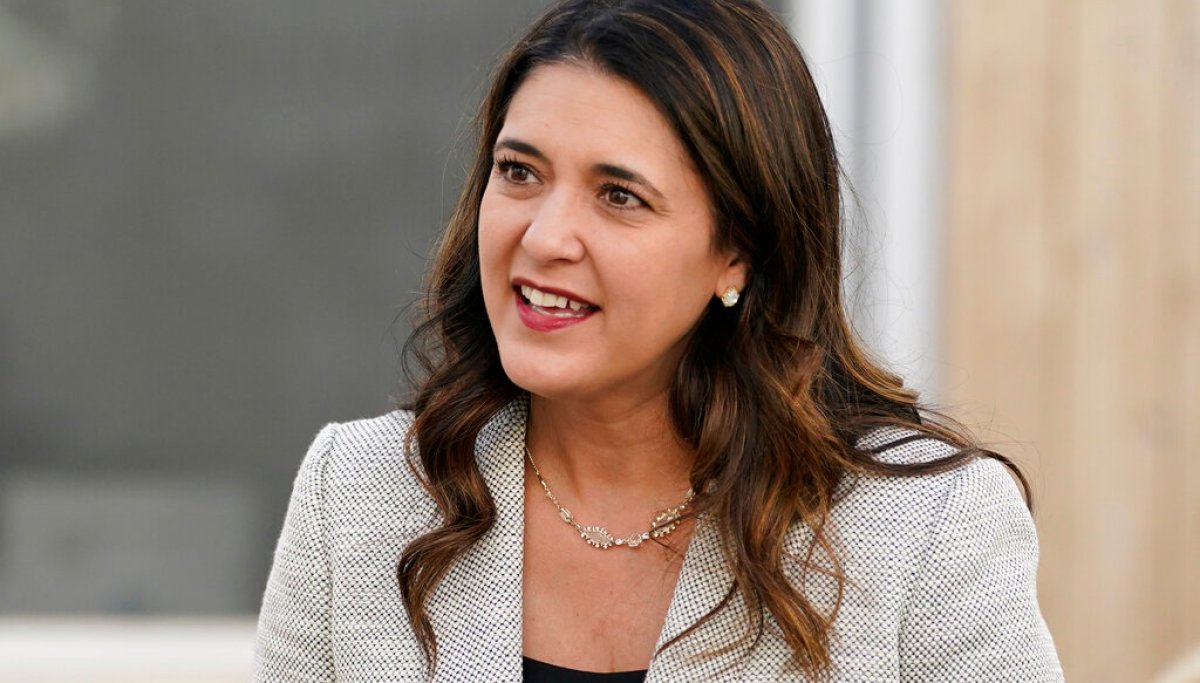
Michigan Senate candidate Mallory McMorrow said after the group’s “poll” in late June showed her support in the single digits, she said “donations dried up,” volunteers were “devastated,” and the media “hounded” her “with calls to drop out.” asserted
media → say → calls
“It killed us,” McMorrow wrote on X. The bogus data, which covered high-profile races across several states, were also highlighted by major polling aggregators and news outlets, including The New York Times. asserted
which → kill → Times
In an editors’ note, The Times said its poll tracker database included 15 surveys released by Wedgewood between June and October, all of which have now been removed. asserted
all → say → which
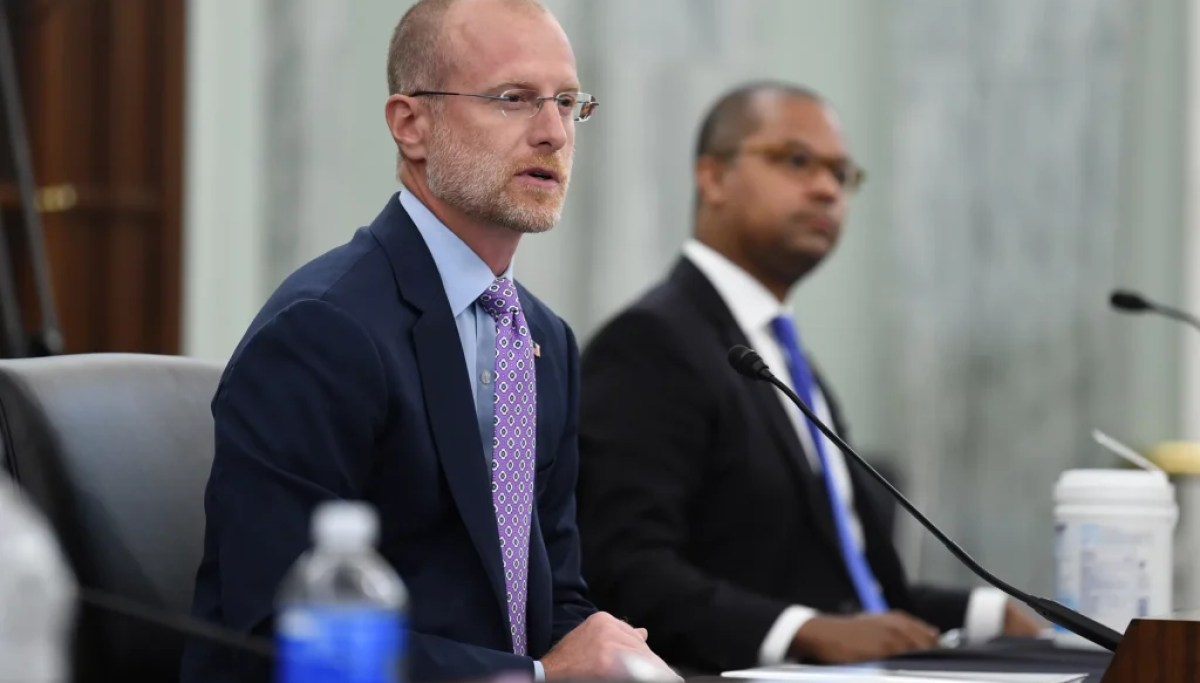
Brendan Carr, chairman of the Federal Communications Commission, said there has been “a significant surge in entirely fake polls and suppression polls” designed to interfere with the electoral process. asserted
Carr → say → process
He urged the media not to amplify such hoaxes and engage in “news distortions.” asserted
He → urge → distortions
In August, another phony group called Median Strategies admitted to fabricating poll results, saying it was “created as a short term social experiment,” according to the Los Angeles Times. uncertain
it → call → Times
On Thursday, in a blog titled “more pollster funny business,” FiftyPlusOne said it will no longer collect polling data by another firm called SoCal Strategies, after an investigation that cast doubt on its authenticity. asserted
that → title → authenticity
The firm could not be reached for comment. uncertain
firm → reach → comment
SoCal Strategies’s website, X account, and Substack page appeared to have been taken offline. asserted
website → appear → ?
The revelations comes amid warnings that AI-powered tools were enabling the fakery. asserted
tools → come → fakery
“It’s getting easier to conduct low-quality polls — or fake them altogether,” FiftyPlusOne said. asserted
FiftyPlusOne → get → them
Sophisticated AI tools were also making it difficult to identify phony pollsters and made-up data, the American Association for Public Opinion Research said in a statement. asserted
Association → make → statement
“We are once again experiencing bad actors producing and distributing fabricated data and organizational information that undermines trust in public opinion and election polling,” said the association’s president, Mary Losch. asserted
president → experience → opinion
“It is important that we don’t conflate fraudulent activity like this with legitimate election polling.” asserted
we → conflate → polling
Give feedback · no sign-in needed

No sign-in needed for now. Your note is sent without a name, so it cannot be answered.

History Support