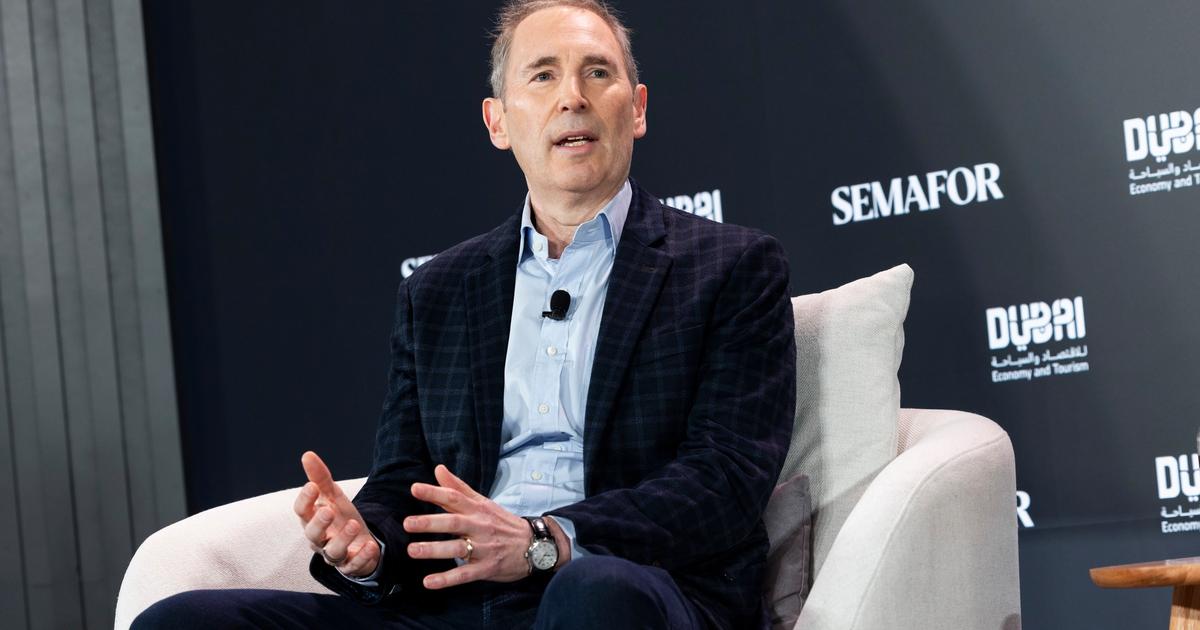
Photo via Semafor

The race to tell humans from AI agents

Read the original at Semafor ↗
Cite

Capelouto, J. (2026, October 23). The race to tell humans from AI agents. Semafor. https://www.semafor.com/article/10/23/2026/the-race-to-tell-humans-from-ai-agents

Dated from the outlet's own feed. Check the original for its byline.

Semafor · collected 2026-10-23 · by J.D. Capelouto

Quick Summary

Sam Altman's startup World has introduced new tools that allow users to verify their identity as human and link it to AI agents, ensuring these agents act on behalf of real people rather than bots. This technology aims to prevent fraudulent activities by distinguishing genuine human activity from automated processes. Companies could offer benefits like discounts and free trials to transactions verified through this system. However, some large US banks are limiting interactions with third-party AI agents due to difficulties in verifying user authorization, according to Axios.
Written by AI on 2026-10-23, from this article's own text only (the story summary below draws on all the coverage).

AI analysis

Story summary

World, a startup co-founded by Sam Altman, has introduced new tools that allow people to verify their own humanity and then link this verification to AI agents acting on their behalf. The company’s product chief, Tiago Sada, stated that these tools could lead to online sellers offering perks like discounts and free trials to verified AI agents, making human-verified transactions more trustworthy. This development aims to combat the issue of "bad bots" while allowing legitimate automated interactions to continue without hindrance. However, some industries, particularly large US banks as reported by Axios, are cautious about AI agent interactions due to difficulties in distinguishing authorized from unauthorized ones.
Written for “Detecting Human AI Agents” on 2026-11-21, grounded in this article and the 0 other(s) covering the same event.

Compared with similar articles

This article reads unscored and hedges 38% of its claims. Each row says how that neighbour differs.
CBS News
Centre Hedges 0 of 2 claims Outlet record 66/100
“The articles discuss different aspects of AI and its regulation, not the same specific incident or occurrence.”
Washington Examiner
Leans right Hedges 1 of 4 claims Outlet record 67/100
“The articles discuss different aspects of AI and its impact on markets versus commerce verification, indicating distinct topics rather than a single event.”
Al Jazeera
Hedges 7 of 34 claims Outlet record 60/100
“The articles discuss different topics related to AI but describe distinct events: one about proof-of-human technology and another about Anthropic's IPO filing.”
South China Morning Post
Leans left Hedges 3 of 9 claims Outlet record 62/100
“The articles discuss different topics within the broader context of AI; Article A focuses on US-China AI talks and cooperation, while Article B discusses proof-of-human technology for online commerce.”

Story

Detecting Human AI Agents
Technology · 1 article(s) covering the same event.
How this article was measured signals, leaning charts, publisher record, byline, topics and claims

Signals How these are calculated →

Claims extracted
8
sentences that state something as happening or true
Uncertain
38%
3 of 8 hedged ("reportedly", "may", "according to")
Leaning
not political
takes no side on a contested political question
Publisher signals
64/100
Semafor's corrections and hedging, across everything collected from it. Not a measure of accuracy.
Outlets on this story
1
Technology
Same framing elsewhere
1
articles that frame the event the way this one does
Analyzed 2026-10-23 · how these are computed

How this is being covered How these are calculated →

Article leaning vs. publisher reliability
Source leaning vs. consistency

Publisher

Semafor · 1931 article(s) · 7 correction(s) detected
Running correction rate · 7 correction(s)

Who wrote this

J.D. Capelouto
41 article(s) here · 1 carrying a prediction
Some global tech leaders at Semafor’s Silicon Valley & The World suggested that backlash to data centers or a potential financing bubble might provide the necessary brakes that the industry needs.
Amazon CEO Andy Jassy said Tuesday it would be a “historic mistake” for the US to pull back on its AI infrastructure buildout following the data center backlash during the midterm elections.
Asked whether “winter is coming” — a nod to fears that the AI boom could face a correction — Al Mubarak said it was, but that “winter doesn’t mean minus 30 degrees.
Speaking alongside Huffington on the panel, Willett Advisors CEO Steven Rattner said the idea of bringing Huang back as CEO is “ridiculous.”
Billionaire hedge fund manager Bill Ackman said Monday it was “unlikely” that he would get directly involved in an effort to reinstate former Nvidia CEO Jensen Huang.
Indians see AI as less of a threat than people in the US because fewer workers hold the “cognitive and office-oriented jobs” that the technology could replace, one of the country’s top tech officials said.
Those ties went beyond business: Hou referenced a New York Times article in which Huang’s longtime hairstylist admitted he was too upset to sleep, drank a bottle of red wine, and prayed for the former chip CEO after his resignation.
They see the model as particularly useful in sales and executive hiring, where a search firm could prompt it to evaluate an interview transcript to gauge how a candidate will behave under pressure.
2026-11-12 · assertive framing · A new AI model wants to read between the lines
“If we leave a market altogether, there’s no question somebody else would step in,” he told Michael Milken in May 2025.
2026-11-11 · assertive framing · Tracking how Jensen Huang changed his stance on China
The votes were hyperlocal and often emotional in nature, but they could carry financial consequences, because some of the projects at stake were already in motion.
Also by J.D. Capelouto
Nothing else under this byline is closely related to this article, so these are simply their most recent.
All 41 articles by J.D. Capelouto →

Topics

Axios World

Subjects

Axios ORG · 1× Sada PERSON · 1× Sam Altman PERSON · 1× Tiago Sada PERSON · 1× World ORG · 1×

Narrative

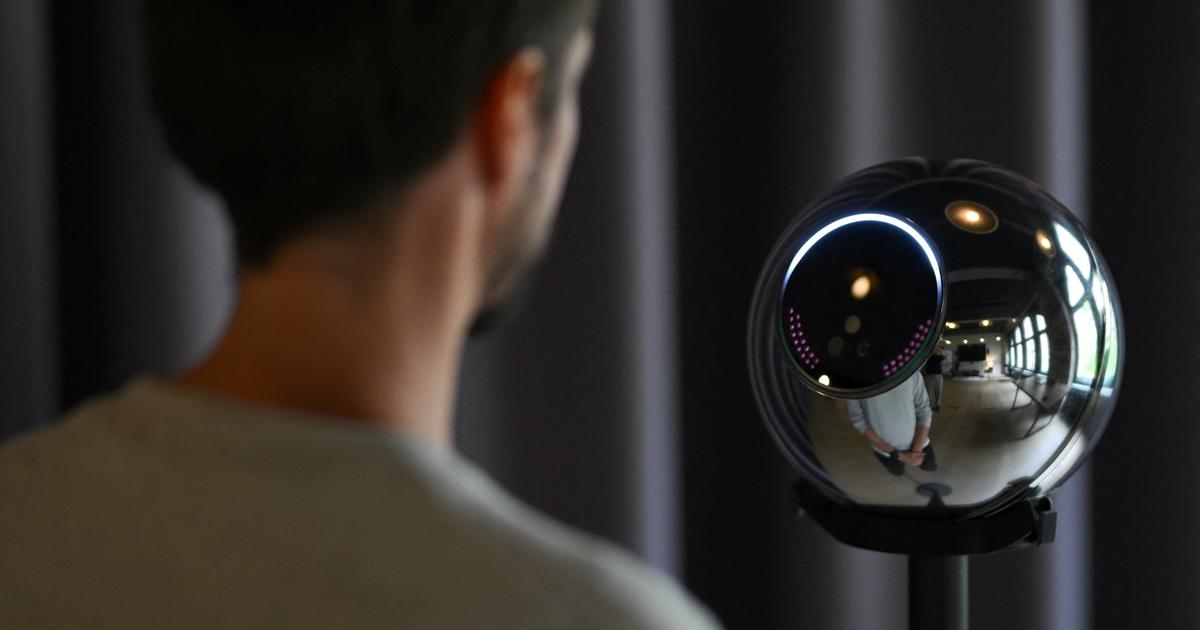
World, the startup co-founded by Sam Altman that scans people’s irises to verify they’re human, this week announced new tools that let people link their proof of humanity to an AI agent.
framing: mixed · carried by 1 article(s) · first seen 2026-10-23
Proof-of-human technology, which can let a person vouch for the AI agents acting on their behalf, could keep bad bots off of websites without forcing platforms to block all of them.
2026-10-23 · Semafor
The race to tell humans from AI agents · mixed framing

Claims (8 extracted, 3 hedged)

The future of agentic commerce hinges on the ability to know whether it’s a human or an AI agent that’s making a purchase, and the tools to do that are arriving fast. asserted
tools → hinge → that
Proof-of-human technology, which can let a person vouch for the AI agents acting on their behalf, could keep bad bots off of websites without forcing platforms to block all of them. uncertain
person → let → them
But it also opens up new possibilities for how business gets done online. asserted
business → open → possibilities
World, the startup co-founded by Sam Altman that scans people’s irises to verify they’re human, this week announced new tools that let people link their proof of humanity to an AI agent. asserted
people → co → agent
The company’s product chief Tiago Sada told me that could eventually lead to online sellers offering perks to verified agents, such as discounts and free trials. uncertain
sellers → tell → discounts
“If you know that an agent is coming from a human, you can actually be much more generous,” Sada said. asserted
Sada → know → human
E-commerce may get comfortable with agent transactions before other industries. uncertain
commerce → get → industries
Several large US banks are restricting interaction with third-party agents, in part because they can’t tell which ones a customer actually authorized, Axios reported. asserted
Axios → restrict → ones
Give feedback · no sign-in needed

No sign-in needed for now. Your note is sent without a name, so it cannot be answered.

History Support