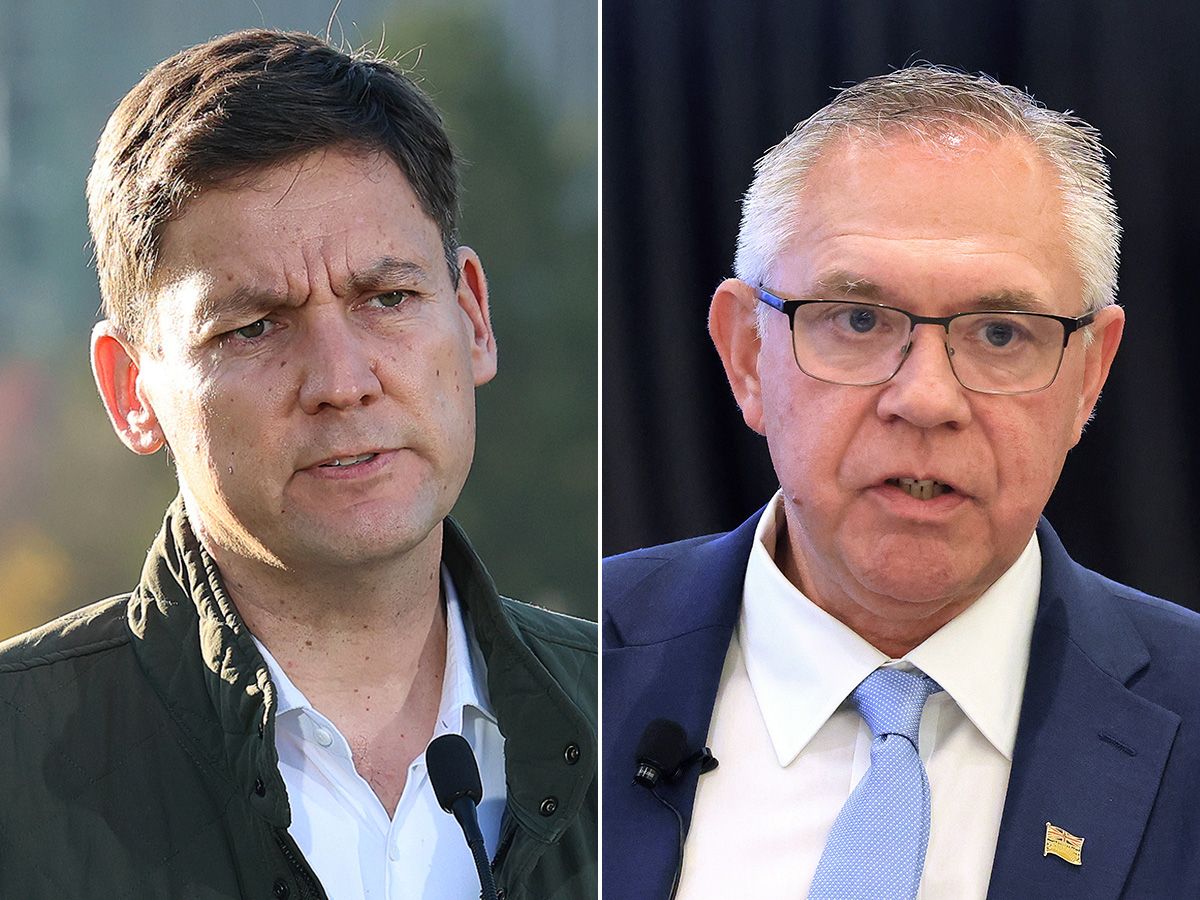
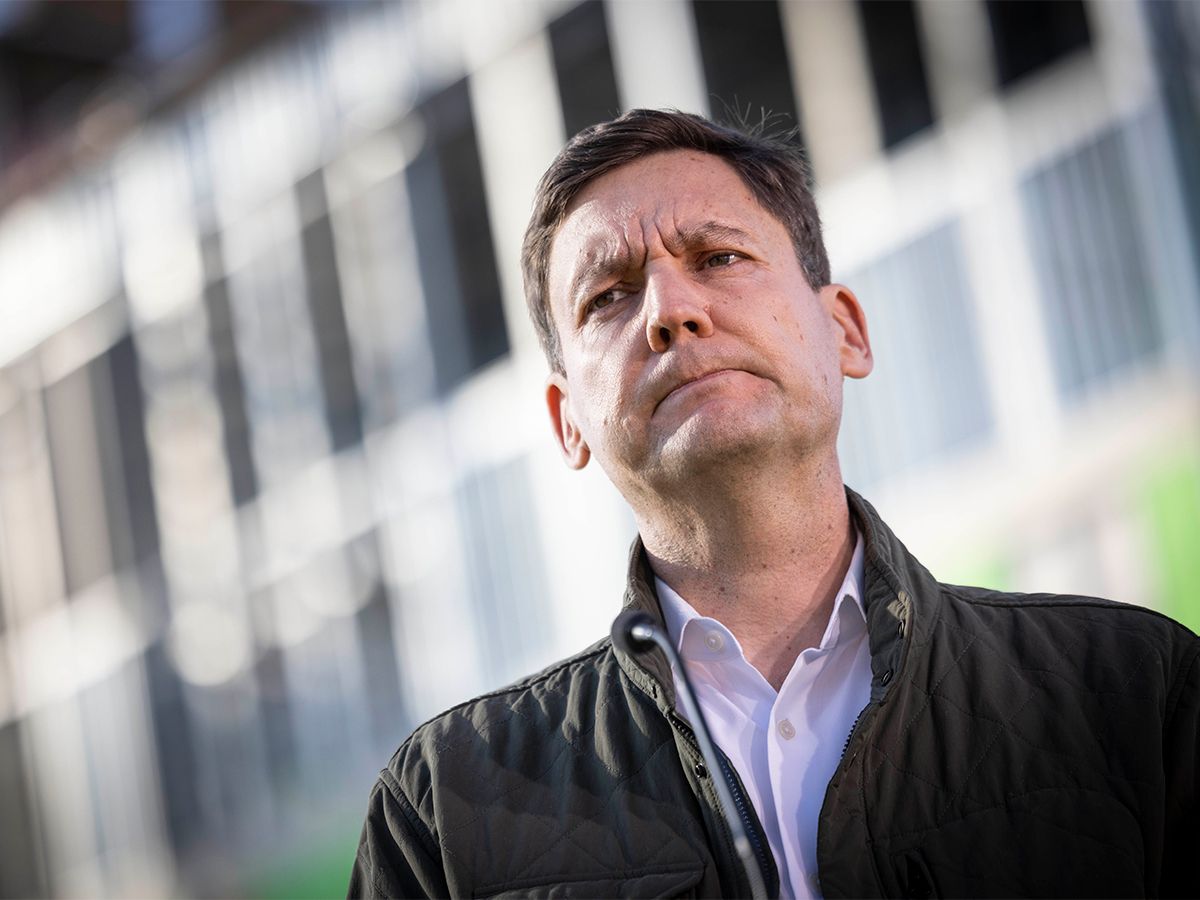
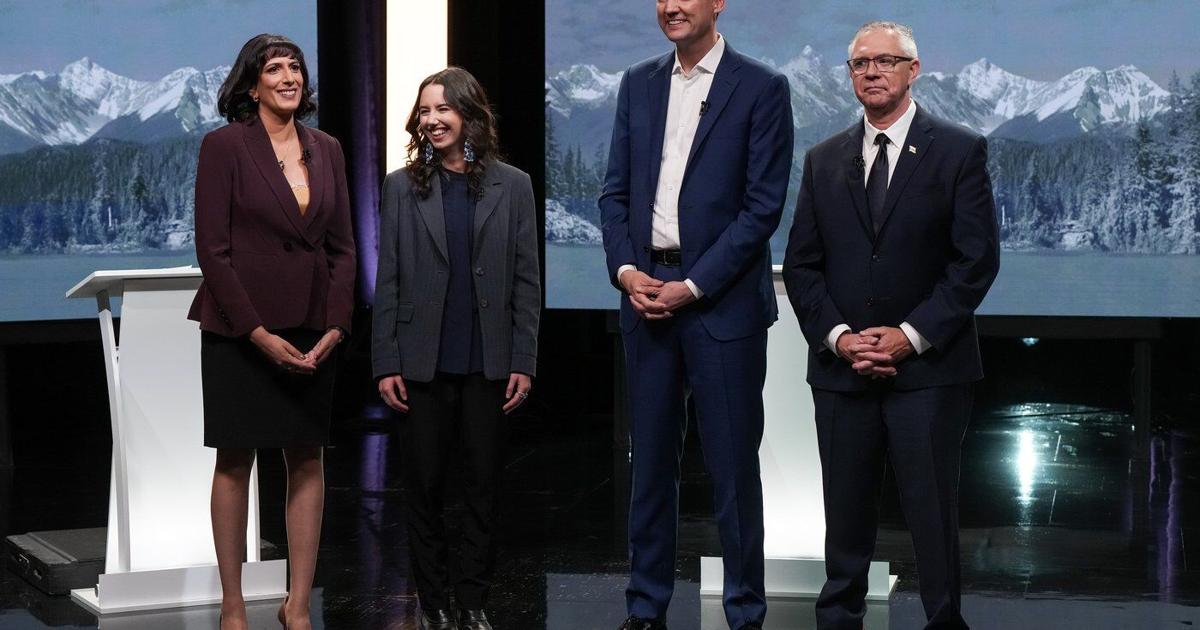
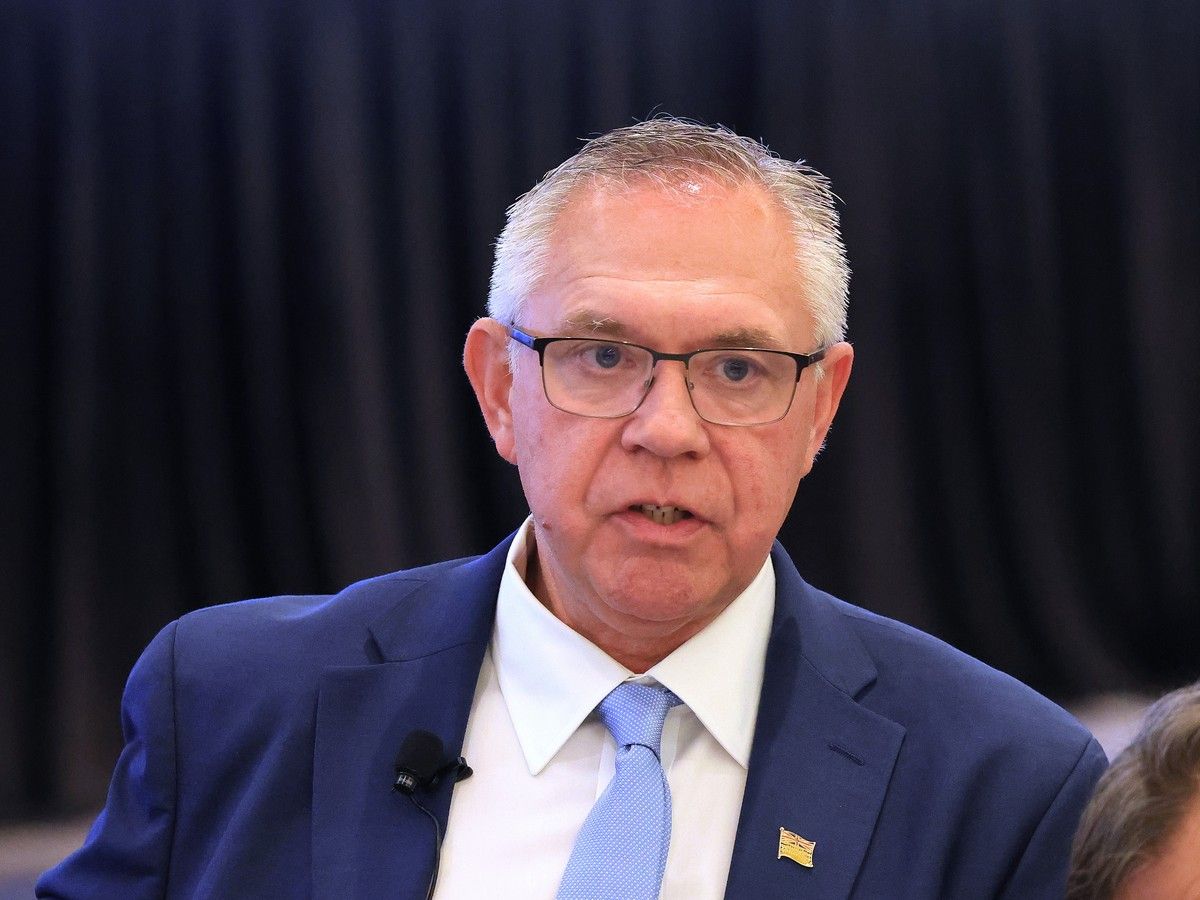
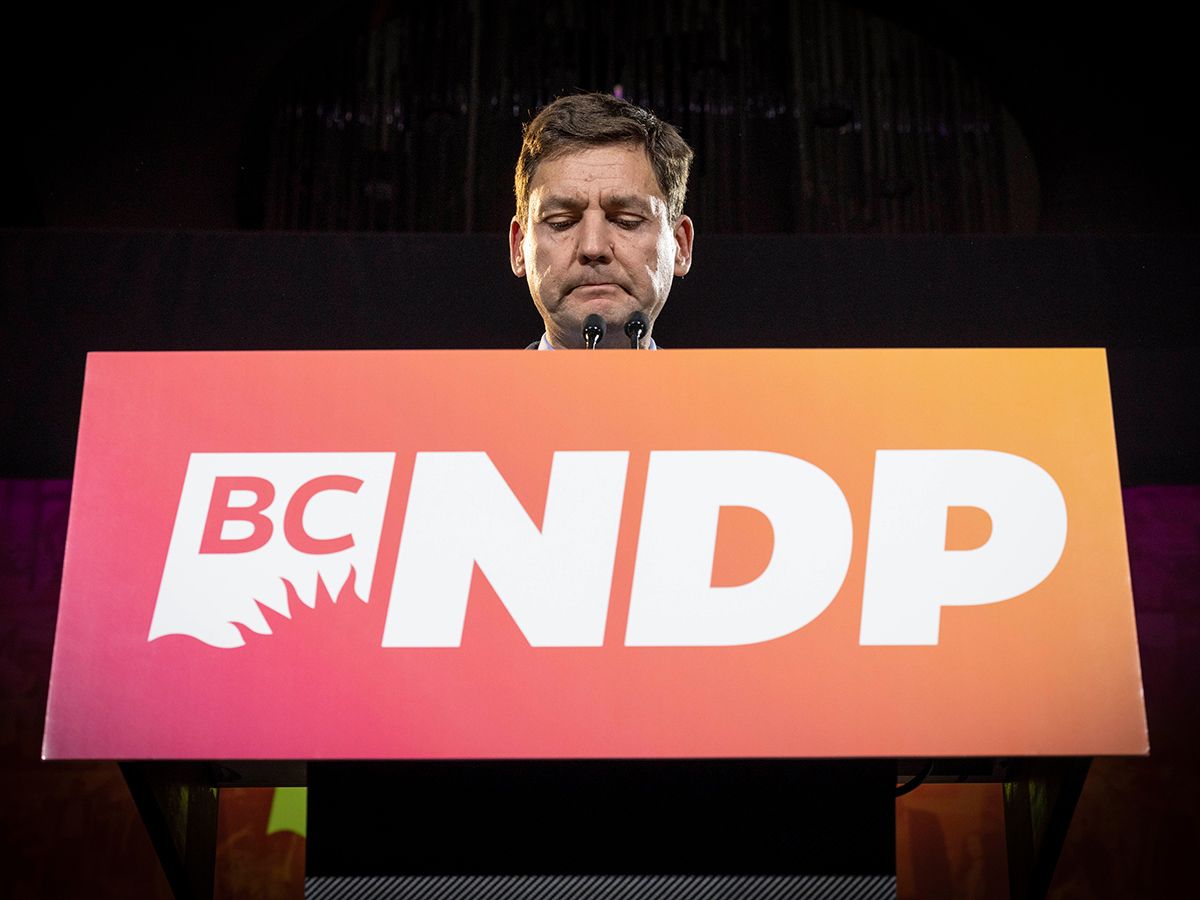
Photo via The Globe and Mail

David Eby’s surprise B.C. election culminates in narrow race between NDP, Conservatives

Read the original at The Globe and Mail ↗
Cite

Hager, M., & Bailey, I. (2026, October 24). David Eby’s surprise B.C. election culminates in narrow race between NDP, Conservatives. The Globe and Mail. https://www.theglobeandmail.com/canada/british-columbia/article-david-eby-surprise-election-narrow-race-ndp-conservatives/

Dated from the outlet's own feed. Check the original for its byline.

The Globe and Mail · collected 2026-10-24 · by Mike Hager, Ian Bailey

Quick Summary

David Eby called a surprise election in British Columbia on September 22, five Sundays after initial planning. The Conservative party’s leadership changed unexpectedly when Kerry-Lynne Findlay resigned and was replaced by Lorne Doerkson just days before the election call. This shift complicated efforts to campaign against specific opposition goals, leading to uncertainty for the NDP as polls now show the Conservatives either tied or slightly ahead of Eby's party.
Written by AI on 2026-10-24, from this article's own text only (the story summary below draws on all the coverage).
See how they differ ↓

AI analysis

Story summary

The Conservative Party won the British Columbia provincial election on October 24, 2026, marking their first victory in nearly a century. The party leader, Lorne Doerkson, will become the new Premier of British Columbia, replacing outgoing NDP Premier David Eby. Despite Eby's surprise call for an early election two years into his mandate, the Conservatives secured a majority government with 47 seats out of 93 in the Legislative Assembly. This outcome ended nine years of NDP rule and reflects significant shifts in voter sentiment towards energy policies and regulatory reform.

Written for “B.C. Conservatives Win Election” on 2026-11-21, grounded in this article and the 23 other(s) covering the same event.

How they differ

7 outlets covered “B.C. Conservatives Win Election”.

What each outlet says

One AI summary per outlet of its latest article on this story, written from that article alone and checked against it. Open the article for the outlet's own words.

The Globe and MailThis outlet24 Oct

David Eby called a surprise election in British Columbia on September 22, five Sundays after initial planning. The Conservative party’s leadership changed unexpectedly when Kerry-Lynne Findlay resigned and was replaced by Lorne Doerkson just days before the election call. This shift complicated efforts to campaign against specific opposition goals, leading to uncertainty for the NDP as polls now show the…

David Eby’s surprise B.C. election culminates in narrow race between NDP, Conservatives (this article)6 articles from The Globe and Mail on this story
Toronto Star28 Oct

In British Columbia, the interim Conservative leader Lorne Doerkson won a majority government despite receiving fewer votes than in the previous election. His success was largely due to lower NDP voter turnout rather than a significant shift in support from other parties. Federal B.C. Conservative MP Aaron Gunn argues that this victory supports the idea that the federal Conservative Party under Pierre Poilievre…

What B.C.'s Conservative win and Alberta's referenda should teach Pierre Poilievre →6 articles from Toronto Star on this story
National Post29 Oct

Geoff Russ argues in his column that British Columbia is fundamentally right-leaning and considers recent elections as proof, particularly the latest where the B.C. Conservatives won decisively with nearly an eleven-point margin over the NDP. He asserts that despite brief periods of NDP governance since 1952, the right has dominated for most of the time, emphasizing voter rejection of left-wing governments at every…

Geoff Russ: B.C. is a right wing province. The NDP was merely a chaotic interlude →5 articles from National Post on this story
CBC27 Oct

Lorne Doerkson, who moved to B.C.'s Interior as an adult and has lived in Williams Lake since 2001, won the recent general election in British Columbia. This marks the first time in decades that a premier will come from north of Metro Vancouver. Doerkson’s victory speech emphasized his commitment to northern and rural perspectives, stating that “the whole map counts,” implying a shift away from previous governance…

Excitement 'beyond Hope' as B.C.'s next premier promises to bring rural, northern perspective to top job →3 articles from CBC on this story
Global News25 Oct

Lorne Doerkson, the newly designated premier of British Columbia, addressed supporters on Sunday following his party's election win. The BC Conservatives secured a projected 64 seats, their victory marked by promises to address economic challenges and affordability issues. Doerkson emphasized the need to earn public trust daily and outlined plans for an independent review of provincial finances and measures to…

BC premier-designate Doerkson says province ‘chose change’ in election →2 articles from Global News on this story
The Straits Times25 Oct

In the recent provincial election in British Columbia held on October 25, the Conservative Party secured victory by winning 64 out of 93 seats, marking their first electoral win since 1928. This shift ends nine years of governance by the New Democrats and brings to power a new leader, Lorne Doerkson, who pledges to boost liquefied natural gas production and cut regulatory barriers for business. The Conservatives…

Conservative party wins first election in nearly a century in British Columbia →
Show 1 more outlets
Daily Mail25 Oct

The Conservative Party won the British Columbia provincial election, marking their first victory since 1928. They secured 64 out of 93 seats, defeating the New Democrats' 27 seats. The Conservatives, led by Lorne Doerkson, promised to boost natural gas production and reduce regulations on energy companies. This shift comes amid concerns over cost-of-living issues and healthcare, as well as ongoing trade tensions…

Conservatives make history as they win election in British Columbia for the first time in nearly 100 years →

Where they agree and split

The full story: what happened, how it changed, and all 24 articles →

Compared with similar articles

This article reads unscored and hedges 4% of its claims. Each row says how that neighbour differs.
Daily Mail
Leans right Hedges 1 of 23 claims Outlet record 69/100
National Post
Hedges 3 of 32 claims Outlet record 60/100
The Globe and Mail
Hedges 0 of 40 claims Outlet record 51/100
National Post
Hedges 5 of 36 claims Outlet record 60/100
“Article A discusses David Eby's political tactics and attempts to cancel opposition, while Article B covers the broader context of the election called by Eby including the resignation and replacement of the Conservative leader.”
Toronto Star
Leans left Hedges 1 of 18 claims Outlet record 64/100
“While both articles discuss David Eby calling an early election in British Columbia, Article A focuses on the context and immediate aftermath of Eby's decision to call the election, while Article B discusses the actual voting day and broader campaign issues.”
National Post
Leans strongly right Hedges 4 of 44 claims Outlet record 60/100
“The articles describe different phases of the same election process: Article A discusses the initial call for the election and resignation of a leader, while Article B reports on the results of the election.”
National Post
Leans strongly right Hedges 5 of 42 claims Outlet record 60/100
“While both articles discuss David Eby calling an early election, Article A describes the circumstances leading up to and including the call for the election, whereas Article B focuses on the aftermath and the impact of the election itself.”
Toronto Star
Hedges 2 of 22 claims Outlet record 64/100
“Article A discusses the surprise election call by David Eby, while Article B covers the aftermath of the election where Lorne Doerkson's party seeks to change its constitution to allow him as permanent leader.”
The Globe and Mail
Centre Hedges 7 of 40 claims Outlet record 51/100
“Article A describes David Eby's surprise call for an election and the unexpected leadership changes in the B.C. Conservatives, while Article B reports on the outcome of that election with Lorne Doerkson sweeping to power as the new premier.”
Global News
Hedges 1 of 15 claims Outlet record 63/100
“Article A describes the lead-up and call of the election, while Article B covers Lorne Doerkson's commitment to campaign promises after winning the election. These are different phases of a larger political process.”

Story

B.C. Conservatives Win Election
Politics · 24 article(s) covering the same event. Compare every outlet's account →
How this article was measured signals, leaning charts, publisher record, byline, topics and claims

Signals How these are calculated →

Claims extracted
50
sentences that state something as happening or true
Uncertain
4%
2 of 50 hedged ("reportedly", "may", "according to")
Leaning
not political
takes no side on a contested political question
Publisher signals
51/100
The Globe and Mail's corrections and hedging, across everything collected from it. Not a measure of accuracy.
Outlets on this story
24
Politics
Same framing elsewhere
1
articles that frame the event the way this one does
Analyzed 2026-10-24 · how these are computed

How this is being covered How these are calculated →

Article leaning vs. publisher reliability
Source leaning vs. consistency

Publisher

The Globe and Mail · 1306 article(s) · 50 correction(s) detected
Running correction rate · 50 correction(s)

Who wrote this

Mike Hager
26 article(s) here · 1 carrying a prediction
U.S. court documents alleged a plot to kill the activist was foiled by American authorities in May 2023, when Mr. Gupta contacted an undercover officer who he thought was a hit man, and was caught arranging an advance of $15,000 cash for Mr. Pannun’s murder.
ChatGPT helped the shooter design a 3D-printed foregrip for one of her weapons, and may have helped design a device that can allow a semi-automatic rifle to operate in a fully automatic capacity, the Mother Jones article alleges.
While on the stand, Mr. Averill was read an e-mail from Annabel Lyon, another creative writing professor: “Our first priority and primary concern is that Steve take a leave immediately so the students will feel the department is a safe environment.”
The District of Squamish warned Thursday morning that water being discharged from BC Hydro’s Cheakamus Dam at Daisy Lake could lead to localized flooding of roads and properties.
She testified the university was also fielding questions from the CBC’s the fifth estate about an episode involving the history student that was set to air at the end of November, with other outlets also contacting the CBC wondering if the coming TV documentary promoted by the national broadcaster involved Mr. Galloway.
Norman Stowe, managing partner of the public relations firm Pace Group Communications, told B.C. Supreme Court that despite being accused of sexual assault by a former creative writing student, Mr. Galloway could have leveraged several strengths if he had a coherent crisis communications plan in place.
A retired judge hired by the university to investigate the complaint found that, on a balance of probabilities, it could not be established that he committed sexual assault or assault, but that he had sexually harassed her and committed other misconduct.
It was plagued by staff dismissals, MLA defections, damaging leaks of internal conversations, separate probes by the RCMP and the elections watchdog into alleged political inducements, and – amid the mayhem – a leader unable to calm her dwindling caucus as it sought answers.
“At that point, you just don’t call it and you would have a perfectly good excuse: ‘It’s not a responsible thing to call an election when there’s so much disarray in the main opposition, we’re going to give them a chance to catch their breath.’
The ex-husband testified that at that time A.B. refused to file a police report or let him talk to Mr. Galloway, instead telling her partner that she would handle the situation.
Also by Mike Hager
Nothing else under this byline is closely related to this article, so these are simply their most recent.
All 26 articles by Mike Hager →
Ian Bailey
7 article(s) here · 1 carrying a prediction
It was plagued by staff dismissals, MLA defections, damaging leaks of internal conversations, separate probes by the RCMP and the elections watchdog into alleged political inducements, and – amid the mayhem – a leader unable to calm her dwindling caucus as it sought answers.
Mr. Eby’s forests minister Ravi Parmar called out David Williams, the incumbent MLA for Salmon Arm-Shuswap, over for a Facebook post that showed much of B.C., the Yukon, Alberta and Saskatchewan as “The Republic of Western Canada,” and a “protectorate” of the U.S. Mr. Williams was re-elected Saturday night.
2026-10-25 · assertive framing · Five takeaways from B.C.’s election
“At that point, you just don’t call it and you would have a perfectly good excuse: ‘It’s not a responsible thing to call an election when there’s so much disarray in the main opposition, we’re going to give them a chance to catch their breath.’
Ms. Sturko, a former Mountie who was first elected in 2022, has been telling voters that she isn’t pretending CentreBC will form government.
Later in the day speaking in Hope, B.C., Mr. Eby said he didn’t use the tragedy for political gain and will steer clear of the topic through to voting day.
The first Green mayor of a major Canadian city says his top priority will be dealing with community safety and moving toward a thoughtful approach to getting people off the streets in Vancouver.
2026-10-19 · assertive framing · Vancouver elects Canada’s first Green mayor
For the first time in more than 70 years, a new monarch will appear on Canada’s $20 bill.
Also by Ian Bailey
Five takeaways from B.C.’s election
2026-10-25 · The Globe and Mail
Nothing else under this byline is closely related to this article, so these are simply their most recent.
All 7 articles by Ian Bailey →

Topics

B.C. Conservative Conservatives NDP The Globe and Mail

Subjects

Eby PERSON · 6× NDP ORG · 6× B.C. GPE · 4× Conservatives NORP · 3× Greens ORG · 2× Lyle PERSON · 2× The New Democrats ORG · 2× Conservative NORP · 1× David Eby PERSON · 1× Kerry-Lynne Findlay PERSON · 1×

Narrative

Mr. Eby “thought he was going to be running against Kerry-Lynne and he ended up with someone else, but they had two full days to figure this thing out or to not call the election,” said Mr. Lyle, who began polling for Kim Campbell’s Progressive Conservative Party in the 1993 federal election.
framing: assertive · carried by 1 article(s) · first seen 2026-10-24
“At that point, you just don’t call it and you would have a perfectly good excuse: ‘It’s not a responsible thing to call an election when there’s so much disarray in the main opposition, we’re going to give them a chance to catch their breath.’

Claims (50 extracted, 2 hedged)

Five Sundays ago, NDP Leader David Eby was gearing up to call a surprise election. asserted
Eby → gear → election
But that day, he received a surprise of his own: Embattled B.C. Conservative leader Kerry-Lynne Findlay resigned after just four months on the job. asserted
Findlay → receive → job
And, he acknowledged during a recent editorial meeting with The Globe and Mail, he was just as shocked to see her replaced that same day by Lorne Doerkson, a 58-year-old former small-town newspaper publisher from the Interior and two-term MLA whom most people had never heard of. asserted
people → acknowledge → whom
Despite his unknown opponent, Mr. Eby called the election two days later on Sept. 22. asserted
Eby → call → Sept.
The timing of this decision became a frequent issue for him throughout the campaign. asserted
timing → become → campaign
Greg Lyle, a Sunshine Coast-based pollster who is president of Innovative Research Group, said the call meant the NDP was fighting an election with far more uncertainty. asserted
NDP → base → uncertainty
With Ms. Findlay gone, Mr. Lyle said, it proved much more difficult to tie Mr. Doerkson to the same grievances and goals animating the greatest existential threat to B.C.’s economy: U.S. President Donald Trump. asserted
it → go → economy
Mr. Eby “thought he was going to be running against Kerry-Lynne and he ended up with someone else, but they had two full days to figure this thing out or to not call the election,” said Mr. Lyle, who began polling for Kim Campbell’s Progressive Conservative Party in the 1993 federal election. asserted
who → think → election
“At that point, you just don’t call it and you would have a perfectly good excuse: ‘It’s not a responsible thing to call an election when there’s so much disarray in the main opposition, we’re going to give them a chance to catch their breath.’ asserted
we → call → breath
The Conservatives appear to have caught their breath anyway. asserted
Conservatives → appear → breath
Most opinion polls show them either statistically tied with the NDP, or slightly ahead. asserted
them → show → NDP
The New Democrats have governed the province for nine years, since the late John Horgan formed government with the support of three Green Party MLAs in 2017. asserted
Horgan → govern → 2017
Mr. Eby succeeded Mr. Horgan as leader and premier in 2022. asserted
Eby → succeed → 2022
Two years ago, he won a slim majority government with 47 seats, compared with 44 for a resurgent BC Conservative Party and two for the Greens. asserted
he → win → Greens
During a campaign appearance this week, Mr. Eby acknowledged that him snapping his term in half is still front of mind for many voters. asserted
snapping → acknowledge → voters
“The No. 1 question that people ask me is why are we having an election. … asserted
we → ask → election
I get it. asserted
I → get → it
I know that people have a lot going on. asserted
people → know → lot
I know they didn’t want an election right now. asserted
they → know → election
I hear the frustration and I understand it,” he said. asserted
he → hear → it
But, Mr. Eby said in the lone leaders’ debate, he requires the stability of a majority mandate to make the “big swings” that British Columbians need government to deliver. asserted
Columbians → say → government
Over the course of the race, the Conservatives dropped two candidates after the NDP highlighted their past anti-Islamic and antisemitic statements. asserted
NDP → drop → statements
However, the party kept Katy Merrifield as campaign director despite controversy over an anti-Islamic social-media post she had made in June. asserted
she → keep → June
She took it down within hours of posting, and after the backlash erupted earlier this month, she explained that, as a rape survivor, she posted in anger upon hearing about an independent “Rape Gang Inquiry” in Britain. asserted
she → take → Britain
She said she misdirected her fury at the entire religion instead of the “extremism used to justify these horrific crimes.” asserted
she → say → crimes
The New Democrats, meanwhile, had to explain why Mr. Eby and his doctor wife, who earn multiple times the province’s median household income, were benefiting from their child using one of B.C.’s scarce $10-a-day subsidized daycare spots. asserted
child → have → spots
Regardless of who forms government, neither of the main parties presented clear paths back to fiscal stability in the near or even medium term amid rising deficits, a mounting debt load and tumbling credit ratings. asserted
neither → form → deficits
Economists say tax hikes proposed by the NDP and Greens could raise less revenue than projected and discourage economic activity, while the Conservatives’ tax cut could put B.C. further in the red. uncertain
cut → say → red
The NDP’s plan shows the deficit falling from roughly $13.8-billion this fiscal year (after adjusting for the government’s pause to its planned expansion of provincial sales taxes on professional services) to $11.97-billion in fiscal 2028-29. asserted
deficit → show → 2028
To achieve even that modest reduction, the party’s plan relies on a tax increase on the top 4 per cent of earners and up to $730-million a year of new revenue from “targeted economic growth” tied to major projects. asserted
plan → achieve → projects
However, planned new spending would absorb most of the new revenue. asserted
spending → absorb → revenue
Meanwhile, the Conservatives said their plan will bring B.C.’s annual deficit down to $10.8-billion by 2029-30, which would still be more than twice the province’s 2023-24 shortfall. asserted
which → say → 2029
The plan was harshly criticized for relying on rosy growth predictions. asserted
plan → criticize → predictions
To reach its target, the party said it would reduce the province’s contingency reserve fund, enact a hiring freeze, review spending at most ministries and cut outside consultants. asserted
it → reach → consultants
The plan bakes in $2.6-billion of extra revenue from faster growth over three years. asserted
plan → bake → years
But a tax cut achieved by raising the province’s personal income tax exemption level to save most workers $1,000 a year would offset that extra revenue by about $3.4-billion annually. asserted
cut → achieve → billion
Both the NDP and the Conservatives pledged to fully fund the health care system. asserted
NDP → pledge → system
To help people with the crushing cost of necessities, the NDP pledged to suspend 10 cents a litre of the provincial motor fuel tax, and promised up to another 20 cents off by asking the BC Utilities Commission to cap the price of gasoline. asserted
NDP → help → gasoline
The Conservatives promised to cut the 10-per-cent provincial sales tax on Canadian alcohol. asserted
Conservatives → promise → alcohol
Political scientist Stewart Prest of the University of British Columbia said the two parties focused the final stretch of the campaign on Surrey, Vancouver’s southeastern suburb and the second most populous city in the province. asserted
parties → say → province
…and 10 more, not listed.
Give feedback · no sign-in needed

No sign-in needed for now. Your note is sent without a name, so it cannot be answered.

History Support