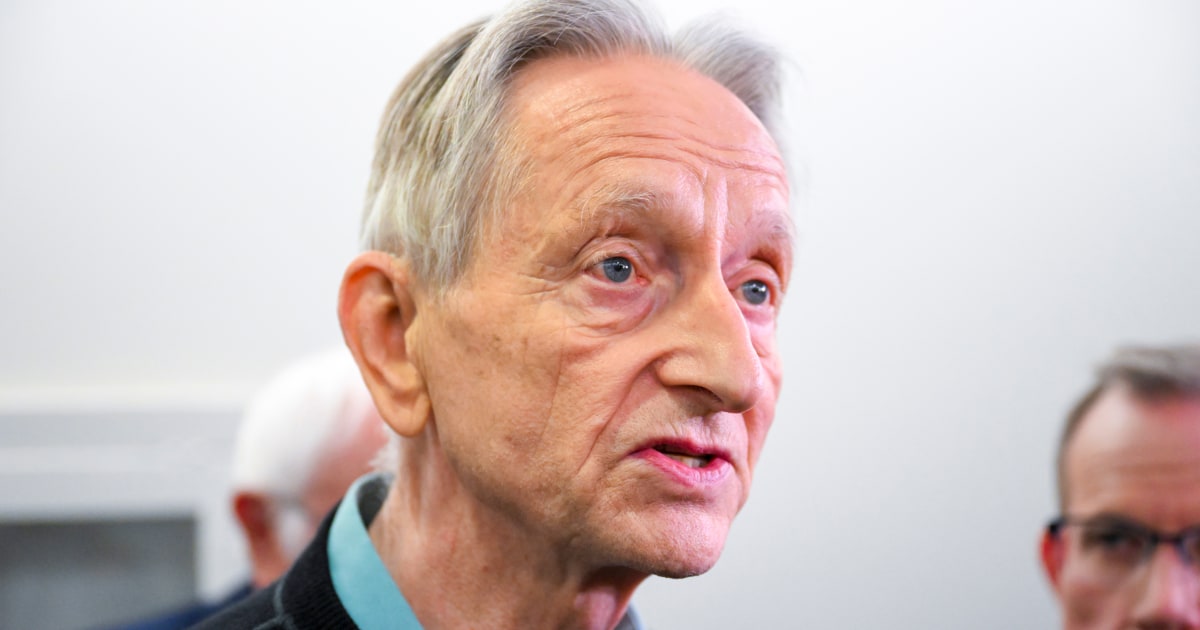
Photo via Semafor

AI risk warnings belie lack of consensus in Congress

Read the original at Semafor ↗
Cite

Gold, A. (2026, September 15). AI risk warnings belie lack of consensus in Congress. Semafor. https://www.semafor.com/article/09/14/2026/ai-risk-warnings-belie-lack-of-consensus-in-congress

Dated when The Aporia collected the article, usually within hours of publication. Check the original for its exact date and byline.

Semafor · collected 2026-09-15 · by Ashley Gold

Quick Summary

The article reports on the lack of consensus in Congress regarding AI regulation despite recent alignment among major AI companies. House Speaker Mike Johnson is focusing on a partnership approach with AI firms, while the Senate Commerce Committee advances bipartisan talks. However, these efforts face skepticism from some AI safety groups and Democrats who fear industry self-regulation. Former President Barack Obama also suggested that House Minority Leader Hakeem Jeffries should develop a public framework for discussing AI regulation.
Written by AI on 2026-09-15, from this article's own text only (the story summary below draws on all the coverage).

AI analysis

Story summary

The recent alignment among AI CEOs regarding industry regulation masks the lack of consensus in Congress. Rep. Lori Trahan, D-Mass., urged immediate action, stating "the time to act is now." However, while OpenAI supports ongoing bipartisan Senate Commerce Committee talks this week, other stakeholders like Anthropic, Democrats, and AI safety groups are skeptical, concerned that these negotiations could allow the industry to self-regulate. Meanwhile, House Speaker Mike Johnson downplayed his role in favor of a partnership with AI companies when speaking to CNN on Sunday. This disagreement highlights the current divisions within Congress regarding how to address the accelerating pace of AI development.
Written for “AI Regulation Debate” on 2026-11-20, grounded in this article and the 0 other(s) covering the same event.

Compared with similar articles

This article reads leans left and hedges 29% of its claims. Each row says how that neighbour differs.
NBC News
Hedges 2 of 40 claims Outlet record 78/100
“The articles describe different events: one discusses AI CEOs' lack of consensus on regulation, while the other reports Geoffrey Hinton's warning to Congress about the timeline for regulating AI.”
Semafor
Hedges 1 of 4 claims Outlet record 64/100
“The articles discuss different aspects of AI safety and regulation, not the same specific incident.”
Mother Jones
Leans left Hedges 1 of 21 claims Outlet record 60/100
“The articles discuss different aspects of AI regulation and agreements, with Article A focusing on a deal between Microsoft and a teachers union, while Article B discusses lack of consensus in Congress about AI regulation.”
Mother Jones
Hedges 8 of 44 claims Outlet record 60/100
“The articles discuss different aspects of AI safety concerns and regulatory discussions, rather than the same specific incident or occurrence.”
NBC News
Outlet record 78/100
“The articles discuss different aspects of AI regulation and warnings, not a single specific incident.”
CBS News
Hedges 10 of 37 claims Outlet record 67/100
“The articles cover different aspects of AI regulation and safety concerns, not the same specific incident or time.”
Semafor
Leans right further right than this Hedges 3 of 13 claims Outlet record 64/100
“The articles discuss different aspects of AI regulation and concerns but do not describe the same specific incident or occurrence.”
CBS News
Hedges 5 of 42 claims Outlet record 67/100
“The articles discuss different aspects of AI regulation and growth, with Article A focusing on Anthropic CEO's warning about rapid AI development, while Article B discusses a lack of consensus in Congress regarding AI regulation.”
The Intercept
Hedges 15 of 431 claims Outlet record 96/100
“The articles discuss different aspects of AI regulation and surveillance, not a single specific event.”
September 13, 2026 Different event
Letters from an American
Leans left Hedges 10 of 65 claims
“While both articles mention Dario Amodei's essay and AI concerns, Article A specifically describes Amodei's publication on September 12th, while Article B discusses the broader implications and lack of consensus among Congress regarding industry regulation following a weekend agreement between CEOs.”

Story

AI Regulation Debate
Politics · 1 article(s) covering the same event.
How this article was measured signals, leaning charts, publisher record, byline, topics and claims

Signals How these are calculated →

Claims extracted
7
sentences that state something as happening or true
Uncertain
29%
2 of 7 hedged ("reportedly", "may", "according to")
Leaning
Leans left
of the writing, not the subject · beta estimate
Publisher signals
64/100
Semafor's corrections and hedging, across everything collected from it. Not a measure of accuracy.
Outlets on this story
1
Politics
Same framing elsewhere
1
articles that frame the event the way this one does
Analyzed 2026-09-15 · how these are computed

How this is being covered How these are calculated →

Article leaning vs. publisher reliability
Source leaning vs. consistency

Publisher

Semafor · 1913 article(s) · 7 correction(s) detected
Running correction rate · 7 correction(s)

Who wrote this

Ashley Gold
42 article(s) here · 1 carrying a prediction
Ashley’s view Someone was bound to take the fall for a string of tech outages that have left the country terrified about what services might get disrupted next — even if the most basic (and likely true) explanation is that organizations are rushing to patch software bugs discovered by AI programs and are crashing their systems in the process.
Cybersecurity experts say the government is largely telling the truth about the crashes’ causes, but the situation reveals a bigger problem: Much more digital instability is coming, and it will be worse.
Big Tech would face some policy threats from the past if Sen. Chris Van Hollen, D-Md., somehow pulls off his longshot bid for Senate Majority Leader over current Democratic leader Chuck Schumer, according to an audio recording of Van Hollen’s remarks at a Hewlett Foundation event in California this week that was shared with Semafor.
Howard Lutnick is expected to travel on Air Force One with the president to China this week as the commerce secretary fights to regain his footing after clashing with Trump officials over Nvidia and China chip controls, according to people familiar with the matter.
2026-11-15 · assertive framing · Under pressure, Lutnick joins Trump in China
Beyond the corporate governance questions raised by the furor, lawmakers are incensed by reports that Nvidia may have pushed for access to its chips by dubious Chinese companies.
2026-11-09 · assertive framing · Nvidia CEO is in Congress’ sights after spy scandal
Public First, which gets significant funding from Anthropic and backs AI guardrails, wrote that Leading the Future — the top pro-AI super PAC — had a “crash out,” but warned: “It would be a mistake to read this cycle and Leading the Future’s decline as the end of Big Tech’s AI political project.
I am fully committed to NVIDIA and will work to earn back your confidence.”
Nvidia spokesman John Rizzo did not directly answer whether Huang would attend the briefing, telling Semafor in a statement: “We’re confident that if the U.S. government believes that any person is a threat to American industry, it would let us know.
2026-11-06 · mixed framing · Nvidia faces a more hostile Washington
But money could not buy influence on the most salient AI-related outcome of the election: local ballot measures curbing data center development, about 40 of which passed across the country on Tuesday.
2026-11-05 · assertive framing · Where AI money worked in the midterms
However, divisions between the more progressive wing of the party and more business-friendly moderates, along with disagreements between the House and the Senate, will make it difficult for the newly empowered party to quickly pass any sweeping AI rules.
2026-11-05 · assertive framing · Democrats are fired up on AI. Consensus is harder.
Also by Ashley Gold
Nothing else under this byline is closely related to this article, so these are simply their most recent.
All 42 articles by Ashley Gold →

Topics

Anthropic CNN Congress House OpenAI

Subjects

House ORG · 3× Anthropic ORG · 2× CNN ORG · 1× Congress ORG · 1× Democrats NORP · 1× Lori Trahan PERSON · 1× Mike Johnson PERSON · 1× OpenAI ORG · 1× Reed Albergotti PERSON · 1× Senate Commerce Committee ORG · 1×

Narrative

But Saturday’s three-CEO agreement that frontier models are accelerating too fast centered on Anthropic’s plan to do “things every AI lab needs to do anyway,” as our colleague Reed Albergotti wrote — which amounts to self-regulation, with labs likely choosing their own independent evaluators. “The time to act is now, before it’s too late,” Rep. Lori Trahan, D-Mass., told Semafor.
framing: mixed · carried by 1 article(s) · first seen 2026-09-15
Across the Capitol, OpenAI remains most supportive of bipartisan Senate Commerce Committee talks that could advance this week, despite skepticism from Anthropic, Democrats, and AI safety groups, who say those negotiations risk letting the industry self-police.
2026-09-15 · Semafor
AI risk warnings belie lack of consensus in Congress · mixed framing

Claims (7 extracted, 2 hedged)

The sudden appearance of alignment among AI CEOs about industry regulation over the weekend masks an inconvenient reality for Congress: There is no consensus. asserted
appearance → mask → Congress
In the House, Speaker Mike Johnson is downplaying his own role in favor of a “partnership” with AI companies, as he told CNN on Sunday. asserted
he → downplay → Sunday
Across the Capitol, OpenAI remains most supportive of bipartisan Senate Commerce Committee talks that could advance this week, despite skepticism from Anthropic, Democrats, and AI safety groups, who say those negotiations risk letting the industry self-police. uncertain
industry → remain → Anthropic
But Saturday’s three-CEO agreement that frontier models are accelerating too fast centered on Anthropic’s plan to do “things every AI lab needs to do anyway,” as our colleague Reed Albergotti wrote — which amounts to self-regulation, with labs likely choosing their own independent evaluators. “The time to act is now, before it’s too late,” Rep. Lori Trahan, D-Mass., told Semafor. asserted
Trahan → accelerate → Semafor
She urged Johnson to keep the House in session past this week to work on AI, but her own leader is already looking to 2027. asserted
leader → urge → 2027
House Minority Leader Hakeem Jeffries told ABC on Sunday that his caucus would gather this week to discuss options. asserted
caucus → tell → options
At a separate closed-door fireside chat with Jeffries last week, former President Barack Obama urged the New Yorker to “put together a framework for a very public conversation” and said he’d prioritize the issue if he were running for president, according to excerpts of the remarks confirmed by Obama’s office. uncertain
he → close → office
Give feedback · no sign-in needed

No sign-in needed for now. Your note is sent without a name, so it cannot be answered.

History Support