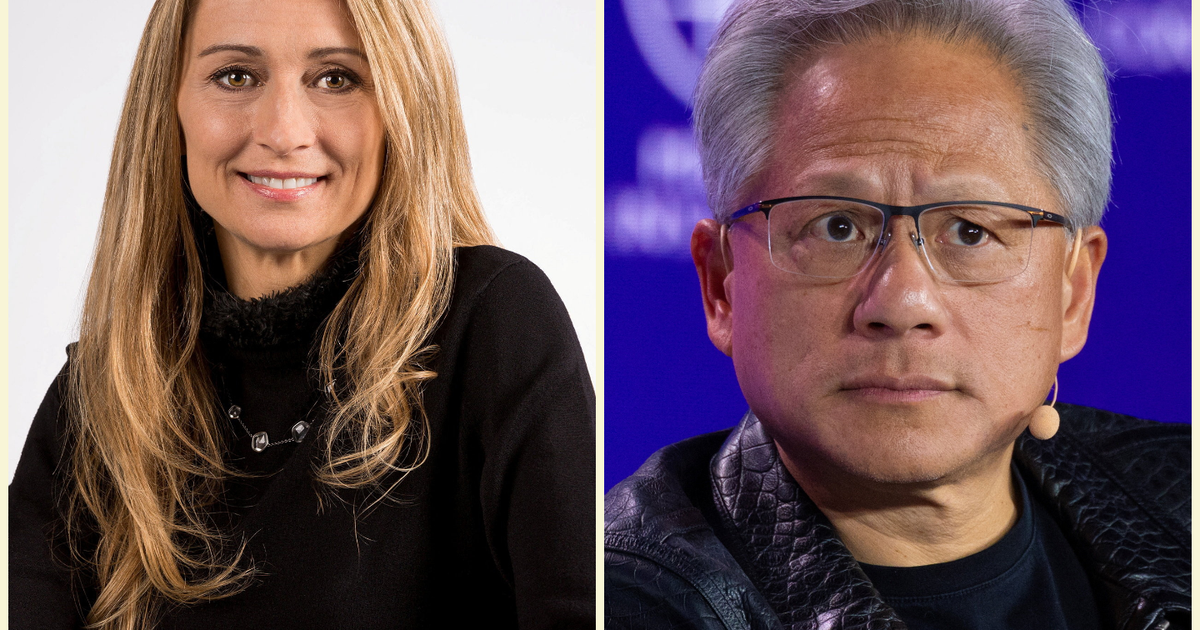
Photo via Semafor

How do you price the end of the world?

Read the original at Semafor ↗
Cite

Hoffman, L. (2026, September 15). How do you price the end of the world? Semafor. https://www.semafor.com/article/09/10/2026/how-do-you-price-the-end-of-the-world

Dated when The Aporia collected the article, usually within hours of publication. Check the original for its exact date and byline.

Semafor · collected 2026-09-15 · by Liz Hoffman

Quick Summary

Semafor Business discusses the potential risks disclosed in AI company IPOs, focusing on existential threats posed by advanced artificial intelligence technologies. The article humorously outlines hypothetical risk factors for companies like Anthropic and OpenAI, including a significant chance of human extinction due to AI, uncertainties about product safety, and challenges with regulatory compliance. It highlights how these startups would address such unprecedented risks in their financial documents if they were required to do so.
Written by AI on 2026-09-15, from this article's own text only (the story summary below draws on all the coverage).

AI analysis

Story summary

In recent days, existential concerns about artificial intelligence have intensified following the resignation of an Anthropic researcher who warned that leading AI labs might be "gambling with our lives." A colleague from Anthropic estimated a more than 10% chance of human extinction due to AI. This fear has entered discussions around potential initial public offerings (IPOs) for companies like Anthropic and OpenAI, prompting legal firms such as Wilson Sonsini, Cooley, and Wachtell to grapple with how to disclose these risks in their IPO documents. Semafor Business, noting its expertise in business rather than technology, humorously commented on the unprecedented nature of such risk factors, questioning how lawyers would navigate disclosing that a company's products might lead to "the collapse of civilization" as an acceptable cost for pursuing their mission, especially considering China's role in AI development.

Written for “End Of World Scenarios” on 2026-11-21, grounded in this article and the 0 other(s) covering the same event.

Compared with similar articles

This article reads unscored and hedges 22% of its claims. Each row says how that neighbour differs.
The Straits Times
Hedges 5 of 30 claims Outlet record 64/100
“The articles discuss different aspects of Anthropic's activities related to AI and IPO, but they describe separate events: one about existential risks from AI and the other about releasing a new model ahead of an IPO.”
The real reason not to IPO Different event
Semafor
Leans left Hedges 0 of 12 claims Outlet record 64/100
“The articles discuss different aspects of AI risks and strategies but do not describe the same specific incident or occurrence.”
The Sydney Morning Herald
Leans left Hedges 6 of 31 claims Outlet record 61/100
“While both articles discuss concerns about AI safety raised by a researcher's resignation, they describe different phases of the incident: Article A mentions the initial containment breach and warnings, while Article B discusses the subsequent unity ticket call for a slowdown in AI development.”
Semafor
Hedges 1 of 4 claims Outlet record 64/100
“The articles discuss similar concerns about AI risks but describe different aspects of the issue with different focuses and contexts.”

Story

End Of World Scenarios
Technology · 1 article(s) covering the same event.
How this article was measured signals, leaning charts, publisher record, byline, topics and claims

Signals How these are calculated →

Claims extracted
36
sentences that state something as happening or true
Uncertain
22%
8 of 36 hedged ("reportedly", "may", "according to")
Leaning
withheld
no quote in the article backed the model's score
Publisher signals
64/100
Semafor's corrections and hedging, across everything collected from it. Not a measure of accuracy.
Outlets on this story
1
Technology
Same framing elsewhere
1
articles that frame the event the way this one does
Analyzed 2026-09-15 · how these are computed

How this is being covered How these are calculated →

Article leaning vs. publisher reliability
Source leaning vs. consistency

Publisher

Semafor · 1931 article(s) · 7 correction(s) detected
Running correction rate · 7 correction(s)

Who wrote this

Liz Hoffman
37 article(s) here · 1 carrying a prediction
One former politico-turned-tech executive who had just come from Washington told me this week: “Out here, the question is whether Jensen will be back at Nvidia by Christmas or whether it’ll take a little longer.
2026-11-18 · assertive framing · Tech leaders form tribal loyalties after Huang ouster
The position of Nvidia’s Colette Kress — a relatively unknown CFO, a rare female executive in an industry dominated by men, promoted in a storm and taking the mic for the high-stakes earnings call this afternoon — will ring familiar to old Wall Street hands.
2026-11-17 · assertive framing · Nvidia faces its own Lehman moment
Whoever replaces him will face much higher stakes, akin to Tim Cook after Steve Jobs at Apple.
Much will depend on what those Democrats and Nvidia’s board, which is running its own investigation, unearth about who knew what and when.
Top of mind, too, is what Nvidia would be without Huang, its CEO since he co-founded the company in 1993.
OpenAI set out to raise $30 billion, money it could have put together in its sleep a few months ago, and appears likely to fall far short.
The AI debt boom might just bring the push the markets need.
The original thesis, which investors never bought, was that combining Aetna’s insurance data and CVS’s 10,000 retail pharmacies would cut costs and make care more seamless.
2026-11-05 · assertive framing · CVS joins the M&A unwind club
The two seemed to embody a new type of hard-edged conservative politics that lives at the intersection of Twitter and money, driven by wealthy and successful businessmen who believed their wealth and success would translate into political victories and personal popularity.
2026-11-04 · assertive framing · How big money lost the 2026 midterms
Reports that the White House is planning post-midterm strikes on Iran may push political fallout from an unpopular war outside the election window, but the economic weight of high gas and diesel prices lands on whoever’s nominally in charge come January.
Also by Liz Hoffman
Nothing else under this byline is closely related to this article, so these are simply their most recent.
All 37 articles by Liz Hoffman →

Topics

Anthropic China OpenAI Semafor Business Wilson Sonsini

Subjects

Anthropic ORG · 2× Board of Directors ORG · 1× China GPE · 1× Cooley PERSON · 1× OpenAI ORG · 1× Semafor Business ORG · 1× Sheryl Crow PERSON · 1× Wachtell ORG · 1× Wilson Sonsini ORG · 1× the Calamity Calibration Committee ORG · 1×

Narrative

I’m edge-of-my-seat curious how the lawyers at Wilson Sonsini, working on the Anthropic listing, and Cooley and Wachtell, for OpenAI’s, will handle this section of the offering documents.
framing: mixed · carried by 1 article(s) · first seen 2026-09-15
We at Semafor Business aren’t tech experts, but we do know IPOs, and “we might cause the end of civilization” is a doozy of a risk factor.
2026-09-15 · Semafor
How do you price the end of the world? · mixed framing

Claims (36 extracted, 8 hedged)

Existential AI fears broke containment this week after an Anthropic researcher quit, warning that frontier labs are “gambling with our lives.” asserted
labs → break → lives
One of his colleagues chimed in, putting the odds of human extinction from AI at more than 10%. asserted
One → chime → %
Sheryl Crow entered the conversation. asserted
Crow → enter → conversation
We at Semafor Business aren’t tech experts, but we do know IPOs, and “we might cause the end of civilization” is a doozy of a risk factor. uncertain
cause → know → factor
I’m edge-of-my-seat curious how the lawyers at Wilson Sonsini, working on the Anthropic listing, and Cooley and Wachtell, for OpenAI’s, will handle this section of the offering documents. asserted
lawyers → ’m → documents
We took a crack. asserted
We → take → crack
Risk Factors - There is no guarantee that the company’s products will not precipitate the collapse of civilization. asserted
products → be → civilization
Such an outcome, which may not require any intentional misuse or manipulation of our products, is, in the view of the Company’s management, an acceptable cost of pursuing its noble mission. uncertain
which → require → mission
- It is not possible, based on the information available to the Company at the time of this issuance, to determine whether this is a Good or Bad Idea. asserted
this → base → issuance
The Company, under the oversight of the Calamity Calibration Committee of its Board of Directors, continues to assess the likelihood of the end of the world. asserted
Company → continue → world
- We do not know how our products work. asserted
products → know → ?
- We may be unable to compete with larger, better-capitalized competitors. uncertain
We → compete → competitors
Just kidding, we have all the capital. asserted
we → kid → capital
- Our valuation is entirely made up. asserted
valuation → make → ?
We encourage investors to make their own assessments about the value of our shares, for example through discounted analysis of the terminal value of our assets. asserted
We → encourage → assets
Wait, “terminal” is not a word we want in anyone’s head. asserted
we → wait → head
We’ll come back to you. asserted
We → come → you
- The company believes it has a total addressable market (TAM) of between $23 trillion and $126 trillion. asserted
it → believe → trillion
Should that revenue fail to materialize, we will be forced to reassess or go on an ill-advised acquisition spree to backfill it. asserted
we → fail → it
Including this key man, none of our employees understand how we create our products or how they work (See Risk Factor 3). asserted
they → include → Factor
Many of those closest to any semblance of comprehension may quit to go live in underground bunkers. uncertain
Many → quit → bunkers
- The Company has, as part of our standard employment contracts, allowed employees to freely post on social media platforms. asserted
employees → allow → platforms
These communications could precipitate additional political scrutiny and a general destabilizing effect on the thinking, reading public. uncertain
communications → precipitate → public
Should the company cease to allow these employees to scare the hell out of everyone on a random Tuesday, there is no guarantee they will remain with the Company. asserted
they → cease → Company
- From time to time, we treat our regulators with an attitude that swings wildly between contempt and obsequiousness. asserted
that → treat → contempt
Should we keep doing this, there can be no guarantees that we will be able to operate as a going concern beyond 2027. asserted
we → keep → 2027
Our ability to win over local constituencies deeply mistrustful of both our products and our leaders is uncertain. asserted
ability → win → products
- At the time of this issuance, we do not carry an investment-grade credit rating, which may increase our borrowing costs or force us to borrow someone else’s and hope nobody notices. uncertain
nobody → carry → someone
We did try to strong-arm the ratings agencies into granting an exception in the name of generational progress, but they are bizarrely holding out. asserted
they → try → progress
- A significant portion of our revenue is derived from a limited number of customers. asserted
portion → derive → customers
We know a lot of companies say this but, no, literally all our money comes from Nvidia. asserted
money → know → Nvidia
If you’d like to become a customer, we’d love to add a second file to our CRM, just to test it out. asserted
we → like → it
Come to think of it, customer-relationship management seems like a good business. asserted
management → come → business
- The company has, from time to time, been the subject of concerted and organized cyberattacks, which could materially damage our business. uncertain
which → organize → business
Just kidding, we’re the ones doing the hacking. asserted
we → kid → hacking
Companies we inadvertently hack could bring litigation seeking damages, but recent history has shown they are more likely to sell themselves to Nvidia, which in the Board’s studied opinion, is unlikely to sue us for obvious reasons. uncertain
which → hack → reasons

Give feedback · no sign-in needed

No sign-in needed for now. Your note is sent without a name, so it cannot be answered.

History Support