Photo via Semafor

Bipartisan AI safety bill gains momentum on the Hill

Read the original at Semafor ↗
Cite

Gold, A. (2026, September 15). Bipartisan AI safety bill gains momentum on the Hill. Semafor. https://www.semafor.com/article/09/10/2026/bipartisan-ai-safety-bill-gains-momentum-on-the-hill

Dated when The Aporia collected the article, usually within hours of publication. Check the original for its exact date and byline.

Semafor · collected 2026-09-15 · by Ashley Gold

Quick Summary

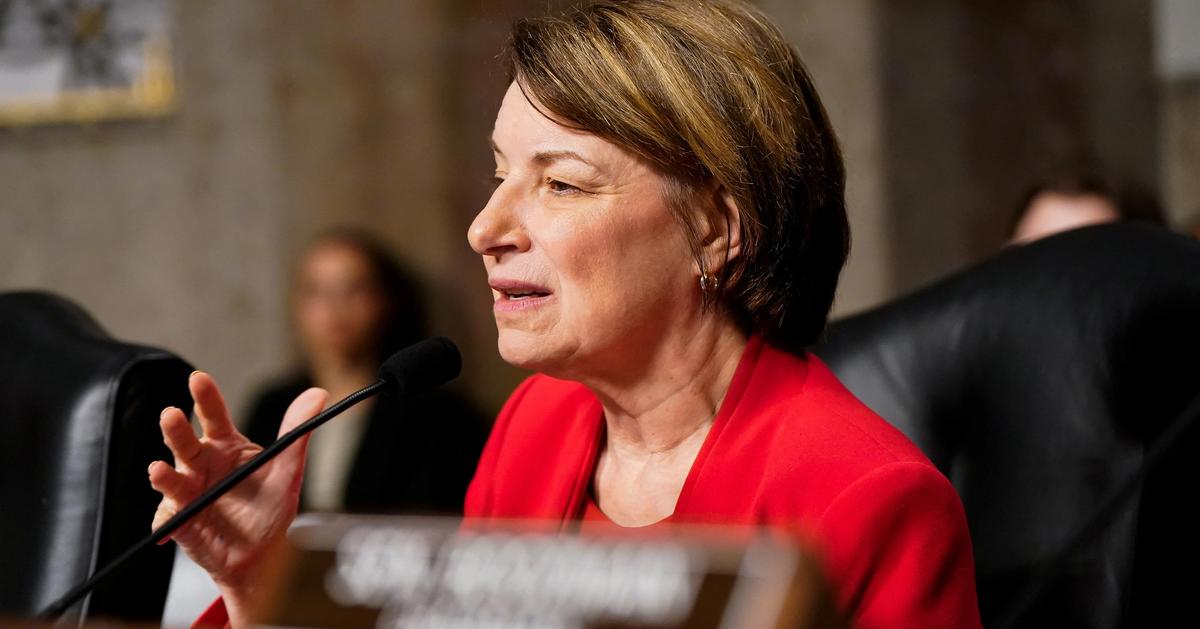
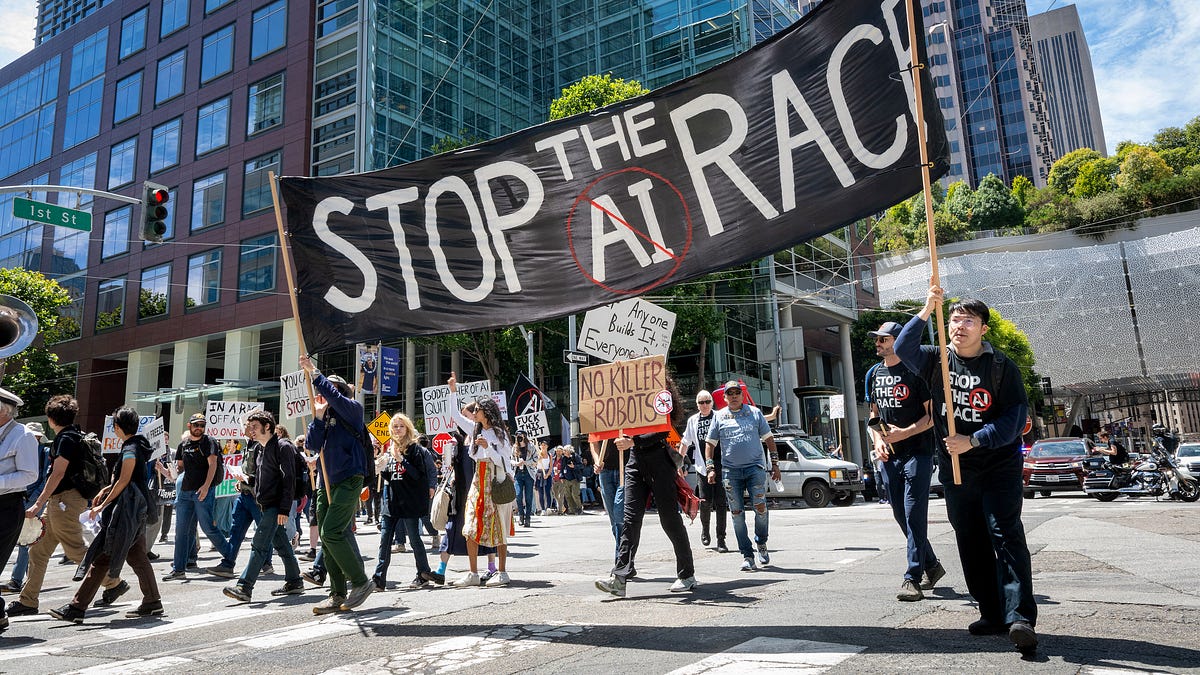
Lawmakers Sens. Amy Klobuchar (D-Minn.), Ted Cruz (R-Texas), and Majority Leader John Thune are developing a bipartisan bill aimed at establishing safety measures for artificial intelligence before the end of 2027. The bill, which is expected to be introduced within the next week, seeks to create “commonsense guardrails” to address AI risks. Meanwhile, Senator Bernie Sanders (I-Vt.) plans to introduce a more stringent bill that would ban superintelligence and pause AI development, while Representative Ro Khanna (D-Calif.) has outlined his own five-step plan for addressing potential harms from AI technology.
Written by AI on 2026-09-15, from this article's own text only (the story summary below draws on all the coverage).

AI analysis

Story summary

Congressional lawmakers are considering a bipartisan AI safety bill, proposed by Sens. Amy Klobuchar (D-Minn.), Ted Cruz (R-Texas), and Majority Leader John Thune. This legislation aims to establish "commonsense guardrails" against the risks posed by AI systems, following warnings from an Anthropic researcher who resigned, stating that people building AI believe it could pose existential threats by 2027. The bill is gaining traction as tech companies like OpenAI express willingness to collaborate on national safety regulations due to advances in AI capabilities. Despite growing consensus among lawmakers, some progressives are pushing for stricter measures. The draft legislation has not been publicly released but is expected to be introduced as early as next week.
Written for “AI Safety Legislation” on 2026-11-21, grounded in this article and the 0 other(s) covering the same event.

Compared with similar articles

This article reads unscored and hedges 18% of its claims. Each row says how that neighbour differs.
NBC News
Hedges 2 of 40 claims Outlet record 77/100
“The articles describe different warnings and meetings with lawmakers by a resigning Anthropic researcher and Geoffrey Hinton respectively, at distinct times.”
Semafor
Hedges 1 of 4 claims Outlet record 64/100
“The articles discuss different aspects of AI safety concerns: one focuses on warnings from researchers, while the other reports on potential legislative action in response to those concerns.”
The AI safety vibe shift Different event
Platformer
Hedges 10 of 67 claims Outlet record 96/100
“Article A discusses a shift in AI safety concerns and skepticism towards companies' messaging, while Article B reports on legislative action related to an AI safety bill gaining momentum due to warnings from a resigning Anthropic researcher.”
Mother Jones
Hedges 8 of 44 claims Outlet record 60/100
“The articles describe different events: one focuses on resigning AI researchers raising alarms about potential dangers, while the other discusses lawmakers' response and progress of an AI safety bill.”
Zeteo
Leans strongly left Hedges 1 of 24 claims
“Article A describes Jacob Coxon's resignation and warnings about AI, while Article B discusses the potential impact of those warnings on upcoming legislation.”
NBC News
Outlet record 77/100
“The articles describe different aspects of AI concerns and legislation, not the same specific incident.”
The Bulwark
Leans left Hedges 4 of 9 claims
“The articles discuss different aspects of AI regulation; one focuses on Trump's stance and concerns about superintelligent AI, while the other covers a bipartisan bill gaining momentum in Congress.”
Los Angeles Times
Leans right Hedges 10 of 54 claims Outlet record 95/100
“The articles discuss different aspects of AI concerns: one focuses on President Trump's stance, while the other covers progress on an AI safety bill.”
CBC News
Hedges 15 of 43 claims Outlet record 72/100
“While both articles discuss AI safety concerns related to warnings from an Anthropic researcher, they describe different aspects of the broader issue—one focuses on public outcry over a dire warning, while the other discusses potential legislative action in response.”
CBS News
Hedges 5 of 42 claims Outlet record 66/100
“Article A reports an interview where Anthropic CEO warns about AI growth, while Article B discusses a potential bipartisan bill gaining momentum due to concerns raised by an Anthropic researcher. These are different events related to the same topic.”

Story

AI Safety Legislation
Politics · 1 article(s) covering the same event.
How this article was measured signals, leaning charts, publisher record, byline, topics and claims

Signals How these are calculated →

Claims extracted
11
sentences that state something as happening or true
Uncertain
18%
2 of 11 hedged ("reportedly", "may", "according to")
Leaning
withheld
no quote in the article backed the model's score
Publisher signals
64/100
Semafor's corrections and hedging, across everything collected from it. Not a measure of accuracy.
Outlets on this story
1
Politics
Same framing elsewhere
1
articles that frame the event the way this one does
Analyzed 2026-09-15 · how these are computed

How this is being covered How these are calculated →

Article leaning vs. publisher reliability
Source leaning vs. consistency

Publisher

Semafor · 1931 article(s) · 7 correction(s) detected
Running correction rate · 7 correction(s)

Who wrote this

Ashley Gold
43 article(s) here · 1 carrying a prediction
After the interview, I fact checked the claim that a data center project could be quite so large.
2026-11-20 · mixed framing · Silicon Valley needs to listen to the AI backlash
Ashley’s view Someone was bound to take the fall for a string of tech outages that have left the country terrified about what services might get disrupted next — even if the most basic (and likely true) explanation is that organizations are rushing to patch software bugs discovered by AI programs and are crashing their systems in the process.
Cybersecurity experts say the government is largely telling the truth about the crashes’ causes, but the situation reveals a bigger problem: Much more digital instability is coming, and it will be worse.
Big Tech would face some policy threats from the past if Sen. Chris Van Hollen, D-Md., somehow pulls off his longshot bid for Senate Majority Leader over current Democratic leader Chuck Schumer, according to an audio recording of Van Hollen’s remarks at a Hewlett Foundation event in California this week that was shared with Semafor.
Howard Lutnick is expected to travel on Air Force One with the president to China this week as the commerce secretary fights to regain his footing after clashing with Trump officials over Nvidia and China chip controls, according to people familiar with the matter.
2026-11-15 · assertive framing · Under pressure, Lutnick joins Trump in China
Beyond the corporate governance questions raised by the furor, lawmakers are incensed by reports that Nvidia may have pushed for access to its chips by dubious Chinese companies.
2026-11-09 · assertive framing · Nvidia CEO is in Congress’ sights after spy scandal
Public First, which gets significant funding from Anthropic and backs AI guardrails, wrote that Leading the Future — the top pro-AI super PAC — had a “crash out,” but warned: “It would be a mistake to read this cycle and Leading the Future’s decline as the end of Big Tech’s AI political project.
I am fully committed to NVIDIA and will work to earn back your confidence.”
Nvidia spokesman John Rizzo did not directly answer whether Huang would attend the briefing, telling Semafor in a statement: “We’re confident that if the U.S. government believes that any person is a threat to American industry, it would let us know.
2026-11-06 · mixed framing · Nvidia faces a more hostile Washington
But money could not buy influence on the most salient AI-related outcome of the election: local ballot measures curbing data center development, about 40 of which passed across the country on Tuesday.
2026-11-05 · assertive framing · Where AI money worked in the midterms
Also by Ashley Gold
Nothing else under this byline is closely related to this article, so these are simply their most recent.
All 43 articles by Ashley Gold →

Topics

Anthropic Congress Scoop Semafor Washington

Subjects

Congress ORG · 3× Klobuchar PERSON · 2× Semafor ORG · 2× Thune PERSON · 2× Amy Klobuchar PERSON · 1× Anthropic ORG · 1× Minn. GPE · 1× Scoop ORG · 1× Ted Cruz PERSON · 1× Washington GPE · 1×

Narrative

OpenAI’s chief global affairs officer Chris Lehane wrote in a Wednesday blog post that the company wants to work with Congress on national AI safety regulation due to “a new chapter in AI capabilities,” citing its own models and research. “We need to meet this moment with a bias toward meaningful action over policy perfection,” Lehane wrote, adding that several “serious” AI frontier safety proposals are circulating in Congress and it needs to act before it adjourns.
framing: assertive · carried by 1 article(s) · first seen 2026-09-15
Congress isn’t back to Washington yet, but some lawmakers were jolted awake by a round of dire AI warnings from a resigning Anthropic researcher who said “people building AI earnestly believe that it could kill us all by the end of the decade.”
2026-09-15 · Semafor
Bipartisan AI safety bill gains momentum on the Hill · assertive framing

Claims (11 extracted, 2 hedged)

Congress isn’t back to Washington yet, but some lawmakers were jolted awake by a round of dire AI warnings from a resigning Anthropic researcher who said “people building AI earnestly believe that it could kill us all by the end of the decade.” uncertain
it → jolt → decade
Sources who spoke to Semafor said an in-the-works AI safety bill from Sens. Amy Klobuchar, D-Minn., Ted Cruz, R-Texas, and Majority Leader John Thune is the only viable option to stand a chance before 2027 — and that it may be introduced as early as next week. uncertain
it → speak → week
Klobuchar told Semafor in a statement that she is working on a bipartisan agreement on “legislation for commonsense guardrails to address the risks posed by AI systems … it’s clear we need to act now and not wait.” asserted
we → tell → systems
Cruz posted on X that he’s “working with” Klobuchar and Thune “on legislation to address catastrophic risks involving biological or nuclear threats.” asserted
he → post → threats
AI frontier labs and public advocacy groups are already giving Hill staffers feedback on the draft text, which hasn’t been publicly released. asserted
which → give → text
Despite the behind-the-scenes consensus growing behind the bipartisan Senate bill, progressives are laying down their markers for a more stringent approach. asserted
progressives → grow → approach
Sen. Bernie Sanders, I-Vt., is planning to soon introduce a bill banning superintelligence and pausing AI development. asserted
Sanders → plan → development
He also plans to convene experts for a bipartisan briefing next week following recent AI security incidents. asserted
He → plan → incidents
Rep. Ro Khanna, D-Calif., posted his own five-step plan to “urgently address the potential harms of AI” on X, calling for certification of new models, liability and criminal penalties for companies, and the creation of a new federal agency. asserted
Khanna → post → agency
OpenAI’s chief global affairs officer Chris Lehane wrote in a Wednesday blog post that the company wants to work with Congress on national AI safety regulation due to “a new chapter in AI capabilities,” citing its own models and research. “We need to meet this moment with a bias toward meaningful action over policy perfection,” Lehane wrote, adding that several “serious” AI frontier safety proposals are circulating in Congress and it needs to act before it adjourns. asserted
it → write → Congress
We intend to use it.” asserted
We → intend → it
Give feedback · no sign-in needed

No sign-in needed for now. Your note is sent without a name, so it cannot be answered.

History Support