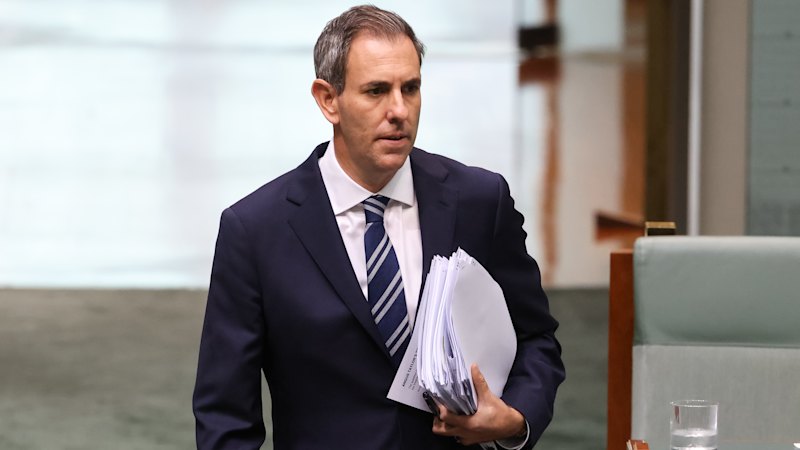
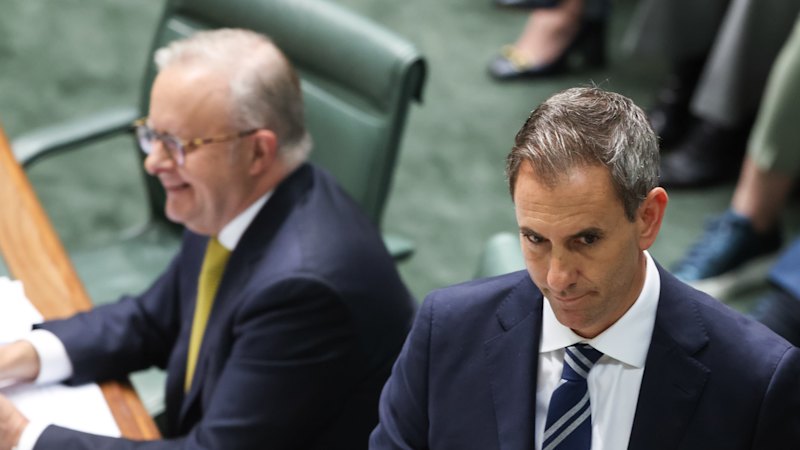
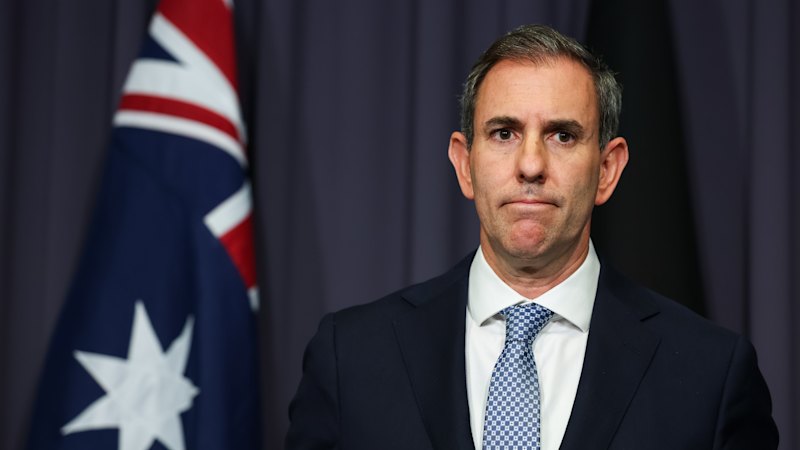
Photo via The Sydney Morning Herald

What would you cut? Chalmers challenges critics of government spending

Read the original at The Sydney Morning Herald ↗
Cite

Wright, S., & Sakkal, P. (2026, October 25). What would you cut? Chalmers challenges critics of government spending. The Sydney Morning Herald. https://www.smh.com.au/politics/federal/what-would-you-cut-chalmers-challenges-critics-of-government-spending-20261026-p6185d.html?ref=rss&utm_medium=rss&utm_source=rss_feed

Dated from the outlet's own feed. Check the original for its byline.

The Sydney Morning Herald · collected 2026-10-25 · by Shane Wright, Paul Sakkal

Quick Summary

Treasurer Jim Chalmers is facing pressure from economists and opposition members to cap near-record government spending levels that reached 26.9% of GDP this past financial year, leading to a $31.5 billion budget deficit. Chalmers declined to specify a spending target, arguing that critics should identify specific areas for cuts while acknowledging growing concerns over inflation and potential economic recession due to rising oil prices and interest rates.
Written by AI on 2026-10-25, from this article's own text only (the story summary below draws on all the coverage).

AI analysis

Story summary

As of October 25, 2026, Treasurer Jim Chalmers refused to limit government spending despite calls from economists and opposition leaders to reduce it to address inflation. Chalmers did not set a specific cap on spending as a share of GDP during an interview with the Sydney Morning Herald’s Inside Politics podcast, even after being urged by policy thinkers like Ken Henry and Saul Eslake for fiscal discipline measures. The government spent 26.9% of the economy in the just-completed financial year, the highest level since 1986-87 outside pandemic times, with a recorded budget deficit of $22.2 billion that is expected to rise to $31.5 billion this financial year. Chalmers and Finance Minister Katy Gallagher are working on mid-year savings updates due in early December but argue critics should specify where spending cuts would be made.

Written for “Government Spending Criticism” on 2026-11-21, grounded in this article and the 1 other(s) covering the same event.

Compared with similar articles

This article reads leans left and hedges 6% of its claims. Each row says how that neighbour differs.
The Sydney Morning Herald
Leans left Hedges 2 of 36 claims Outlet record 61/100
Evening Standard
Hedges 0 of 17 claims Outlet record 64/100
“The articles describe different aspects of government finances over time, with Article A reporting on current borrowing figures ahead of a Budget announcement, while Article B focuses on the Treasurer's stance regarding spending caps and fiscal discipline.”
The Guardian
Leans strongly right further right than this Hedges 1 of 29 claims Outlet record 64/100
“The articles describe different events involving different political figures (John Healey vs Jim Chalmers) discussing budgets at distinct times.”
The Guardian
Hedges 3 of 20 claims Outlet record 64/100
“The articles discuss different aspects of Jim Chalmers' economic policies and forecasts, not the same specific incident or speech.”
Daily Mail
Hedges 1 of 23 claims Outlet record 69/100
“The articles describe different events: one is about Treasurer Jim Chalmers refusing to cap government spending and the other is about Reform party presenting an alternative budget with proposed savings.”
The Guardian
Leans left Hedges 10 of 48 claims Outlet record 64/100
“The articles discuss different government spending contexts and times, with Article A focusing on Treasurer Jim Chalmers' stance and Article B discussing Chancellor John Healey's first budget presentation.”
Daily Mail
Hedges 5 of 65 claims Outlet record 69/100
“The articles discuss different aspects and times related to government spending and economic policies, without clearly covering the same specific incident or moment.”
National Post
Leans strongly right further right than this Hedges 4 of 48 claims Outlet record 60/100
“The articles discuss different aspects of government spending and economic policy, with distinct focuses on Treasurer Jim Chalmers' stance and Prime Minister Mark Carney's budget priorities.”
Evening Standard
Leans right further right than this Hedges 2 of 27 claims Outlet record 64/100
“The articles discuss different speeches and debates about government spending by Chalmers and Healey on separate occasions.”
Daily Mail
Hedges 5 of 27 claims Outlet record 69/100
“The articles describe different aspects and timelines related to government spending, with Article A focusing on Treasurer Jim Chalmers' stance and Article B discussing Chancellor John Healey's budget forecasts by the Institute for Fiscal Studies.”

Story

Government Spending Criticism
Politics · 2 article(s) covering the same event. See how they differ ↑
How this article was measured signals, leaning charts, publisher record, byline, topics and claims

Signals How these are calculated →

Claims extracted
36
sentences that state something as happening or true
Uncertain
6%
2 of 36 hedged ("reportedly", "may", "according to")
Leaning
Leans left
of the writing, not the subject · beta estimate
Publisher signals
61/100
The Sydney Morning Herald's corrections and hedging, across everything collected from it. Not a measure of accuracy.
Outlets on this story
2
Politics
Same framing elsewhere
2
articles that frame the event the way this one does
Analyzed 2026-10-25 · how these are computed

How this is being covered How these are calculated →

Article leaning vs. publisher reliability
Source leaning vs. consistency

Publisher

The Sydney Morning Herald · 7770 article(s) · 16 correction(s) detected
Running correction rate · 16 correction(s)

Who wrote this

Shane Wright
30 article(s) here · 1 carrying a prediction
Treasurer Jim Chalmers is promising a “Goldilocks” mid-year budget update that will be focused on savings large enough ease inflation pressures but which will not hurt the overall economy.
The Greens could get in the way of Treasurer Jim Chalmers’ plans to overhaul capital gains tax by the end of the year, backing an inquiry into a separate proposal from independent MP Allegra Spender.
The CEOs of two of the nation’s largest banks have backed cuts in government spending to bring down inflation and make housing more affordable amid warnings the AI building boom could push up the cost of suburban homes as they compete for electricians and plumbers.
The federal government’s budget overhaul of negative gearing and capital gains tax has been blamed for the biggest fall in home loans taken out by investors on record, with warnings the property market will struggle well into next year.
The AI building boom that is powering the global economy could force interest rates to remain higher, the Reserve Bank’s chief economist has warned, while revealing there are few signs the new technology will eat into the job prospects of young Australians.
But it wasn’t accompanied by a surge in unemployment which would peak at 7.4 per cent.
It may not be an official recession, but the Reserve Bank knows it may feel like one for plenty of Australians after it delivered another dose of monetary policy punishment to the country.
The last time the RBA board split was in May when 8 voted in favour of a rate hike with one holding out.
The Reserve Bank is being warned it could drive Australia into a recession and leave tens of thousands of people out of work with a Melbourne Cup Day interest rate rise that will lift pressure on Treasurer Jim Chalmers to cut deeper into government spending.
The nationwide slump in house values has spread to Brisbane and Perth with no signs the property downturn is close to ending, amid fears it could get worse if the Reserve Bank pushes ahead with another interest rate hike this week.
Also by Shane Wright
Chalmers reveals plan for ‘Goldilocks’ budget update
2026-11-16 · The Sydney Morning Herald
Nothing else under this byline is closely related to this article, so these are simply their most recent.
All 30 articles by Shane Wright →
Paul Sakkal
42 article(s) here · 1 carrying a prediction
One Nation leader Pauline Hanson has wrongly claimed Donald Trump’s war in Iran has not contributed to inflation, while confirming her crackdown on parent visas could force more than 10,000 parents and grandparents out of the country.
2026-11-18 · assertive framing · Hanson stands doubles down on plan to deport grannies
Migrants would be barred from bringing parents to Australia and the refugee intake slashed by 90 per cent under One Nation’s latest hardline immigration plan, as Home Affairs Minister Tony Burke retreats from backpacker rules that regional businesses warned would trigger labour shortages.
Regional employers crying out for backpackers to fill pubs and cafes are set to win a reprieve on Tuesday, when Home Affairs Minister Tony Burke is expected to wind back a proposed crackdown on working holidaymakers.
Australia’s lucrative illicit tobacco market may finally be shrinking after years of rampant criminality including homicides and more than 300 firebombings that turned cigarette taxes into a frontline political issue.
But the RBA downgraded its outlook last month and predicted dwelling investment to fall about 2.5 per cent from late next year until 2029, casting doubt on Labor’s target of 1.2 million homes.
The Australian Federal Police is calling on parents and teachers to monitor teens for signs they could be on the brink of violence after the force foiled several mass-casualty terror plots, as its counter-terror commander issues an urgent warning about the surge in youth radicalisation.
Elevated spending on the bureaucracy was revealed hours before a Productivity Commission report was published, blaming more than a decade of excessive government regulation for dulling the economy’s “animal spirits”. Days after Reserve Bank governor Michele Bullock warned of a “new normal” of subpar growth, Wood said that even small improvements in productivity over the next decade would improve a workers’ income by $14,000.
High-level government sources said that in the run-up to the May budget and years past, Chalmers had often advocated for the lowest-cost option when proposals came to the cabinet’s expenditure review subcommittee.
Hawke argued that Canavan had no right to dictate the Liberal position and said voters could see the economic damage caused by the Trump administration’s stance on tariffs and trade. “If we don’t have our own identity on key economic issues, then the Nationals will dominate us and that will be at our expense electorally,” Hawke told his colleagues, according to sources in the room.
Politicians will receive a security boost after the attack on independent MP Helen Haines, which the prime minister has described as a turning point.
Also by Paul Sakkal
Hanson stands doubles down on plan to deport grannies
2026-11-18 · The Sydney Morning Herald
Nothing else under this byline is closely related to this article, so these are simply their most recent.
All 42 articles by Paul Sakkal →

Topics

BetaShares Finance Labor the Commonwealth Bank the Reserve Bank’s

Subjects

Chalmers PERSON · 7× Labor NORP · 6× BetaShares ORG · 1× Finance ORG · 1× Jim Chalmers PERSON · 1× Katy Gallagher PERSON · 1× Ken Henry PERSON · 1× Saul Eslake PERSON · 1× the Commonwealth Bank ORG · 1× the Reserve Bank’s ORG · 1×

Narrative

Chalmers said he took very seriously the suggestion he was not open to feedback, also insisting the economic agenda was a top priority for a prime minister who critics say is not as personally interested in economic policy as previous leaders. Shadow treasurer Tim Wilson said inflation had been a problem since July last year when it moved above the RBA’s target band.
framing: assertive · carried by 2 article(s) · first seen 2026-10-25
The budget recorded a deficit of $22.2 billion which is expected to grow to $31.5 billion this financial year.
2026-10-25 · The Sydney Morning Herald
What would you cut? Chalmers challenges critics of government spending · assertive framing
2026-10-25 · The Sydney Morning Herald
What would you cut? Chalmers challenges critics of government spending · assertive framing

Claims (36 extracted, 2 hedged)

Treasurer Jim Chalmers has refused to put a cap on near-record government spending that economists and the opposition insist must be reduced to tame inflation while admitting his ambitious budget is causing his colleagues to worry about Labor’s electoral fortunes. asserted
colleagues → refuse → fortunes
Chalmers told this masthead’s Inside Politics podcast he was “not prepared to put a specific number on the optimal spending as a share of GDP” despite calls from leading policy thinkers such as Ken Henry and Saul Eslake for rules to impose fiscal discipline. asserted
he → tell → discipline
The level of government spending, the state of the budget and its heavy dependence on personal income tax are becoming more powerful headaches for Chalmers who, with Finance Minister Katy Gallagher, say they are working on savings in the mid-year budget update due in early December. asserted
they → become → December
In the just-completed financial year, spending as a share of the economy reached 26.9 per cent. asserted
spending → complete → cent
The budget recorded a deficit of $22.2 billion which is expected to grow to $31.5 billion this financial year. asserted
which → record → billion
Chalmers said those advocating more cuts in spending should nominate what they would slash, arguing that pressures on the government were growing rather than receding. asserted
pressures → say → government
“People will have different views about what the optimal level is. asserted
level → have → views
From our point of view, it needs to recognise some of these pressures in the care economy and elsewhere … defence spending and the like,” he said. asserted
he → need → economy
Financial markets put the chance of a fifth interest rate rise this year, at the Reserve Bank’s early November meeting, at 60 per cent. asserted
markets → put → cent
But that has prompted concerns about the state of the economy with the chief economists of the Commonwealth Bank and BetaShares warning the country could tip into a recession. uncertain
country → prompt → recession
A growing problem is the surge in oil prices. asserted
problem → grow → prices
At the weekend, Brent crude hit $US117 a barrel, its highest level since the war against Iran started. asserted
war → hit → Iran
Chalmers would not be drawn on the RBA’s next move but noted he and the Reserve had to balance the financial fallout from the war on the jobs market and the entire economy. asserted
he → draw → market
“Whether it’s the independent Reserve Bank weighing up all of those things or the government weighing up all of those things ... we’ve all got balances to strike,” he said. asserted
he → ’ → balances
The Coalition has declared the next election to be a referendum on the economy. asserted
election → declare → economy
A growing group of Labor-aligned figures, including backbencher Ed Husic last week, joined conservatives such as Mattias Cormann and Josh Frydenberg in making urgent warnings on the need for pro-growth reforms. asserted
group → grow → reforms
Several leading policy voices say Labor’s budget should be in surplus at a time when tax receipts were strong and welfare payments low due to strong employment. asserted
payments → say → employment
Many are driving for deep personal income taxes on top of those put in place by the government this year and in mid-2027. asserted
Many → drive → mid-2027
Chalmers said the pressures on the economy and budget were complicating the timings for a round of larger tax cuts, expected to be promised in next year’s budget or before the election due in 2028. asserted
pressures → say → 2028
“We will look to cut taxes again, but it’s not clear yet what the best way to go about that would be, or the most appropriate time to do that would be given the really substantial fiscal pressures,” he said. asserted
he → look → pressures
Chalmers admitted the suite of tax changes contained in the budget in May “makes life tougher” for Labor MPs who have recently spoken out about the government’s handling of inflation and productivity. uncertain
who → admit → inflation
The treasurer, who has come under the sharpest criticism of his four-and-a-half years in the job, argued Labor had “lost some paint over the course of not just the last six months or so but over a longer period”, suggesting Labor’s midterm turbulence was caused by factors outside the budget. asserted
turbulence → come → budget
“I think it’s only right and only fair that I put my hand up and take responsibility for my share of that,” he said. asserted
he → think → that
“It’s up to other ministers and the prime ministers how they describe their part in that.” asserted
they → ’ → that
The relationship between Chalmers and Albanese has come under the spotlight given the strong political reaction to key budget measures. asserted
relationship → come → measures
Chalmers has been more explicit than Albanese in taking responsibility for the government’s drop in the polls, which still has Labor in a winning position against a fractured right flank. asserted
which → take → flank
The treasurer, 48, said he and Albanese, 63, “actually work really closely together”, adding “treasurers are lightning rods when the government is under pressure”. asserted
government → say → pressure
Responding to observations from colleagues that he had become an isolated figure in the cabinet, Chalmers said: “If you’re asking me about my kind of internal political or factional management style, it is a fair criticism of me to say that I spend a lot of time locked in windowless rooms working very hard on some of these difficult economic challenges.” asserted
I → respond → challenges
Chalmers said he took very seriously the suggestion he was not open to feedback, also insisting the economic agenda was a top priority for a prime minister who critics say is not as personally interested in economic policy as previous leaders. Shadow treasurer Tim Wilson said inflation had been a problem since July last year when it moved above the RBA’s target band. asserted
it → say → band
“Inflation won’t be tamed until the government kicks its spending addiction,” Wilson said. asserted
Wilson → tame → addiction
Chalmers came under heavy fire last term when he declared the RBA’s higher interest rates were “smashing the economy”, which the opposition said was an attempt to turn the monetary policy setting body into an economic bogeyman. asserted
opposition → come → bogeyman
He said the remark was a “a self-evident piece of economic analysis”. asserted
remark → say → analysis
He rejected the notion that Labor should have waited for clearer economic skies to pursue such an ambitious tax agenda. asserted
Labor → reject → agenda
“If you wait for calm in the world, you’ll be waiting forever,” he said. asserted
he → wait → world
“The relative calm of the post-Cold War period has been replaced by chaos, and these rolling economic shocks mean that we are in a very substantial period of global economic uncertainty, volatility, risk and flux.” asserted
we → replace → uncertainty
Subscribers can sign up to our weekly Inside Politics newsletter. asserted
Subscribers → sign → newsletter

Give feedback · no sign-in needed

No sign-in needed for now. Your note is sent without a name, so it cannot be answered.

History Support