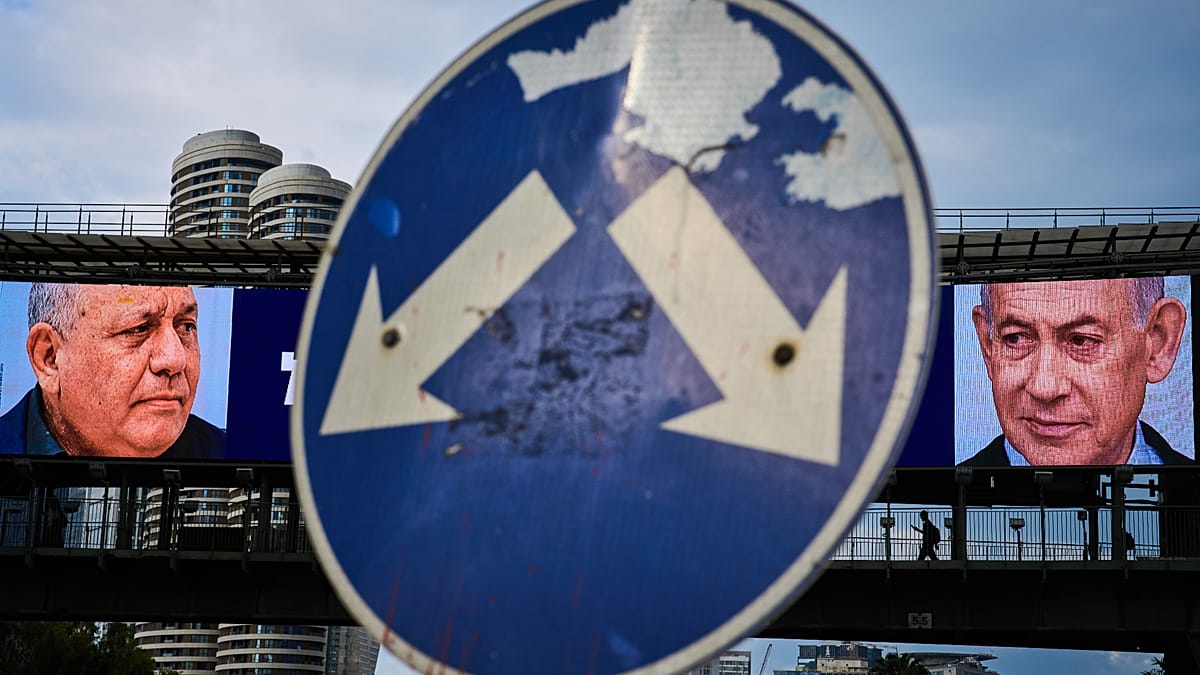
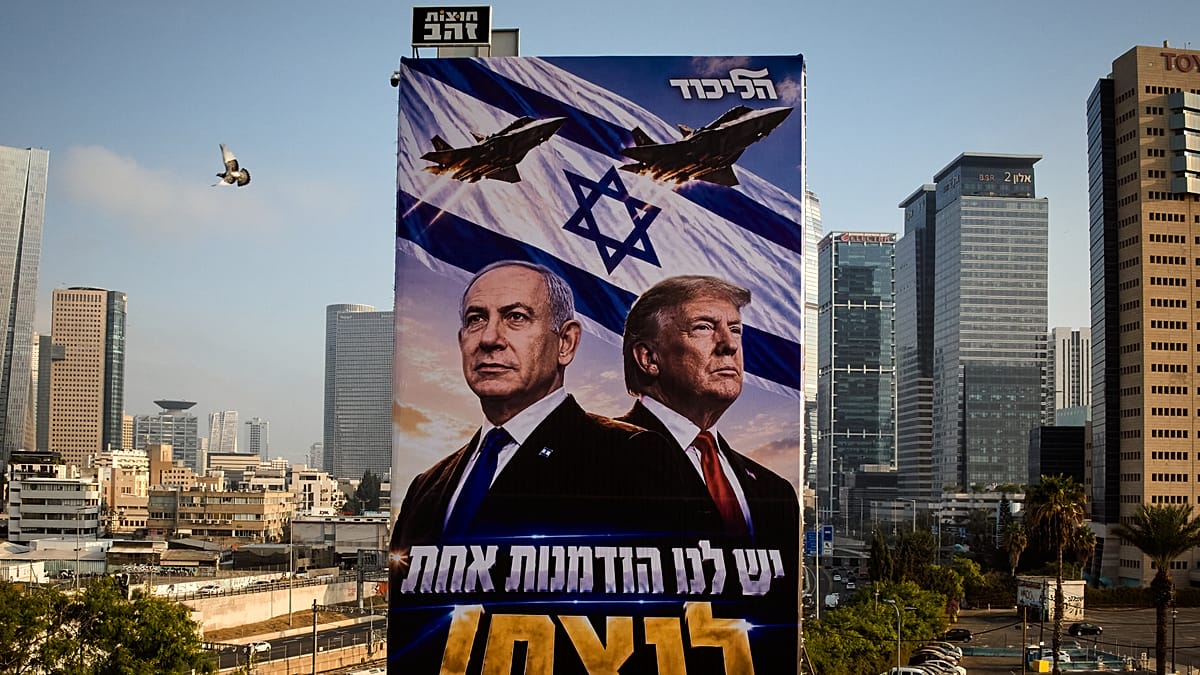
Photo via New York Post

Israelis in war-ravaged border communities rebuke Netanyahu as country heads to polls: ‘We need ‘hope’

Read the original at New York Post ↗
Cite

Fenton, R. (2026, October 26). Israelis in war-ravaged border communities rebuke Netanyahu as country heads to polls: ‘We need ‘hope’. New York Post. https://nypost.com/2026/10/26/world-news/israelis-in-war-ravaged-border-communities-rebuke-netanyahu-as-country-heads-to-polls/

Dated from the outlet's own feed. Check the original for its byline.

New York Post · collected 2026-10-26 · by Reuven Fenton

Quick Summary

In Israel’s upcoming election, residents of border communities damaged by recent conflicts are questioning Prime Minister Benjamin Netanyahu's leadership. Asaf Lengleben, head of the Upper Galilee Regional Council, expresses frustration over the lack of economic recovery and government investment in these areas since the start of three years of conflict. Meanwhile, Daniella Porat-Penso acknowledges improved security but seeks new political leadership to boost confidence and regional development.
Written by AI on 2026-10-26, from this article's own text only (the story summary below draws on all the coverage).
See how they differ ↓

AI analysis

Story summary

Israelis voted on October 27, 2026, in a closely contested election to elect the Knesset. The election was marked by a strong anti-Netanyahu sentiment, with thousands rallying in Tel Aviv against Prime Minister Benjamin Netanyahu. Gadi Eisenkot, a centrist challenger, emerged as Netanyahu's main rival, leading a coalition that could potentially form a government with the support of Arab-Israeli parties. Despite Netanyahu's Likud bloc winning the most seats, they fell short of a majority, securing only 53 out of 120 seats. This political deadlock leaves Netanyahu's future uncertain, as forming a stable government remains a challenge.

Written for “Israeli Election Deadlock” on 2026-11-21, grounded in this article and the 257 other(s) covering the same event.

How they differ

32 outlets covered “Israeli Election Deadlock”.

What each outlet says

One AI summary per outlet of its latest article on this story, written from that article alone and checked against it. Open the article for the outlet's own words.

New York PostThis outlet26 Oct

In Israel’s upcoming election, residents of border communities damaged by recent conflicts are questioning Prime Minister Benjamin Netanyahu's leadership. Asaf Lengleben, head of the Upper Galilee Regional Council, expresses frustration over the lack of economic recovery and government investment in these areas since the start of three years of conflict. Meanwhile, Daniella Porat-Penso acknowledges improved security…

Israelis in war-ravaged border communities rebuke Netanyahu as country heads to polls: ‘We need ‘hope’ (this article)10 articles from New York Post on this story
Al Jazeera3 Nov

Israeli Prime Minister Benjamin Netanyahu's Likud-led bloc emerged as the winner in the recent general election, securing the most seats. However, forming a governing coalition remains challenging due to the need for broad support across various political factions, including former rivals and far-right parties, each of which demands concessions from Netanyahu.

Netanyahu’s eight-seat problem →35 articles from Al Jazeera on this story
The Hindu2 Nov

The Israeli Knesset elections concluded with an inconclusive outcome that reflects the country's deepening division along nationalist lines and ethnic splits. With only 11 out of 38 parties likely to secure seats in a 120-member legislature, the centrist bloc, the ruling extreme right coalition, and the Israeli-Arab bloc received approximately 48%, 53%, and 19% of the seats respectively. Voter turnout surged to…

An anti-climactic outcome in the Knesset elections →20 articles from The Hindu on this story
The Straits Times30 Oct

The final vote count from Israel’s election on October 30 confirmed that neither Prime Minister Benjamin Netanyahu's hard-right coalition nor the opposition bloc led by Gadi Eisenkot secured an outright majority, with Netanyahu’s alliance winning 53 seats and the opposition securing 48. Two Arab parties gained a record-high 19 seats, adding to the political uncertainty. President Isaac Herzog will decide who has the…

Final vote results in Israel set up weeks of uncertainty about who will govern →18 articles from The Straits Times on this story
The Independent29 Oct

US President Donald Trump said he would "take a look" at helping Israeli Prime Minister Benjamin Netanyahu after Netanyahu claimed that the recent Israeli election was stolen due to alleged voter fraud by Arab citizens. With about 94% of votes counted, Netanyahu’s right-wing bloc had won 53 seats in Israel's parliament but fell short of a clear majority needed to form a government without support from Arab parties…

Trump says he will look at helping Netanyahu after Israeli prime minister claims election ‘stolen’ →15 articles from The Independent on this story
BBC29 Oct

Israeli opposition leaders Gadi Eisenkot and Arab party representatives have criticized Prime Minister Benjamin Netanyahu for accusing foreign entities of interfering in recent elections that his coalition lost its majority. Netanyahu's Likud Party alleged that Israel’s Arab-led parties received illegal funding from Qatar and Turkey, a claim denied by Qatar's foreign ministry as "ridiculous." Final election results…

Israeli opposition accuses Netanyahu of trying to 'delegitimise' election →12 articles from BBC on this story
Show 26 more outlets
Washington Examiner6 Nov

Benjamin Netanyahu's political resilience was on full display in recent Israeli elections despite facing significant challenges. After a devastating terrorist attack on October 7, 2023, which his government failed to prevent and which initially suggested his downfall, Netanyahu surprisingly maintained strong support. Polls had previously indicated that the opposition would defeat him and his Likud party, but the…

The Israeli elections prove Netanyahu’s political prowess →11 articles from Washington Examiner on this story
CBS News30 Oct

Prime Minister Benjamin Netanyahu and his Likud party have accused Arab-majority parties of stealing Israel's recent election through foreign funding, which they claim amounted to vote-buying. The final results show that Netanyahu’s bloc lost its majority in parliament, dropping from 68 seats to 53, while the main opposition won 48 seats. This leaves a potential coalition short on votes and reliant on support from…

Netanyahu's party claims Israel's election was stolen. Now what? →10 articles from CBS News on this story
Dawn30 Oct

Benjamin Netanyahu’s coalition in Israel finished with 53 seats, just short of a majority needed to form a government, following the country's recent general election. The opposition bloc secured 48 seats, while Arab party groupings Raam and the Joint List won a combined 19 seats, positioning them as crucial for forming any potential coalition. Controversy over alleged foreign funding by Qatar to influence votes…

Netanyahu's bloc finishes ahead in Israel election, but well short of majority →10 articles from Dawn on this story
ABC News (AU)31 Oct

In Israel's recent election, Arab parties secured a record 19 seats in the 120-seat Knesset, up from their previous total of 10 seats. This surge was driven by high voter turnout among Arab Israelis and Bedouin communities, who aimed to challenge Benjamin Netanyahu’s government and demand equal citizenship rights. With neither major coalition achieving a majority, these parties now hold significant power in…

Israel's Arab parties emerge from deadlocked election as kingmakers →8 articles from ABC News (AU) on this story
Euronews30 Oct

Israeli legislative election results show Prime Minister Benjamin Netanyahu’s bloc with 53 seats and the opposition led by Gadi Eisenkot securing 48 seats in the 120-seat Knesset. Likud remains the largest single party with 27 seats, while Arab parties collectively gained a record 19 seats. Netanyahu has accused Arab parties of election fraud and alleged foreign funding influence from Qatar, calling for an…

Netanyahu bloc emerges ahead in Israeli election but fails to secure majority →8 articles from Euronews on this story
National Post30 Oct

Jesse Kline discusses how Israel's recent high-stakes election has resulted in an unclear winner, with Prime Minister Benjamin Netanyahu’s Likud party leading but falling short of forming a majority government on its own. With neither side close to the required 61 seats and Arab parties holding key votes, this outcome is deemed unfavorable as it may prolong political instability at a critical time for Israel's…

Jesse Kline: Election could not have turned out worse for Israel →8 articles from National Post on this story
Times of India30 Oct

Yair Lapid, Israel’s opposition leader, has claimed a moral victory despite his bloc falling short of an outright majority in recent elections. With 67 seats out of 120, Lapid argues that while not decisive, this outcome presents a significant challenge to Prime Minister Benjamin Netanyahu's ability to form a government. Despite the difficulty in coalition-building due to ideological divides within the…

'A win is a win': Israel opposition leader Lapid reacts to Netanyahu's poll setback →7 articles from Times of India on this story
Fox News30 Oct

Israel’s final election results show Benjamin Netanyahu's bloc has lost its parliamentary majority, securing only 53 seats in the 120-member Knesset compared to 48 for opposition leader Gadi Eisenkot. The election saw a record 77.9% voter turnout and placed Arab parties with 19 seats in a potentially decisive position. Netanyahu's Likud party holds 27 seats, but neither side has the required 61 seats for a majority…

Netanyahu's bloc falls short as longtime allies reportedly weigh move that could end his rule →6 articles from Fox News on this story
NPR30 Oct

Israel's recent election resulted in a political deadlock, with neither Prime Minister Benjamin Netanyahu nor his main challenger Gadi Eisenkot able to secure enough parliamentary support to form a government. The Knesset lacks a clear majority for either side, as Eisenkot’s bloc cannot achieve one without Arab party support, which he has ruled out due to their stances on issues like Hamas and the Gaza conflict…

Israel is in a political deadlock. What comes next? →6 articles from NPR on this story
Daily Mail30 Oct

Benjamin Netanyahu’s party, Likud, intensified claims that Arab-led parties had "stolen" the election in Israel, alleging foreign interference and warning of “Islamisation.” The election results show Netanyahu's bloc with 53 seats out of 120 in parliament, below the majority needed to form a government. The opposition has accused Netanyahu of attempting to delegitimise the election by demonizing Arab voters after…

Netanyahu's party ramps up claims Arab parties 'stole' the election and warns of 'Israel's Islamisation' after failing to win majority →6 articles from Daily Mail on this story
The Guardian29 Oct

Benjamin Netanyahu has faced accusations of employing smear tactics to retain power after losing his parliamentary majority in Tuesday’s elections. He alleged that foreign-backed Arab Israeli parties manipulated the vote and demanded investigations into supposed irregularities in Palestinian communities. This claim was criticized by opposition leader Gadi Eisenkot, who called it an attempt to delegitimize election…

Israeli leader Netanyahu accused of using ‘ugly’ smear tactics to cling to power →6 articles from The Guardian on this story
Toronto Star30 Oct

Palestinian citizens of Israel participated in record numbers during recent elections, marking a significant political shift as two Arab-led parties secured the largest number of seats ever—19 out of 120. This surge is seen as a response to years of marginalization and rising anti-Arab sentiment under Netanyahu’s right-wing government. Voter turnout increased by over 60% compared to previous elections, with many…

For Palestinian citizens of Israel, a historic vote born of fear and frustration →5 articles from Toronto Star on this story
CBC29 Oct

Israelis are waiting for final election results that could confirm Benjamin Netanyahu’s bloc holding a slight edge over opposition parties, with about 53 seats compared to 48 for the opposition and 19 for Arab-led groups. The counting of roughly half a million absentee ballots is expected to conclude on Thursday evening, potentially affecting coalition negotiations but unlikely to change the overall outcome…

Israelis await final election results as Netanyahu's bloc holds slight edge →5 articles from CBC on this story
Sydney Morning Herald30 Oct

After the Israeli election, Arab parties have gained significant strength with 19 seats, up from 10 in the previous election, due to a dramatic increase in voter turnout among Arab-Israelis to about 80%. This surge was driven by concerns over security issues under Itamar Ben-Gvir's leadership. The opposition bloc, led by Gadi Eisenkot and including these Arab parties with 67 seats total, surpasses Netanyahu’s…

They’re potential kingmakers, but may be excluded from Israel’s government. Here’s why →5 articles from Sydney Morning Herald on this story
South China Morning Post29 Oct

Benjamin Netanyahu’s party has accused Arab-led parties of stealing the Israeli election, suggesting foreign involvement, despite official results showing his bloc with 53 seats while the main opposition holds 48 and Arab-led parties have 19 seats. The opposition claims Netanyahu is trying to delegitimize the election by targeting Arab voters after their strong performance. A potential coalition between the…

Netanyahu’s party claims election ‘stolen’ as results show him losing majority →5 articles from South China Morning Post on this story
NBC News30 Oct

Israel's final election results show Benjamin Netanyahu’s right-wing bloc securing 53 seats and Gadi Eisenkot’s rival bloc winning 48 seats in Israel’s 120-member parliament, falling short of the 61 seats needed to form a government. President Isaac Herzog will next week decide which candidate has the best chance to lead government formation efforts. Notably, parties representing Arab Israelis won a combined 19…

Israel’s final election results show neither Netanyahu nor rival can immediately form government →5 articles from NBC News on this story
Semafor28 Oct

Benjamin Netanyahu's coalition currently leads in Israel's closely contested election but falls short of the majority needed to form a government. Arab parties achieved a record number of seats, potentially positioning them as key players in determining the next prime minister. Critics see this outcome as reflecting voter dissatisfaction with Netanyahu’s leadership, yet both main political blocs are hesitant to…

Netanyahu's coalition draws ahead in Israel's tight election race →5 articles from Semafor on this story
Reason30 Oct

The Israeli Central Elections Committee announced final results showing Benjamin Netanyahu's right-wing bloc securing 53 seats in the Knesset, just short of a majority needed to form a government without coalition negotiations. Despite these political uncertainties, the article asserts that regardless of who leads Israel next, American military aid and funding will continue to support Israel’s defense initiatives…

With or Without Netanyahu, Israel Will Want American Taxpayers To Keep Funding Its Wars →3 articles from Reason on this story
The Dispatch29 Oct

Voters in Israel participated in a nationwide election on Tuesday, with many casting ballots in Tel Aviv’s Hatikva Quarter. A campaign booth nearby played an anthem praising incumbent Prime Minister Benjamin Netanyahu, highlighting his leadership and popularity. The election also featured other prominent figures such as former IDF chief of staff Gadi Eisenkot, as evidenced by electronic billboards displayed around…

Who Will Lead Israel Now? →2 articles from The Dispatch on this story
The Free Press29 Oct

The article discusses the results of Israel's recent parliamentary election where Benjamin Netanyahu’s coalition secured 53 seats in the 120-seat Knesset, while the opposition led by Gadi Eisenkot received 48 seats and two Arab parties gained a combined total of 19. With no single bloc achieving the required 61 seats to form a majority government, Netanyahu may attempt to form a minority government or negotiate with…

Where Does Benjamin Netanyahu Go from Here? →2 articles from The Free Press on this story
The Bulwark30 Oct

Israel’s recent elections were expected to resolve key political issues but instead have left the country in a state of uncertainty and frustration. Despite a majority of voters seeking change, Prime Minister Benjamin Netanyahu's coalition, currently holding around 68 seats, is set to decline to about 53 seats. The opposition, led by former IDF Chief Gadi Eisenkot, has gained significant support but still falls…

Israel’s Democracy—And Its Relationship with America—Remain in Limbo →2 articles from The Bulwark on this story
Global News26 Oct

Prime Minister Benjamin Netanyahu faces a critical election as Israelis vote on Tuesday, nearly six months after Hamas attacked Israel on October 7, 2023. The attack resulted in over 1,200 Israeli deaths and 251 hostages, leading to significant military retaliation that has killed more than 74,000 Palestinians according to local health authorities. Netanyahu’s legacy hangs in the balance as his opponents see this…

Netanyahu’s legacy on the line as Israelis head to elections this week →
Deutsche Welle27 Oct

Israel is holding its first general election since the October 7, 2023 Hamas attack, which plunged the country into one of its most severe security crises. Incumbent Prime Minister Benjamin Netanyahu seeks re-election against Gadi Eisenkot, former IDF chief and leader of the Yashar party. US President Donald Trump has endorsed Netanyahu as a "warrior prime minister," cautioning that any other leadership choice could…

Will elections in Israel change its Iran approach? →
Time27 Oct

On Tuesday, Israeli voters participated in what is likely to be the highest turnout election since 1973, with 66.7% of eligible voters casting ballots by 6 p.m. local time. Prime Minister Benjamin Netanyahu, facing a critical test of his leadership, urged supporters to vote as polls showed a tight race between his pro-Netanyahu coalition and opposition movements led by figures like former IDF chief Gadi Eisenkot…

Record Israeli Election Turnout as Netanyahu Battles to Stay in Power →
Persuasion29 Oct

Israeli election results show a divided nation, with Benjamin Netanyahu's pro-Bibi camp securing 53 Knesset seats and the Jewish anti-Netanyahu bloc obtaining 48, falling short of a majority in parliament. Notably, Arab parties gained significant ground, capturing 19 seats. Voter turnout was high at 78%, reflecting heightened engagement from Arab-Israeli citizens who voted at an unprecedented rate of 80%. The…

Eizenkot’s Choice →
ABC News (US)29 Oct

The final vote count from Israel's parliamentary election shows Benjamin Netanyahu's bloc maintaining its lead with 53 seats, while the opposition bloc has secured 48 seats. No coalition has achieved the required 61-seat majority needed for governance. This situation could potentially require Netanyahu’s or Gadi Eisenkot’s bloc to seek support from Arab Israeli parties, though both leaders have previously rejected…

Israel election results: Netanyahu's bloc maintains lead but does not secure majority →

Compared with similar articles

This article reads unscored and hedges 2% of its claims. Each row says how that neighbour differs.
Toronto Star
Hedges 5 of 52 claims Outlet record 65/100
Euronews
Leans right Hedges 3 of 19 claims Outlet record 60/100
Al Jazeera
Leans strongly left Hedges 3 of 32 claims Outlet record 60/100
“The articles discuss different aspects of the upcoming Israeli election from the perspectives of Lebanese residents and Israelis in war-ravaged border communities, but they do not describe the same specific incident or occurrence.”
Al Jazeera
Leans strongly left Hedges 3 of 34 claims Outlet record 60/100
“The articles discuss different aspects of Israel's political situation without clearly covering the exact same election day incident.”
Toronto Star
Leans left Hedges 6 of 45 claims Outlet record 65/100
“While both articles discuss Israeli elections on the same day in 2026 and mention Benjamin Netanyahu's leadership, they focus on different aspects of the election context. Article A focuses on the overall issues of the campaign, while Article B highlights specific voter sentiments in war-affected border communities.”
Al Jazeera
Centre Hedges 0 of 2 claims Outlet record 60/100
“The articles discuss different aspects of Israeli politics and society around election time but do not describe the same specific incident or occurrence.”
Euronews
Leans left Hedges 1 of 47 claims Outlet record 60/100
“The articles discuss different aspects of the election context without describing the same specific incident.”
CBC News
Leans left Hedges 1 of 6 claims Outlet record 72/100
“The articles discuss different perspectives of Israeli voters regarding Benjamin Netanyahu ahead of an election on October 26th but do not describe the same specific incident.”
The Free Press
Leans right Hedges 0 of 13 claims Outlet record 96/100
“The articles discuss different aspects of the upcoming election and do not focus on the same specific incident.”
The Free Press
Hedges 0 of 6 claims Outlet record 96/100
“Article A reports on reactions from border communities ahead of a specific election day, while Article B discusses broader historical and ideological aspects of the election with an analyst.”

Story

Israeli Election Deadlock
Politics · 258 article(s) covering the same event. See how they differ ↑
How this article was measured signals, leaning charts, publisher record, byline, topics and claims

Signals How these are calculated →

Claims extracted
56
sentences that state something as happening or true
Uncertain
2%
1 of 56 hedged ("reportedly", "may", "according to")
Leaning
withheld
no quote in the article backed the model's score
Publisher signals
66/100
New York Post's corrections and hedging, across everything collected from it. Not a measure of accuracy.
Outlets on this story
258
Politics
Same framing elsewhere
1
articles that frame the event the way this one does
Analyzed 2026-10-26 · how these are computed

How this is being covered How these are calculated →

Article leaning vs. publisher reliability
Source leaning vs. consistency

Publisher

New York Post · 21831 article(s) · 42 correction(s) detected
Running correction rate · 42 correction(s)

Who wrote this

Reuven Fenton
19 article(s) here · 1 carrying a prediction
Scholt insisted her daughter had never been in the country illegally and was blindsided by her latest arrest, claiming she never received notice of an immigration court hearing in May — at which a judge ordered her deported.
The studious teen’s family said his father brought the boy to the Big Apple from Ghana last year so he could live the American dream, and he hoped to become a doctor after serving in the military.
Still, Porat-Penso, who is weighing a vote for either Eisenkot’s centrist Yashar party or Yair Golan’s left-wing Democrats, believes new political leadership could give the region a much-needed lift.
“For the first time… those victims will have a direct line to the attorney general,” Komatireddy said — as she unveiled her plan to establish a “Victims Advisory Council” within the AG’s Office if she unseats James on November 3.
The note — dated Oct. 5 and addressed to Harrison — warned that her gas service could be disconnected on or after 8:00 a.m. on Oct. 8 over the unpaid balance of $29.05.
There was nothing we could do about that,” Thetga said.
“She had called and we’re video chatting, and then she says she loved us very much, just like she normally would,” Thetga recalled.
The children’s book author called the last 72 hours “totally surreal” after receiving an onslaught of hate from Clarkson’s fanbase. “It’s been so intense — thousands of hateful phone calls, thousands of hateful text messages, Kelly Clarkson fans demanding we issue her an apology, and it’s just such a perverse distortion of reality, that anyone could look at the situation and think that we are the ones who owe an apology,” he said.
The drama broke out over the weekend when Clarkson, 44, claimed an “idiot” employee belittled her and suggested she wouldn’t be able to afford a one-of-a-kind mechanical bird that was on display.
“The first thought that comes to mind is, even if I disagree with someone, I would never want someone that acts like this to run for congress,” he said.
Also by Reuven Fenton
Nothing else under this byline is closely related to this article, so these are simply their most recent.
All 19 articles by Reuven Fenton →

Topics

Gaza Hezbollah Israel Jewish METULA

Subjects

Netanyahu PERSON · 9× Lengleben PERSON · 4× Bader PERSON · 2× Gaza GPE · 2× Hezbollah ORG · 2× IDF ORG · 2× Israel GPE · 2× Jewish NORP · 2× Yashar ORG · 2× METULA GPE · 1×

Narrative

Recent polling has pointed to a fragmented electorate, with neither Netanyahu’s allies nor the opposition assured of enough seats to form a government without difficult negotiations. Former national security adviser Tzachi Hanegbi, a longtime Netanyahu ally, said the election campaign has been unusually subdued, a striking contrast to the fiery political battles of years past. “So far it looks, I would say … it’s a sleepy election,” he said during a meeting organized by the Foreign Press Club of Israel.
framing: assertive · carried by 1 article(s) · first seen 2026-10-26
Still, Porat-Penso, who is weighing a vote for either Eisenkot’s centrist Yashar party or Yair Golan’s left-wing Democrats, believes new political leadership could give the region a much-needed lift.

Claims (56 extracted, 1 hedged)

Israelis head to the polls Tuesday facing a question that goes beyond whether Benjamin Netanyahu should remain prime minister: who can rebuild a country battered by three years of war, restore confidence in its leadership and heal the deep divisions tearing Israeli society apart? asserted
who → head → society
From the struggling communities along the Lebanese border to the still-traumatized kibbutzim near Gaza, voters are weighing competing visions of Israel’s future — with some demanding greater government investment and accountability for Oct. 7, while others credit Netanyahu with delivering the military victories that have made the Jewish state safer. asserted
state → struggle → victories
“Three years of fear has changed the people and we need to give them a lot of hope,” said Asaf Lengleben, head of the Upper Galilee Regional Council, who plans to vote for the centrist Yashar party led by former IDF chief Gadi Eisenkot, the main opposition challenger to Netanyahu’s right-wing Likud party. asserted
who → change → party
“People didn’t want to come back. asserted
People → want → ?
They’re still afraid of Hezbollah,” Lengleben said. asserted
Lengleben → ’re → Hezbollah
“They feel alone and they decided to leave. asserted
they → feel → ?
Some decided to leave temporarily. asserted
Some → decide → ?
Others decided to leave for a long time.” asserted
Others → decide → time
Lengleben said fewer than 1,000 families with children have returned to communities in his region since the war began. asserted
war → say → region
The exodus has taken a heavy economic toll, with tourism collapsing and businesses struggling to attract customers and workers. asserted
businesses → take → customers
“If you want to strengthen our region, you have to build us a train, you need to build infrastructure,” Lengleben said. asserted
Lengleben → want → infrastructure
“It’s about money. asserted
It → ’ → money
The ability of the government to assist us is about money.” asserted
ability → assist → money
The Netanyahu government has approved reconstruction measures, including funding to transform Tel-Hai Academic College into the University of Kiryat Shmona, but Lengleben argues that more sustained investment is needed. asserted
investment → approve → Shmona
Daniella Porat-Penso, 59, of Kibbutz Yiftah, credits the military with dramatically improving security along the northern border, where she recalled seeing Hezbollah flags near the fence before Oct. 7. asserted
she → credit → Oct.
“We had to use a significant amount of strength, of army, of funds, of manpower to push them back, and we’re not threatened now,” she said. asserted
she → have → them
“I feel safe.” asserted
I → feel → ?
Still, Porat-Penso, who is weighing a vote for either Eisenkot’s centrist Yashar party or Yair Golan’s left-wing Democrats, believes new political leadership could give the region a much-needed lift. uncertain
leadership → weigh → lift
“I think the north will benefit from a change in government,” she said. asserted
she → think → government
“It’s a lot about confidence, what you feel when you go to your house or ride around the area. asserted
you → ’ → area
” Eylon Bader, 37, who spent roughly a year fighting in Gaza and moved from Tel Aviv to the northern kibbutz of Neot Mordechai about 18 months ago, considers Netanyahu one of the most consequential Jewish leaders of modern times — comparing his historical importance to that of the biblical kings David and Solomon. asserted
Netanyahu → spend → kings
But Bader plans to support former Defense Minister Avigdor Lieberman, saying Netanyahu has become a central figure in the political divisions gripping the country. asserted
Netanyahu → plan → country
“It’s not about right or left. asserted
It → ’ → ?
It’s not about a Palestinian state or not,” he said. asserted
he → ’ → state
“It’s about yes Netanyahu or no Netanyahu.” asserted
It → ’ → Netanyahu
Bader’s biggest concern is the exemption from military service enjoyed by many ultra-Orthodox Jewish men, a contentious issue as reservists have endured repeated deployments. asserted
reservists → enjoy → deployments
“It’s not Judaism. asserted
It → ’ → ?
It’s terrible for society,” he said. asserted
he → ’ → society
Retired IDF Col. Kobi Marom delivered a blistering assessment of Netanyahu’s leadership, holding the prime minister personally accountable for the failures surrounding Hamas’ Oct. 7 massacre. asserted
minister → deliver → massacre
“I think Netanyahu and his government are totally responsible for what happened on this terrible Oct. 7, the biggest disaster this country ever had,” he said. asserted
he → think → Oct.
“We must check how and why this has happened.” asserted
this → check → ?
Marom also blasted the government’s relationship with Qatar, which he called “an enemy country,” and its continued support for ultra-Orthodox parties resisting military conscription, describing them as central issues confronting voters. asserted
he → blast → voters
He plans to vote for Gadi Eisenkot’s Yashar party, noting that he served alongside the former IDF chief of staff and considers him a close personal friend. asserted
him → plan → staff
Along the Gaza border, the wounds of the war remain intensely personal. asserted
wounds → remain → war
Hila Fenlon, 48, of Netiv HaAsara, whose partner’s cousin Eden Yerushalmi was among six Israeli hostages murdered by Hamas in captivity, sees Netanyahu’s handling of the hostage crisis as a failure extending beyond military judgment. asserted
cousin → murder → judgment
“You can forgive a professional failure. asserted
You → forgive → failure
You cannot forgive a moral failure,” she said. asserted
she → forgive → failure
But others believe Netanyahu’s wartime leadership is precisely why his governing coalition should remain in power. asserted
coalition → believe → power
Shira Felbert, 46, a Jerusalem mother of six who plans to vote for Finance Minister Bezalel Smotrich’s Religious Zionist Party, said she judges politicians by their actions rather than their campaign rhetoric. asserted
she → plan → rhetoric
“Under this government, Israel has become much stronger against its enemies: Hezbollah is far weaker, and Iran knows Israel will act,” she said. asserted
she → become → enemies
…and 16 more, not listed.
Give feedback · no sign-in needed

No sign-in needed for now. Your note is sent without a name, so it cannot be answered.

History Support