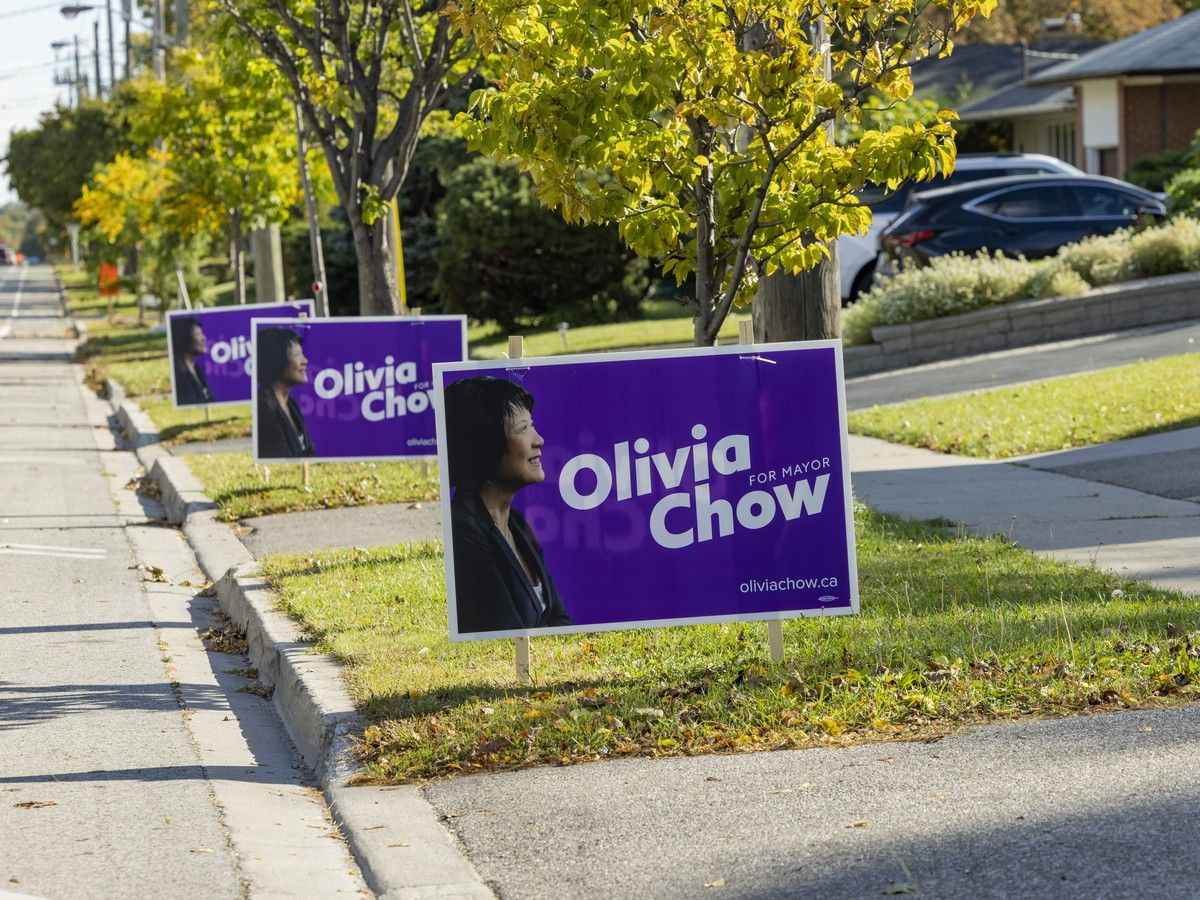
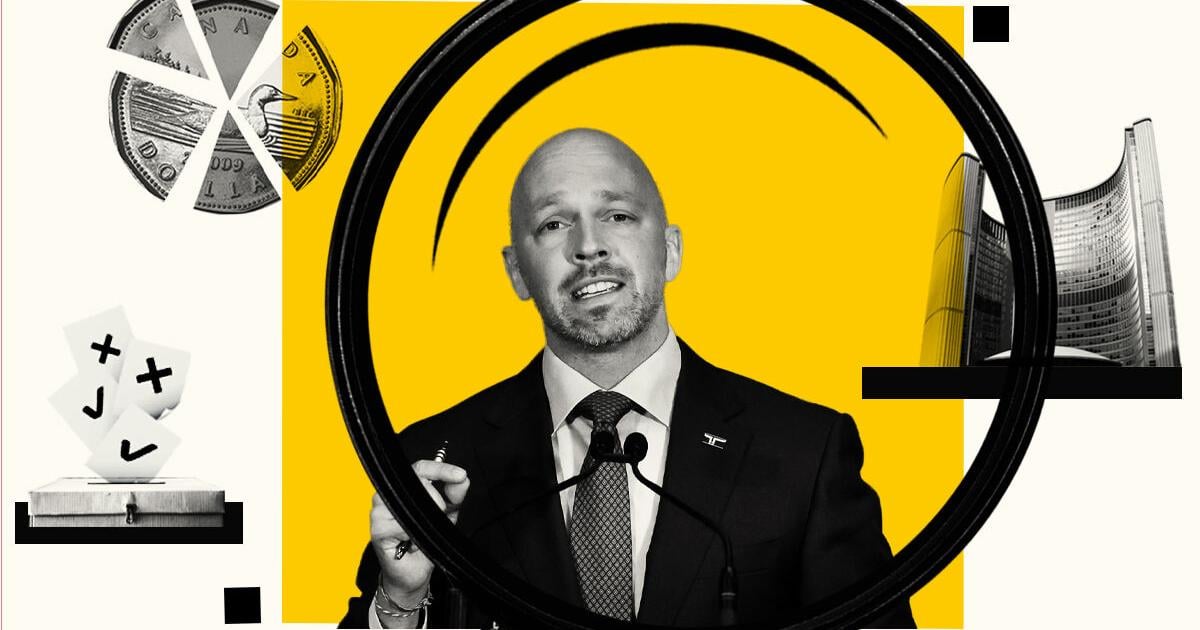
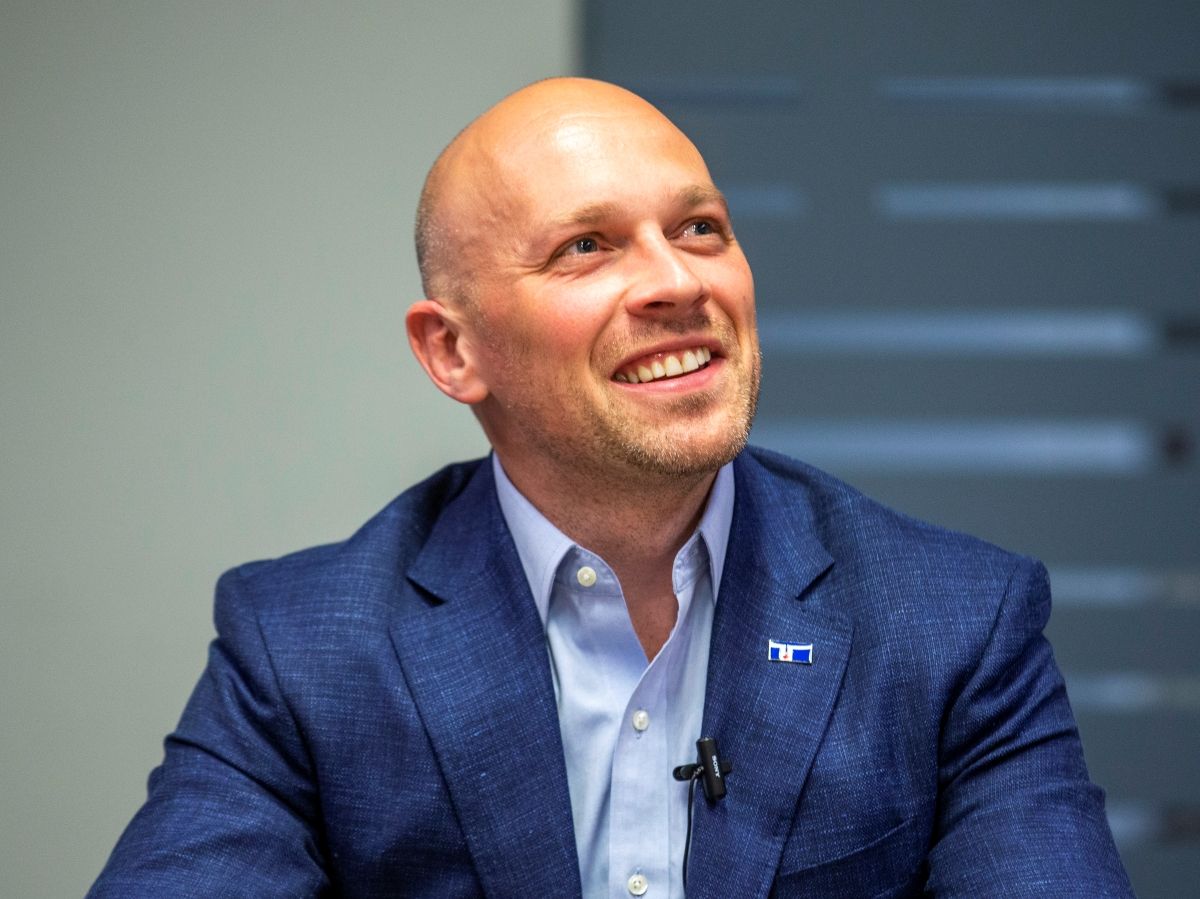
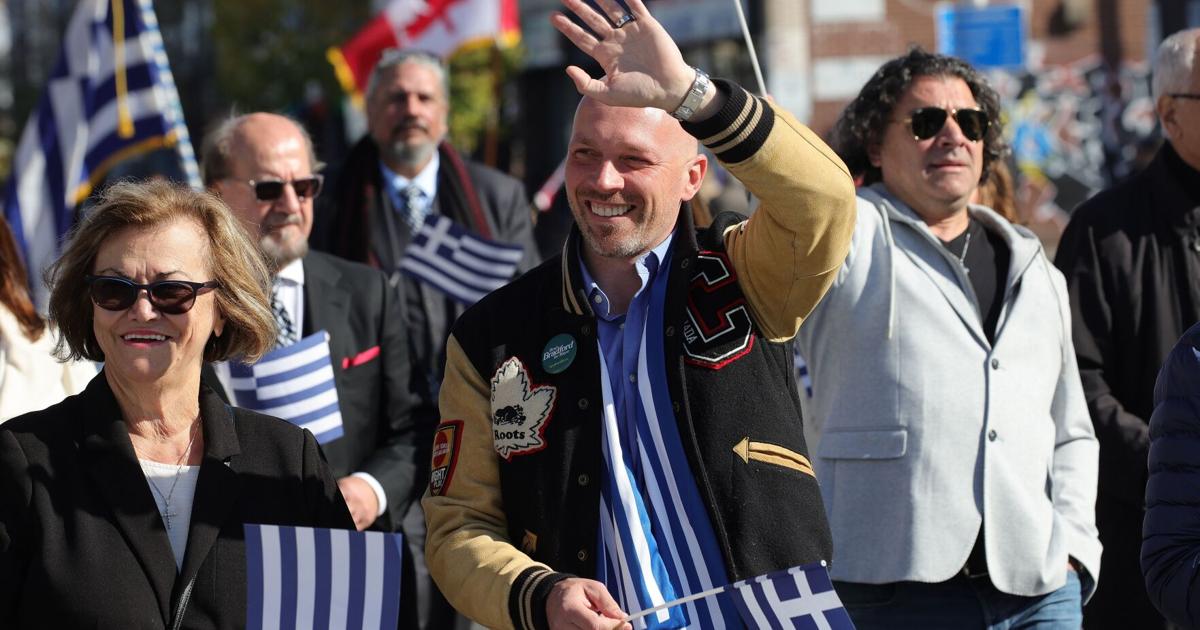
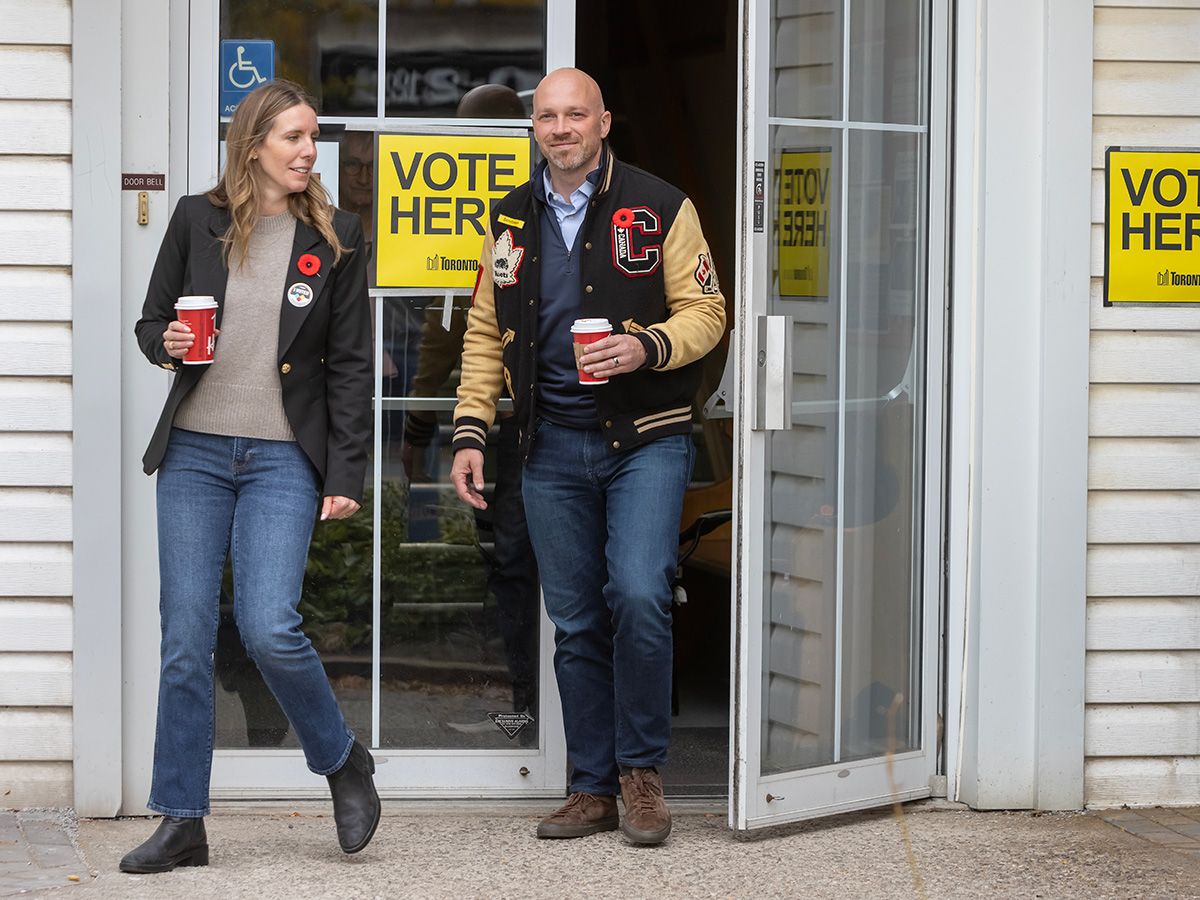
Photo via The Globe and Mail

While Olivia Chow clinched victory in Toronto, Brad Bradford earned a respectable loss

Read the original at The Globe and Mail ↗
Cite

Urback, R. (2026, October 27). While Olivia Chow clinched victory in Toronto, Brad Bradford earned a respectable loss. The Globe and Mail. https://www.theglobeandmail.com/opinion/article-olivia-chow-major-victory-brad-bradford-respectable-loss-election/

Dated from the outlet's own feed. Check the original for its byline.

The Globe and Mail · collected 2026-10-27 · by Robyn Urback

Quick Summary

Olivia Chow won re-election as mayor of Toronto on Monday night, defeating city councillor Brad Bradford by a margin of 13 percentage points. While previous incumbent mayors have typically secured much larger victories, Chow's win still solidified her position. Throughout the campaign, despite early polls showing a strong lead, Chow faced growing challenges from Bradford’s platform addressing issues like traffic congestion and cost of living. As support for Bradford increased, Chow's campaign turned to negative campaigning, criticizing his proposals as privatization attempts and associating him with controversial endorsers.
Written by AI on 2026-10-29, from this article's own text only (the story summary below draws on all the coverage).
See how they differ ↓

AI analysis

Story summary

Olivia Chow was elected as Toronto's mayor for a second term on October 27, 2026, defeating her conservative challenger Brad Bradford by almost 130,000 votes. The race had been closely watched and predicted to be very tight due to issues like affordability and fiscal management in the wake of COVID-19's impact. Chow campaigned on promises such as more rental housing, free school lunches, and reduced transit fares for frequent riders. Her victory was attributed not only to progressive support but also a strong ground game and moderate stance that broadened her appeal. Meanwhile, former NDP leader Andrea Horwath lost in Hamilton's mayoral race, part of several upsets across the Greater Toronto and Hamilton Area (GTHA).

Written for “Olivia Chow Elected Toronto Mayor” on 2026-11-21, grounded in this article and the 22 other(s) covering the same event.

How they differ

6 outlets covered “Olivia Chow Elected Toronto Mayor”.

What each outlet says

One AI summary per outlet of its latest article on this story, written from that article alone and checked against it. Open the article for the outlet's own words.

The Globe and MailThis outlet27 Oct

Olivia Chow won re-election as mayor of Toronto on Monday night, defeating city councillor Brad Bradford by a margin of 13 percentage points. While previous incumbent mayors have typically secured much larger victories, Chow's win still solidified her position. Throughout the campaign, despite early polls showing a strong lead, Chow faced growing challenges from Bradford’s platform addressing issues like traffic…

While Olivia Chow clinched victory in Toronto, Brad Bradford earned a respectable loss (this article)9 articles from The Globe and Mail on this story
CBC27 Oct

Olivia Chow has won re-election as mayor of Toronto, defeating Brad Bradford in a close race where she received approximately 530,000 votes compared to Bradford’s roughly 404,000 votes. The article focuses on how Chow effectively countered Bradford’s main campaign promise of creating a public utility company for the city's water and wastewater systems, which Chow argued could lead to privatization. Additionally, the…

Olivia Chow races to victory as head of progressive new Toronto council →6 articles from CBC on this story
National Post27 Oct

Keanin Loomis won the Hamilton mayoral election on Monday night with nearly 42% of the vote, defeating incumbent councillor Andy Spectar Cooper and former Ontario NDP leader Andrea Horwath. Born in Oswego, New York, Loomis moved to Canada at age 12, later returning to Hamilton after a career in Washington D.C., where he worked as a lawyer before becoming involved in economic development initiatives in Hamilton. His…

Who is Keanin Loomis, Hamilton’s new American-born mayor? →4 articles from National Post on this story
Toronto Star31 Oct

Poll-by-poll voting results from Toronto's mayoral election reveal that Olivia Chow won with 54.2% of the vote, securing victories in 19 out of 25 wards. She performed particularly well in Toronto Centre and Scarborough, areas where many residents rely on public transit or walk to work. In contrast, Brad Bradford, who focused his campaign on Etobicoke and North York, won only six wards but saw stronger support in…

What neighbourhood voting results tell us about Olivia Chow's big mayoral win →2 articles from Toronto Star on this story
Global News27 Oct

Several incumbent mayors in the Greater Toronto and Hamilton Area (GTHA) lost their bids for re-election during recent voting. Andrea Horwath, who became mayor of Hamilton in 2022 after losing her provincial leadership role, placed third at 14% with Keanin Loomis winning at 41%. Canada’s longest-serving mayor Gord Krantz from Milton also lost to Coun. George Minakakis. In Mississauga, rookie councillor Alvin Tedjo…

Horwath among incumbents ousted across Greater Toronto and Hamilton Area →
The Guardian27 Oct

Olivia Chow won re-election as Toronto's mayor for a second term, securing 54% of the vote compared to her rival Brad Bradford's 41%. The election saw record turnout, with Chow’s victory reflecting voter support for progressive policies like affordable housing and reduced transit fares. Her decisive win contrasts with pre-election polls predicting a closer race, signaling that residents prioritize addressing the…

Olivia Chow elected as Toronto mayor for second term in victory for progressives →

Where they agree and split

Framing

How the first headlines put it

Stated as fact2
The headlines (2)

Olivia Chow, Brad Bradford battle to the wire in Toronto’s mayoral election The Globe and Mail · stated as fact

Toronto’s mayoral campaign is ending in a tight race. Here's how it got so close CBC · stated as fact

Words to watch (1)

Big wins, shocking losses, and goodbye to a 46-year mayor: what to know about Ontario's 400+ elections CBC

The full story: what happened, how it changed, and all 23 articles →

Compared with similar articles

This article reads leans left and hedges 7% of its claims. Each row says how that neighbour differs.
The Globe and Mail
Leans left Hedges 4 of 37 claims Outlet record 51/100
CBC News
Hedges 5 of 29 claims Outlet record 72/100
The Guardian
Leans left Hedges 1 of 27 claims Outlet record 64/100
National Post
Hedges 2 of 36 claims Outlet record 60/100
“The articles describe different stages of the election process, not the same specific incident.”
Toronto Star
Leans left Hedges 5 of 35 claims Outlet record 64/100
“Article A discusses broader issues related to municipal elections and voter responsibility, while Article B reports on the outcome of a specific mayoral election where Olivia Chow won.”
Toronto Star
Hedges 9 of 90 claims Outlet record 64/100
“The articles describe different phases of Brad Bradford's political career: one discusses his campaign and aspirations, while the other reports on Olivia Chow winning the election against him.”
National Post
Hedges 6 of 42 claims Outlet record 60/100
“Article A discusses a shift in polling trends before an election, while Article B reports on Olivia Chow's actual victory in the mayoral election. These describe different stages of the same election but not the exact same event.”
Toronto Star
Leans left Hedges 6 of 53 claims Outlet record 64/100
“Article A describes the campaigning activities of Olivia Chow and Brad Bradford during the final weekend before an election, while Article B reports on the outcome of the election where Olivia Chow won. These are different specific events.”
The Globe and Mail
Hedges 3 of 33 claims Outlet record 51/100
“Article A describes the ongoing mayoral election and its tight race, while Article B reports the result of the election with Olivia Chow winning. They describe different points in time.”
National Post
Leans left Hedges 0 of 32 claims Outlet record 60/100

Story

Olivia Chow Elected Toronto Mayor
Politics · 23 article(s) covering the same event. Compare every outlet's account →
How this article was measured signals, leaning charts, publisher record, byline, topics and claims

Signals How these are calculated →

Claims extracted
28
sentences that state something as happening or true
Uncertain
7%
2 of 28 hedged ("reportedly", "may", "according to")
Leaning
Leans left
of the writing, not the subject · beta estimate
Publisher signals
51/100
The Globe and Mail's corrections and hedging, across everything collected from it. Not a measure of accuracy.
Outlets on this story
23
Politics
Same framing elsewhere
1
articles that frame the event the way this one does
Analyzed 2026-10-29 · how these are computed

How this is being covered How these are calculated →

Article leaning vs. publisher reliability
Source leaning vs. consistency

Publisher

The Globe and Mail · 1303 article(s) · 50 correction(s) detected
Running correction rate · 50 correction(s)

Who wrote this

Robyn Urback
1 article(s) here · 1 carrying a prediction
Toronto loves its mayoral incumbents.
The only article under this byline in the corpus.

Topics

Scarborough TTC Toronto Toronto Water Torontonians

Subjects

Toronto ORG · 10× Chow PERSON · 9× Bradford GPE · 5× Brad Bradford PERSON · 2× Progress Toronto ORG · 2× David Miller PERSON · 1× Jane Pitfield PERSON · 1× John Tory PERSON · 1× Mel Lastman PERSON · 1× Olivia Chow PERSON · 1×

Narrative

The attacks ranged from bad faith (by law, Toronto’s drinking water cannot be privatized) to ridiculous (one of the “questionable endorsers” Progress Toronto tried to portray as extreme is Conservative MP Scott Aitchison), but they clearly accomplished what they sought to do. On Monday night, Ms. Chow achieved an unequivocal victory, but the result was also a rather respectable loss for runner-up Brad Bradford (with the exception of the walloping he was handed in his own ward).
framing: assertive · carried by 1 article(s) · first seen 2026-10-29
Toronto loves its mayoral incumbents.

Claims (28 extracted, 2 hedged)

Toronto loves its mayoral incumbents. asserted
Toronto → love → incumbents
Since the city was amalgamated in 1998, every mayor who has chosen to stand for re-election has successfully won back the mayor’s chair, and by considerable margins. asserted
who → amalgamate → margins
Mel Lastman won re-election in 2000 with a whopping 80 per cent of the popular vote. asserted
Lastman → win → vote
Incumbent mayor David Miller bested Jane Pitfield in 2006, winning by a margin of 25 percentage points. asserted
Miller → best → points
John Tory did better: he won his two bids for re-election in 2018 and 2022 by roughly 40 and 44 percentage points, respectively. asserted
he → do → points
On Monday night, Olivia Chow carried on the tradition to earn a second term as Toronto mayor. asserted
Chow → carry → mayor
She won handily, sweeping wards in downtown Toronto, all of Scarborough, and even eking out a win in Premier Doug Ford’s riding of Etobicoke North. asserted
She → win → North
But Ms. Chow’s victory was not the colossal blowout win enjoyed by previous incumbent Toronto mayors; her margin of victory over city councillor Brad Bradford was not 25, 40 or 44 points – but just 13. asserted
margin → enjoy → Bradford
It’s a decisive win, of course, but hardly the thumping sweep Toronto has come to expect of its mayoral incumbents. asserted
Toronto → ’ → incumbents
At the outset of the campaign, Ms. Chow appeared to have believed she was headed toward that thumping return enjoyed by her predecessors. asserted
she → appear → predecessors
She was running a classic front-runner campaign: not saying all that much or promising too many ideas, and instead coasting on her name, her reputation, and her record. asserted
She → run → name
Ms. Chow’s campaign benefited by the fact that her two main opponents, Mr. Bradford (who got barely over 1 per cent of the vote in the previous race for mayor) and former Harper cabinet minister Chris Alexander were splitting the centre-right vote. asserted
who → benefit → vote
Ms. Chow wasn’t performing all that well in early debates, but it didn’t seem to matter: she was going to win anyway. asserted
she → perform → debates
That apparent inevitability started to look less certain a few weeks ago, after Mr. Alexander dropped out of the race and Mr. Bradford’s campaign picked up momentum. asserted
campaign → start → momentum
His message about Toronto being “stuck” was resonating – among people tired of sitting in traffic, frustrated with the ever-increasing cost of living, and worried about visible signs of social disorder such as open drug use on the TTC. asserted
Toronto → stick → TTC
Polling showed that more than a third of Torontonians don’t feel safe in their own neighbourhoods after dark, and a majority said that the city is headed in the wrong direction. asserted
city → show → direction
But Ms. Chow wasn’t acknowledging that reality; when asked during one debate whether Toronto was living up to its full potential, she indicated that it was. asserted
it → acknowledge → potential
So when the polls began to narrow, Ms. Chow’s campaign did what campaigns often do when they get cornered: it went negative. asserted
it → begin → what
She attacked Mr. Bradford’s proposal to turn Toronto Water into a publicly owned arms-length corporation (akin to Hydro One) and labelled it an attempt to “privatize” Toronto’s “drinking water.” asserted
She → attack → water
She warned he will “cut services you rely on,” and Progress Toronto, a group supporting her campaign, charged that Mr. Bradford was aligned with “questionable endorsers.” asserted
Bradford → warn → endorsers
The attacks ranged from bad faith (by law, Toronto’s drinking water cannot be privatized) to ridiculous (one of the “questionable endorsers” Progress Toronto tried to portray as extreme is Conservative MP Scott Aitchison), but they clearly accomplished what they sought to do. On Monday night, Ms. Chow achieved an unequivocal victory, but the result was also a rather respectable loss for runner-up Brad Bradford (with the exception of the walloping he was handed in his own ward). asserted
he → range → ward
Mr. Bradford went from 1 per cent of the vote in 2023 to 41 per cent in just three years. asserted
Bradford → go → years
He resonated with voters by acknowledging the reality they experience living in Toronto, and clearly spooked the Chow campaign by forcing a negative pivot in the 11th hour. asserted
they → resonate → hour
Ms. Chow came into this election with name recognition, the power of incumbency and her personal legacy as a public figure for the last four decades. asserted
Chow → come → decades
She had the backing of major public sector unions, the loyalty of many incumbent city councillors, and an incredible get-out-the-vote machine fortified by her time as a city councillor and as a member of the federal NDP. asserted
She → have → NDP
Ms. Chow also came into this election without a full term behind her (since she was elected mayor in a by-election after Mr. Tory’s abrupt resignation in 2023), and thus could credibly make the case that she has not had the time to fully implement her plans for the city. uncertain
she → come → city
Ms. Chow still managed to sail her way to victory, but it was on a swell – not a tsunami, as one might have expected. uncertain
one → manage → swell
It’s clearly a win for the incumbent mayor, but a rather honourable defeat for her challenger, too. asserted
It → ’ → challenger
Give feedback · no sign-in needed

No sign-in needed for now. Your note is sent without a name, so it cannot be answered.

History Support