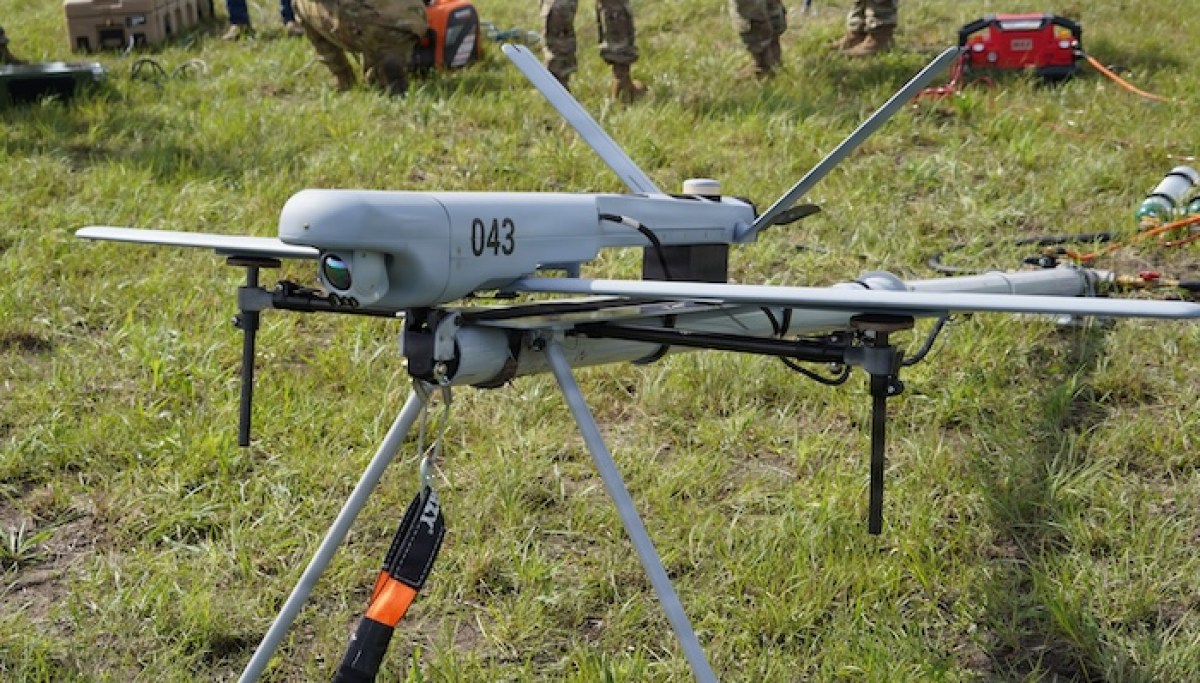
Photo via Washington Examiner

The military’s $1 billion drone plan to take on China — and how they hope they never have to use them

Read the original at Washington Examiner ↗
Cite

Brest, M. (2026, October 27). The military’s $1 billion drone plan to take on China — and how they hope they never have to use them. Washington Examiner. https://www.washingtonexaminer.com/policy/defense/4779740/defense-innovation-unit-drones-future-war-china/

Dated from the outlet's own feed. Check the original for its byline.

Washington Examiner · collected 2026-10-27 · by Mike Brest

Quick Summary

The U.S. military plans to invest $1 billion in developing hundreds of thousands of drones with various capabilities to prepare for a potential conflict with China. This strategy focuses on both long-range and short-range drone technologies, including smaller, cheaper, and more expendable models, aimed at operations in the Pacific region where a future war might take place. The military emphasizes that this buildup is intended as a deterrent, hoping to avoid actual use of these drones in combat.
Written by AI on 2026-10-27, from this article's own text only (the story summary below draws on all the coverage).

AI analysis

Story summary

The U.S. military plans to invest $1 billion in developing hundreds of thousands of drones of various shapes and sizes with different capabilities to prepare for a potential future conflict with China. This initiative emphasizes the need for long-range drones due to the likelihood that any fighting would occur primarily in the Pacific region, far from the continental United States. Despite the focus on advanced long-range technology, smaller, cheaper, and more expendable drones will also play a significant role in such scenarios. The military hopes this extensive drone program will ensure readiness without ever needing to be used in actual combat.
Written for “Military Drone Plan Against China” on 2026-11-21, grounded in this article and the 0 other(s) covering the same event.

Compared with similar articles

This article reads leans right and hedges 0% of its claims. Each row says how that neighbour differs.
South China Morning Post
Hedges 0 of 1 claims Outlet record 62/100
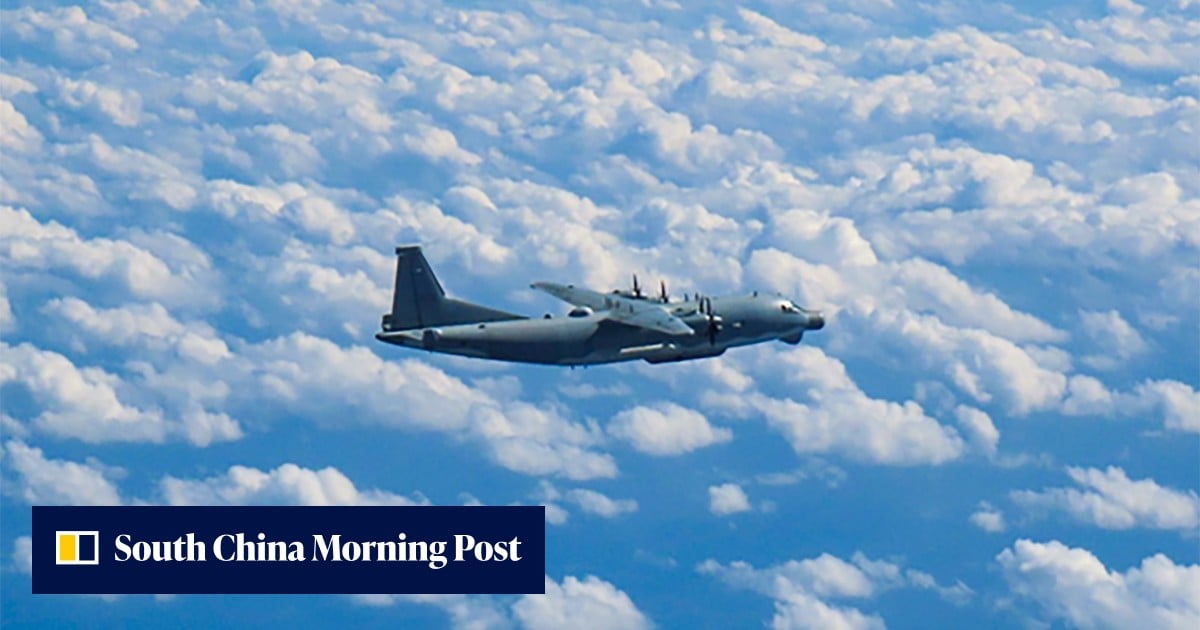
“Article A discusses a hypothetical future scenario for drone usage in a potential war with China, while Article B reports on actual recent increases in military drone flights near Japan and the South China Sea.”

Story

Military Drone Plan Against China
Politics · 1 article(s) covering the same event.
How this article was measured signals, leaning charts, publisher record, byline, topics and claims

Signals How these are calculated →

Claims extracted
2
sentences that state something as happening or true
Uncertain
0%
0 of 2 hedged ("reportedly", "may", "according to")
Leaning
Leans right
of the writing, not the subject · beta estimate
Publisher signals
67/100
Washington Examiner's corrections and hedging, across everything collected from it. Not a measure of accuracy.
Outlets on this story
1
Politics
Same framing elsewhere
1
articles that frame the event the way this one does
Analyzed 2026-10-27 · how these are computed

How this is being covered How these are calculated →

Article leaning vs. publisher reliability
Source leaning vs. consistency

Publisher

Washington Examiner · 5250 article(s) · 11 correction(s) detected
Running correction rate · 11 correction(s)

Who wrote this

Mike Brest
57 article(s) here · 1 carrying a prediction
This was Cao’s first time testifying on Capitol Hill in a public hearing since May, and he faced questions about the Iran war, specifically about the well-being of sailors and Marines aboard vessels in the region as well as the physical costs of the conflict.
I was proud to execute them, and I would do it again tomorrow.”
The Trump administration is optimistic that its trilateral talks with Russian and Ukrainian officials set for Tuesday and Wednesday in the United Arab Emirates could result in legitimate progress that allows them to continue the talks on the way to a lasting peace.
Outgoing Republican Rep. Thomas Massie (R-KY) reintroduced articles of impeachment against War Secretary Pete Hegseth on Monday when Congress returned to Washington, D.C., kicking off what’s expected to be rigorous oversight of the Department of War and its leader in the weeks and months ahead.
Trump announced a framework that is “going to involve more than Ukraine” and “might involve all of Europe.”
The Ukrainian government is “optimistic” that U.S. first lady Melania Trump may be able to broker additional localized ceasefires to provide humanitarian aid to the most desperate communities suffering from the war.
We are more determined than ever, more resolute than ever to finish what we have started, we will stand, we will fight, and we will defend this republic from all enemies foreign and domestic.”
The department’s $1.5 trillion defense budget request was broken into two: a base budget of $1.15 trillion and a reconciliation bill for $350 billion, which could be passed with only Republican support.
Democrats have been salivating at the possibility of taking back the majority in one or both parties to conduct aggressive oversight of the Pentagon, and Tuesday’s “bluenami” will give them that opportunity.
Secretary of War Pete Hegseth maintains President Donald Trump’s support but faces a tidal wave of opposition following the midterm elections, which could threaten his job security.
Also by Mike Brest
Nothing else under this byline is closely related to this article, so these are simply their most recent.
All 57 articles by Mike Brest →

Topics

China U.S. United States

Subjects

China GPE · 2× U.S. GPE · 1× United States GPE · 1×

Narrative

In a hypothetical war in China, the fighting would likely largely occur in the Pacific region, far from the continental United States, which emphasizes the need for long-range capabilities even though countless small, cheap, and attritable drones or quadcopters will play a significant role as well.
framing: assertive · carried by 1 article(s) · first seen 2026-10-27
The U.S. military will need hundreds of thousands of drones of various shapes and sizes with different capabilities in preparation for a future war with China that the department hopes it never has to fight.

Claims (2 extracted, 0 hedged)

The U.S. military will need hundreds of thousands of drones of various shapes and sizes with different capabilities in preparation for a future war with China that the department hopes it never has to fight. asserted
it → need → that
In a hypothetical war in China, the fighting would likely largely occur in the Pacific region, far from the continental United States, which emphasizes the need for long-range capabilities even though countless small, cheap, and attritable drones or quadcopters will play a significant role as well. asserted
drones → occur → role
Give feedback · no sign-in needed

No sign-in needed for now. Your note is sent without a name, so it cannot be answered.

History Support