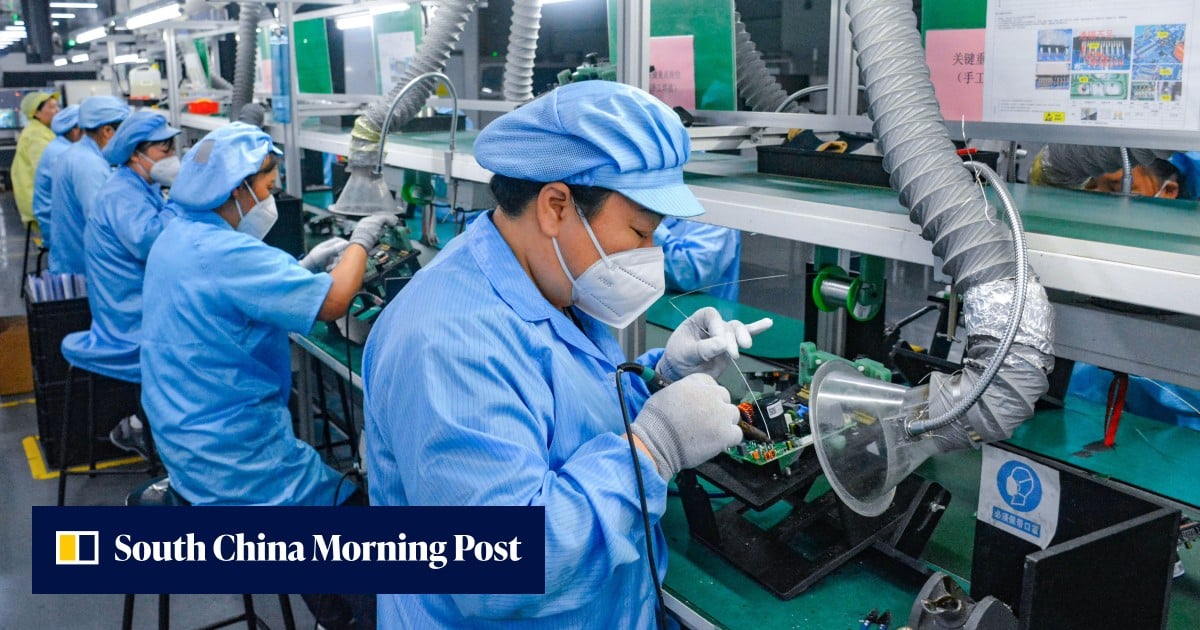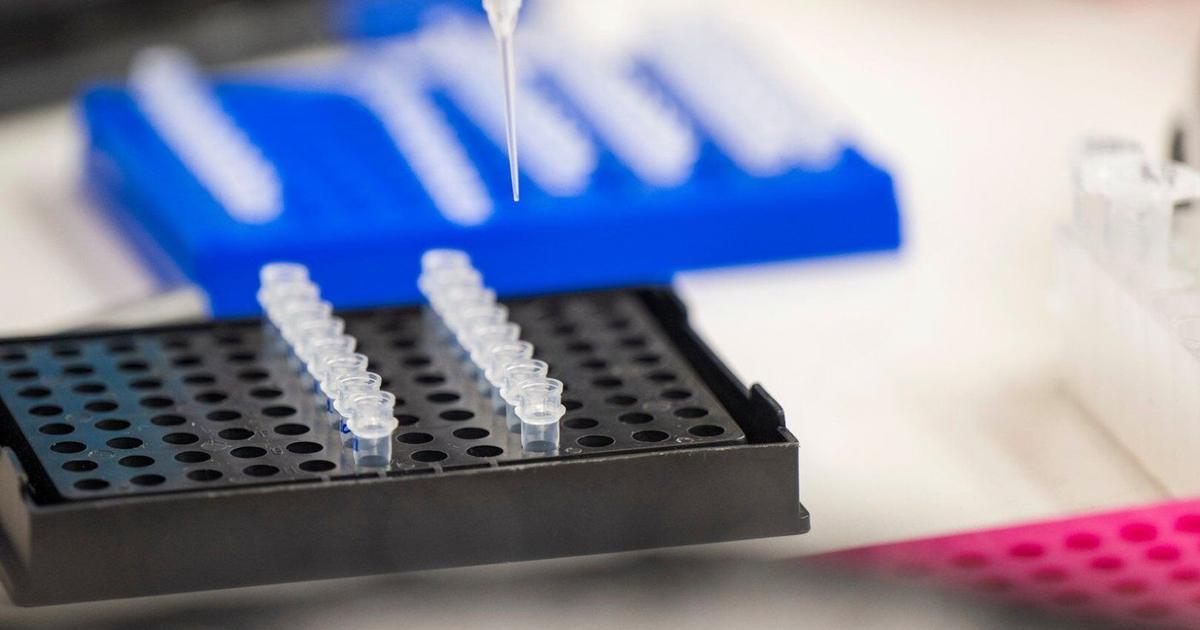
Photo via Toronto Star

US bans imports from 3 Chinese biotech companies over forced labor allegations

Read the original at Toronto Star ↗
Cite

Tang, D. (2026, October 28). US bans imports from 3 Chinese biotech companies over forced labor allegations. Toronto Star. https://www.thestar.com/news/world/united-states/us-bans-imports-from-3-chinese-biotech-companies-over-forced-labor-allegations/article_c53bef20-4884-5193-9ab1-bb22b8cf71d6.html

Dated from the outlet's own feed. Check the original for its byline.

Toronto Star · collected 2026-10-29 · by Didi Tang

Quick Summary

The Trump administration announced on Wednesday that it would block imports from Chinese biotech company BGI Group and its affiliates, BGI Genomics and MGI Tech, due to alleged ties with forced labor practices in Xinjiang. Starting Thursday, U.S. Customs and Border Protection will prohibit goods from these companies, which are accused of either sourcing materials from or collaborating with the Xinjiang government to exploit members of persecuted ethnic groups through forced labor.
Written by AI on 2026-10-31, from this article's own text only (the story summary below draws on all the coverage).
See how they differ ↓

AI analysis

Story summary

As of October 28, 2026, the U.S. Department of Homeland Security banned imports from three Chinese biotech companies—BGI Group (including BGI Genomics and MGI Tech)—over allegations they are involved in forced labor practices targeting ethnic minorities in China’s Xinjiang region. The ban takes effect starting October 29. According to the DHS, these companies either source materials from or collaborate with the Xinjiang government to recruit, transport, harbor, or receive forced labor of Uyghurs and other persecuted groups. The United States claims that these entities helped collect genetic material used to track ethnic minorities subjected to forced labor, raising concerns about human rights abuses in the region. China has denied such accusations repeatedly.

Written for “U.S. Bans Chinese Genomics Imports” on 2026-11-21, grounded in this article and the 1 other(s) covering the same event.

How they differ

2 outlets covered “U.S. Bans Chinese Genomics Imports”.

What each outlet says

One AI summary per outlet of its latest article on this story, written from that article alone and checked against it. Open the article for the outlet's own words.

Toronto StarThis outlet29 Oct

The Trump administration announced on Wednesday that it would block imports from Chinese biotech company BGI Group and its affiliates, BGI Genomics and MGI Tech, due to alleged ties with forced labor practices in Xinjiang. Starting Thursday, U.S. Customs and Border Protection will prohibit goods from these companies, which are accused of either sourcing materials from or collaborating with the Xinjiang government to…

US bans imports from 3 Chinese biotech companies over forced labor allegations (this article)

The Hindu29 Oct

On Wednesday, October 28, 2026, the U.S. Department of Homeland Security added three Chinese genomics companies—BGI Genomics, MGI Tech, and Shenzhen BGI Technology—to an entity list under the Uyghur Forced Labor Prevention Act due to their alleged involvement in collecting genetic material used for tracking persecuted ethnic minorities in Xinjiang. China strongly condemned the ban, insisting it had no factual basis…

U.S. bans imports from Chinese genomics companies over forced labour concerns →

Compared with similar articles

This article reads leans right and hedges 0% of its claims. Each row says how that neighbour differs.
The Hindu
Leans left further left than this Hedges 2 of 12 claims Outlet record 78/100
South China Morning Post
Hedges 0 of 1 claims Outlet record 62/100
“Article A reports on the US ban on imports from Chinese biotech companies due to forced labor allegations, while Article B discusses China's reaction to a US ban on device testing in China, warning of supply chain disruptions. These are different specific events.”

Story

U.S. Bans Chinese Genomics Imports
Politics · 2 article(s) covering the same event. See how they differ ↑
How this article was measured signals, leaning charts, publisher record, byline, topics and claims

Signals How these are calculated →

Claims extracted
3
sentences that state something as happening or true
Uncertain
0%
0 of 3 hedged ("reportedly", "may", "according to")
Leaning
Leans right
of the writing, not the subject · beta estimate
Publisher signals
64/100
Toronto Star's corrections and hedging, across everything collected from it. Not a measure of accuracy.
Outlets on this story
2
Politics
Same framing elsewhere
1
articles that frame the event the way this one does
Analyzed 2026-10-31 · how these are computed

How this is being covered How these are calculated →

Article leaning vs. publisher reliability
Source leaning vs. consistency

Publisher

Toronto Star · 16472 article(s) · 31 correction(s) detected
Running correction rate · 31 correction(s)
2026-11-17
Correction
2026-10-26
Correction
2026-10-24
Correction
2026-10-07
Correction
2026-09-24
Correction

Who wrote this

Didi Tang
13 article(s) here · 1 carrying a prediction
Nothing is set, but the three-leader gathering would take place this month on the sidelines of a regional summit in the southern Chinese city of Shenzhen.
Starting Thursday, U.S. Customs and Border Protection will bar goods by BGI Group, a major biotech company known for its genetic sequencing technologies, as well as BGI Genomics and MGI Tech.
As the rivalry intensifies, experts say the window for countries to be able to choose freely between the two AI superpowers may be narrowing, forcing them to at one point pick between the U.S.-led Pax Silica and the China-inspired World AI Cooperation Organization.
The U.S. government has been working for years to deny China and other adversaries investments that could help them boost their military power.
Taiwanese authorities have said the new Phoenix office — their 14th in the United States — will promote collaboration in technology, especially in semiconductor manufacturing, and better serve a growing number of Taiwanese migrants in the city.
Legislation to permanently ban the sale of Chinese vehicles in the United States stalled out on Wednesday as senators struggled to seal an agreement, virtually guaranteeing that the bill will have to wait until after the November elections. The bipartisan bill, sponsored by Republican Sen. Bernie Moreno of Ohio and Democratic Sen. Elissa Slotkin of Michigan, aims to prevent China’s auto industry from gaining a foothold in the U.S. market.
The biggest policy announcement of the visit was modest: an agreement to extend by two months a trade truce that had been set to expire in November.
Ahead of a high-stakes summit between the U.S. and Chinese leaders, the wife of a detained Chinese American seismologist expressed hope that an intervention by President Donald Trump could bring home her husband, Youlin Chen, nearly two years after he was detained in China.
Neither expects any grand bargain, but the leaders are expected to play nice in their third meeting since Trump returned to the White House to try to steady fragile ties.
The U.S. and China have made uneven progress in fulfilling the trade commitments announced after their two leaders met in Beijing in May.
Also by Didi Tang
Nothing else under this byline is closely related to this article, so these are simply their most recent.
All 13 articles by Didi Tang →

Topics

BGI Group China Chinese WASHINGTON Xinjiang

Subjects

Xinjiang GPE · 3× BGI Group ORG · 2× BGI Genomics ORG · 1× China GPE · 1× Chinese NORP · 1× MGI Tech ORG · 1× The Department of Homeland Security ORG · 1× U.S. Customs and Border Protection ORG · 1× Uyghurs NORP · 1× WASHINGTON GPE · 1×

Narrative

The Department of Homeland Security said the companies are either sourcing materials from Xinjiang or working with the regional government to “recruit, transport, transfer, harbor, or receive forced labor” of members of persecuted ethnic groups in Xinjiang, including Uyghurs.
framing: assertive · carried by 1 article(s) · first seen 2026-10-31
Starting Thursday, U.S. Customs and Border Protection will bar goods by BGI Group, a major biotech company known for its genetic sequencing technologies, as well as BGI Genomics and MGI Tech.

Claims (3 extracted, 0 hedged)

The Trump administration said Wednesday that it is blocking shipments by the Chinese biotech company BGI Group and its affiliates, alleging ties to forced labor in China’s far-west ethnic region of Xinjiang. asserted
it → say → Xinjiang
Starting Thursday, U.S. Customs and Border Protection will bar goods by BGI Group, a major biotech company known for its genetic sequencing technologies, as well as BGI Genomics and MGI Tech. asserted
Customs → start → technologies
The Department of Homeland Security said the companies are either sourcing materials from Xinjiang or working with the regional government to “recruit, transport, transfer, harbor, or receive forced labor” of members of persecuted ethnic groups in Xinjiang, including Uyghurs. asserted
companies → say → Uyghurs
Give feedback · no sign-in needed

No sign-in needed for now. Your note is sent without a name, so it cannot be answered.

History Support