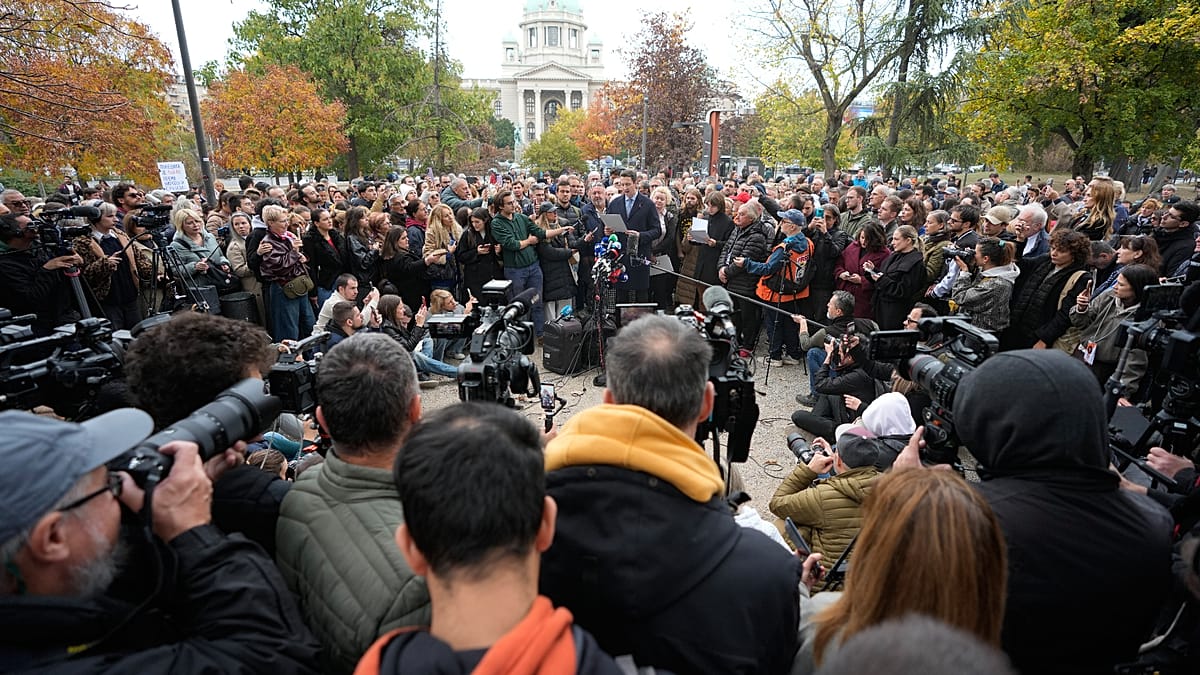
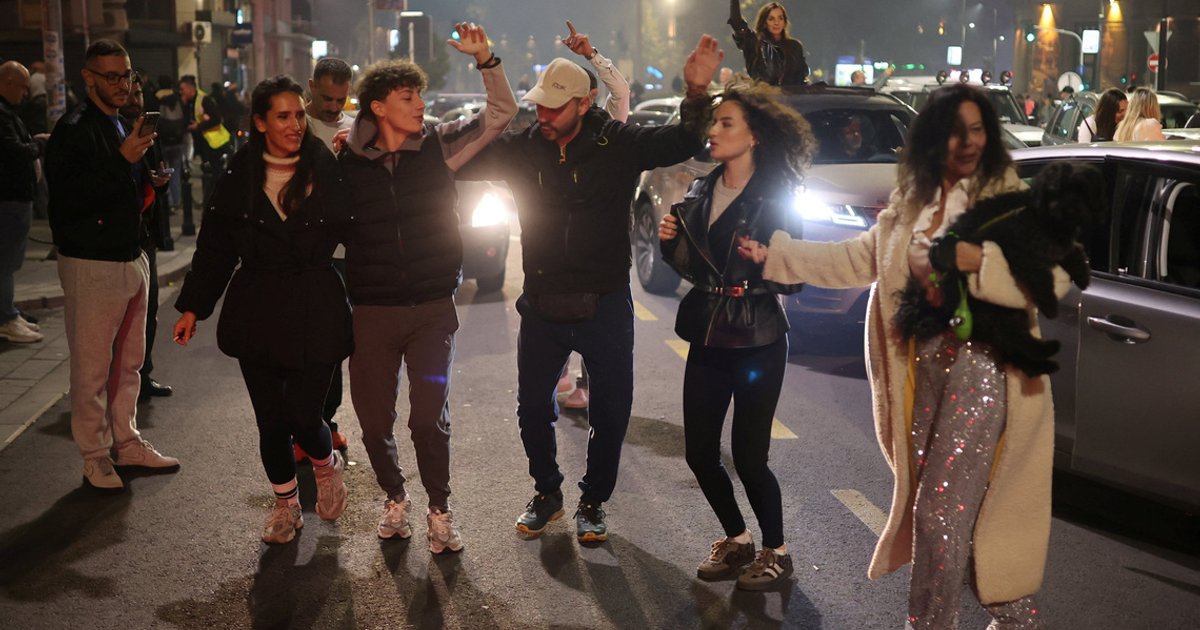
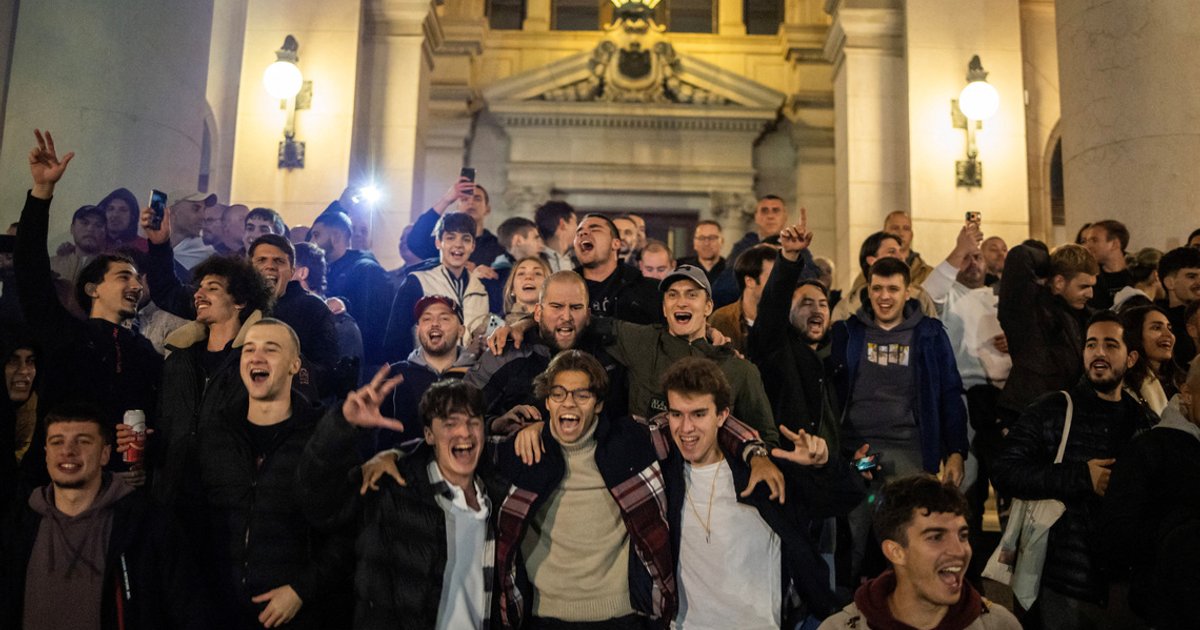
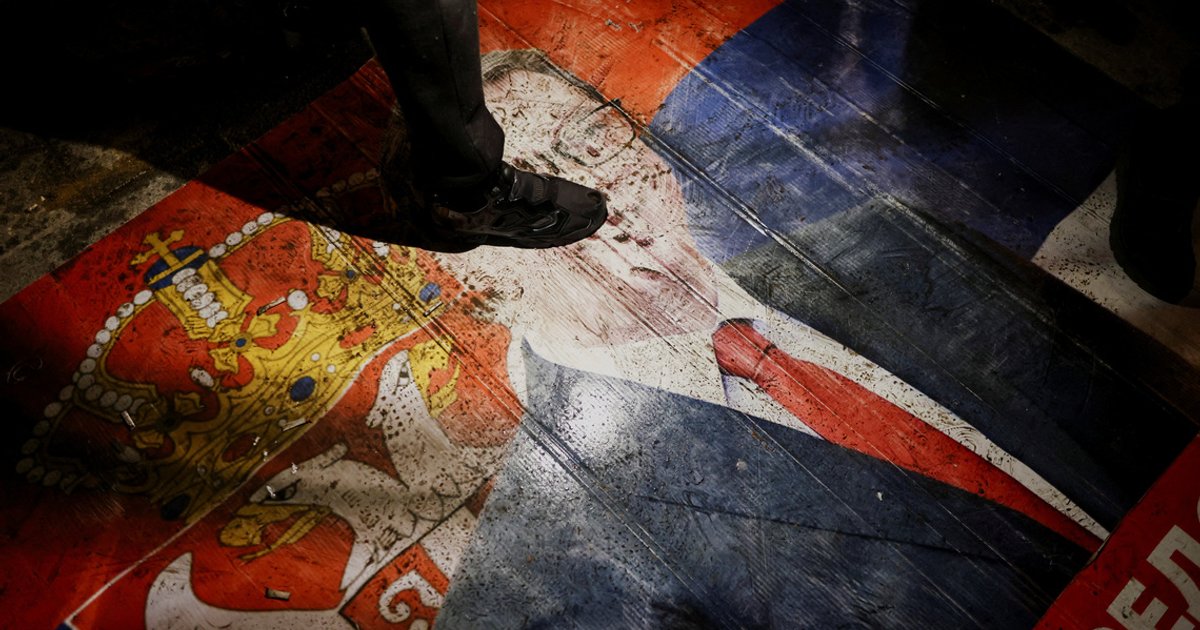
Photo via Al Jazeera

What European students can learn from their Serbian peers

Read the original at Al Jazeera ↗
Cite

Matković, A. (2026, October 29). What European students can learn from their Serbian peers. Al Jazeera. https://www.aljazeera.com/opinions/2026/10/29/what-european-students-can-learn-from-their-serbian-peers?traffic_source=rss

Dated from the outlet's own feed. Check the original for its byline.

Al Jazeera · collected 2026-10-29 · by Aleksandar Matković

Quick Summary

Serbian students played a crucial role in recent elections that significantly weakened the long-standing rule of President Aleksandar Vucic. Despite initial skepticism from international media, these students organized nationwide protests independently from political parties and foreign influences for nearly two years. By establishing their own governance structures within universities and holding peaceful demonstrations, they created an alternative model of politics that resonated with broader societal frustrations over corruption and economic precarity.
Written by AI on 2026-10-30, from this article's own text only (the story summary below draws on all the coverage).
See how they differ ↓

AI analysis

Story summary

On October 29, 2026, Serbia's student movement demanded the resignations of top officials in the police, intelligence agencies, and judiciary after winning a historic election against former leader Aleksandar Vucic. The movement, known as "The Students’ List," secured victory on October 25, marking a significant shift in Serbia’s political landscape. Earlier, around 150,000 supporters gathered for the final rally in Belgrade before the election, seeking to oust Vucic's party. The election was seen as one of the most competitive in recent history due to close polling between Vucic’s SNS and the Students’ List. After the victory, the new MPs called for swift action against corruption and demanded that key institutions be cleansed of officials linked to past regimes. This movement follows nearly two years of student-led protests initiated by a canopy collapse at a railway station in Novi Sad in 2024, which killed 16 people.

Written for “Serbia's Student List Triumph” on 2026-11-21, grounded in this article and the 56 other(s) covering the same event.

How they differ

21 outlets covered “Serbia's Student List Triumph”.

What each outlet says

One AI summary per outlet of its latest article on this story, written from that article alone and checked against it. Open the article for the outlet's own words.

Al JazeeraThis outlet29 Oct

Serbian students played a crucial role in recent elections that significantly weakened the long-standing rule of President Aleksandar Vucic. Despite initial skepticism from international media, these students organized nationwide protests independently from political parties and foreign influences for nearly two years. By establishing their own governance structures within universities and holding peaceful…

What European students can learn from their Serbian peers (this article)9 articles from Al Jazeera on this story
The Straits Times28 Oct

Serbia faces a leadership transition following the resignation of former President Aleksandar Vucic after losing power in snap elections on October 28. Among the potential new leaders are Dejan Soskic, a former central bank governor and economist who opposes systemic corruption, and Ilija Srdanovic, a cardiologist and professor advocating for a decentralized health system. Both candidates have been active in the…

The banker, the basketball star, the cardiologist and the chemist: meet Serbia's potential new leaders →11 articles from The Straits Times on this story
The Guardian30 Oct

In Belgrade’s Pioneers Park, members of the Student List, who recently won Serbia's election, gathered to outline their plans for cleaning up corrupt institutions. They called for the dismissal of several senior law enforcement officials and the resignation of the director of Serbia’s internal intelligence agency. The movement also stressed its commitment to anti-corruption efforts and ensuring that prosecutors and…

‘Swift justice’: Student List supporters focus on cleaning up Serbia’s rotten institutions →7 articles from The Guardian on this story
Toronto Star26 Oct

Aleksandar Vucic, Serbia’s long-standing authoritarian leader who ruled for 14 years, conceded defeat in Sunday’s election to a grassroots movement led by university students. Despite Vucic’s aggressive campaign tactics, including favorable state media coverage and populist promises, the diverse youth movement successfully campaigned against rampant corruption and cronyism under his leadership. The student protests…

Serbia's political veteran Vucic outplayed all opponents. Then the students came →4 articles from Toronto Star on this story
BBC30 Oct

Serbia's newly elected student-led movement, which defeated President Aleksandar Vučić's ruling party, is demanding the immediate dismissal of top officials in the police and intelligence agencies. The movement, known as the Student List, is also calling for an investigation into corruption following a tragic railway station collapse that killed 16 people last year in Novi Sad. Newly elected MPs have vowed to…

Student-backed election winners demand sweeping resignations in Serbia →4 articles from BBC on this story
The Independent28 Oct

Serbia recently held snap elections resulting in the ousting of right-wing populist leader Aleksandar Vucic, who conceded defeat after his party received fewer votes than a student-led anti-corruption movement that garnered 2.25 million votes compared to the ruling party's 1.67 million. The winning movement will now select new leaders for key government positions, including the prime minister role, which is…

From basketball stars to bankers: Meet Serbia's new leaders after historic student movement →4 articles from The Independent on this story
Show 15 more outlets
Euronews25 Oct

Crowds celebrated in Belgrade after President Vučić admitted defeat in parliamentary elections. Election officials counted ballots as voting concluded, and preliminary figures showed the highest voter turnout in over three decades. The election followed widespread protests that began after a railway station disaster in November 2024, which highlighted public anger over corruption and poor governance. Students played…

Serbia: crowds celebrate in Belgrade after Vučić admits defeat →2 articles from Euronews on this story
The Hindu29 Oct

Serbian students, part of the Students’ List movement, demanded on October 29, 2026, that top officials in the police, intelligence agencies, and judiciary resign following their electoral victory against long-time leader Aleksandar Vucic. The students urged Serbia’s election authorities to finalize results from the previous Sunday's (October 25) ballot so a new government could be formed. They also called for…

Serbia’s students demand resignations in police, judiciary as they prepare to take power →2 articles from The Hindu on this story
Washington Examiner27 Oct

A student movement unexpectedly defeated Serbian President Aleksandar Vucic, ending his 14-year tenure in power. Vucic had been dominant since becoming leader of the Serbian Progressive Party in 2012 and held various roles including prime minister before switching to president in 2017. Serbia's strategic position between Russia, Europe, China, and the U.S. has made it a critical player in international relations…

Longtime Serbian leader Vucic’s defeat at the hands of student movement leaves Washington in awkward position →2 articles from Washington Examiner on this story
Fox News23 Oct

Serbian President Aleksandar Vucic resigned from his presidential position and is now running for prime minister ahead of upcoming parliamentary elections, seen as one of the most competitive in recent years. Student protesters are mounting a significant challenge against Vucic’s long-standing rule, though Foreign Minister Marko Djuric remains confident that the established leader will prevail due to public support…

Serbia’s longtime leader faces biggest political test as students mount election challenge →
ABC News (AU)25 Oct

Serbian President Aleksandar Vucic conceded defeat to the opposition student-led movement called The Student List following parliamentary elections. Vucic stated that The Student List would secure between 135 and 140 seats, while his party would hold only 105. The high voter turnout of nearly 70% was noted as the highest since Yugoslavia's dissolution in 1992.

Breaking: Serbian president concedes defeat to student-led movement in election →
CBC25 Oct

Aleksandar Vucic, Serbia’s long-standing leader, conceded defeat in Sunday’s election to a student-led opposition movement, marking an end to his political dominance and ushering in a new era for the Balkan country. The election saw nearly 70% voter turnout, with preliminary results showing that the student-led group will have between 135 and 140 seats in parliament compared to Vucic’s party securing around 105…

Serbia's longtime strongman Vucic concedes election defeat to student-led opposition →
CBS News25 Oct

Aleksandar Vucic conceded defeat in Serbia’s parliamentary election on Sunday, projecting that the Students' List will secure between 135 and 140 seats while his Serbian Progressive Party (SNS) is expected to have around 105. The election, characterized by high voter turnout and tension, saw accusations of corruption against Vucic’s government and protests led by university students over the past two years. With a…

Vucic concedes defeat in Serbia's parliamentary election →
Daily Mail25 Oct

Serbia's long-time leader Aleksandar Vucic conceded defeat to a student-led protest movement after Sunday’s parliamentary election, marking a significant political shift in the Balkans nation. The contest primarily pitted Vucic's right-wing Serbian Progressive Party against the Student List, comprising 250 diverse figures selected by university students protesting against Vucic for nearly two years. With high voter…

Serbia's long-standing leader concedes defeat to student-led protest movement →
Global News25 Oct

Aleksandar Vucic, the long-serving leader of Serbia, conceded defeat in Sunday's parliamentary election to a student-led opposition movement after 14 years in power. The Students’ List is projected to win between 135 and 140 seats out of 250, while Vucic’s Serbian Progressive Party (SNS) is expected to secure around 105 seats. Despite his loss, Vucic accused independent media and unnamed European countries of…

Serbia’s Vucic concedes defeat against student-led opposition movement →
Mother Jones25 Oct

Aleksandar Vucic, Serbia’s nationalist leader who has aligned himself with figures like Donald Trump and Vladimir Putin, conceded defeat in Sunday's elections to an anti-corruption movement led by students. The opposition won despite concerns of voter suppression and fraud; Vucic had long dominated Serbian politics since 2012 but faced criticism over his downplay of war crimes from the 1990s. His campaign included…

A Serbian Nationalist Leader Who Courted MAGA Just Lost in a Landslide →
Times of India25 Oct

In Serbia’s recent parliamentary election, long-time leader Aleksandar Vucic conceded defeat to a student-led opposition movement called the Students’ List. With projections showing the Students’ List winning between 135 and 140 seats out of 250 in Parliament, compared to around 105 for Vucic’s Serbian Progressive Party (SNS), celebrations erupted across Belgrade as thousands celebrated in the streets. The movement…

Serbia’s Vucic concedes defeat as student-led movement wins parliamentary election →
Dawn26 Oct

Serbia's student-led protest movement, which began in November 2024 following a tragic train station canopy collapse that killed 16 people, has won a significant victory by ending Aleksandar Vucic’s 14-year rule. The movement, known as the Students’ List and characterized by collective leadership, ran an election campaign focused on corruption, the rule of law, and press freedom. Despite not having named a specific…

From protests to power: How Serbia's students triumphed →
Los Angeles Times26 Oct

In Serbia, after two years of protests led by students accusing Aleksandar Vucic of authoritarianism and corruption, his political opponents won a major election victory, leading to celebrations in Belgrade as the youth movement dismantled pro-Vucic encampments. This youth-driven change mirrors recent events in Hungary, where similar anti-corruption campaigns succeeded in ousting Prime Minister Viktor Orbán after 16…

In Serbia and Hungary, groundswells of youthful energy topple entrenched governments →
Letters from an American28 Oct

On October 27, 2026, Serbian TV apologized for biased reporting during the rule of President Aleksandar Vučić, who was recently ousted by a student-led movement. Meanwhile, leftist candidate Luiz Inácio Lula da Silva won Brazil's presidential election against right-wing candidate Flávio Bolsonaro with over four million more votes than expected, despite Meta’s alleged bias in favor of Bolsonaro on social media…

October 27, 2026 →
South China Morning Post28 Oct

Serbia's recent election loss by nationalist leader Aleksandar Vucic has led to large public celebrations across Belgrade and is expected to increase scrutiny on Chinese investments in Serbia. However, experts predict that this shift will not fundamentally alter the long-standing cooperative relationship between China and Serbia. The political change follows 14 years of Vucic's rule and marks a significant moment…

Why China ties with Serbia face scrutiny, not severance, after historic Vucic loss →

Where they agree and split

Agreed

AI · cited, from two or more outlets

  • The election is seen as a referendum between Vucic’s Serbian Progressive Party and the youth-backed Students' List.12
  • Vucic conceded defeat, citing preliminary results showing his party losing to the student movement.23
Quoted from the coverage (4)

In the lead-up to Sunday’s vote, both international and local election monitors expressed concerns about detentions and reports of surveillance and cyber-attacks against activists.

7 outlets

"We still do not have final results [but] on the basis of a sample … it is clear that we have lost these elections," Mr Vucic said on Sunday.

7 outlets

Vilified by pro-government media, students have cycled and walked through the country to reach voters in rural areas — Vucic’s traditional strongholds.

6 outlets

Recent elections have been marred by irregularities and the European Union is watching closely the conduct of Sunday’s vote in a candidate nation for the bloc’s membership.

5 outlets

Framing

How the first headlines put it

  • The Toronto Star headline focuses on the election as a showdown between Vucic and protesting students, while ABC News highlights Vucic's concession to the student-led movement.12
  • CBS News emphasizes the seismic political shift caused by Vucic’s defeat, whereas The Straits Times focuses on whether the student movement can govern effectively.56
Words to watch (2)

‘It’s the smell of freedom’: Belgrade cleans up after Student List triumph The Guardian

Serbia: crowds celebrate in Belgrade after Vučić admits defeat Euronews

The full story: what happened, how it changed, and all 57 articles →

Compared with similar articles

This article reads leans strongly left and hedges 5% of its claims. Each row says how that neighbour differs.
The Guardian
Leans left further right than this Hedges 0 of 6 claims Outlet record 64/100
Euronews
Hedges 13 of 128 claims Outlet record 60/100
“While both articles discuss Serbia's student movement winning an election, Article A describes the context leading up to the victory and its impact on the political landscape, whereas Article B focuses on the challenges facing the student movement after their electoral success.”
Al Jazeera
Leans left further right than this Hedges 1 of 2 claims Outlet record 60/100
“Article A discusses the student movement demanding justice for victims of a railway station canopy collapse, while Article B focuses on the electoral impact and broader political significance of the student movement.”
The Straits Times
Hedges 0 of 13 claims Outlet record 64/100
“Article A covers immediate reactions to the election victory, while Article B provides a broader analysis of what European students can learn from their Serbian peers' actions over the past two years.”
The Hindu
Leans left further right than this Hedges 1 of 24 claims Outlet record 78/100
“While both articles discuss the impact of Serbian students' actions following an election, Article A covers the initial movement and its electoral victory, whereas Article B discusses subsequent demands made by the students after winning the election.”
The Straits Times
Leans left further right than this Hedges 1 of 26 claims Outlet record 64/100
“While both articles discuss the success of Serbia's student movement in an election, Article A focuses on the immediate aftermath and implications of Vucic's defeat, while Article B provides a broader perspective on what other European students can learn from this movement, suggesting they cover different aspects or timeframes.”
Los Angeles Times
Leans strongly left Hedges 2 of 41 claims Outlet record 95/100
“Article A reports on the electoral defeat of Aleksandar Vucic in Serbia, while Article B focuses more broadly on the nationwide student movement that led up to this victory and what it means for other European students.”
BBC News
Leans left further right than this Hedges 3 of 35 claims Outlet record 65/100
“Article A discusses the initial impact of the student movement on the election results, while Article B reports on the aftermath and demands made by newly elected MPs from the Student List.”
The Straits Times
Hedges 3 of 18 claims Outlet record 64/100
“Article A describes the immediate aftermath of Vucic's electoral defeat and subsequent celebrations, while Article B reflects on the broader impact and significance of the student movement that led to his defeat.”
The Guardian
Leans left further right than this Hedges 1 of 39 claims Outlet record 64/100
“Article A discusses the impact and outcome of a nationwide student movement leading to an electoral victory, while Article B focuses on the Student List candidates gathering to discuss their plans for cleaning up institutions post-election.”

Story

Serbia's Student List Triumph
Politics · 57 article(s) covering the same event. Compare every outlet's account →
How this article was measured signals, leaning charts, publisher record, byline, topics and claims

Signals How these are calculated →

Claims extracted
56
sentences that state something as happening or true
Uncertain
5%
3 of 56 hedged ("reportedly", "may", "according to")
Leaning
Leans strongly left
of the writing, not the subject · beta estimate
Publisher signals
60/100
Al Jazeera's corrections and hedging, across everything collected from it. Not a measure of accuracy.
Outlets on this story
57
Politics
Same framing elsewhere
1
articles that frame the event the way this one does
Analyzed 2026-10-30 · how these are computed

How this is being covered How these are calculated →

Article leaning vs. publisher reliability
Source leaning vs. consistency

Publisher

Al Jazeera · 6200 article(s) · 4 correction(s) detected
Running correction rate · 4 correction(s)

Who wrote this

Aleksandar Matković
1 article(s) here · 1 carrying a prediction
Associating with them would have been damaging to the movement.
The only article under this byline in the corpus.

Topics

China Russia Serbia Serbian the European Union

Subjects

Serbia GPE · 4× Serbian NORP · 4× Novi Sad GPE · 2× Aleksandar Vucic PERSON · 1× China GPE · 1× Russia GPE · 1× Vucic PERSON · 1× the European Union ORG · 1× the Faculty of Technical Sciences ORG · 1× the United States GPE · 1×

Narrative

Students and their families had been squeezed from all sides: by local elites whose corruption and mismanagement eroded the standard of living and plunged them into precarity; and by international corporations, which fed that corruption, while offering substandard jobs with little prospect of social mobility.
framing: assertive · carried by 1 article(s) · first seen 2026-10-30
Associating with them would have been damaging to the movement.
2026-10-30 · Al Jazeera
What European students can learn from their Serbian peers · assertive framing

Claims (56 extracted, 3 hedged)

A nationwide student movement shook the foundations of a deeply entrenched government and on Sunday, it dealt it an unprecedented electoral blow – something opposition parties had failed to do for more than a decade. asserted
parties → shake → decade
Until the election results came out, the Serbian student movement was largely ignored by international media. asserted
movement → come → media
The students were seen as naive, irrelevant, disaffected youth. asserted
students → see → youth
That they were underestimated by the world and by President Aleksandar Vucic was perhaps to their advantage. asserted
underestimated → underestimate → advantage
But Serbian students did not just rely on their opponent’s overconfidence. asserted
students → rely → overconfidence
For almost two years, they built and practised an alternative model of politics that soon became visible and eventually triumphed at the polls. asserted
that → build → polls
The hidden abode of alternative politics Although the student protests were triggered by one particular incident – the death of 16 people in a train canopy collapse at a newly renovated station in 2024 – their anger had much deeper roots. asserted
anger → trigger → roots
Students and their families had been squeezed from all sides: by local elites whose corruption and mismanagement eroded the standard of living and plunged them into precarity; and by international corporations, which fed that corruption, while offering substandard jobs with little prospect of social mobility. asserted
which → squeeze → mobility
The protests the students started were not the first against Vucic and his government. asserted
students → start → Vucic
But what was different this time is that they remained independent: neither aligned with any domestic political party nor any of the four superpowers Serbia is dealing with – Russia, China, the European Union and the United States. asserted
Serbia → remain → superpowers
Students managed to sustain the pressure because they did not join existing politics. asserted
they → manage → politics
Most Serbian opposition parties are small, centralised and increasingly detached from the crises people face daily. asserted
people → face → crises
Associating with them would have been damaging to the movement. asserted
Associating → associate → movement
Instead, the students created their own alternative political scene. asserted
students → create → scene
Across the country, they blockaded and took over universities, bringing higher education to a standstill. asserted
they → blockade → standstill
They filled squares with peaceful protests and vigils. asserted
They → fill → protests
They set up their own structures to run their affairs at occupied buildings. asserted
They → set → buildings
This strong self-reliance was apparent at the Faculty of Technical Sciences in Novi Sad — Serbia’s largest university department, with more than 16,000 students enrolled — which I visited for the first time in March 2025. asserted
I → enrol → March
I was invited there to speak to students. asserted
I → invite → students
The faculty looked nothing like it had before. asserted
it → look → ?
Student guards controlled entrances with communication equipment and metal fencing. asserted
guards → control → equipment
LED screens in the corridors announced plenaries and alternative lectures for students. asserted
screens → announce → students
There were rooms stocked with food sorted by type, and medical supplies, with student nurses tending to anyone in need. asserted
nurses → be → need
Kitchens, reading rooms and a student-run administration could also be seen at the faculty. uncertain
Kitchens → see → faculty
Discussions on current political and economic issues of interest to Serbia, organised by the students’ alternative education sections, often involved 300 to 400 students and lasted five or six hours, covering topics that would later enter the movement’s electoral programme. asserted
that → organise → programme
The more the government and its repressive apparatus attacked them, the more the people stood with them. asserted
people → attack → them
Introducing direct democracy As this bond between the students and the wider population grew deeper, democratic participation expanded. asserted
participation → introduce → students
By March 2025, suffering more and more attacks, the students called for people to establish citizens’ assemblies akin to the student plenaries, in order to aid them in seeking justice for the 16 killed in Novi Sad. asserted
people → suffer → Sad
As the Serbian government continued its repressive strategy, the students realised that a change was necessary and made the first public demand for snap elections. asserted
change → continue → elections
The students took decisions collectively. asserted
students → take → decisions
They chose academics and activists whom they had invited to their occupied faculties to discuss and debate with well-known public figures. asserted
they → choose → figures
It was collectively decided that established politicians would not be nominated. asserted
politicians → decide → ?
The students made it clear they rejected being incorporated into a type of leadership-based politics that was failing all across Europe. asserted
that → make → Europe
Candidates were chosen after interviews with students. asserted
Candidates → choose → students
Last summer, I was invited to one such interview session near Novi Sad. asserted
I → invite → Sad
There was a large group of 300 students who questioned each candidate. asserted
who → be → candidate
Phones had to be left outside. asserted
Phones → have → ?
This was the hidden abode of a new kind of politics: decisions were made not at a party headquarters by a select few, but by a network of assemblies, local committees and informal institutions. asserted
decisions → make → assemblies
It was leaderless, and in that particular moment, it worked. asserted
it → work → moment
The challenges ahead The Student List has already started negotiations to form the government. asserted
List → start → government
…and 16 more, not listed.
Give feedback · no sign-in needed

No sign-in needed for now. Your note is sent without a name, so it cannot be answered.

History Support