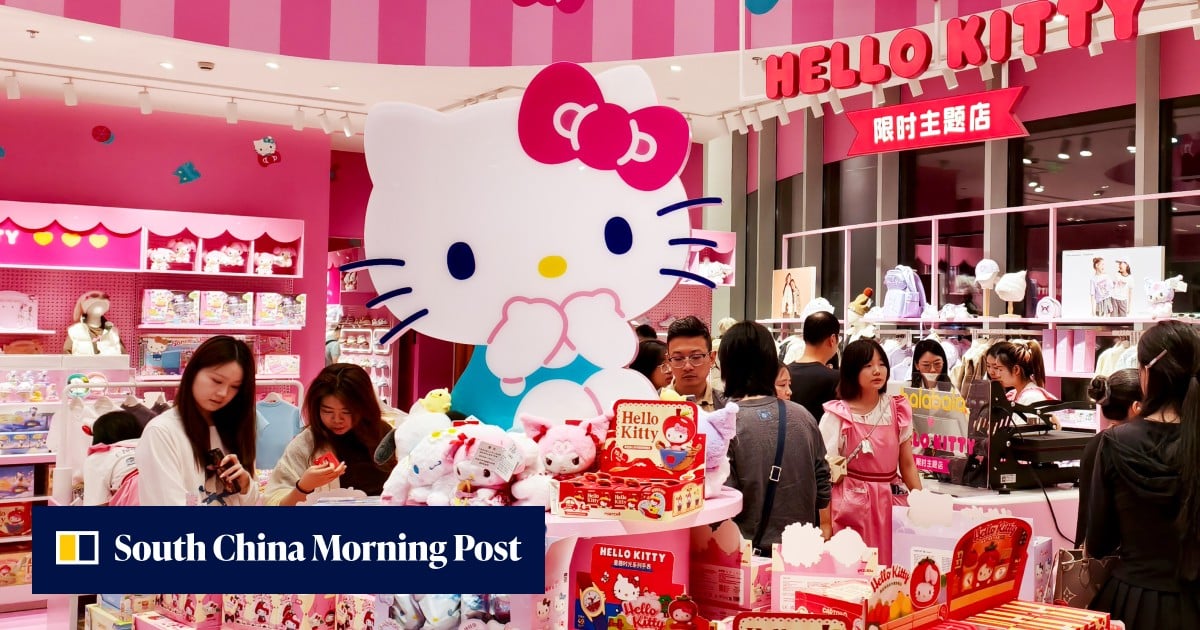
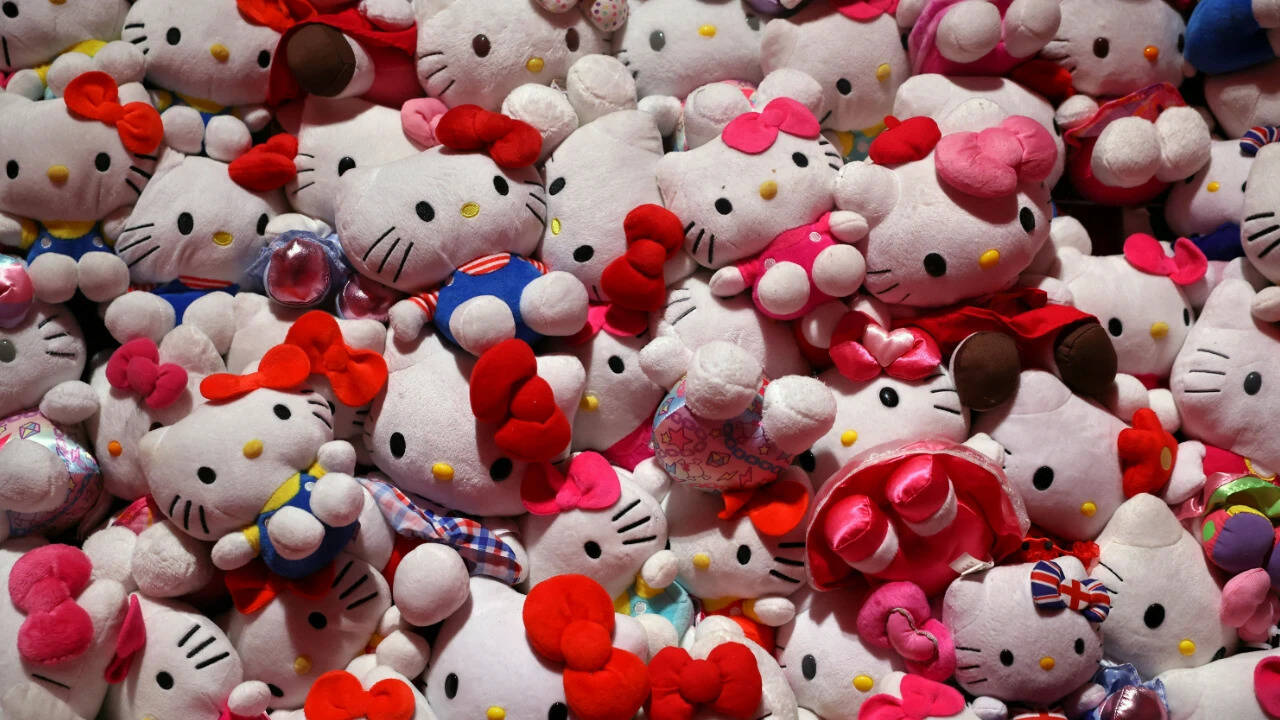
Photo via The Guardian

Hello Kitty company cuts ties with Japanese spy show after China outcry

Read the original at The Guardian ↗
Cite

Tokyo, J. M. i. (2026, October 29). Hello Kitty company cuts ties with Japanese spy show after China outcry. The Guardian. https://www.theguardian.com/world/2026/oct/29/hello-kitty-japanese-spy-show-vivant-china-outcry

Dated from the outlet's own feed. Check the original for its byline.

The Guardian · collected 2026-10-29 · by Justin McCurry in Tokyo
Content note This article describes violence described in detail.

Quick Summary

Sanrio, the Japanese company behind Hello Kitty, has ended its commercial partnership with the TV drama "Vivant" following criticism from Chinese state media and netizens over the show’s portrayal of Chinese agents using violence against Japanese characters. Sanrio cited elements inconsistent with their core values as the reason for terminating the collaboration. The controversy arose after an episode depicted a Chinese agent torturing a Japanese intelligence officer, prompting Chinese media to denounce it as a distortion of historical facts related to World War II atrocities committed by Japan against China.
Written by AI on 2026-10-29, from this article's own text only (the story summary below draws on all the coverage).
See how they differ ↓

AI analysis

Story summary

Sanrio, the company behind popular characters like Hello Kitty, has ended its merchandise partnership with the controversial Japanese TV show Vivant after facing backlash in China. Chinese state media and social media users criticized Vivant for depicting Chinese intelligence agents torturing Japanese operatives using brutal methods similar to those used during wartime. Sanrio terminated the collaboration and apologized, stating that the content was inconsistent with their core values of care and connection. The company announced it will strengthen its review processes for future projects to avoid such issues. This incident highlights the strained China-Japan relations and the sensitivity surrounding historical grievances in both countries.

Written for “Hello Kitty Ends Spy Show Collab” on 2026-11-21, grounded in this article and the 3 other(s) covering the same event.

How they differ

4 outlets covered “Hello Kitty Ends Spy Show Collab”.

What each outlet says

One AI summary per outlet of its latest article on this story, written from that article alone and checked against it. Open the article for the outlet's own words.

The GuardianThis outlet29 Oct

Sanrio, the Japanese company behind Hello Kitty, has ended its commercial partnership with the TV drama "Vivant" following criticism from Chinese state media and netizens over the show’s portrayal of Chinese agents using violence against Japanese characters. Sanrio cited elements inconsistent with their core values as the reason for terminating the collaboration. The controversy arose after an episode depicted a…

Hello Kitty company cuts ties with Japanese spy show after China outcry (this article)
BBC29 Oct

Sanrio, known for Hello Kitty and other popular characters, ended its collaboration with the controversial Japanese TV show Vivant following backlash in China. Chinese media criticized Vivant for depicting brutal torture tactics used by Chinese agents against a Japanese spy, which sparked outrage among Chinese internet users and state-run media outlets like Global Times. Sanrio apologized and terminated the…

Hello Kitty maker ends collab with Japanese spy drama after backlash in China →
South China Morning Post29 Oct

Sanrio, the company behind Hello Kitty, has ended its partnership with the Japanese TV drama series Vivant due to backlash from China. The decision came after Chinese criticism of the show's portrayal of wartime torture by Chinese intelligence agents against Japanese characters. Sanrio cited incompatibility between the show’s content and their corporate values. The company will cease all collaborations with Vivant…

Hello Kitty owner Sanrio scraps Japanese TV show Vivant deal over China backlash →
Times of India30 Oct

Sanrio, known for Hello Kitty, faced backlash in China after collaborating with Japanese TV drama VIVANT by creating spy-themed toys based on characters from the show. The drama's storyline depicting Chinese intelligence agencies capturing and torturing Japanese spies upset Chinese audiences, leading to widespread criticism online and condemnation from state media. In response, Sanrio’s Chinese subsidiary ended the…

Hello Kitty's spy drama lands in hot water: What went wrong with Sanrio in China →

Where they agree and split

Framing

How the first headlines put it

Stated as fact3
The headlines (3)

Hello Kitty maker ends collab with Japanese spy drama after backlash in China BBC · stated as fact

Hello Kitty owner Sanrio scraps Japanese TV show Vivant deal over China backlash South China Morning Post · stated as fact

Hello Kitty company cuts ties with Japanese spy show after China outcry The Guardian · stated as fact

The full story: what happened, how it changed, and all 4 articles →

Compared with similar articles

This article reads leans left and hedges 13% of its claims. Each row says how that neighbour differs.
South China Morning Post
Leans left Hedges 0 of 4 claims Outlet record 62/100
BBC News
Leans left Hedges 1 of 21 claims Outlet record 65/100
Times of India
Leans left Hedges 1 of 28 claims Outlet record 59/100

Story

Hello Kitty Ends Spy Show Collab
Entertainment · 4 article(s) covering the same event. Compare every outlet's account →
How this article was measured signals, leaning charts, publisher record, byline, topics and claims

Signals How these are calculated →

Claims extracted
15
sentences that state something as happening or true
Uncertain
13%
2 of 15 hedged ("reportedly", "may", "according to")
Leaning
Leans left
of the writing, not the subject · beta estimate
Publisher signals
64/100
The Guardian's corrections and hedging, across everything collected from it. Not a measure of accuracy.
Outlets on this story
4
Entertainment
Same framing elsewhere
1
articles that frame the event the way this one does
Analyzed 2026-10-29 · how these are computed

How this is being covered How these are calculated →

Article leaning vs. publisher reliability
Source leaning vs. consistency

Publisher

The Guardian · 3767 article(s) · 8 correction(s) detected
Running correction rate · 8 correction(s)

Who wrote this

Justin McCurry in Tokyo
7 article(s) here · 1 carrying a prediction
Moving forward, we will strengthen our review processes for all future collaborative projects.”
The ban, which went into effect this week at Kadena airbase on the southern Japanese island of Okinawa, has fueled speculation that similar measures could be taken at other US military facilities as part of Washington’s crackdown on Chinese technology it suspects of being used to collect sensitive information.
Akihiro Nabae, the deputy mayor of Saijo in western Japan, was carrying a giant float with other participants in a festival on Saturday when he became trapped beneath the structure, Agence France-Presse reported.
Japanese authorities have raided the country’s four biggest breweries over suspicions they colluded to set the price of beer and other beverages – a practice media reports said could have forced drinkers to pay over the odds.
Tsuda, 55, claimed that the 188 TikTok videos uploaded on an anonymous account between July 2024 and September last year had been narrated by a “deep” and “lustrous” voice that could only be his.
Citing a 2025 analysis by the James Martin Center for Nonproliferation Studies in the US, South Korea’s Chosun Daily said the potential 28 cascades comprising 4,592 centrifuges at the Yongbyon facility could yield about 85 kg of weapons-grade highly enriched uranium a year – enough to build three or four additional warheads.
Authorities hopes the restrictions will address concerns that residential areas are not experiencing the same improvements in safety seen on larger roads.
Also by Justin McCurry in Tokyo
Nothing else under this byline is closely related to this article, so these are simply their most recent.
All 7 articles by Justin McCurry in Tokyo →

Topics

Chinese Japan Japanese Sanrio Vivant

Subjects

Chinese NORP · 13× Japanese NORP · 6× Sanrio ORG · 6× Japan GPE · 3× Beijing GPE · 2× China GPE · 2× Tokyo GPE · 2× Vivant ORG · 2× Hello Kitty ORG · 1× Weibo ORG · 1×

Narrative

The backlash began this week when Chinese state media blasted the portrayal of Chinese agents using “ruthless violence” to torture members of a secret unit of Japan’s self-defence forces, calling it a “deliberate smear” against Beijing. Chinese media said that some of the torture methods were similar to those Japanese troops used against Chinese civilians during the second world war. The state-run tabloid Global Times said the acts shown in the episode “bear striking similarities to the torture inflicted on Chinese nationals by invading Japanese troops” during the war, adding that the drama “distorts the truth by attributing these atrocities to modern Chinese characters”.
framing: assertive · carried by 1 article(s) · first seen 2026-10-29
Moving forward, we will strengthen our review processes for all future collaborative projects.”
2026-10-29 · The Guardian
Hello Kitty company cuts ties with Japanese spy show after China outcry · assertive framing

Claims (15 extracted, 2 hedged)

The company behind the successful Hello Kitty franchise has apologised and ended its commercial tie-up with a Japanese TV drama after Chinese state media and netizens condemned the show’s “deliberate smears” against China. asserted
media → apologise → China
Sanrio, a Japanese firm whose characters are popular around the world, said in a post on the Chinese social media site Weibo that it had decided to end its association with the TV drama Vivant after concluding that it “contained elements inconsistent with Sanrio’s core values”. asserted
it → say → values
In the second season of the popular spy thriller, produced by the Japanese TBS network, Masato Sakai plays a salaryman who is drawn into a web of international crime and espionage. asserted
who → produce → crime
The backlash began this week when Chinese state media blasted the portrayal of Chinese agents using “ruthless violence” to torture members of a secret unit of Japan’s self-defence forces, calling it a “deliberate smear” against Beijing. Chinese media said that some of the torture methods were similar to those Japanese troops used against Chinese civilians during the second world war. The state-run tabloid Global Times said the acts shown in the episode “bear striking similarities to the torture inflicted on Chinese nationals by invading Japanese troops” during the war, adding that the drama “distorts the truth by attributing these atrocities to modern Chinese characters”. asserted
drama → begin → characters
In the 4 October episode, a Chinese agent is seen cutting off the fingers of the Japanese intelligence officer and stabbing him in the abdomen. asserted
agent → see → abdomen
Sanrio said in a statement: “Since its inception, Sanrio has consistently used its characters to convey values such as care and connection, and remains committed to its corporate philosophy of fostering harmony among all people. asserted
Sanrio → say → people
“We take the feedback we have received regarding this incident very seriously. asserted
we → take → incident
Moving forward, we will strengthen our review processes for all future collaborative projects.” asserted
we → move → projects
The drama’s first season, set in a fictional central Asian country, avoided controversy, but its latest season is being shown at a time of increasingly fractious relations between Beijing and Tokyo. asserted
season → set → Beijing
Japan’s conservative prime minister, Sanae Takaichi, set off a diplomatic row in November last year when she told MPs that a Chinese attack on Taiwan could trigger the deployment of her country’s self-defence forces if the conflict posed an existential threat to Japan. uncertain
conflict → set → Japan
Takaichi said earlier this month that she had recorded episodes of Vivant and hoped to watch them over the year-end and new year holidays. asserted
she → say → holidays
China is a crucial overseas market for Sanrio, whose cast of characters includes My Melody and Cinnamoroll – both featured in Vivant-themed merchandise. asserted
both → include → merchandise
The Tokyo-based company racked up 781m yuan ($117m) in revenue from the Chinese market in the first half of this year, according to Chinese media, up more than 40% from the same period last year. uncertain
company → base → period
The backlash against Sanrio comes days after the French international footballer Kylian Mbappé was dropped by several Chinese brands after he jokingly referred to Mao Zedong as a “dictator”. asserted
he → come → dictator
The Real Madrid forward, who is nicknamed the “dictator” for his influence on the game, later apologised for his “ill-judged” remarks. asserted
who → nickname → remarks
Give feedback · no sign-in needed

No sign-in needed for now. Your note is sent without a name, so it cannot be answered.

History Support