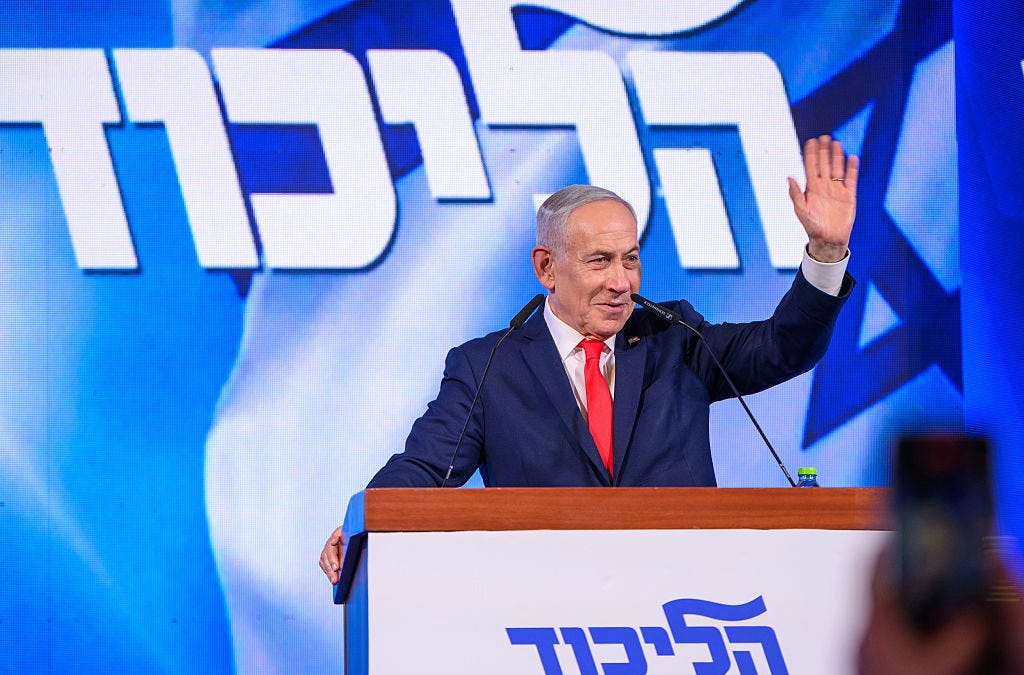
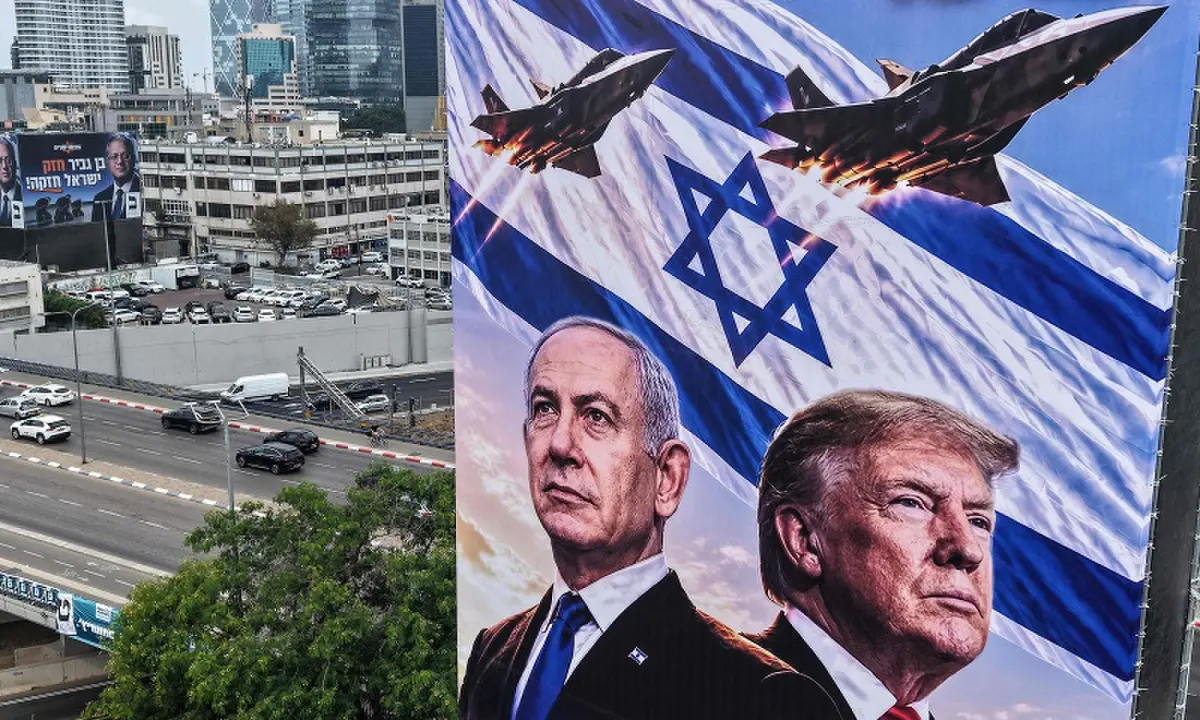
Photo via The Independent

Elections, corruption scandals and assassination attempts: Netanyahu’s remarkable history of survival

Read the original at The Independent ↗
Cite

Reynolds, J. C. (2026, October 29). Elections, corruption scandals and assassination attempts: Netanyahu’s remarkable history of survival. The Independent. https://www.independent.co.uk/news/world/middle-east/netanyahu-israel-election-results-assassination-corruption-b3075452.html

Dated from the outlet's own feed. Check the original for its byline.

The Independent · collected 2026-10-29 · by James C. Reynolds

Quick Summary

Benjamin Netanyahu and his allies are projected to win the most seats in Israel’s recent parliamentary election, despite initial polls suggesting otherwise. As of Wednesday, the central election committee was still counting votes, with results expected by Thursday; current forecasts indicate Netanyahu's coalition will secure 54 seats, short of a majority but ahead of main rival Gadi Eisenkot. The article highlights Netanyahu’s political longevity and resilience, noting his 19 years as prime minister over three decades, including surviving multiple assassination attempts and corruption scandals.
Written by AI on 2026-10-30, from this article's own text only (the story summary below draws on all the coverage).
See how they differ ↓

AI analysis

Story summary

Israelis voted on October 27, 2026, in a closely contested election to elect the Knesset. The election was marked by a strong anti-Netanyahu sentiment, with thousands rallying in Tel Aviv against Prime Minister Benjamin Netanyahu. Gadi Eisenkot, a centrist challenger, emerged as Netanyahu's main rival, leading a coalition that could potentially form a government with the support of Arab-Israeli parties. Despite Netanyahu's Likud bloc winning the most seats, they fell short of a majority, securing only 53 out of 120 seats. This political deadlock leaves Netanyahu's future uncertain, as forming a stable government remains a challenge.

Written for “Israeli Election Deadlock” on 2026-11-20, grounded in this article and the 257 other(s) covering the same event.

How they differ

32 outlets covered “Israeli Election Deadlock”.

What each outlet says

One AI summary per outlet of its latest article on this story, written from that article alone and checked against it. Open the article for the outlet's own words.

The IndependentThis outlet29 Oct

Benjamin Netanyahu and his allies are projected to win the most seats in Israel’s recent parliamentary election, despite initial polls suggesting otherwise. As of Wednesday, the central election committee was still counting votes, with results expected by Thursday; current forecasts indicate Netanyahu's coalition will secure 54 seats, short of a majority but ahead of main rival Gadi Eisenkot. The article highlights…

Elections, corruption scandals and assassination attempts: Netanyahu’s remarkable history of survival (this article)15 articles from The Independent on this story
Al Jazeera3 Nov

Israeli Prime Minister Benjamin Netanyahu's Likud-led bloc emerged as the winner in the recent general election, securing the most seats. However, forming a governing coalition remains challenging due to the need for broad support across various political factions, including former rivals and far-right parties, each of which demands concessions from Netanyahu.

Netanyahu’s eight-seat problem →35 articles from Al Jazeera on this story
The Hindu2 Nov

The Israeli Knesset elections concluded with an inconclusive outcome that reflects the country's deepening division along nationalist lines and ethnic splits. With only 11 out of 38 parties likely to secure seats in a 120-member legislature, the centrist bloc, the ruling extreme right coalition, and the Israeli-Arab bloc received approximately 48%, 53%, and 19% of the seats respectively. Voter turnout surged to…

An anti-climactic outcome in the Knesset elections →20 articles from The Hindu on this story
The Straits Times30 Oct

The final vote count from Israel’s election on October 30 confirmed that neither Prime Minister Benjamin Netanyahu's hard-right coalition nor the opposition bloc led by Gadi Eisenkot secured an outright majority, with Netanyahu’s alliance winning 53 seats and the opposition securing 48. Two Arab parties gained a record-high 19 seats, adding to the political uncertainty. President Isaac Herzog will decide who has the…

Final vote results in Israel set up weeks of uncertainty about who will govern →18 articles from The Straits Times on this story
BBC29 Oct

Israeli opposition leaders Gadi Eisenkot and Arab party representatives have criticized Prime Minister Benjamin Netanyahu for accusing foreign entities of interfering in recent elections that his coalition lost its majority. Netanyahu's Likud Party alleged that Israel’s Arab-led parties received illegal funding from Qatar and Turkey, a claim denied by Qatar's foreign ministry as "ridiculous." Final election results…

Israeli opposition accuses Netanyahu of trying to 'delegitimise' election →12 articles from BBC on this story
Washington Examiner6 Nov

Benjamin Netanyahu's political resilience was on full display in recent Israeli elections despite facing significant challenges. After a devastating terrorist attack on October 7, 2023, which his government failed to prevent and which initially suggested his downfall, Netanyahu surprisingly maintained strong support. Polls had previously indicated that the opposition would defeat him and his Likud party, but the…

The Israeli elections prove Netanyahu’s political prowess →11 articles from Washington Examiner on this story
Show 26 more outlets
CBS News30 Oct

Prime Minister Benjamin Netanyahu and his Likud party have accused Arab-majority parties of stealing Israel's recent election through foreign funding, which they claim amounted to vote-buying. The final results show that Netanyahu’s bloc lost its majority in parliament, dropping from 68 seats to 53, while the main opposition won 48 seats. This leaves a potential coalition short on votes and reliant on support from…

Netanyahu's party claims Israel's election was stolen. Now what? →10 articles from CBS News on this story
New York Post30 Oct

In Israel’s recent national election, Benjamin Netanyahu’s right-wing bloc won with 53 seats out of 120 in the Knesset, falling short by eight seats of the 61 needed for a majority. Likud emerged as the largest party with 27 seats. The opposition bloc led by Gadi Eisenkot secured 48 seats. With neither side able to form a government on its own, Netanyahu and Eisenkot both pledged to work towards forming a coalition…

Netanyahu’s right-wing bloc wins Israeli election but he’s eight seats short of majority →10 articles from New York Post on this story
Dawn30 Oct

Benjamin Netanyahu’s coalition in Israel finished with 53 seats, just short of a majority needed to form a government, following the country's recent general election. The opposition bloc secured 48 seats, while Arab party groupings Raam and the Joint List won a combined 19 seats, positioning them as crucial for forming any potential coalition. Controversy over alleged foreign funding by Qatar to influence votes…

Netanyahu's bloc finishes ahead in Israel election, but well short of majority →10 articles from Dawn on this story
ABC News (AU)31 Oct

In Israel's recent election, Arab parties secured a record 19 seats in the 120-seat Knesset, up from their previous total of 10 seats. This surge was driven by high voter turnout among Arab Israelis and Bedouin communities, who aimed to challenge Benjamin Netanyahu’s government and demand equal citizenship rights. With neither major coalition achieving a majority, these parties now hold significant power in…

Israel's Arab parties emerge from deadlocked election as kingmakers →8 articles from ABC News (AU) on this story
Euronews30 Oct

Israeli legislative election results show Prime Minister Benjamin Netanyahu’s bloc with 53 seats and the opposition led by Gadi Eisenkot securing 48 seats in the 120-seat Knesset. Likud remains the largest single party with 27 seats, while Arab parties collectively gained a record 19 seats. Netanyahu has accused Arab parties of election fraud and alleged foreign funding influence from Qatar, calling for an…

Netanyahu bloc emerges ahead in Israeli election but fails to secure majority →8 articles from Euronews on this story
National Post30 Oct

Jesse Kline discusses how Israel's recent high-stakes election has resulted in an unclear winner, with Prime Minister Benjamin Netanyahu’s Likud party leading but falling short of forming a majority government on its own. With neither side close to the required 61 seats and Arab parties holding key votes, this outcome is deemed unfavorable as it may prolong political instability at a critical time for Israel's…

Jesse Kline: Election could not have turned out worse for Israel →8 articles from National Post on this story
Times of India30 Oct

Yair Lapid, Israel’s opposition leader, has claimed a moral victory despite his bloc falling short of an outright majority in recent elections. With 67 seats out of 120, Lapid argues that while not decisive, this outcome presents a significant challenge to Prime Minister Benjamin Netanyahu's ability to form a government. Despite the difficulty in coalition-building due to ideological divides within the…

'A win is a win': Israel opposition leader Lapid reacts to Netanyahu's poll setback →7 articles from Times of India on this story
Fox News30 Oct

Israel’s final election results show Benjamin Netanyahu's bloc has lost its parliamentary majority, securing only 53 seats in the 120-member Knesset compared to 48 for opposition leader Gadi Eisenkot. The election saw a record 77.9% voter turnout and placed Arab parties with 19 seats in a potentially decisive position. Netanyahu's Likud party holds 27 seats, but neither side has the required 61 seats for a majority…

Netanyahu's bloc falls short as longtime allies reportedly weigh move that could end his rule →6 articles from Fox News on this story
NPR30 Oct

Israel's recent election resulted in a political deadlock, with neither Prime Minister Benjamin Netanyahu nor his main challenger Gadi Eisenkot able to secure enough parliamentary support to form a government. The Knesset lacks a clear majority for either side, as Eisenkot’s bloc cannot achieve one without Arab party support, which he has ruled out due to their stances on issues like Hamas and the Gaza conflict…

Israel is in a political deadlock. What comes next? →6 articles from NPR on this story
Daily Mail30 Oct

Benjamin Netanyahu’s party, Likud, intensified claims that Arab-led parties had "stolen" the election in Israel, alleging foreign interference and warning of “Islamisation.” The election results show Netanyahu's bloc with 53 seats out of 120 in parliament, below the majority needed to form a government. The opposition has accused Netanyahu of attempting to delegitimise the election by demonizing Arab voters after…

Netanyahu's party ramps up claims Arab parties 'stole' the election and warns of 'Israel's Islamisation' after failing to win majority →6 articles from Daily Mail on this story
The Guardian29 Oct

Benjamin Netanyahu has faced accusations of employing smear tactics to retain power after losing his parliamentary majority in Tuesday’s elections. He alleged that foreign-backed Arab Israeli parties manipulated the vote and demanded investigations into supposed irregularities in Palestinian communities. This claim was criticized by opposition leader Gadi Eisenkot, who called it an attempt to delegitimize election…

Israeli leader Netanyahu accused of using ‘ugly’ smear tactics to cling to power →6 articles from The Guardian on this story
Toronto Star30 Oct

Palestinian citizens of Israel participated in record numbers during recent elections, marking a significant political shift as two Arab-led parties secured the largest number of seats ever—19 out of 120. This surge is seen as a response to years of marginalization and rising anti-Arab sentiment under Netanyahu’s right-wing government. Voter turnout increased by over 60% compared to previous elections, with many…

For Palestinian citizens of Israel, a historic vote born of fear and frustration →5 articles from Toronto Star on this story
CBC29 Oct

Israelis are waiting for final election results that could confirm Benjamin Netanyahu’s bloc holding a slight edge over opposition parties, with about 53 seats compared to 48 for the opposition and 19 for Arab-led groups. The counting of roughly half a million absentee ballots is expected to conclude on Thursday evening, potentially affecting coalition negotiations but unlikely to change the overall outcome…

Israelis await final election results as Netanyahu's bloc holds slight edge →5 articles from CBC on this story
Sydney Morning Herald30 Oct

After the Israeli election, Arab parties have gained significant strength with 19 seats, up from 10 in the previous election, due to a dramatic increase in voter turnout among Arab-Israelis to about 80%. This surge was driven by concerns over security issues under Itamar Ben-Gvir's leadership. The opposition bloc, led by Gadi Eisenkot and including these Arab parties with 67 seats total, surpasses Netanyahu’s…

They’re potential kingmakers, but may be excluded from Israel’s government. Here’s why →5 articles from Sydney Morning Herald on this story
South China Morning Post29 Oct

Benjamin Netanyahu’s party has accused Arab-led parties of stealing the Israeli election, suggesting foreign involvement, despite official results showing his bloc with 53 seats while the main opposition holds 48 and Arab-led parties have 19 seats. The opposition claims Netanyahu is trying to delegitimize the election by targeting Arab voters after their strong performance. A potential coalition between the…

Netanyahu’s party claims election ‘stolen’ as results show him losing majority →5 articles from South China Morning Post on this story
NBC News30 Oct

Israel's final election results show Benjamin Netanyahu’s right-wing bloc securing 53 seats and Gadi Eisenkot’s rival bloc winning 48 seats in Israel’s 120-member parliament, falling short of the 61 seats needed to form a government. President Isaac Herzog will next week decide which candidate has the best chance to lead government formation efforts. Notably, parties representing Arab Israelis won a combined 19…

Israel’s final election results show neither Netanyahu nor rival can immediately form government →5 articles from NBC News on this story
Semafor28 Oct

Benjamin Netanyahu's coalition currently leads in Israel's closely contested election but falls short of the majority needed to form a government. Arab parties achieved a record number of seats, potentially positioning them as key players in determining the next prime minister. Critics see this outcome as reflecting voter dissatisfaction with Netanyahu’s leadership, yet both main political blocs are hesitant to…

Netanyahu's coalition draws ahead in Israel's tight election race →5 articles from Semafor on this story
Reason30 Oct

The Israeli Central Elections Committee announced final results showing Benjamin Netanyahu's right-wing bloc securing 53 seats in the Knesset, just short of a majority needed to form a government without coalition negotiations. Despite these political uncertainties, the article asserts that regardless of who leads Israel next, American military aid and funding will continue to support Israel’s defense initiatives…

With or Without Netanyahu, Israel Will Want American Taxpayers To Keep Funding Its Wars →3 articles from Reason on this story
The Dispatch29 Oct

Voters in Israel participated in a nationwide election on Tuesday, with many casting ballots in Tel Aviv’s Hatikva Quarter. A campaign booth nearby played an anthem praising incumbent Prime Minister Benjamin Netanyahu, highlighting his leadership and popularity. The election also featured other prominent figures such as former IDF chief of staff Gadi Eisenkot, as evidenced by electronic billboards displayed around…

Who Will Lead Israel Now? →2 articles from The Dispatch on this story
The Free Press29 Oct

The article discusses the results of Israel's recent parliamentary election where Benjamin Netanyahu’s coalition secured 53 seats in the 120-seat Knesset, while the opposition led by Gadi Eisenkot received 48 seats and two Arab parties gained a combined total of 19. With no single bloc achieving the required 61 seats to form a majority government, Netanyahu may attempt to form a minority government or negotiate with…

Where Does Benjamin Netanyahu Go from Here? →2 articles from The Free Press on this story
The Bulwark30 Oct

Israel’s recent elections were expected to resolve key political issues but instead have left the country in a state of uncertainty and frustration. Despite a majority of voters seeking change, Prime Minister Benjamin Netanyahu's coalition, currently holding around 68 seats, is set to decline to about 53 seats. The opposition, led by former IDF Chief Gadi Eisenkot, has gained significant support but still falls…

Israel’s Democracy—And Its Relationship with America—Remain in Limbo →2 articles from The Bulwark on this story
Global News26 Oct

Prime Minister Benjamin Netanyahu faces a critical election as Israelis vote on Tuesday, nearly six months after Hamas attacked Israel on October 7, 2023. The attack resulted in over 1,200 Israeli deaths and 251 hostages, leading to significant military retaliation that has killed more than 74,000 Palestinians according to local health authorities. Netanyahu’s legacy hangs in the balance as his opponents see this…

Netanyahu’s legacy on the line as Israelis head to elections this week →
Deutsche Welle27 Oct

Israel is holding its first general election since the October 7, 2023 Hamas attack, which plunged the country into one of its most severe security crises. Incumbent Prime Minister Benjamin Netanyahu seeks re-election against Gadi Eisenkot, former IDF chief and leader of the Yashar party. US President Donald Trump has endorsed Netanyahu as a "warrior prime minister," cautioning that any other leadership choice could…

Will elections in Israel change its Iran approach? →
Time27 Oct

On Tuesday, Israeli voters participated in what is likely to be the highest turnout election since 1973, with 66.7% of eligible voters casting ballots by 6 p.m. local time. Prime Minister Benjamin Netanyahu, facing a critical test of his leadership, urged supporters to vote as polls showed a tight race between his pro-Netanyahu coalition and opposition movements led by figures like former IDF chief Gadi Eisenkot…

Record Israeli Election Turnout as Netanyahu Battles to Stay in Power →
Persuasion29 Oct

Israeli election results show a divided nation, with Benjamin Netanyahu's pro-Bibi camp securing 53 Knesset seats and the Jewish anti-Netanyahu bloc obtaining 48, falling short of a majority in parliament. Notably, Arab parties gained significant ground, capturing 19 seats. Voter turnout was high at 78%, reflecting heightened engagement from Arab-Israeli citizens who voted at an unprecedented rate of 80%. The…

Eizenkot’s Choice →
ABC News (US)29 Oct

The final vote count from Israel's parliamentary election shows Benjamin Netanyahu's bloc maintaining its lead with 53 seats, while the opposition bloc has secured 48 seats. No coalition has achieved the required 61-seat majority needed for governance. This situation could potentially require Netanyahu’s or Gadi Eisenkot’s bloc to seek support from Arab Israeli parties, though both leaders have previously rejected…

Israel election results: Netanyahu's bloc maintains lead but does not secure majority →

Compared with similar articles

This article reads unscored and hedges 4% of its claims. Each row says how that neighbour differs.
The Independent
Hedges 2 of 56 claims Outlet record 59/100
The Free Press
Leans right Hedges 1 of 13 claims Outlet record 96/100
National Post
Hedges 2 of 27 claims Outlet record 60/100
The Hindu
Leans right Hedges 5 of 39 claims Outlet record 78/100
Photos of the week Different event
CBS News
Hedges 0 of 1 claims Outlet record 67/100
“While both articles discuss Netanyahu's election and political situation, they do not describe the exact same specific incident or time frame.”
Fox News
Hedges 6 of 46 claims Outlet record 67/100
“The articles discuss different aspects of Israeli politics and do not refer to the same specific event.”
The Guardian
Leans strongly left Hedges 1 of 34 claims Outlet record 64/100
“The articles describe different stages of the election process; Article A discusses the outcome and aftermath before final results were in, while Article B focuses on Netanyahu's overall survival and current standings as votes are still being tallied.”
The Hindu
Leans strongly left Hedges 3 of 19 claims Outlet record 78/100
“While both articles discuss Netanyahu's October 27 election results in Israel, Article A focuses on the immediate aftermath of the vote count being nearly complete, while Article B discusses ongoing tallying and forecasts for final results.”
CBS News
Leans strongly right Hedges 10 of 57 claims Outlet record 67/100
“Article A discusses the upcoming election and its potential outcomes before it happens, while Article B reports on the results after the election took place.”
Dawn
Leans right Hedges 2 of 32 claims Outlet record 67/100
“Article A describes Netanyahu's efforts on election day and initial exit polls, while Article B discusses post-election vote counting and forecasts.”

Story

Israeli Election Deadlock
Politics · 258 article(s) covering the same event. See how they differ ↑
How this article was measured signals, leaning charts, publisher record, byline, topics and claims

Signals How these are calculated →

Claims extracted
56
sentences that state something as happening or true
Uncertain
4%
2 of 56 hedged ("reportedly", "may", "according to")
Leaning
not political
takes no side on a contested political question
Publisher signals
59/100
The Independent's corrections and hedging, across everything collected from it. Not a measure of accuracy.
Outlets on this story
258
Politics
Same framing elsewhere
1
articles that frame the event the way this one does
Analyzed 2026-10-30 · how these are computed

How this is being covered How these are calculated →

Article leaning vs. publisher reliability
Source leaning vs. consistency

Publisher

The Independent · 4711 article(s) · 10 correction(s) detected
Running correction rate · 10 correction(s)

Who wrote this

James C. Reynolds
84 article(s) here · 1 carrying a prediction
Putin also admitted afterwards that the summit did not set ambitious goals and that nobody would be forced to comply with its decisions, as he vowed fresh strikes on Ukraine’s energy infrastructure.
Trump on Thursday also appealed to president Xi to help end the war and expressed hope that their three-way meeting with Putin would yield results.
While ceding land that it currently controls had been a red line for Kyiv, Mr Zelensky said he would hold a referendum to allow Ukrainians to vote on a peace agreement should the US and Nato support the proposals.
It was late one Friday afternoon in October when Donald Trump unveiled what he thought would be a bold new plan to rescue America from the fuel crisis.
Born in the Netherlands in 1876, Margaretha Geertruida Zelle would go on to earn a reputation as one of the most dangerous female spies of the First World War.
Leading African beauty queens fear they could be left out of this year’s Miss Universe competition due to difficulties obtaining a US visa, after Donald Trump restricted travel for dozens of foreign countries.
The liner left Spain with some 2,000 passengers and 800 crew on board on 4 November and was expected to conclude its voyage in the Americas on Sunday.
Russia’s chief negotiator Vladimir Medinsky said that mutual understanding had been achieved on some issues and that more talks would be held, adding that the two sides had agreed on a large-scale prisoner swap. Ukrainian negotiator David Arakhamia said that there was “good momentum” towards reaching a solution by the end of this year, but that Europe should also be represented in future discussions. This week’s talks in the United Arab Emirates marked a restart for diplomacy some nine months after delegations last met in Geneva to discuss peace terms.
Nvidia has seen hundreds of billions of dollars wiped from its value in recent days after the US chipmaker said it would investigate Huang’s admitted relationship with the former Megaspeed director Alice Huang.
Also by James C. Reynolds
Nothing else under this byline is closely related to this article, so these are simply their most recent.
All 84 articles by James C. Reynolds →

Topics

Israel Israeli Knesset Labor Likud

Subjects

Netanyahu PERSON · 9× Likud ORG · 5× Bibi PERSON · 3× Israeli NORP · 3× Labor ORG · 3× Israel GPE · 2× Knesset ORG · 2× Benjamin Netanyahu PERSON · 1× Gadi Eisenkot PERSON · 1× Independent ORG · 1×

Narrative

He and Gantz signed an emergency unity government deal that April, rotating the leadership and resolving calls to form a coalition and get to work tackling the pandemic. Netanyahu was finally forced out of office after 12 years in 2021 by a broad coalition of ideologically disparate partners, Yair Lapid and Naftali Bennett.
framing: assertive · carried by 1 article(s) · first seen 2026-10-30
Benjamin Netanyahu and his allies are on track to win the most seats in Israel’s parliament, despite weeks of polling predicting he would not survive Tuesday’s election.

Claims (56 extracted, 2 hedged)

Benjamin Netanyahu and his allies are on track to win the most seats in Israel’s parliament, despite weeks of polling predicting he would not survive Tuesday’s election. asserted
he → win → election
The central election committee was still tallying votes on Wednesday, and it will likely take until Thursday before definitive results of the election are known. asserted
results → tally → election
Current forecasts suggest Netanyahu and his allies will win 54 seats, falling short of the 61 needed for a majority in the Knesset, but also leaving his main challenger Gadi Eisenkot without a clear path to government. asserted
Netanyahu → suggest → government
Israel’s longest serving prime minister, 77, has established himself as a political survivor with a cumulative 19 years in office, and could stay on as caretaker if negotiations fail to yield a new government. uncertain
negotiations → serve → government
But beyond politics he has survived multiple assassination attempts and multiple corruption scandals. asserted
he → survive → attempts
Below, The Independent looks back on Netanyahu’s unmatched staying power at the top of Israeli politics. asserted
Independent → look → politics
Thirty years have passed since Bibi was first elected prime minister in 1996. asserted
Bibi → pass → 1996
The single most dominant figure in Israeli politics, he has spent 19 years in the role, including 12 consecutively between 2009 and 2021. asserted
he → spend → 2009
Netanyahu’s first election set the tone as he overcame opponent Shimon Peres by just 29,457 votes. asserted
he → set → votes
Likud took charge of the 14th Knesset with just 50.4 per cent of the vote, against Labor’s 49.6. asserted
Likud → take → 49.6
He resigned as party leader three years later after suffering a landslide defeat to Labor challenger Ehud Barak. asserted
He → resign → Barak
Netanyahu would spend a decade in the wilderness before storming to power again on the heels of the 2009 war with militants in Gaza. asserted
Netanyahu → spend → Gaza
The Likud party did not win the most seats this year, as foreign minister Tzipi Livni’s centrist Kadima party narrowly pulled in front. asserted
party → win → front
But it was Bibi who managed to form a coalition government with the remaining parties. asserted
who → manage → parties
Voters struggled through the second term with the cost of living and mounting income equality, and Netanyahu was polling behind a Labor-Livni hybrid in the run up to the 2013 election. asserted
Netanyahu → struggle → election
A popular new centrist party, Yesh Atid, had also emerged around former journalist Yair Lapid, swallowing up a swathe of Bibi’s base. asserted
party → emerge → base
And yet, a Likud-Yisrael-Beiteinu alliance formed and Netanyahu stayed on. asserted
Netanyahu → form → ?
Livni and current president Isaac Herzog made a challenge with the centre-left Zionist Union alliance in 2015, but lost out with just 24 seats to Likud’s 30. asserted
Livni → make → 30
April 2019 began a turbulent year as Likud failed to form a government after tying with centrist challenger Benny Gantz. asserted
Likud → begin → Gantz
A second inconclusive election followed in September, with Gantz pulling ahead 33-32. asserted
Gantz → follow → September
But again, neither side was able to form a government. asserted
side → form → government
A third election would follow in March 2020, by which time Netanyahu had become embroiled in a corruption row, charged with bribery, fraud and breach of trust. asserted
Netanyahu → follow → trust
Netanyahu has been on trial for six years over three separate criminal cases, all of which he denies. asserted
he → deny → which
The cases have been repeatedly delayed, particularly since the October 7 terror attacks in 2023. asserted
cases → delay → 2023
He was first indicted in 2019 on charges of bribery, fraud and breach of trust. asserted
He → indict → trust
The prime minister was accused of accepting tens of thousands of dollars’ worth of cigars and champagne from a Hollywood producer in exchange for assistance with personal and business interests. asserted
minister → accuse → interests
He was also accused of promoting advantageous regulations for media moguls in exchange for favourable coverage of himself and his family. asserted
He → accuse → himself
He consistently denied the charges and cast the case as a partisan witch hunt. asserted
He → deny → hunt
The third case accuses Netanyahu of granting regulatory favours worth around $500 million to Bezeq Telecom Israel. asserted
case → accuse → Israel
Bribery charges alone carry a prison sentence of up to 10 years and a fine. asserted
charges → carry → years
Under Israeli law, a prime minister is under no obligation to stand down unless convicted. asserted
minister → stand → obligation
If he or she appeals their conviction, they can keep their office throughout the appeals process. asserted
they → appeal → process
Netanyahu’s cross examination was completed in June this year after 98 hearings. asserted
examination → complete → hearings
Earlier this month the court moved to sit five days a week in a bid to accelerate the case before the presiding judge retires. asserted
judge → move → case
Meanwhile, Netanyahu has requested a pardon from president Isaac Herzog, with a decision still pending. asserted
decision → request → Herzog
Out of office - and back just 18 months later The March 2020 election became a fight for survival as Bibi pleaded for immunity from prosecution while campaigning as the world began to lockdown from the Coronavirus. asserted
world → become → Coronavirus
He and Gantz signed an emergency unity government deal that April, rotating the leadership and resolving calls to form a coalition and get to work tackling the pandemic. Netanyahu was finally forced out of office after 12 years in 2021 by a broad coalition of ideologically disparate partners, Yair Lapid and Naftali Bennett. asserted
Netanyahu → sign → partners
The unique coalition, which for the first time included an Arab party (Ra’am), was beginning to destabilise by spring 2022. asserted
which → include → spring
Bennett called for early elections and the stage was set for Likud to come out on top with a strong majority, despite the corruption scandal. The country was soon thrown back into crisis in 2023 as Netanyahu moved to overhaul the judiciary. asserted
Netanyahu → call → judiciary
Tens of thousands of people turned out for weekly protests in towns and cities across the country, calling for all the planned reforms to be scrapped and for Netanyahu to resign. asserted
Netanyahu → turn → country
…and 16 more, not listed.
Give feedback · no sign-in needed

No sign-in needed for now. Your note is sent without a name, so it cannot be answered.

History Support