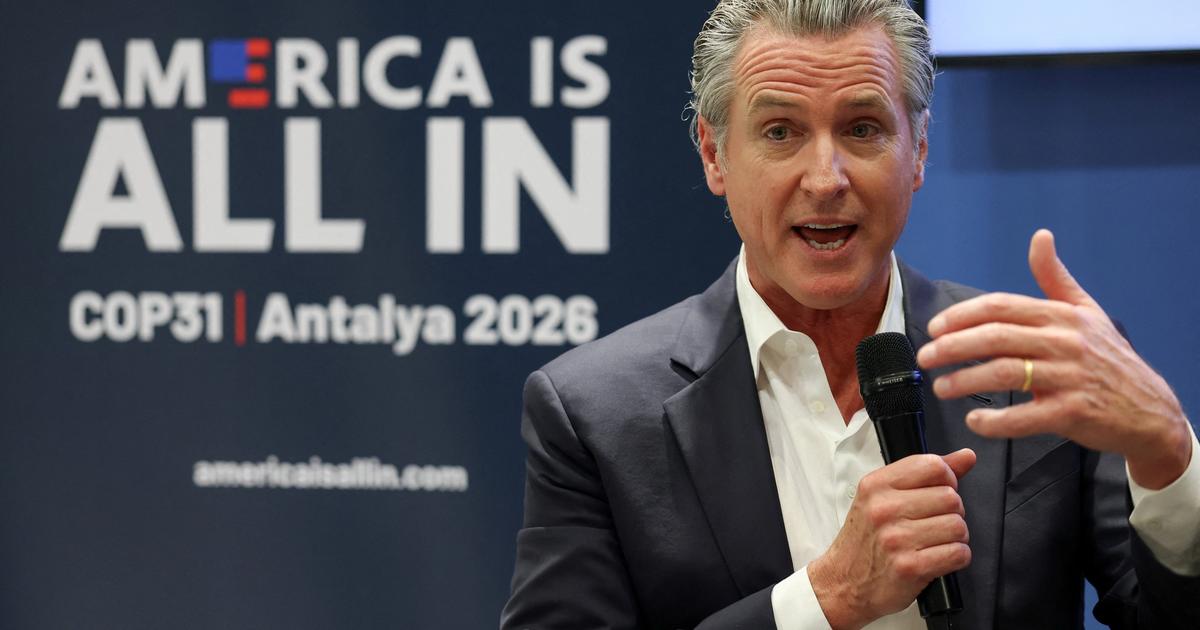
Photo via Semafor

Democrats divided on timing for permitting reform

Read the original at Semafor ↗
Cite

McDonnell, T. (2026, October 29). Democrats divided on timing for permitting reform. Semafor. https://www.semafor.com/article/10/29/2026/democrats-divided-on-timing-for-permitting-reform

Dated from the outlet's own feed. Check the original for its byline.

Semafor · collected 2026-10-29 · by Tim McDonnell

Quick Summary

Democrats are split over whether to advance a bipartisan permitting reform bill immediately or wait until after the midterms. Left-leaning senators and environmental groups want the White House to restore clean energy funding before proceeding, while Biden’s Energy Secretary Jennifer Granholm and climate advocate Tom Steyer urge moving forward now due to potential economic benefits. However, critics warn that the bill could undermine government oversight and not significantly reduce electric bills for years despite long-term electrification gains.
Written by AI on 2026-10-29, from this article's own text only (the story summary below draws on all the coverage).

AI analysis

Story summary

Leading Democrats are divided on whether to proceed now or wait until after the midterm elections to pass a bipartisan permitting reform bill. A group of left-leaning Senate Democrats and environmental groups want the White House to restore clean energy funding before voting, while former President Joe Biden’s climate advisor John Podesta warns that the bill could be easily used by former President Donald Trump to push through fossil fuel projects. However, Energy Secretary Jennifer Granholm and Tom Steyer urge Congress to move forward immediately due to potential benefits like boosting household income and accelerating electrification, as forecasted by a White House study and Columbia University researchers. These same researchers caution that the bill could weaken government oversight powers, make environmental harms harder to reverse, and delay noticeable reductions in electric bills for years after new infrastructure projects start.
Written for “Democrats Divided On Permitting Reform_timing” on 2026-11-21, grounded in this article and the 0 other(s) covering the same event.

Compared with similar articles

This article reads leans left and hedges 17% of its claims. Each row says how that neighbour differs.
Deutsche Welle
Leans left Hedges 8 of 42 claims Outlet record 95/100
“The articles discuss different aspects of Democrats' strategy regarding climate policy and permitting reform, not a single specific incident.”

Story

Democrats Divided On Permitting Reform_timing
Politics · 1 article(s) covering the same event.
How this article was measured signals, leaning charts, publisher record, byline, topics and claims

Signals How these are calculated →

Claims extracted
6
sentences that state something as happening or true
Uncertain
17%
1 of 6 hedged ("reportedly", "may", "according to")
Leaning
Leans left
of the writing, not the subject · beta estimate
Publisher signals
64/100
Semafor's corrections and hedging, across everything collected from it. Not a measure of accuracy.
Outlets on this story
1
Politics
Same framing elsewhere
1
articles that frame the event the way this one does
Analyzed 2026-10-29 · how these are computed

How this is being covered How these are calculated →

Article leaning vs. publisher reliability
Source leaning vs. consistency

Publisher

Semafor · 1931 article(s) · 7 correction(s) detected
Running correction rate · 7 correction(s)

Who wrote this

Tim McDonnell
31 article(s) here · 1 carrying a prediction
More restrictions are almost certainly forthcoming in newly Democrat-led states like Texas, and the wellspring of capital from Nvidia, both for hyperscalers’ construction ambitions and the comparatively modest needs of energy startups, could start to ebb.
2026-11-17 · assertive framing · AI isn't out of energy yet
The CEO of fuel cell maker Bloom Energy said at Semafor’s Silicon Valley & The World that he’s not worried about rising natural gas prices or political pushback to data centers, as the economy-wide scramble for electrons marks an “architectural shift” for the grid that will favor onsite power production.
2026-11-17 · assertive framing · Bloom Energy sees 'nothing but a huge opportunity'
Acwa, which is part-owned by Saudi Arabia’s Public Investment Fund, operates power and desalination plants across the Gulf, and Serhan quickly understood they could become targets.
2026-11-16 · assertive framing · Inside Acwa’s clean power battle plan
“I don’t want to romanticize what this will mean.
There are still many people here at COP31 in Antalya, Türkiye, this week who would love to see the oil and gas industry shuttered tomorrow, energy access and prices be damned.
2026-11-10 · assertive framing · COP should put itself out of business
A panel factory in Texas shows how that’s already happening — but why weaning them off entirely could be harder than it looks.
2026-11-10 · assertive framing · US solar learns to live without China
Democrats, while not able to directly control US national security strategy, can also flex their powers over the budget and personnel confirmations to pressure US President Donald Trump on a deal with Iran, which would push oil prices down.
2026-11-05 · assertive framing · Big Oil sweats the blue wave
Thanks to the breakneck evolution of frontier AI models, “We’re now really seeing the technology mature to the level where it will make a significant change in the operating processes within the sector,” said Dan Jeavons, president of UK-based Applied Computing.
2026-11-05 · assertive framing · AI companies race to lock down oil clients
Tim’s view Today’s US election is a test of how much voters will want to punish the president for soaring gasoline and power prices.
2026-11-03 · assertive framing · Gas on the ballot in US elections
US President Donald Trump’s apparent handout to Big Oil this week is really more of a favor for small producers, and may actually hand more regulatory sway to Europe.
2026-10-29 · assertive framing · Trump's methane rollback could backfire
Also by Tim McDonnell
AI isn't out of energy yet
2026-11-17 · Semafor
Nothing else under this byline is closely related to this article, so these are simply their most recent.
All 31 articles by Tim McDonnell →

Topics

Congress Democrats Energy Senate the White House

Subjects

Democrats NORP · 2× Biden PERSON · 1× Energy ORG · 1× Granholm PERSON · 1× Howitzer PERSON · 1× Joe Biden PERSON · 1× John Podesta PERSON · 1× Senate ORG · 1× Trump PERSON · 1× the White House ORG · 1×

Narrative

“Those gains come with a cost,” the researchers nevertheless wrote, including weakening the government’s oversight powers, making environmental harms harder to reverse, and not delivering noticeable reductions in electric bills for “years after households start paying for new infrastructure.”
framing: assertive · carried by 1 article(s) · first seen 2026-10-29
The bill could lead to a boost in household income, a White House study forecast, and Columbia University researchers concluded it would meaningfully accelerate the country’s electrification.
2026-10-29 · Semafor
Democrats divided on timing for permitting reform · assertive framing

Claims (6 extracted, 1 hedged)

Leading Democrats are divided on whether to press forward now on a bipartisan permitting reform bill, or wait and try for more concessions after the midterm elections. asserted
Democrats → lead → elections
A group of left-leaning Senate Democrats, echoing concerns from environmental groups, said a vote should be put off until the White House commits to restore clean energy funding it cut. asserted
it → lean → funding
And former President Joe Biden’s climate advisor John Podesta warned the bill is “a loaded Howitzer” for Trump to push through fossil fuel projects. asserted
Trump → warn → projects
But Biden administration Energy Secretary Jennifer Granholm, and erstwhile presidential candidate Tom Steyer, urged Congress to move forward now. asserted
Congress → urge → ?
The bill could lead to a boost in household income, a White House study forecast, and Columbia University researchers concluded it would meaningfully accelerate the country’s electrification. uncertain
it → lead → electrification
“Those gains come with a cost,” the researchers nevertheless wrote, including weakening the government’s oversight powers, making environmental harms harder to reverse, and not delivering noticeable reductions in electric bills for “years after households start paying for new infrastructure.” asserted
households → come → infrastructure
Give feedback · no sign-in needed

No sign-in needed for now. Your note is sent without a name, so it cannot be answered.

History Support