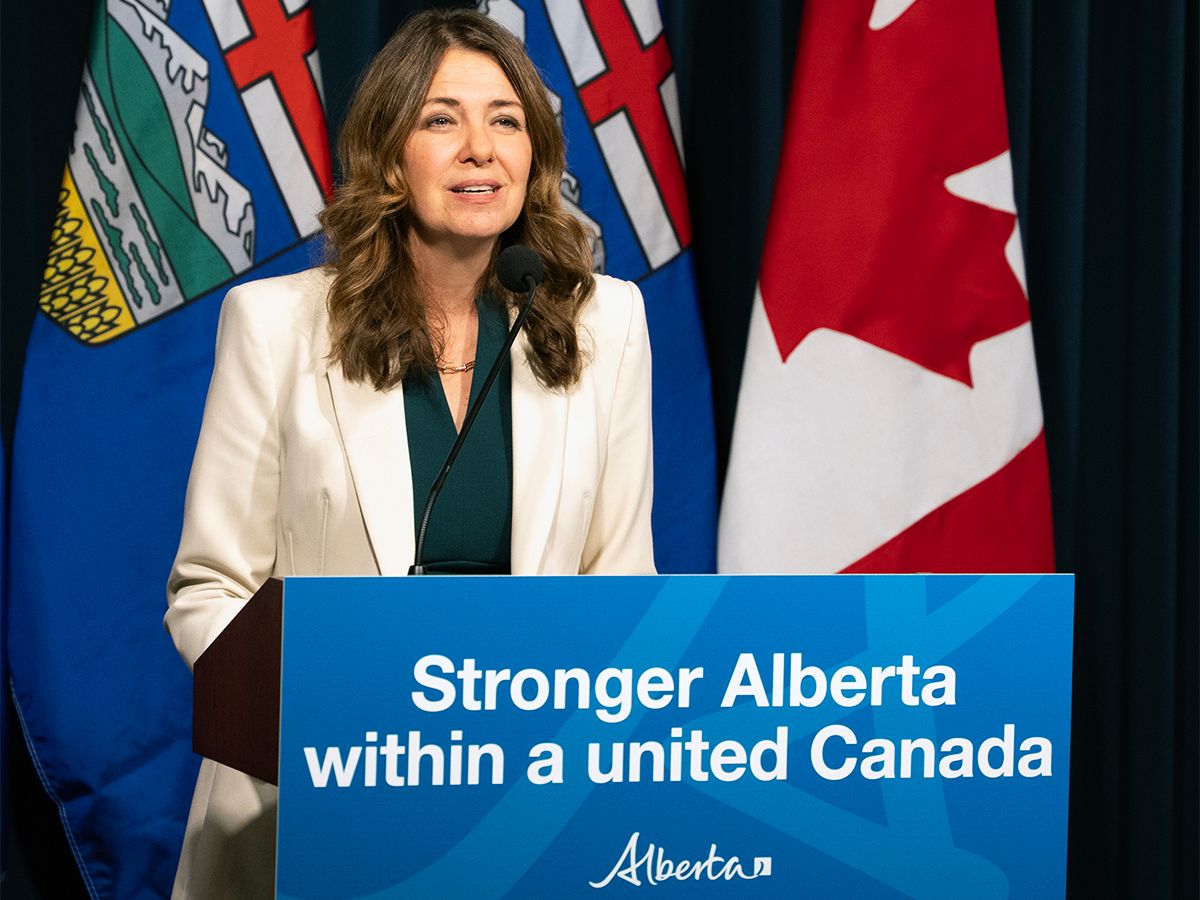
Photo via Toronto Star

Final numbers in: Alberta separation referendum turnout pegged at 70.4 per cent

Read the original at Toronto Star ↗
Cite

Farrell, J. (2026, October 29). Final numbers in: Alberta separation referendum turnout pegged at 70.4 per cent. Toronto Star. https://www.thestar.com/news/canada/alberta/final-numbers-in-alberta-separation-referendum-turnout-pegged-at-70-4-per-cent/article_73d4888d-334e-5ec8-88b3-ff94e0fa9dc5.html

Dated from the outlet's own feed. Check the original for its byline.

Toronto Star · collected 2026-10-29 · by Jack Farrell

Quick Summary

The final results from Alberta's separation referendum show a voter turnout of 70.4%, the highest since at least 1975. Of the approximately 22.1 million ballots cast across ten questions, about 1.56 million Albertans voted to stay in Canada rather than hold another binding referendum on separation. The proposal requiring proof of citizenship for voting received more total votes than the main separation question, with nearly 600 additional votes and over 58% support. There was a significant urban-rural divide, with major cities rejecting separation while rural areas showed mixed results on staying in Canada or holding another referendum.
Written by AI on 2026-10-31, from this article's own text only (the story summary below draws on all the coverage).
See how they differ ↓

AI analysis

Story summary

On October 28, 2026, Alberta held a referendum that saw 74.9% of voters reject holding a second, binding referendum on separation from Canada, with a voter turnout of 70.4%, the highest since at least 1975. The results showed that while most Albertans want to remain in Canada, nearly 25% supported Option B for a follow-up secession vote, which some see as doubling from a decade ago and potentially reaching 50% if trends continue. Additionally, the referendum saw slim margins on other questions, with voters approving changes to immigration policies while rejecting proposals for constitutional reforms that would transfer power from Ottawa to Alberta.

Written for “Alberta Separation Referendum Turnout High” on 2026-11-21, grounded in this article and the 3 other(s) covering the same event.

How they differ

4 outlets covered “Alberta Separation Referendum Turnout High”.

What each outlet says

One AI summary per outlet of its latest article on this story, written from that article alone and checked against it. Open the article for the outlet's own words.

Toronto StarThis outlet29 Oct

The final results from Alberta's separation referendum show a voter turnout of 70.4%, the highest since at least 1975. Of the approximately 22.1 million ballots cast across ten questions, about 1.56 million Albertans voted to stay in Canada rather than hold another binding referendum on separation. The proposal requiring proof of citizenship for voting received more total votes than the main separation question…

Final numbers in: Alberta separation referendum turnout pegged at 70.4 per cent (this article)
National Post28 Oct

Ted Morton analyzes Alberta's recent referendum on potential secession, noting a 25% vote for Option B despite his personal stance against separation. He argues that while this indicates dissatisfaction with federal treatment but not immediate support for secession, future sentiment hinges on Ottawa’s actions, particularly regarding pipeline approvals and energy policies under Prime Minister Mark Carney. Morton…

Ted Morton: What happens next in Alberta depends on Ottawa →
Global News29 Oct

Alberta held a referendum on separation and other provincial issues, resulting in a voter turnout of 70.4%, the highest since at least 1975. While the majority of voters chose to stay within Canada, they supported changes to immigration policies but rejected calls for increased provincial autonomy from the federal government.

Alberta referendum saw 70.4% turnout — highest voter participation in decades →
CBC29 Oct

The official results of Alberta's referendum on separation showed that 70.4% of eligible voters participated, which is nearly 10 percentage points higher than the turnout for the last provincial election in 2023. Despite this high voter engagement, Albertans overwhelmingly rejected the proposal to hold a binding referendum on separation with 74.9% voting against it. The five immigration questions passed with slim…

70% of eligible voters turned out for Alberta referendum question on separation →

Where they agree and split

The full story: what happened, how it changed, and all 4 articles →

Compared with similar articles

This article reads unscored and hedges 6% of its claims. Each row says how that neighbour differs.
Global News
Leans right Hedges 2 of 8 claims Outlet record 63/100
National Post
Leans left Hedges 10 of 64 claims Outlet record 60/100
CBC News
Leans right Hedges 5 of 60 claims Outlet record 72/100
“The articles discuss different aspects of the referendum: one focuses on immigration questions and constitutional changes, while the other reports on voter turnout for the separation question.”
CBC News
Leans right Hedges 4 of 22 claims Outlet record 72/100
Toronto Star
Hedges 1 of 55 claims Outlet record 65/100
“Article A describes personal observations and opinions regarding Alberta separatism, while Article B reports on official turnout numbers for a separation referendum. They are related but describe different aspects of the broader topic.”
CBC News
Leans right Hedges 2 of 28 claims Outlet record 72/100
“The articles describe different aspects of the Alberta referendum: one focuses on rural-urban voting patterns regarding immigration and constitutional questions, while the other reports on overall voter turnout for the separation question.”
National Post
Leans right Hedges 1 of 50 claims Outlet record 60/100
“While both articles discuss the Alberta referendum, Article A focuses on reflections and concerns about the results for one particular option (Option B), whereas Article B provides detailed information about overall voter turnout.”
Toronto Star
Outlet record 65/100
“While both articles discuss a referendum related to Alberta's separation from Canada, Article A is a cartoon depicting voter rejection of separation, while Article B reports on official turnout and results data for the actual referendum event.”
CBC News
Hedges 4 of 96 claims Outlet record 72/100
“Article A discusses the aftermath and reactions following the referendum results, while Article B reports on the official turnout numbers for the referendum.”
CBC News
Leans left Hedges 5 of 33 claims Outlet record 72/100
“Article A discusses takeaways from Alberta's referendum results, while Article B focuses on the final turnout numbers for the referendum. They describe related but distinct aspects of the same broader event.”

Story

Alberta Separation Referendum Turnout High
Politics · 4 article(s) covering the same event. Compare every outlet's account →
How this article was measured signals, leaning charts, publisher record, byline, topics and claims

Signals How these are calculated →

Claims extracted
32
sentences that state something as happening or true
Uncertain
6%
2 of 32 hedged ("reportedly", "may", "according to")
Leaning
not political
takes no side on a contested political question
Publisher signals
65/100
Toronto Star's corrections and hedging, across everything collected from it. Not a measure of accuracy.
Outlets on this story
4
Politics
Same framing elsewhere
1
articles that frame the event the way this one does
Analyzed 2026-10-31 · how these are computed

How this is being covered How these are calculated →

Article leaning vs. publisher reliability
Source leaning vs. consistency

Publisher

Toronto Star · 16516 article(s) · 32 correction(s) detected
Running correction rate · 32 correction(s)
2026-11-17
Correction
2026-10-26
Correction
2026-10-24
Correction
2026-10-07
Correction
2026-09-24
Correction

Who wrote this

Jack Farrell
13 article(s) here · 1 carrying a prediction
Chief electoral officer Gordon McClure told the committee the price tag is nearly $50-million more than the agency’s annual budget could pay for and that it needs the government to cover the rest through additional funding.
"This is just a practical, common-sense way that we can help businesses that we know could be struggling or impacted because of the current tariffs," Nally said in an interview.
The proposal, made public in a report on Monday, would split the southern city of Lethbridge into four ridings from its current two.
The other nine questions saw voters, by slim margins, sign off on the province pursuing changes to immigration policies and reject proposals from Premier Danielle Smith on changes to Canada’s Constitution that would transfer more power from Ottawa to the provinces.
A government bill tabled Tuesday, if passed, would prohibit a number of public bodies from using DEI policies to make hiring decisions.
“Empty words and platitudes do not make it otherwise.” Stephan’s public stance forced Smith into some pretzel-style arguments over how her caucus could be pro-Canada while harbouring separatists.
Smith’s four proposals, three of which would likely require the support of seven legislatures representing over half of Canada’s population (known as the 7/50 rule) and Parliament to implement, are among 10 questions she’s putting to Albertans on Oct. 19.
The agency said those who have previously registered for a special ballot will soon start receiving their packages in the mail or they can pick them up in person.
For Thursday’s call, Albertans could either submit questions online or, if they registered in advance, over the phone.
The event, hosted by the City of Edmonton and Mayor Andrew Knack, saw Indigenous leaders and elders participate in ceremonies, drumming, dancing and the raising of the Treaty 6 flag.
Also by Jack Farrell
Nothing else under this byline is closely related to this article, so these are simply their most recent.
All 13 articles by Jack Farrell →

Topics

Alberta Canada EDMONTON Elections Alberta Ottawa

Subjects

Alberta GPE · 5× Canada GPE · 5× EDMONTON GPE · 5× Calgary GPE · 3× Ottawa ORG · 3× Smith PERSON · 3× Albertans NORP · 2× Elections Alberta ORG · 2× Danielle Smith PERSON · 1× NDP ORG · 1×

Narrative

The other nine questions saw voters, by slim margins, sign off on the province pursuing changes to immigration policies and reject proposals from Premier Danielle Smith on changes to Canada’s Constitution that would transfer more power from Ottawa to the provinces.
framing: assertive · carried by 1 article(s) · first seen 2026-10-31
The other nine questions saw voters, by slim margins, sign off on the province pursuing changes to immigration policies and reject proposals from Premier Danielle Smith on changes to Canada’s Constitution that would transfer more power from Ottawa to the provinces.

Claims (32 extracted, 2 hedged)

The final count is in, and Alberta’s historic referendum on separation saw voters trek to the polls in the highest numbers in decades. asserted
voters → see → decades
That’s according to official results from Elections Alberta, released Thursday, which peg voter turnout on the separation question at 70.4 per cent. uncertain
which → accord → cent
The turnout is the highest for a provincewide vote since at least 1975, but it fell short of breaking the record of 81.8 per cent turnout seen in the 1935 general election. asserted
it → fall → election
Three-quarters of voters, or close to 1.56 million Albertans, said they want to stay in Canada rather than hold a second, binding referendum on separation. asserted
they → say → separation
The other nine questions saw voters, by slim margins, sign off on the province pursuing changes to immigration policies and reject proposals from Premier Danielle Smith on changes to Canada’s Constitution that would transfer more power from Ottawa to the provinces. asserted
that → see → provinces
The official results show that not everyone who voted cast a ballot on all 10 questions. asserted
who → show → questions
In fact, the separation question itself didn’t receive the most ballots. asserted
question → receive → ballots
That honour belongs to the question about whether voters should have to prove citizenship when voting in provincial elections. asserted
voters → belong → elections
It received nearly 600 more total votes than the headlining separation question and about 58 per cent of voters said yes to the proposal. asserted
cent → receive → proposal
The question with the lowest turnout was whether Alberta should take more control from Ottawa over immigration so that fewer newcomers come to the province and current residents are prioritized for jobs. asserted
residents → take → jobs
Elections Alberta tallied the turnout at just under 70 per cent, or roughly 14,000 fewer total votes than the separation question. asserted
Alberta → tally → question
Just over 22.1 million ballots were cast in total across all 10 questions. asserted
ballots → cast → questions
The official results also confirmed a stark divide among voters in Alberta’s two major cities and the rest of the province. asserted
results → confirm → province
Edmonton and Calgary’s 46 combined ridings resoundingly rejected the issue of separation. asserted
ridings → combine → separation
(Voters in Opposition NDP Leader Naheed Nenshi’s Edmonton-Strathcona riding, for example, were almost 91 per cent in favour of staying in Canada.) asserted
Voters → stay → Canada
Two rural ridings — both held by cabinet ministers in Smith’s government — saw very slim majorities in favour of Alberta holding a second, binding separation vote. asserted
Alberta → hold → vote
Forestry and Parks Minister Todd Loewen’s Central Peace-Notley constituency voted 50.4 per cent in favour of a second vote. asserted
constituency → vote → vote
Finance Minister Jason Nixon’s Rimbey-Rocky Mountain House-Sundre riding totalled 50.9 per cent in favour. asserted
riding → total → favour
Just 51.6 per cent of voters in former finance minister Nate Horner’s Drumheller-Stettler riding voted to stay in Canada. asserted
cent → vote → Canada
About 63 per cent of voters in Smith’s Brooks-Medicine Hat riding in southern Alberta voted to stick with Canada. asserted
cent → vote → Canada
The urban and rural divide was also evident when it came to the immigration questions, which drew widespread support in rural areas and even some bedroom communities outside the two major cities. asserted
which → come → cities
All 20 Edmonton ridings rejected three of the five immigration proposals, while one riding, by a margin of 78 votes, said yes to taking more control from Ottawa. asserted
riding → reject → Ottawa
The question about proving citizenship to vote drew the support of seven ridings in the capital city. asserted
question → prove → city
Calgary’s 26 ridings, 12 of which elected UCP representatives in the last election, were a bit more supportive of immigration reform. asserted
12 → elect → reform
A handful of the city’s constituencies approved most of the five questions while the issue of proving citizenship drew majority support from more than half of ridings. asserted
issue → approve → ridings
A majority of ridings provincewide, including all of Edmonton and Calgary, voted against all four constitutional proposals. asserted
majority → include → proposals
The premier told reporters last week that she understood this to mean Albertans want her government to focus on areas where it could make meaningful change. uncertain
it → tell → change
Smith has said the overall results on the immigration questions and the muted support seen in the major centres means her government would be proceeding with caution. asserted
government → say → caution
She’s also said that she’ll be putting together a proposal to present to Ottawa on how the two governments can have a “collaborative approach” on immigration. asserted
governments → say → immigration
No government legislation is expected to come forward in the fall sitting, which got underway this week. asserted
which → expect → sitting
As for Alberta’s place in Canada, Smith has said the issue is now settled and there will not be any more separation referendums while she is premier. asserted
she → say → Canada
This report by The Canadian Press was first published Oct. 29, 2026. asserted
report → publish → Press

Give feedback · no sign-in needed

No sign-in needed for now. Your note is sent without a name, so it cannot be answered.

History Support