Photo via The Independent

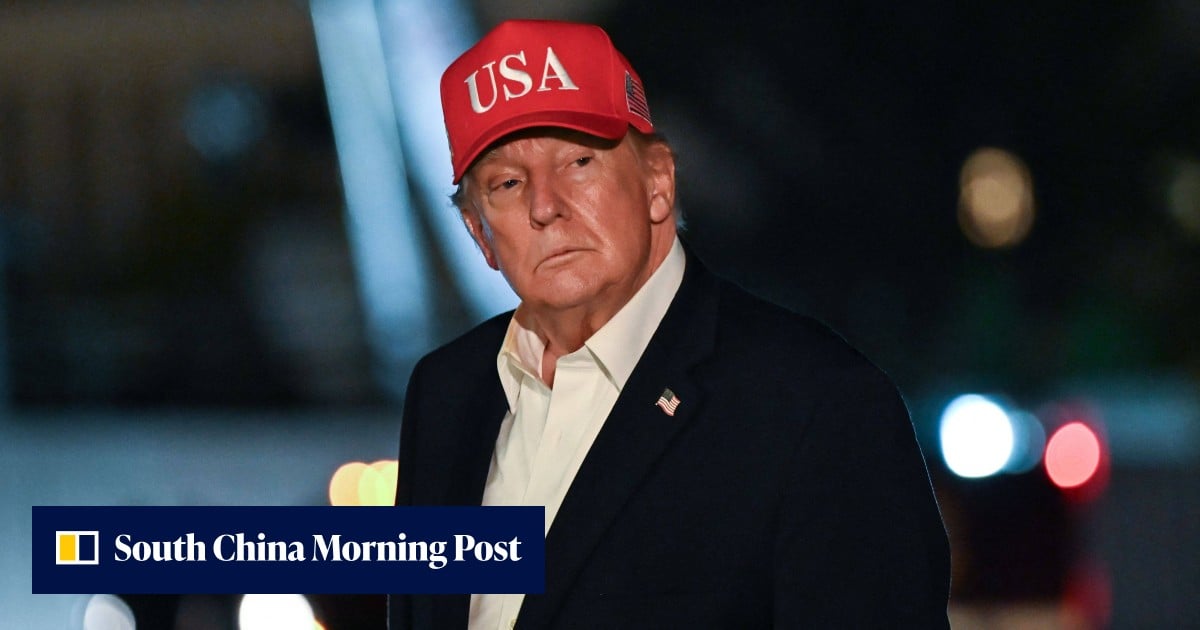
Trump approval rating is historically low for a president heading into the midterms

Read the original at The Independent ↗
Cite

Fernández, J. (2026, October 29). Trump approval rating is historically low for a president heading into the midterms. The Independent. https://www.independent.co.uk/news/world/americas/us-politics/trump-approval-rating-low-midterms-b3076022.html

Dated from the outlet's own feed. Check the original for its byline.

The Independent · collected 2026-10-30 · by Jasmine Fernández

Quick Summary

President Donald Trump's approval rating dropped to 30 percent in early October, according to Pew Research Center, marking his lowest level and one of the lowest for any sitting president heading into midterm elections. This decline is partly attributed to public dissatisfaction over economic performance and foreign policy decisions such as the conflict with Iran. Political analysts suggest that voter frustration could result in a backlash against the Republican Party during the upcoming midterms, following a pattern where voters often seek partisan balance when one party controls both executive and legislative branches.
Written by AI on 2026-10-30, from this article's own text only (the story summary below draws on all the coverage).
See how they differ ↓

AI analysis

Story summary

As of October 2026, President Donald Trump’s approval rating dropped to 30%, marking the lowest point for any sitting U.S. president heading into midterm elections since Harry Truman in 1946. According to polling from the Pew Research Center and the AP-NORC Center for Public Affairs Research, public dissatisfaction is largely driven by economic issues, with only 26% of Americans supporting Trump’s handling of the economy and 17% approving his approach to cost-of-living concerns. Additionally, just 28% of respondents approve of Trump's foreign policy stance, particularly regarding the conflict in Iran. This significant drop could heavily influence voter priorities as they head to the polls for November’s midterms.

Written for “Trump's Low Approval Rating” on 2026-11-21, grounded in this article and the 1 other(s) covering the same event.

How they differ

2 outlets covered “Trump's Low Approval Rating”.

What each outlet says

One AI summary per outlet of its latest article on this story, written from that article alone and checked against it. Open the article for the outlet's own words.

The IndependentThis outlet30 Oct

President Donald Trump's approval rating dropped to 30 percent in early October, according to Pew Research Center, marking his lowest level and one of the lowest for any sitting president heading into midterm elections. This decline is partly attributed to public dissatisfaction over economic performance and foreign policy decisions such as the conflict with Iran. Political analysts suggest that voter frustration…

Trump approval rating is historically low for a president heading into the midterms (this article)
Time29 Oct

President Donald Trump's approval rating dropped to 30% in early October according to Pew Research Center, marking his lowest point heading into midterm elections and one of the lowest for any president historically. Much of this dissatisfaction stems from economic issues; only 26% of Americans support how Trump is handling the economy and just 17% approve of his approach to living costs, as per The Associated…

Trump’s Approval Is at a New Low. Here’s Where Other Presidents’ Stood Before the Midterms—and How Their Parties Fared →

Compared with similar articles

This article reads leans left and hedges 7% of its claims. Each row says how that neighbour differs.
The Independent
Hedges 4 of 24 claims Outlet record 59/100
“The articles discuss different aspects of Trump's approval ratings over time, not a single specific event.”
The Independent
Leans left Hedges 2 of 31 claims Outlet record 59/100
“The articles report on different polls conducted at distinct times, not a single specific occurrence.”
NBC News
Hedges 4 of 41 claims Outlet record 78/100
“Article A describes Trump's historically low approval ratings heading into the midterms, while Article B reports on early exit poll results showing voter sentiment against Trump during the actual midterm elections.”
CBS News
Leans left Hedges 3 of 46 claims Outlet record 66/100
“The articles cover different time periods and aspects of President Trump's approval rating, with Article A discussing his historically low ratings leading up to the midterms, while Article B reports on exit poll results from the actual midterm elections.”
The Independent
Leans right further right than this Hedges 3 of 25 claims Outlet record 59/100
“The articles discuss different aspects of Trump's approval rating and do not refer to the same specific incident or time.”
Los Angeles Times
Leans left Hedges 4 of 58 claims Outlet record 95/100
“Both articles discuss low approval ratings for President Trump ahead of midterms, but they do not describe a single specific incident happening at one time.”
South China Morning Post
Hedges 1 of 4 claims Outlet record 62/100
“The articles discuss different polls and timeframes for Trump's approval ratings, indicating they are reporting on separate data points rather than the exact same incident.”
Daily Mail
Leans left Hedges 4 of 20 claims Outlet record 69/100
“The articles discuss different aspects of political sentiment and polling trends related to Trump's presidency but do not describe the same specific incident or occurrence.”
Daily Mail
Leans left Hedges 5 of 19 claims Outlet record 69/100
“While both articles discuss President Trump's low approval ratings ahead of midterm elections, they report different poll results and are published on different dates.”

Story

Trump's Low Approval Rating
Politics · 2 article(s) covering the same event. See how they differ ↑
How this article was measured signals, leaning charts, publisher record, byline, topics and claims

Signals How these are calculated →

Claims extracted
27
sentences that state something as happening or true
Uncertain
7%
2 of 27 hedged ("reportedly", "may", "according to")
Leaning
Leans left
of the writing, not the subject · beta estimate
Publisher signals
59/100
The Independent's corrections and hedging, across everything collected from it. Not a measure of accuracy.
Outlets on this story
2
Politics
Same framing elsewhere
1
articles that frame the event the way this one does
Analyzed 2026-10-30 · how these are computed

How this is being covered How these are calculated →

Article leaning vs. publisher reliability
Source leaning vs. consistency

Publisher

The Independent · 4757 article(s) · 10 correction(s) detected
Running correction rate · 10 correction(s)

Who wrote this

Jasmine Fernández
114 article(s) here · 1 carrying a prediction
“So, why might he be saying now he’s not that way?”
Prediction market platform Kalshi has reportedly stopped offering contracts that allow users to wager on what President Donald Trump will say during public appearances, following a federal regulatory order over concerns that the markets could be manipulated.
In his Truth Social post, Trump argued the overhaul would attract major tournaments like the U.S. Open and Ryder Cup, and promised a 50 percent discount on rates for Washington-area residents.
“It is inevitable, with all of the value that he’s created and his role commonly accepted as the godfather of AI, that he will have a second act,” an anonymous executive at a prominent California startup told Politico.
Pennsylvania Sen. John Fetterman signaled that he would consider quitting the Democratic Party if the caucus elected Maryland Sen. Chris Van Hollen as majority leader, citing disagreements over U.S. policy toward Israel.
“I did not know at that time where He would send me.
“While officers searched on the ground, the drones checked several locations the boy was known to frequent or may have traveled to,” St. Louis Police Department said.
2026-11-14 · assertive framing · Called 911? A drone may now be the first response
President Donald Trump said he would consider ordering a military campaign against Cuba before the end of his term, even as his administration pulls back from diplomatic talks over the war with Iran following recent midterm election losses.
Conservative commentator Ben Shapiro said Thursday on Sean Hannity’s “Hang Out” podcast that Democrats would seek to deliberately weaken the U.S. economy over the next two years in an effort to hurt President Donald Trump politically.
"Based on the severity of the coyote’s injuries and significant blood loss, officers believed the animal would not survive.
Also by Jasmine Fernández
Nothing else under this byline is closely related to this article, so these are simply their most recent.
All 114 articles by Jasmine Fernández →

Topics

Cornell University Iran Republicans TIME the Pew Research Center

Subjects

Republicans NORP · 5× Trump PERSON · 5× TIME ORG · 4× Democrats NORP · 3× Enns PERSON · 3× Senate ORG · 3× House ORG · 2× Iran GPE · 2× Panagopoulos PERSON · 2× Donald Trump PERSON · 1×

Narrative

“Part of the reason Trump’s approval ratings are so low is he’s pushing policies and pushing positions that are very unpopular, and so the conflict in Iran is a great example; the public understands that this was Trump’s decision, and they understand this connects to extremely high gas prices,” Enns told TIME.
framing: assertive · carried by 1 article(s) · first seen 2026-10-30
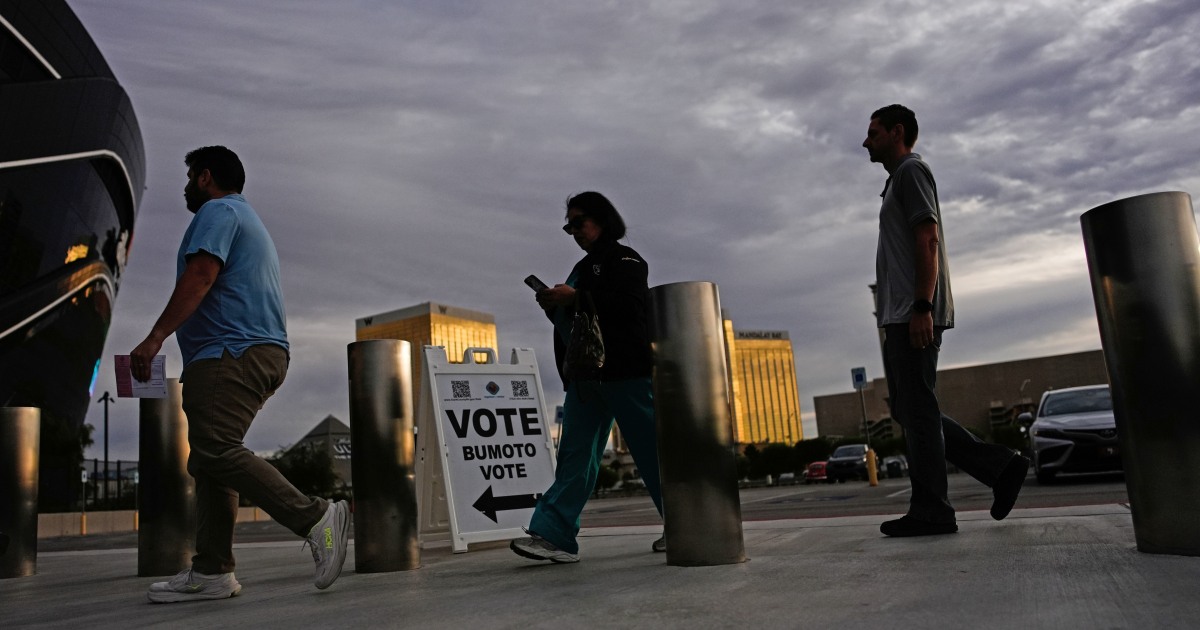
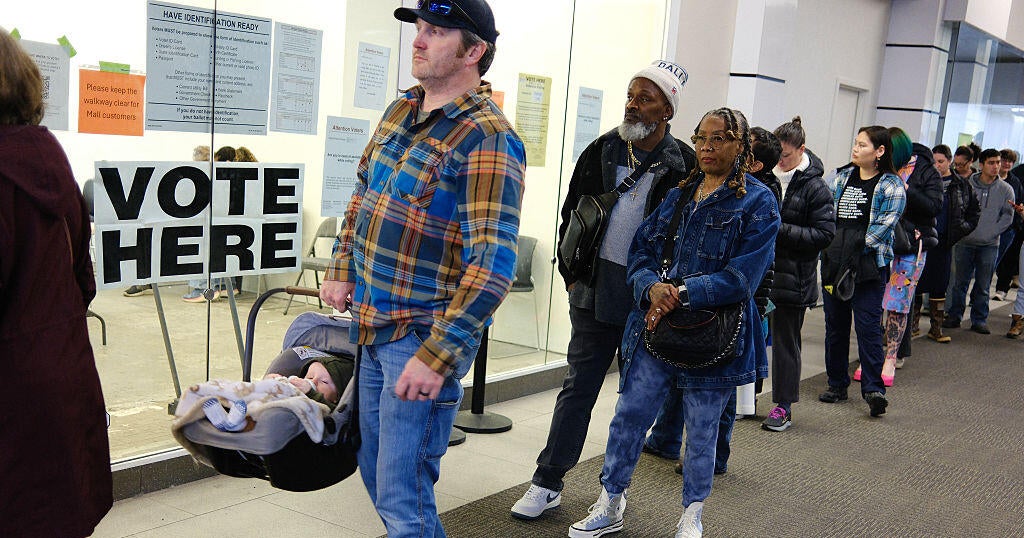
These voter priorities could prove decisive at the ballot box.

Claims (27 extracted, 2 hedged)

Republicans are facing a difficult political environment ahead of November’s midterm elections, driven in large part by President Donald Trump’s historically low approval ratings. asserted
Republicans → face → ratings
With the pivotal elections approaching, Trump’s approval rating dropped to 30 percent earlier this month, according to polling from the Pew Research Center. uncertain
rating → approach → Center
The slump marks the lowest point of his second term and represents the lowest level any sitting president has reached heading into the midterms since Harry Truman in 1946, as reported by TIME. asserted
president → mark → TIME
“This is historically low approval ratings for a president,” Peter Enns, a professor in the department of government at Cornell University and co-founder of the survey research company Verasight, told TIME. asserted
Enns → tell → TIME
Data indicates that much of the public discontent with the administration stems from economic performance. asserted
much → indicate → performance
An Associated Press-NORC Center for Public Affairs Research poll released earlier this month found that only 26 percent of U.S. adults approved of how Trump was tackling the economy, and just 17 percent approved of his handling of the cost of living. asserted
percent → release → living
Foreign policy has generated similar pushback. asserted
policy → generate → pushback
The same AP-NORC poll showed that only 28 percent of respondents expressed support for Trump’s handling of the war in Iran. asserted
percent → show → Iran
“Part of the reason Trump’s approval ratings are so low is he’s pushing policies and pushing positions that are very unpopular, and so the conflict in Iran is a great example; the public understands that this was Trump’s decision, and they understand this connects to extremely high gas prices,” Enns told TIME. asserted
Enns → push → TIME
“It’s very unusual for a President to position himself on the side of so many unpopular positions.” asserted
President → ’ → positions
These voter priorities could prove decisive at the ballot box. uncertain
priorities → prove → box
Pew Research data shows that 84 percent of registered voters rank the economy as a “very important issue” heading into the midterms, while 57 percent say foreign policy is “very important” to their vote. asserted
policy → show → vote
Midterm elections are routinely difficult for the party controlling the White House, as voters frequently express frustration with the sitting administration. asserted
voters → control → administration
This dynamic is a “well-known phenomenon” resulting from dissatisfaction among both opposition voters and a president's supporters who feel policy progress has lagged, Enns told TIME. asserted
Enns → know → TIME
“That doesn’t mean everybody’s changing their vote,” Enns said. asserted
Enns → mean → vote
“It just means the backlash, the tides, are working against the incumbent president.” asserted
backlash → mean → president
Costas Panagopoulos, a professor of political science at Northeastern University, told the magazine that voters often sought “partisan balance in Washington,” particularly when one party held unified control over the executive and legislative branches. asserted
party → tell → branches
“There’s simply nobody else to blame for government actions and current policies if voters are unhappy with those besides the Republican Party [right now],” Panagopoulos said. asserted
Panagopoulos → ’ → Party
“It’s very easy for [voters] to point the finger to the Republicans if they’re not happy with what they’re seeing.” asserted
they → ’ → what
Though historical precedents usually favor the opposition party, rare exceptions have occurred. asserted
exceptions → favor → party
Following the September 11 terrorist attacks, President George W. Bush maintained a 63 percent approval rating, allowing Republicans to gain seats in both the House and Senate during the 2002 midterms. asserted
Republicans → follow → midterms
Current polling metrics favor Democrats in voter engagement. asserted
metrics → favor → engagement
A recent PBS News/NPR/Marist poll showed that 91 percent of Democrats expressed enthusiasm about voting in the midterms, compared to 86 percent of Republicans. asserted
percent → show → Republicans
Democrats have also shown strength in competitive state races, including in Texas, where Democratic Senate candidate James Talarico holds a narrow lead in polls over Republican candidate Ken Paxton. asserted
Talarico → show → Paxton
“I think we can expect Republicans to be facing an uphill battle at the polls,” Panagopoulos said. asserted
Panagopoulos → think → polls
“We can expect that they will likely lose seats in the House and also the Senate. asserted
they → expect → House
And the question is, will they lose enough seats to lose the majority in either or both those chambers?” asserted
they → lose → chambers
Give feedback · no sign-in needed

No sign-in needed for now. Your note is sent without a name, so it cannot be answered.

History Support