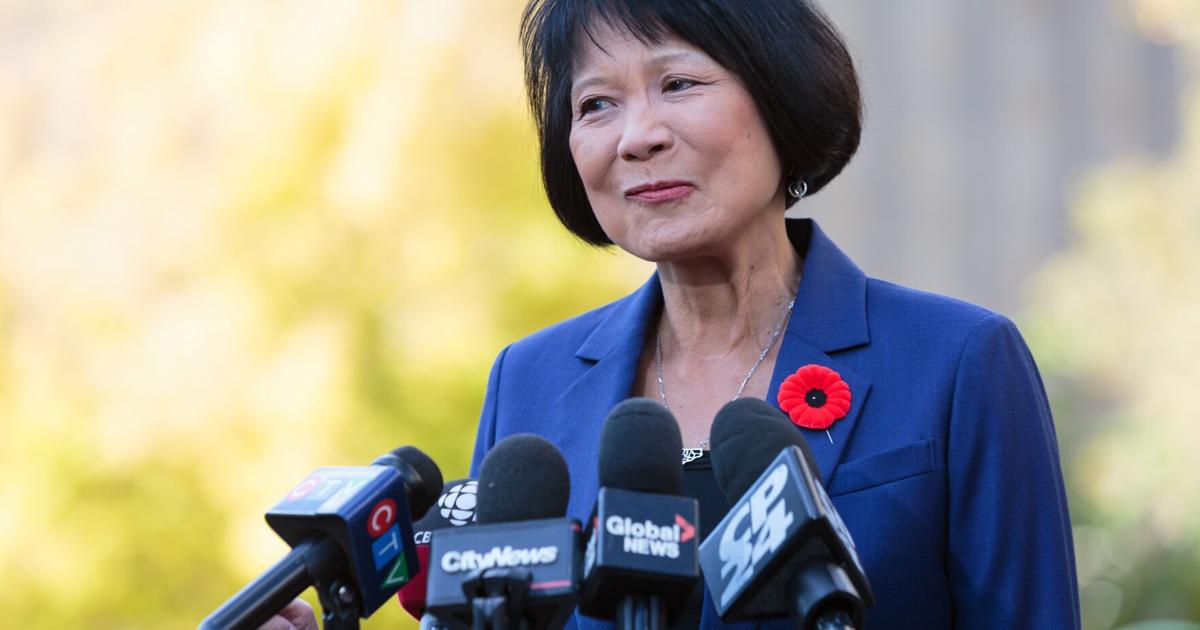
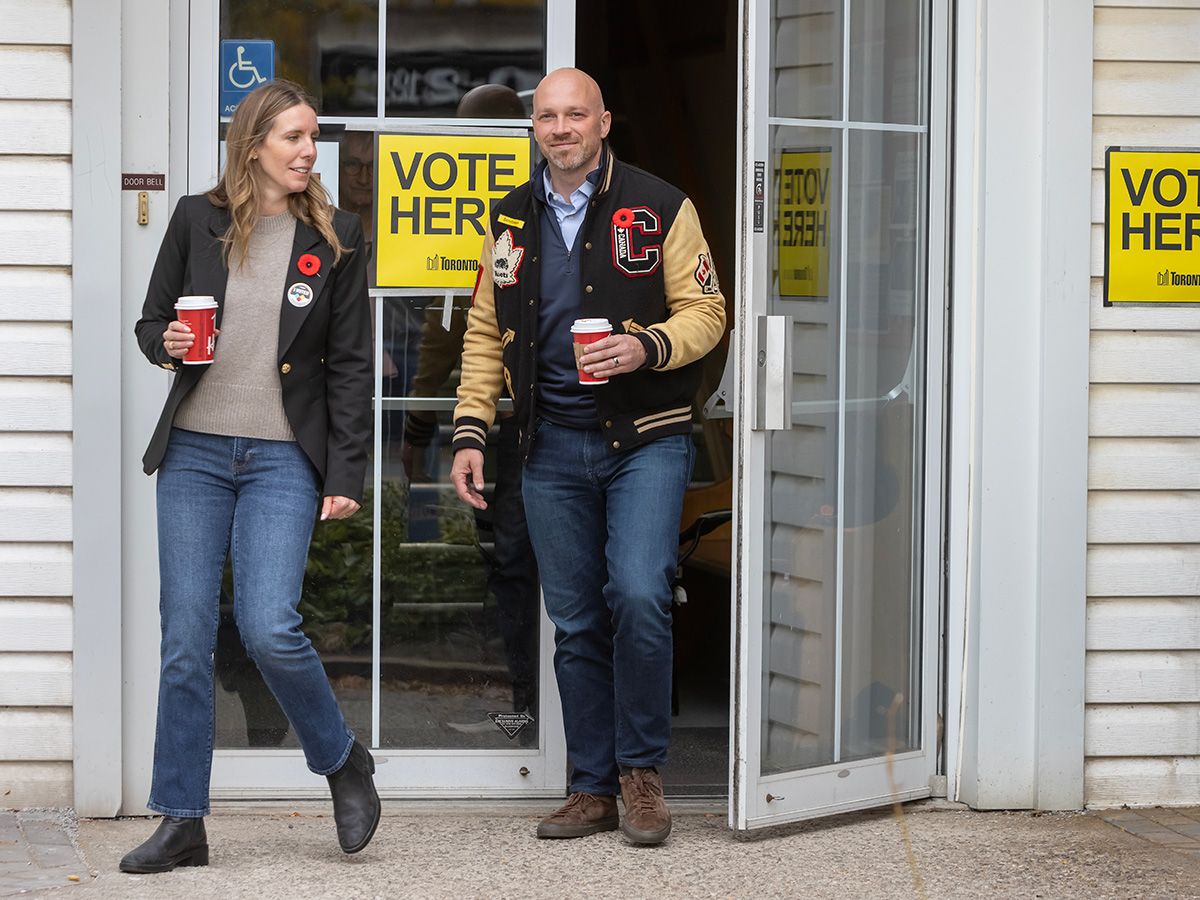
Photo via The Globe and Mail

What kind of Toronto does Chow want to build?

Read the original at The Globe and Mail ↗
Cite

Bozikovic, A. (2026, October 30). What kind of Toronto does Chow want to build? The Globe and Mail. https://www.theglobeandmail.com/canada/article-what-kind-of-toronto-does-chow-want-to-build/

Dated from the outlet's own feed. Check the original for its byline.

The Globe and Mail · collected 2026-10-30 · by Alex Bozikovic

Quick Summary

Olivia Chow won re-election as Toronto's mayor with a significant margin of 130,000 votes over her conservative challenger Brad Bradford. The article critiques Chow’s campaign for lacking a clear vision and ambitious plans for the city's future growth and development. With Toronto's population at 3.3 million and its metropolitan area exceeding seven million, the piece emphasizes the need for strategies focusing on sustainable transportation, housing, and public spaces to accommodate ongoing urban expansion effectively.
Written by AI on 2026-10-30, from this article's own text only (the story summary below draws on all the coverage).
See how they differ ↓

AI analysis

Story summary

Olivia Chow was elected as Toronto's mayor for a second term on October 27, 2026, defeating her conservative challenger Brad Bradford by almost 130,000 votes. The race had been closely watched and predicted to be very tight due to issues like affordability and fiscal management in the wake of COVID-19's impact. Chow campaigned on promises such as more rental housing, free school lunches, and reduced transit fares for frequent riders. Her victory was attributed not only to progressive support but also a strong ground game and moderate stance that broadened her appeal. Meanwhile, former NDP leader Andrea Horwath lost in Hamilton's mayoral race, part of several upsets across the Greater Toronto and Hamilton Area (GTHA).

Written for “Olivia Chow Elected Toronto Mayor” on 2026-11-21, grounded in this article and the 22 other(s) covering the same event.

How they differ

6 outlets covered “Olivia Chow Elected Toronto Mayor”.

What each outlet says

One AI summary per outlet of its latest article on this story, written from that article alone and checked against it. Open the article for the outlet's own words.

The Globe and MailThis outlet30 Oct

Olivia Chow won re-election as Toronto's mayor with a significant margin of 130,000 votes over her conservative challenger Brad Bradford. The article critiques Chow’s campaign for lacking a clear vision and ambitious plans for the city's future growth and development. With Toronto's population at 3.3 million and its metropolitan area exceeding seven million, the piece emphasizes the need for strategies focusing on…

What kind of Toronto does Chow want to build? (this article)9 articles from The Globe and Mail on this story
CBC27 Oct

Olivia Chow has won re-election as mayor of Toronto, defeating Brad Bradford in a close race where she received approximately 530,000 votes compared to Bradford’s roughly 404,000 votes. The article focuses on how Chow effectively countered Bradford’s main campaign promise of creating a public utility company for the city's water and wastewater systems, which Chow argued could lead to privatization. Additionally, the…

Olivia Chow races to victory as head of progressive new Toronto council →6 articles from CBC on this story
National Post27 Oct

Keanin Loomis won the Hamilton mayoral election on Monday night with nearly 42% of the vote, defeating incumbent councillor Andy Spectar Cooper and former Ontario NDP leader Andrea Horwath. Born in Oswego, New York, Loomis moved to Canada at age 12, later returning to Hamilton after a career in Washington D.C., where he worked as a lawyer before becoming involved in economic development initiatives in Hamilton. His…

Who is Keanin Loomis, Hamilton’s new American-born mayor? →4 articles from National Post on this story
Toronto Star31 Oct

Poll-by-poll voting results from Toronto's mayoral election reveal that Olivia Chow won with 54.2% of the vote, securing victories in 19 out of 25 wards. She performed particularly well in Toronto Centre and Scarborough, areas where many residents rely on public transit or walk to work. In contrast, Brad Bradford, who focused his campaign on Etobicoke and North York, won only six wards but saw stronger support in…

What neighbourhood voting results tell us about Olivia Chow's big mayoral win →2 articles from Toronto Star on this story
Global News27 Oct

Several incumbent mayors in the Greater Toronto and Hamilton Area (GTHA) lost their bids for re-election during recent voting. Andrea Horwath, who became mayor of Hamilton in 2022 after losing her provincial leadership role, placed third at 14% with Keanin Loomis winning at 41%. Canada’s longest-serving mayor Gord Krantz from Milton also lost to Coun. George Minakakis. In Mississauga, rookie councillor Alvin Tedjo…

Horwath among incumbents ousted across Greater Toronto and Hamilton Area →
The Guardian27 Oct

Olivia Chow won re-election as Toronto's mayor for a second term, securing 54% of the vote compared to her rival Brad Bradford's 41%. The election saw record turnout, with Chow’s victory reflecting voter support for progressive policies like affordable housing and reduced transit fares. Her decisive win contrasts with pre-election polls predicting a closer race, signaling that residents prioritize addressing the…

Olivia Chow elected as Toronto mayor for second term in victory for progressives →

Where they agree and split

Framing

How the first headlines put it

Stated as fact2
The headlines (2)

Olivia Chow, Brad Bradford battle to the wire in Toronto’s mayoral election The Globe and Mail · stated as fact

Toronto’s mayoral campaign is ending in a tight race. Here's how it got so close CBC · stated as fact

Words to watch (1)

Big wins, shocking losses, and goodbye to a 46-year mayor: what to know about Ontario's 400+ elections CBC

The full story: what happened, how it changed, and all 23 articles →

Compared with similar articles

This article reads leans left and hedges 6% of its claims. Each row says how that neighbour differs.
Global News
Leans right further right than this Hedges 1 of 19 claims Outlet record 63/100
“The articles describe different stages of political interaction between the city and provincial government, not a single specific incident.”
Toronto Star
Leans left Hedges 1 of 35 claims Outlet record 64/100
National Post
Hedges 4 of 31 claims Outlet record 60/100
“While both articles discuss Olivia Chow's re-election, they describe different aspects: Article A focuses on her campaign promises and stance against breaking previous commitments, while Article B discusses the election results and criticism of her lack of vision.”
CBC News
Hedges 3 of 33 claims Outlet record 72/100
“Article A covers multiple municipal elections in Ontario with brief mentions, while Article B focuses specifically on Olivia Chow's win in the Toronto mayoral election. Although related, they describe different events.”
CBC News
Hedges 5 of 29 claims Outlet record 72/100
“While both articles discuss Olivia Chow's victory in the mayor's race, ARTICLE A reports on the election results and the immediate aftermath, while ARTICLE B focuses more on the vision for Toronto that Chow will pursue as a result of her victory.”
Toronto Star
Leans left Hedges 14 of 112 claims Outlet record 64/100
“The articles describe different aspects of the Toronto mayoral election campaign, not a single specific incident.”
The Globe and Mail
Leans right further right than this Hedges 0 of 32 claims Outlet record 51/100
“Article A discusses broader trends in Canadian politics while Article B focuses specifically on Olivia Chow's victory in Toronto. Although they both mention Chow’s win, they describe different aspects and contexts.”
National Post
Hedges 1 of 39 claims Outlet record 60/100
“While both articles discuss Olivia Chow's re-election as mayor of Toronto, they do not describe the exact same specific incident or moment. Article A discusses the results and implications of the election, while Article B reflects on the vision for the city post-election.”
The Globe and Mail
Hedges 0 of 24 claims Outlet record 51/100
“Article A covers election results across several cities in Ontario, while Article B focuses on analyzing Olivia Chow's victory and future plans for Toronto.”
National Post
Leans left Hedges 0 of 32 claims Outlet record 60/100
“Article A describes the upcoming municipal elections in Toronto, while Article B reports on Olivia Chow's re-election win, which is a different specific event that occurred after the election day mentioned.”

Story

Olivia Chow Elected Toronto Mayor
Politics · 23 article(s) covering the same event. Compare every outlet's account →
How this article was measured signals, leaning charts, publisher record, byline, topics and claims

Signals How these are calculated →

Claims extracted
36
sentences that state something as happening or true
Uncertain
6%
2 of 36 hedged ("reportedly", "may", "according to")
Leaning
Leans left
of the writing, not the subject · beta estimate
Publisher signals
51/100
The Globe and Mail's corrections and hedging, across everything collected from it. Not a measure of accuracy.
Outlets on this story
23
Politics
Same framing elsewhere
1
articles that frame the event the way this one does
Analyzed 2026-10-30 · how these are computed

How this is being covered How these are calculated →

Article leaning vs. publisher reliability
Source leaning vs. consistency

Publisher

The Globe and Mail · 1306 article(s) · 50 correction(s) detected
Running correction rate · 50 correction(s)

Who wrote this

Alex Bozikovic
6 article(s) here · 1 carrying a prediction
The mayor trounced her conservative challenger, Brad Bradford, to win re-election by almost 130,000 votes.
2026-10-30 · assertive framing · What kind of Toronto does Chow want to build?
Then-mayor John Tory launched a program by that name to urgently build mixed-income housing on city land.
In 1991, The Globe’s John Bentley Mays wrote about the city’s Port Lands as a “wilderness of trees and rust.”
2026-10-09 · assertive framing · Waterfront Toronto gets design right. We should learn
This trend of local population declines has been largely overlooked, even as Canadian governments work to create more homes and build the infrastructure – pipes, roads, community facilities – to serve the people who will occupy them.
At Spring House, a new supportive and transitional housing building in Toronto’s Parkdale neighbourhood, the hospital and three governments will bring that ideal home.
2026-10-05 · assertive framing · Designing a solution to homelessness
The division will spend $440-million this year on construction projects.
2026-09-18 · assertive framing · Is there a design for Toronto’s parks?
Also by Alex Bozikovic
Designing a solution to homelessness
2026-10-05 · The Globe and Mail
Nothing else under this byline is closely related to this article, so these are simply their most recent.
All 6 articles by Alex Bozikovic →

Topics

England London Toronto Toronto Builds Yonge

Subjects

Toronto GPE · 11× Chow PERSON · 6× Brad Bradford PERSON · 1× Bradford GPE · 1× England GPE · 1× London GPE · 1× Olivia Chow’s PERSON · 1× Sadiq Khan PERSON · 1× Toronto Builds ORG · 1× Yonge GPE · 1×

Narrative

Under her watch, the city has largely failed to rebalance some of its 5,500 kilometres of roadway from vehicles to pedestrians, as dozens of cities around the world have now done, improving quality of life, reducing air pollution and improving the visitor experience.
framing: assertive · carried by 1 article(s) · first seen 2026-10-30
The mayor trounced her conservative challenger, Brad Bradford, to win re-election by almost 130,000 votes.
2026-10-30 · The Globe and Mail
What kind of Toronto does Chow want to build? · assertive framing

Claims (36 extracted, 2 hedged)

The mayor trounced her conservative challenger, Brad Bradford, to win re-election by almost 130,000 votes. asserted
mayor → trounce → votes
Ms. Chow promised optimism and a handful of day-to-day improvements for vulnerable citizens. asserted
Chow → promise → citizens
School food programs, transit fare caps – these promises lack the power to stir the blood. asserted
promises → lack → blood
Ms. Chow, who now has four years and considerable political capital, must build a progressive blueprint for Toronto. asserted
who → have → Toronto
That must include a clear idea of how Toronto will evolve – and a clear strategy for the physical city. asserted
Toronto → include → city
Toronto is now a metropolis of 3.3 million, the centre of a region that tops seven million. asserted
that → top → million
It will continue to grow. asserted
It → continue → ?
These numbers have specific implications for the physical environment. asserted
numbers → have → environment
Toronto must rely less on cars, and more on public transit, walking and cycling. asserted
Toronto → rely → transit
Some parts of the city will get new buildings and add many more residents. asserted
parts → get → residents
Many public spaces and amenities will get built or rebuilt. asserted
spaces → build → ?
Ms. Chow has displayed few strong positions on these matters. asserted
Chow → display → matters
On transportation, she supports bike lanes. asserted
she → support → lanes
But she also boasted about getting the provincial government to help reopen the Gardiner Expressway. asserted
government → boast → Expressway
Under her watch, the city has largely failed to rebalance some of its 5,500 kilometres of roadway from vehicles to pedestrians, as dozens of cities around the world have now done, improving quality of life, reducing air pollution and improving the visitor experience. asserted
dozens → fail → experience
On Oct. 26 in London, England, Mayor Sadiq Khan permanently closed a kilometre of busy Oxford Street. asserted
Khan → close → Street
Ms. Chow could bring to life the pedestrianization of downtown Yonge Street, now stalled, and of John Street – which has been in the works for 17 years. uncertain
which → bring → years
On housing, Ms. Chow has advocated for more new homes and created the city’s public Toronto Builds. asserted
Chow → advocate → Builds
But that is a boutique operation that will generate a few thousand homes a year, at best, while relying almost completely on federal funding. asserted
that → generate → funding
Most housing will continue to be delivered by private builders. asserted
housing → continue → builders
And reforming the city’s sclerotic planning system, a massive job, has only just begun. asserted
reforming → reform → job
Recent policy tweaks to serve small-scale development are positive. asserted
tweaks → serve → development
Toronto Mayor Olivia Chow says it doesn't matter who voted for her, she'll be mayor for everyone in Toronto, and will work with the new council and other levels of government to addr… Still, a Canada Mortgage and Housing Corp. analysis suggests Toronto’s housing construction needs to double from its 2019 highs in order to moderate affordability. uncertain
construction → say → affordability
City government also reshapes Toronto in its own right, and key aspects of its capital program go largely unscrutinized. asserted
aspects → reshape → program
How many councillors even know what is in that budget, or how it was shaped? asserted
it → know → budget
How do those projects build community? asserted
projects → build → community
Are pool-and-gym megacomplexes, costing nearly $150-million apiece, actually going to bring people together? asserted
megacomplexes → cost → people
All these things are intertwined: Where people live and work, how they get around, and where and why they come together. asserted
they → intertwine → ?
And the uncomfortable fact is that Toronto’s government has no coherent vision for the physical city. asserted
government → have → city
Since it was amalgamated in 1998, Toronto has lurched along without articulating what kind of a place it is, or wants to be. asserted
it → amalgamate → place
Does it want to be a metropolis, open to all, vibrant and dynamic? asserted
it → want → all
In Ms. Chow’s redoubt of the old City of Toronto, one can avoid that question. asserted
one → avoid → question
But those zones are emptying out, getting richer and older. asserted
zones → empty → ?
They have not stayed the same. asserted
They → stay → ?
A city never does. asserted
city → do → ?
It changes, and it needs someone to lead it into the future. asserted
it → change → future
Give feedback · no sign-in needed

No sign-in needed for now. Your note is sent without a name, so it cannot be answered.

History Support