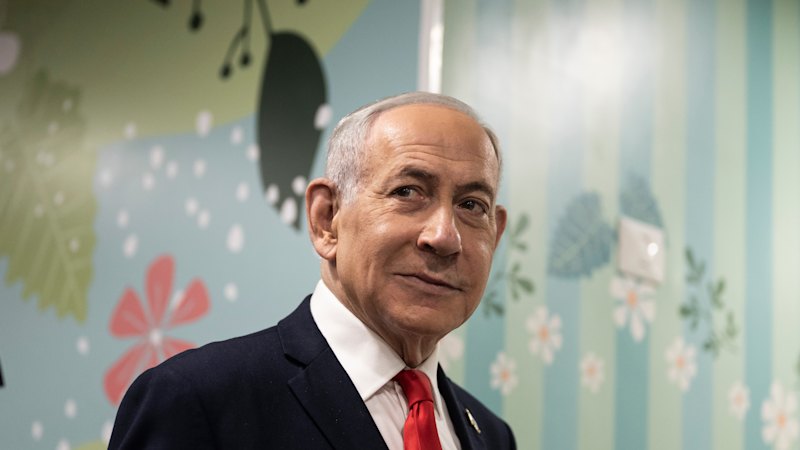
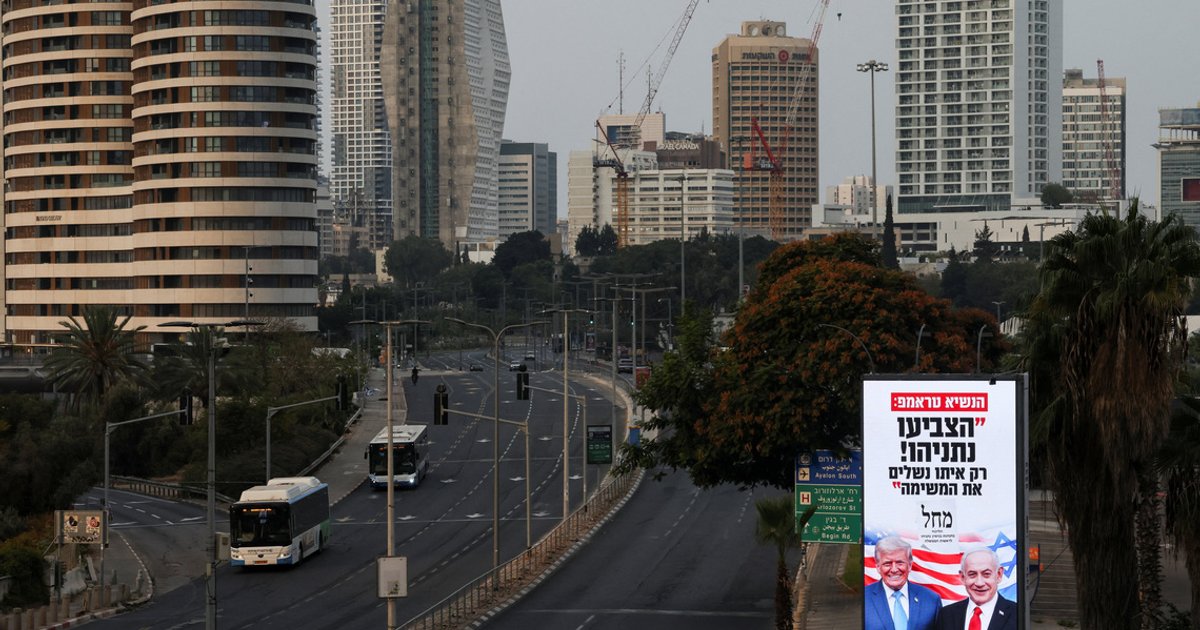
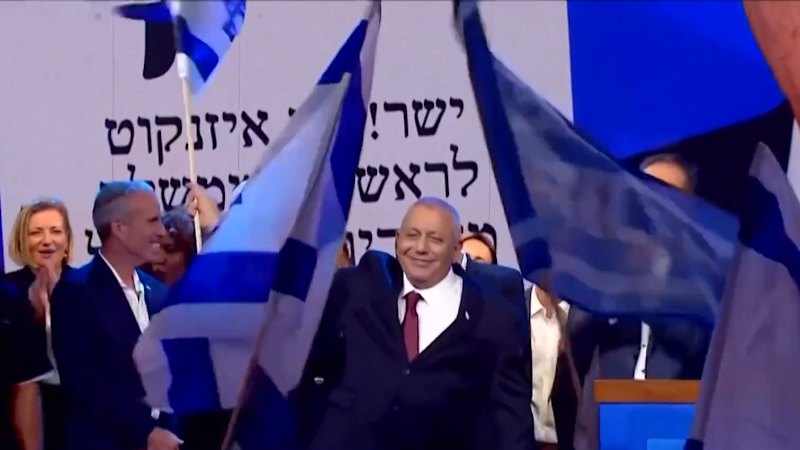
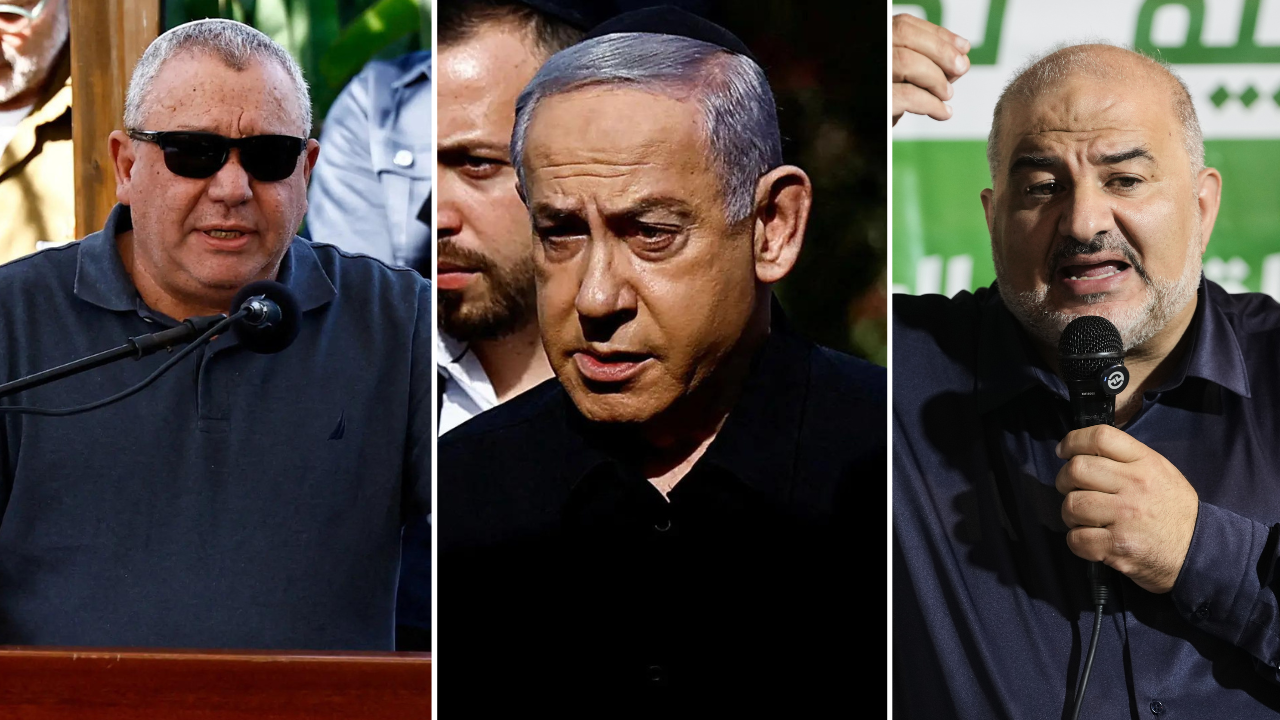
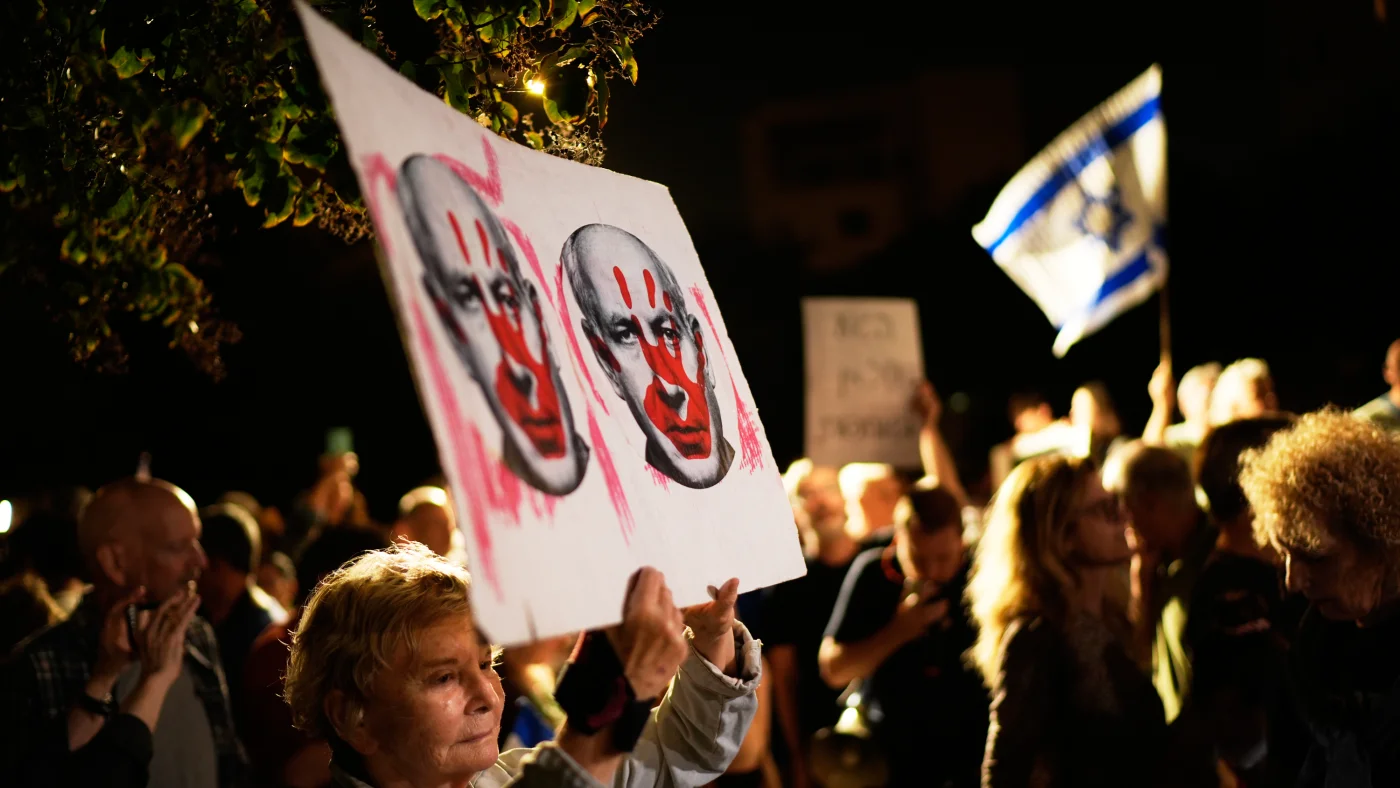
Photo via Al Jazeera

How can Israel break its election deadlock?

Read the original at Al Jazeera ↗
Cite

Shankar, P. (2026, October 30). How can Israel break its election deadlock? Al Jazeera. https://www.aljazeera.com/news/2026/10/30/how-can-israel-break-its-election-deadlock?traffic_source=rss

Dated from the outlet's own feed. Check the original for its byline.

Al Jazeera · collected 2026-10-30 · by Priyanka Shankar

Quick Summary

Israel's recent election did not produce a clear winner, leaving Benjamin Netanyahu’s bloc with 53 seats and Gadi Eisenkot’s opposition bloc with 48 in the 120-member Knesset. The United Arab List and Joint List together secured 19 seats but are being excluded from potential coalition talks by major parties like Netanyahu's Likud. With no single party achieving a majority, political consultations to form a governing coalition have begun; if unsuccessful, President Isaac Herzog may step in to assign the task of forming a government or call for new elections.
Written by AI on 2026-10-30, from this article's own text only (the story summary below draws on all the coverage).
See how they differ ↓

AI analysis

Story summary

Israelis voted on October 27, 2026, in a closely contested election to elect the Knesset. The election was marked by a strong anti-Netanyahu sentiment, with thousands rallying in Tel Aviv against Prime Minister Benjamin Netanyahu. Gadi Eisenkot, a centrist challenger, emerged as Netanyahu's main rival, leading a coalition that could potentially form a government with the support of Arab-Israeli parties. Despite Netanyahu's Likud bloc winning the most seats, they fell short of a majority, securing only 53 out of 120 seats. This political deadlock leaves Netanyahu's future uncertain, as forming a stable government remains a challenge.

Written for “Israeli Election Deadlock” on 2026-11-21, grounded in this article and the 257 other(s) covering the same event.

How they differ

32 outlets covered “Israeli Election Deadlock”.

What each outlet says

One AI summary per outlet of its latest article on this story, written from that article alone and checked against it. Open the article for the outlet's own words.

Al JazeeraThis outlet30 Oct

Israel's recent election did not produce a clear winner, leaving Benjamin Netanyahu’s bloc with 53 seats and Gadi Eisenkot’s opposition bloc with 48 in the 120-member Knesset. The United Arab List and Joint List together secured 19 seats but are being excluded from potential coalition talks by major parties like Netanyahu's Likud. With no single party achieving a majority, political consultations to form a governing…

How can Israel break its election deadlock? (this article)35 articles from Al Jazeera on this story
The Hindu2 Nov

The Israeli Knesset elections concluded with an inconclusive outcome that reflects the country's deepening division along nationalist lines and ethnic splits. With only 11 out of 38 parties likely to secure seats in a 120-member legislature, the centrist bloc, the ruling extreme right coalition, and the Israeli-Arab bloc received approximately 48%, 53%, and 19% of the seats respectively. Voter turnout surged to…

An anti-climactic outcome in the Knesset elections →20 articles from The Hindu on this story
The Straits Times30 Oct

The final vote count from Israel’s election on October 30 confirmed that neither Prime Minister Benjamin Netanyahu's hard-right coalition nor the opposition bloc led by Gadi Eisenkot secured an outright majority, with Netanyahu’s alliance winning 53 seats and the opposition securing 48. Two Arab parties gained a record-high 19 seats, adding to the political uncertainty. President Isaac Herzog will decide who has the…

Final vote results in Israel set up weeks of uncertainty about who will govern →18 articles from The Straits Times on this story
The Independent29 Oct

US President Donald Trump said he would "take a look" at helping Israeli Prime Minister Benjamin Netanyahu after Netanyahu claimed that the recent Israeli election was stolen due to alleged voter fraud by Arab citizens. With about 94% of votes counted, Netanyahu’s right-wing bloc had won 53 seats in Israel's parliament but fell short of a clear majority needed to form a government without support from Arab parties…

Trump says he will look at helping Netanyahu after Israeli prime minister claims election ‘stolen’ →15 articles from The Independent on this story
BBC29 Oct

Israeli opposition leaders Gadi Eisenkot and Arab party representatives have criticized Prime Minister Benjamin Netanyahu for accusing foreign entities of interfering in recent elections that his coalition lost its majority. Netanyahu's Likud Party alleged that Israel’s Arab-led parties received illegal funding from Qatar and Turkey, a claim denied by Qatar's foreign ministry as "ridiculous." Final election results…

Israeli opposition accuses Netanyahu of trying to 'delegitimise' election →12 articles from BBC on this story
Washington Examiner6 Nov

Benjamin Netanyahu's political resilience was on full display in recent Israeli elections despite facing significant challenges. After a devastating terrorist attack on October 7, 2023, which his government failed to prevent and which initially suggested his downfall, Netanyahu surprisingly maintained strong support. Polls had previously indicated that the opposition would defeat him and his Likud party, but the…

The Israeli elections prove Netanyahu’s political prowess →11 articles from Washington Examiner on this story
Show 26 more outlets
CBS News30 Oct

Prime Minister Benjamin Netanyahu and his Likud party have accused Arab-majority parties of stealing Israel's recent election through foreign funding, which they claim amounted to vote-buying. The final results show that Netanyahu’s bloc lost its majority in parliament, dropping from 68 seats to 53, while the main opposition won 48 seats. This leaves a potential coalition short on votes and reliant on support from…

Netanyahu's party claims Israel's election was stolen. Now what? →10 articles from CBS News on this story
New York Post30 Oct

In Israel’s recent national election, Benjamin Netanyahu’s right-wing bloc won with 53 seats out of 120 in the Knesset, falling short by eight seats of the 61 needed for a majority. Likud emerged as the largest party with 27 seats. The opposition bloc led by Gadi Eisenkot secured 48 seats. With neither side able to form a government on its own, Netanyahu and Eisenkot both pledged to work towards forming a coalition…

Netanyahu’s right-wing bloc wins Israeli election but he’s eight seats short of majority →10 articles from New York Post on this story
Dawn30 Oct

Benjamin Netanyahu’s coalition in Israel finished with 53 seats, just short of a majority needed to form a government, following the country's recent general election. The opposition bloc secured 48 seats, while Arab party groupings Raam and the Joint List won a combined 19 seats, positioning them as crucial for forming any potential coalition. Controversy over alleged foreign funding by Qatar to influence votes…

Netanyahu's bloc finishes ahead in Israel election, but well short of majority →10 articles from Dawn on this story
ABC News (AU)31 Oct

In Israel's recent election, Arab parties secured a record 19 seats in the 120-seat Knesset, up from their previous total of 10 seats. This surge was driven by high voter turnout among Arab Israelis and Bedouin communities, who aimed to challenge Benjamin Netanyahu’s government and demand equal citizenship rights. With neither major coalition achieving a majority, these parties now hold significant power in…

Israel's Arab parties emerge from deadlocked election as kingmakers →8 articles from ABC News (AU) on this story
Euronews30 Oct

Israeli legislative election results show Prime Minister Benjamin Netanyahu’s bloc with 53 seats and the opposition led by Gadi Eisenkot securing 48 seats in the 120-seat Knesset. Likud remains the largest single party with 27 seats, while Arab parties collectively gained a record 19 seats. Netanyahu has accused Arab parties of election fraud and alleged foreign funding influence from Qatar, calling for an…

Netanyahu bloc emerges ahead in Israeli election but fails to secure majority →8 articles from Euronews on this story
National Post30 Oct

Jesse Kline discusses how Israel's recent high-stakes election has resulted in an unclear winner, with Prime Minister Benjamin Netanyahu’s Likud party leading but falling short of forming a majority government on its own. With neither side close to the required 61 seats and Arab parties holding key votes, this outcome is deemed unfavorable as it may prolong political instability at a critical time for Israel's…

Jesse Kline: Election could not have turned out worse for Israel →8 articles from National Post on this story
Times of India30 Oct

Yair Lapid, Israel’s opposition leader, has claimed a moral victory despite his bloc falling short of an outright majority in recent elections. With 67 seats out of 120, Lapid argues that while not decisive, this outcome presents a significant challenge to Prime Minister Benjamin Netanyahu's ability to form a government. Despite the difficulty in coalition-building due to ideological divides within the…

'A win is a win': Israel opposition leader Lapid reacts to Netanyahu's poll setback →7 articles from Times of India on this story
Fox News30 Oct

Israel’s final election results show Benjamin Netanyahu's bloc has lost its parliamentary majority, securing only 53 seats in the 120-member Knesset compared to 48 for opposition leader Gadi Eisenkot. The election saw a record 77.9% voter turnout and placed Arab parties with 19 seats in a potentially decisive position. Netanyahu's Likud party holds 27 seats, but neither side has the required 61 seats for a majority…

Netanyahu's bloc falls short as longtime allies reportedly weigh move that could end his rule →6 articles from Fox News on this story
NPR30 Oct

Israel's recent election resulted in a political deadlock, with neither Prime Minister Benjamin Netanyahu nor his main challenger Gadi Eisenkot able to secure enough parliamentary support to form a government. The Knesset lacks a clear majority for either side, as Eisenkot’s bloc cannot achieve one without Arab party support, which he has ruled out due to their stances on issues like Hamas and the Gaza conflict…

Israel is in a political deadlock. What comes next? →6 articles from NPR on this story
Daily Mail30 Oct

Benjamin Netanyahu’s party, Likud, intensified claims that Arab-led parties had "stolen" the election in Israel, alleging foreign interference and warning of “Islamisation.” The election results show Netanyahu's bloc with 53 seats out of 120 in parliament, below the majority needed to form a government. The opposition has accused Netanyahu of attempting to delegitimise the election by demonizing Arab voters after…

Netanyahu's party ramps up claims Arab parties 'stole' the election and warns of 'Israel's Islamisation' after failing to win majority →6 articles from Daily Mail on this story
The Guardian29 Oct

Benjamin Netanyahu has faced accusations of employing smear tactics to retain power after losing his parliamentary majority in Tuesday’s elections. He alleged that foreign-backed Arab Israeli parties manipulated the vote and demanded investigations into supposed irregularities in Palestinian communities. This claim was criticized by opposition leader Gadi Eisenkot, who called it an attempt to delegitimize election…

Israeli leader Netanyahu accused of using ‘ugly’ smear tactics to cling to power →6 articles from The Guardian on this story
Toronto Star30 Oct

Palestinian citizens of Israel participated in record numbers during recent elections, marking a significant political shift as two Arab-led parties secured the largest number of seats ever—19 out of 120. This surge is seen as a response to years of marginalization and rising anti-Arab sentiment under Netanyahu’s right-wing government. Voter turnout increased by over 60% compared to previous elections, with many…

For Palestinian citizens of Israel, a historic vote born of fear and frustration →5 articles from Toronto Star on this story
CBC29 Oct

Israelis are waiting for final election results that could confirm Benjamin Netanyahu’s bloc holding a slight edge over opposition parties, with about 53 seats compared to 48 for the opposition and 19 for Arab-led groups. The counting of roughly half a million absentee ballots is expected to conclude on Thursday evening, potentially affecting coalition negotiations but unlikely to change the overall outcome…

Israelis await final election results as Netanyahu's bloc holds slight edge →5 articles from CBC on this story
Sydney Morning Herald30 Oct

After the Israeli election, Arab parties have gained significant strength with 19 seats, up from 10 in the previous election, due to a dramatic increase in voter turnout among Arab-Israelis to about 80%. This surge was driven by concerns over security issues under Itamar Ben-Gvir's leadership. The opposition bloc, led by Gadi Eisenkot and including these Arab parties with 67 seats total, surpasses Netanyahu’s…

They’re potential kingmakers, but may be excluded from Israel’s government. Here’s why →5 articles from Sydney Morning Herald on this story
South China Morning Post29 Oct

Benjamin Netanyahu’s party has accused Arab-led parties of stealing the Israeli election, suggesting foreign involvement, despite official results showing his bloc with 53 seats while the main opposition holds 48 and Arab-led parties have 19 seats. The opposition claims Netanyahu is trying to delegitimize the election by targeting Arab voters after their strong performance. A potential coalition between the…

Netanyahu’s party claims election ‘stolen’ as results show him losing majority →5 articles from South China Morning Post on this story
NBC News30 Oct

Israel's final election results show Benjamin Netanyahu’s right-wing bloc securing 53 seats and Gadi Eisenkot’s rival bloc winning 48 seats in Israel’s 120-member parliament, falling short of the 61 seats needed to form a government. President Isaac Herzog will next week decide which candidate has the best chance to lead government formation efforts. Notably, parties representing Arab Israelis won a combined 19…

Israel’s final election results show neither Netanyahu nor rival can immediately form government →5 articles from NBC News on this story
Semafor28 Oct

Benjamin Netanyahu's coalition currently leads in Israel's closely contested election but falls short of the majority needed to form a government. Arab parties achieved a record number of seats, potentially positioning them as key players in determining the next prime minister. Critics see this outcome as reflecting voter dissatisfaction with Netanyahu’s leadership, yet both main political blocs are hesitant to…

Netanyahu's coalition draws ahead in Israel's tight election race →5 articles from Semafor on this story
Reason30 Oct

The Israeli Central Elections Committee announced final results showing Benjamin Netanyahu's right-wing bloc securing 53 seats in the Knesset, just short of a majority needed to form a government without coalition negotiations. Despite these political uncertainties, the article asserts that regardless of who leads Israel next, American military aid and funding will continue to support Israel’s defense initiatives…

With or Without Netanyahu, Israel Will Want American Taxpayers To Keep Funding Its Wars →3 articles from Reason on this story
The Dispatch29 Oct

Voters in Israel participated in a nationwide election on Tuesday, with many casting ballots in Tel Aviv’s Hatikva Quarter. A campaign booth nearby played an anthem praising incumbent Prime Minister Benjamin Netanyahu, highlighting his leadership and popularity. The election also featured other prominent figures such as former IDF chief of staff Gadi Eisenkot, as evidenced by electronic billboards displayed around…

Who Will Lead Israel Now? →2 articles from The Dispatch on this story
The Free Press29 Oct

The article discusses the results of Israel's recent parliamentary election where Benjamin Netanyahu’s coalition secured 53 seats in the 120-seat Knesset, while the opposition led by Gadi Eisenkot received 48 seats and two Arab parties gained a combined total of 19. With no single bloc achieving the required 61 seats to form a majority government, Netanyahu may attempt to form a minority government or negotiate with…

Where Does Benjamin Netanyahu Go from Here? →2 articles from The Free Press on this story
The Bulwark30 Oct

Israel’s recent elections were expected to resolve key political issues but instead have left the country in a state of uncertainty and frustration. Despite a majority of voters seeking change, Prime Minister Benjamin Netanyahu's coalition, currently holding around 68 seats, is set to decline to about 53 seats. The opposition, led by former IDF Chief Gadi Eisenkot, has gained significant support but still falls…

Israel’s Democracy—And Its Relationship with America—Remain in Limbo →2 articles from The Bulwark on this story
Global News26 Oct

Prime Minister Benjamin Netanyahu faces a critical election as Israelis vote on Tuesday, nearly six months after Hamas attacked Israel on October 7, 2023. The attack resulted in over 1,200 Israeli deaths and 251 hostages, leading to significant military retaliation that has killed more than 74,000 Palestinians according to local health authorities. Netanyahu’s legacy hangs in the balance as his opponents see this…

Netanyahu’s legacy on the line as Israelis head to elections this week →
Deutsche Welle27 Oct

Israel is holding its first general election since the October 7, 2023 Hamas attack, which plunged the country into one of its most severe security crises. Incumbent Prime Minister Benjamin Netanyahu seeks re-election against Gadi Eisenkot, former IDF chief and leader of the Yashar party. US President Donald Trump has endorsed Netanyahu as a "warrior prime minister," cautioning that any other leadership choice could…

Will elections in Israel change its Iran approach? →
Time27 Oct

On Tuesday, Israeli voters participated in what is likely to be the highest turnout election since 1973, with 66.7% of eligible voters casting ballots by 6 p.m. local time. Prime Minister Benjamin Netanyahu, facing a critical test of his leadership, urged supporters to vote as polls showed a tight race between his pro-Netanyahu coalition and opposition movements led by figures like former IDF chief Gadi Eisenkot…

Record Israeli Election Turnout as Netanyahu Battles to Stay in Power →
Persuasion29 Oct

Israeli election results show a divided nation, with Benjamin Netanyahu's pro-Bibi camp securing 53 Knesset seats and the Jewish anti-Netanyahu bloc obtaining 48, falling short of a majority in parliament. Notably, Arab parties gained significant ground, capturing 19 seats. Voter turnout was high at 78%, reflecting heightened engagement from Arab-Israeli citizens who voted at an unprecedented rate of 80%. The…

Eizenkot’s Choice →
ABC News (US)29 Oct

The final vote count from Israel's parliamentary election shows Benjamin Netanyahu's bloc maintaining its lead with 53 seats, while the opposition bloc has secured 48 seats. No coalition has achieved the required 61-seat majority needed for governance. This situation could potentially require Netanyahu’s or Gadi Eisenkot’s bloc to seek support from Arab Israeli parties, though both leaders have previously rejected…

Israel election results: Netanyahu's bloc maintains lead but does not secure majority →

Compared with similar articles

This article reads leans right and hedges 19% of its claims. Each row says how that neighbour differs.
The Sydney Morning Herald
Hedges 5 of 42 claims Outlet record 61/100
“The articles describe the aftermath and implications of the election results rather than a single specific incident occurring at the same time and place.”
Al Jazeera
Leans strongly left further left than this Hedges 4 of 37 claims Outlet record 60/100
The Straits Times
Leans right Hedges 11 of 37 claims Outlet record 64/100
“The articles discuss different stages and aspects of Israel's election aftermath; Article A focuses on Trump's implications in the uncertainty, while Article B discusses strategies to break the deadlock following the final results.”
BBC News
Leans left further left than this Hedges 6 of 42 claims Outlet record 65/100
“The articles cover different aspects and times within Israel's election process - one discusses the initial results and implications, while the other focuses on strategies to break the deadlock after final results.”
Al Jazeera
Leans strongly right further right than this Hedges 5 of 22 claims Outlet record 60/100
The Sydney Morning Herald
Outlet record 61/100
“While both articles discuss Israel's election deadlock, they describe different aspects and stages of the situation.”
Times of India
Hedges 16 of 43 claims Outlet record 59/100
NPR
Hedges 12 of 62 claims Outlet record 60/100
Al Jazeera
Hedges 9 of 34 claims Outlet record 60/100
BBC News
Leans left further left than this Hedges 11 of 31 claims Outlet record 65/100
“While both articles discuss Israel's political deadlock following an election, Article A focuses on scenarios for breaking the deadlock after 85% of votes counted, whereas Article B discusses the final results published by the Central Elections Committee.”

Story

Israeli Election Deadlock
Politics · 258 article(s) covering the same event. See how they differ ↑
How this article was measured signals, leaning charts, publisher record, byline, topics and claims

Signals How these are calculated →

Claims extracted
64
sentences that state something as happening or true
Uncertain
19%
12 of 64 hedged ("reportedly", "may", "according to")
Leaning
Leans right
of the writing, not the subject · beta estimate
Publisher signals
60/100
Al Jazeera's corrections and hedging, across everything collected from it. Not a measure of accuracy.
Outlets on this story
258
Politics
Same framing elsewhere
1
articles that frame the event the way this one does
Analyzed 2026-10-30 · how these are computed

How this is being covered How these are calculated →

Article leaning vs. publisher reliability
Source leaning vs. consistency

Publisher

Al Jazeera · 6194 article(s) · 4 correction(s) detected
Running correction rate · 4 correction(s)

Who wrote this

Priyanka Shankar
17 article(s) here · 1 carrying a prediction
Recommended Stories list of 3 items- list 1 of 3Putin pitches Arctic route, calls for investment: Will it work?
3Will the Shenzhen summit safeguard world peace?
Aerospace engineers across the globe have lauded the first-ever capture of the upper stage of a spaceship and welcomed the achievement, which signals that mega rockets could soon be fully reusable.
If they win all of those, they could end up with more than 260 seats in the House, the party’s biggest majority since 1990, when the Democrats won 267 seats in the lower chamber.
Results in some races may, however, not be known until Wednesday or later.
The authors of the report, led by World Bank’s South Asia poverty economist Ayago Wambile, wrote that poverty in India is “projected to continue declining, albeit more gradually with the poverty rate at the $4.20/day line expected to fall from 14.2 percent in 2026 to 12.1 percent by 2028.” “This progress was mainly driven by strong consumption growth, rising employment, especially among women, and expanded social transfers, including food subsidies,” they added.
“First, Russia could have deliberately shared information with Iran,” he said.
No clear winner has emerged from Israel’s election, raising speculation over which party could form the next government.
2026-10-30 · assertive framing · How can Israel break its election deadlock?
The estimate, disclosed last week, comes just days before the November 3 midterm elections, which will determine if US President Donald Trump’s Republican Party will maintain control of Congress for the next two years.
The government is also expected to announce changes to Parcoursup, France’s national online university admissions platform, according to French media reports.
Also by Priyanka Shankar
Nothing else under this byline is closely related to this article, so these are simply their most recent.
All 17 articles by Priyanka Shankar →

Topics

Arab Israel Israeli Knesset Palestinian

Subjects

Arab NORP · 6× Netanyahu PERSON · 6× Israeli NORP · 5× Israel GPE · 4× Knesset ORG · 3× the Joint List ORG · 3× Gadi Eisenkot PERSON · 2× Jewish NORP · 2× Palestinian NORP · 2× the United Arab List ORG · 2×

Narrative

The change comes through Jewish-Arab partnership, a true and equal partnership,” he wrote on X. Political analyst Ahmed Najar said the parties representing Palestinian citizens of Israel have shown considerably more pragmatism than Eisenkot and most of his allies. “Ra’am has indicated that it is open to participating in an Eisenkot-led government, while the Joint List has left open the possibility of supporting a minority government from outside the coalition, provided that such support delivers meaningful commitments on equality, violent crime in Palestinian communities, home demolitions and a political pathway for the wider Palestinian question,” he said.
framing: assertive · carried by 1 article(s) · first seen 2026-10-30
No clear winner has emerged from Israel’s election, raising speculation over which party could form the next government.
2026-10-30 · Al Jazeera
How can Israel break its election deadlock? · assertive framing

Claims (64 extracted, 12 hedged)

No clear winner has emerged from Israel’s election, raising speculation over which party could form the next government. uncertain
party → emerge → government
Early on Friday, the Central Elections Committee (CEC) published the final results of the October 27 vote, which had a high voter turnout of 77.9 percent. asserted
which → publish → percent
Recommended Stories list of 3 items- list 1 of 3‘Arab voice doesn’t count’: Jewish Israeli blocs reject Palestinian support - list 2 of 3Israel election result shows no overall majority as vote count complete - list 3 of 3Palestinians injured, arrested in Israeli raids across West Bank Neither Israeli Prime Minister Benjamin Netanyahu’s bloc nor the opposition grouping led by Gadi Eisenkot has secured the majority necessary to form a government. asserted
bloc → count → government
Both leaders have also ruled out working with the two main electoral lists representing Palestinian citizens of Israel – the United Arab List (Ra’am) and the Joint List. asserted
leaders → rule → Israel
So how can Israel break its political deadlock? asserted
Israel → break → deadlock
Here’s what we know: Have all votes been counted? asserted
votes → ’ → what
On Thursday, at least 500,000 “double envelope” votes which came in from soldiers and diplomats were counted. asserted
which → come → soldiers
These voters use two envelopes: the first contains their ballot without any identifying information, while the second bears their personal details. asserted
second → use → details
The anonymous envelope is placed inside the second envelope, allowing officials to check that voters have not cast ballots elsewhere, without compromising the secrecy of their choice. asserted
voters → place → choice
Netanyahu’s bloc secured 53 seats in the 120-member Knesset, while the opposition bloc led by Gadi Eisenkot won 48 seats. asserted
bloc → secure → seats
The United Arab List, or Ra’am, and the Joint List secured a combined 19 seats. asserted
List → secure → seats
To form a government, a political party must hold at least 61 seats. asserted
party → form → seats
No single party has ever won that majority and alliances have led to governing coalitions, with a prime minister at the helm. asserted
alliances → win → helm
What happens next? asserted
What → happen → ?
Political consultations to form a coalition are reported to be under way. asserted
consultations → form → way
If the process fails, Israeli President Isaac Herzog could choose which candidate has the best chance to form a government. uncertain
candidate → fail → government
That candidate is then given about 28 days to do so – a period that could be extended. uncertain
that → give → days
If the candidate fails, the president can then choose another. asserted
president → fail → another
If that candidate is unable to form a government, then a 21-day window opens in which 61 members of the Knesset can submit a request to Herzog to assign the task to a Knesset member. asserted
members → form → member
Yes, because if all the processes listed above fail, Israelis will have to return to the polls. asserted
Israelis → list → polls
Are Arab parties being considered for coalitions? asserted
parties → consider → coalitions
Many Israeli leaders have rejected the idea of partnering with Arab-led parties. Netanyahu has ruled out working alongside them and demonised them following their strong showing. “It is forbidden to form a government with them,” Netanyahu posted on X on Friday. asserted
Netanyahu → partner → Friday
Netanyahu’s Likud party has accused the Arab-led parties of “stealing” the election, after his own coalition lost its majority. asserted
coalition → accuse → majority
According to a Times of Israel report this week, Eisenkot has said he would only consider partnering with any party that recognises Israel as a Jewish and democratic state, endorses the values of the Declaration of Independence and commits to all Israelis performing national service. uncertain
Israelis → accord → service
He has not said whether the Arab-led parties would meet those criteria. asserted
parties → say → criteria
On Thursday, another opposition figure, Avigdor Lieberman, the hard-right leader of Yisrael Beytenu, also ruled out certain coalitions. asserted
figure → rule → coalitions
“Neither Bibi nor Tibi”, he said, using Netanyahu’s nickname and invoking Ahmad Tibi, leader of the Ta’al party – part of the Joint List. asserted
he → say → List
Where do the Arab parties stand? asserted
parties → stand → ?
The Arab parties have shown interest in partnering with anti-Netanyahu factions. asserted
parties → show → factions
Yousef Jabareen from the Joint List said that his party was ready for the “ousting of the Netanyahu government”, which he called one of “bloodshed”. “Against a politics of supremacy, racism, and exclusion, we offer a completely different alternative. asserted
we → say → alternative
The change comes through Jewish-Arab partnership, a true and equal partnership,” he wrote on X. Political analyst Ahmed Najar said the parties representing Palestinian citizens of Israel have shown considerably more pragmatism than Eisenkot and most of his allies. “Ra’am has indicated that it is open to participating in an Eisenkot-led government, while the Joint List has left open the possibility of supporting a minority government from outside the coalition, provided that such support delivers meaningful commitments on equality, violent crime in Palestinian communities, home demolitions and a political pathway for the wider Palestinian question,” he said. asserted
he → come → question
Can Arab parties break the political deadlock? asserted
parties → break → deadlock
It is still too soon to say, according to analysts. uncertain
It → say → analysts
“The numbers don’t add up for any side,” Roi Zur, a lecturer at Essex University and specialist in Israeli voting behaviour and election strategies, told Al Jazeera. asserted
Zur → add → Jazeera
“However, there are rumours that Eisenkot will ask for the support of the Arab parties in a government investiture vote in return for financial investment in their communities. asserted
Eisenkot → be → communities
Yet, this is unlikely on both sides, and even if both sides go forward with this idea, it might fall due to Lieberman objecting to the idea.” uncertain
Lieberman → go → idea
Zur said that if the four parties in Eisenkot’s “change bloc” were closer to a majority, outside support would have been more likely because Ra’am is perceived as a more “moderate” Arab party. asserted
Ra’am → say → party
“Then a European-style confidence-and-supply agreement would be more probable,” he added. asserted
he → add → ?
Nimrod Flaschenberg, a Berlin-based political analyst, told Al Jazeera that it is still unclear whether Eisenkot is willing to rely on Ra‘am and the Joint List. uncertain
Eisenkot → base → Ra‘am
“If Eisenkot will be willing to go for such cooperation, then there are three options: The first is the Israeli-Arab parties could be part of the government. uncertain
parties → go → government
…and 24 more, not listed.
Give feedback · no sign-in needed

No sign-in needed for now. Your note is sent without a name, so it cannot be answered.

History Support