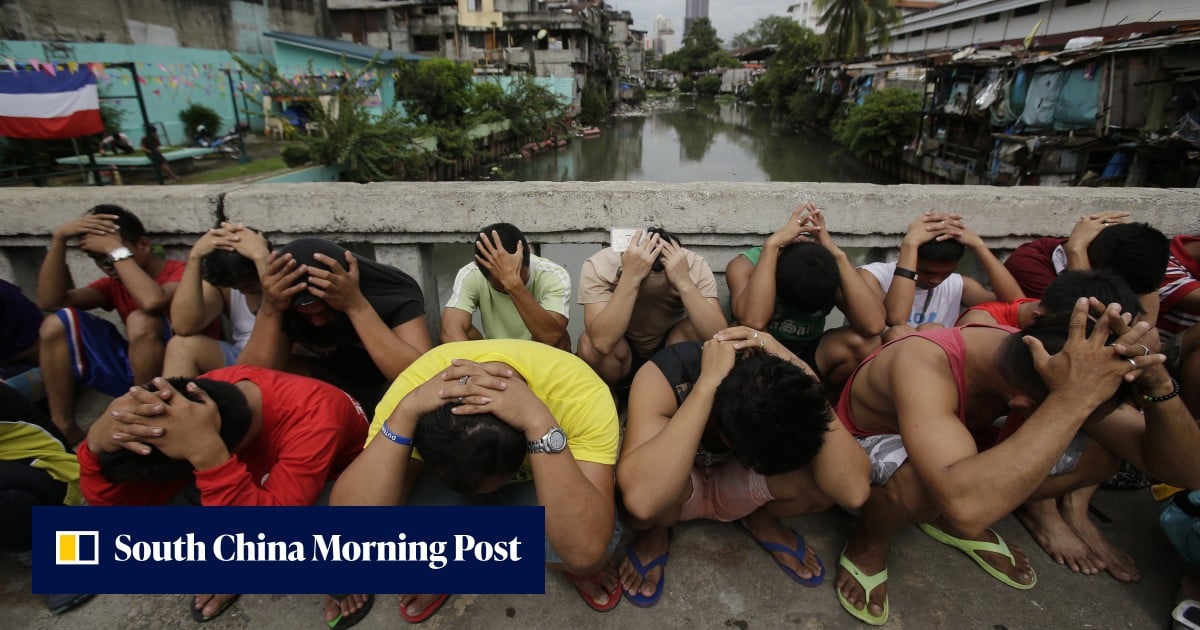
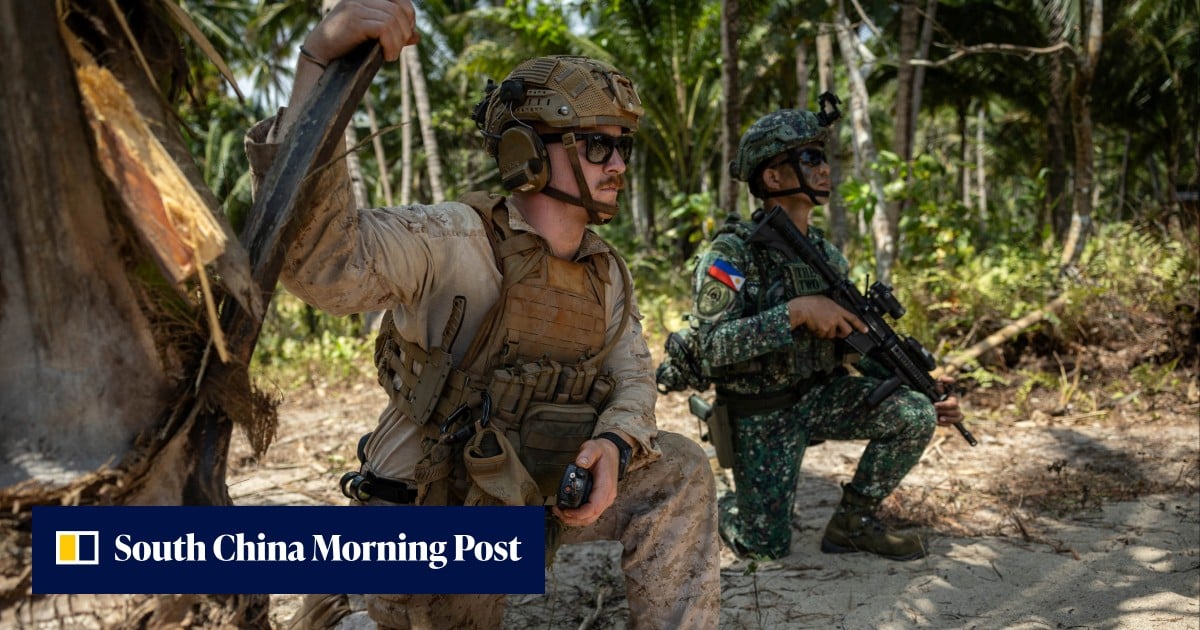
Photo via South China Morning Post

Why the Philippines remains a hotspot for transnational drug syndicates

Read the original at South China Morning Post ↗
Cite

Beltran, S. (2026, October 30). Why the Philippines remains a hotspot for transnational drug syndicates. South China Morning Post. https://www.scmp.com/week-asia/politics/article/3372777/why-philippines-remains-hotspot-transnational-drug-syndicates

Dated from the outlet's own feed. Check the original for its byline.

South China Morning Post · collected 2026-10-30 · by Sam Beltran

Quick Summary

The Philippines is a favored location for transnational drug syndicates due to its strategic geographical position, inadequate maritime surveillance, and significant domestic demand for drugs. Security analysts and former drug officials highlight that the country's drug trade is intricately linked with regional supply chains, where criminal groups collaborate with local partners and exploit established distribution networks and maritime routes to transport methamphetamine through Southeast Asia.
Written by AI on 2026-11-01, from this article's own text only (the story summary below draws on all the coverage).

AI analysis

Story summary

The Philippines continues to be a key hub for transnational drug syndicates due to its strategic geographical location, weak maritime surveillance, and high domestic demand for drugs. Former drug officials and security analysts point out that the country's drug trade is intricately linked with regional supply chains, facilitating the movement of methamphetamine through Southeast Asia. Criminal groups leverage local partnerships, maritime routes, and established distribution networks to transport illicit substances across borders. This situation underscores the ongoing challenges faced by Philippine authorities in combating drug trafficking within the region.

Written for “Philippines Drug Syndicates Hotspot” on 2026-11-21, grounded in this article and the 0 other(s) covering the same event.

Compared with similar articles

This article reads leans right and hedges 0% of its claims. Each row says how that neighbour differs.
South China Morning Post
Hedges 1 of 4 claims Outlet record 62/100
“Article A discusses general vulnerabilities of the Philippines to transnational drug syndicates, while Article B describes a specific joint operation involving China, Indonesia, and Malaysia to dismantle a methamphetamine trafficking network.”
Al Jazeera
Hedges 0 of 5 claims Outlet record 60/100
“The articles discuss different topics related to drug policies and outcomes in Southeast Asia but do not describe the same specific incident.”

Story

Philippines Drug Syndicates Hotspot
Crime & Law · 1 article(s) covering the same event.
How this article was measured signals, leaning charts, publisher record, byline, topics and claims

Signals How these are calculated →

Claims extracted
2
sentences that state something as happening or true
Uncertain
0%
0 of 2 hedged ("reportedly", "may", "according to")
Leaning
Leans right
of the writing, not the subject · beta estimate
Publisher signals
62/100
South China Morning Post's corrections and hedging, across everything collected from it. Not a measure of accuracy.
Outlets on this story
1
Crime & Law
Same framing elsewhere
1
articles that frame the event the way this one does
Analyzed 2026-11-01 · how these are computed

How this is being covered How these are calculated →

Article leaning vs. publisher reliability
Source leaning vs. consistency

Publisher

South China Morning Post · 4214 article(s) · 8 correction(s) detected
Running correction rate · 8 correction(s)

Who wrote this

Sam Beltran
33 article(s) here · 0 carrying a prediction
Canberra is forcing tech giants to report rogue models, but analysts say Asean may lack the leverage to make Big Tech listen 4-MIN READ4-MIN Listen Australia’s new mandatory safeguards on AI companies could serve as a model for Southeast Asia, analysts say, but the region needs to build its institutional and technical capabilities first. Prime Minister Anthony Albanese announced on Tuesday that AI companies operating in Australia must immediately report incidents in which their models behave in a rogue or misaligned way and must open systems for evaluation.
Asian-Americans rejected Trump’s ICE raids, but will anything change?
Why Democratic Congress may enhance US-Philippines alliance, pivot to Asia An end to the Iran war could see a greater shift of US military assets to the Indo-Pacific region, including the Philippines, analysts say Analysts expect bipartisan support for Manila to endure, with Democratic oversight set to rein in Trump’s unpredictability.
Hegseth pitches US-Asean defence framework but will it be a hard sell?
At this time of year, Fatima Ramos would normally be preparing her balikbayan boxes.
The Philippines is turning to the United States to build its oil stockpile amid the global energy crunch, with observers saying the move could also serve Washington’s military interests and deepen strategic ties.
Both sides will develop an offshore wind project in line with Vietnam’s goal to boost renewable electricity generation Vietnam is well placed to grow its renewable electricity sector by tapping its large pool of engineering talent and abundant wind resources with help from Denmark, a global leader in wind energy, according to analysts.
We would move on and proceed to the next voyage,” he said.
The Philippines’ telco industry wants the country to become a regional digital hub anchored by stable underwater cables, but a leading executive and analysts warn that slow approvals for repairs, limited monitoring and fragmented official oversight could undermine the ambition.
Also by Sam Beltran
Nothing else under this byline is closely related to this article, so these are simply their most recent.
All 33 articles by Sam Beltran →

Topics

Philippines

Subjects

Philippines GPE · 2×

Narrative

Geographical location, weak maritime surveillance and domestic demand make the Philippines vulnerable to these activities, analysts say Former drug officials and security analysts say the country’s drug trade remains closely connected to a wider regional supply chain, with criminal groups relying on local partners, maritime routes and established distribution networks to move methamphetamine across Southeast Asia.
framing: assertive · carried by 1 article(s) · first seen 2026-11-01
2026-11-01 · South China Morning Post
Why the Philippines remains a hotspot for transnational drug syndicates · assertive framing

Claims (2 extracted, 0 hedged)

Why the Philippines remains a hotspot for transnational drug syndicates asserted
Philippines → remain → syndicates
Geographical location, weak maritime surveillance and domestic demand make the Philippines vulnerable to these activities, analysts say Former drug officials and security analysts say the country’s drug trade remains closely connected to a wider regional supply chain, with criminal groups relying on local partners, maritime routes and established distribution networks to move methamphetamine across Southeast Asia. asserted
groups → make → Asia
Give feedback · no sign-in needed

No sign-in needed for now. Your note is sent without a name, so it cannot be answered.

History Support