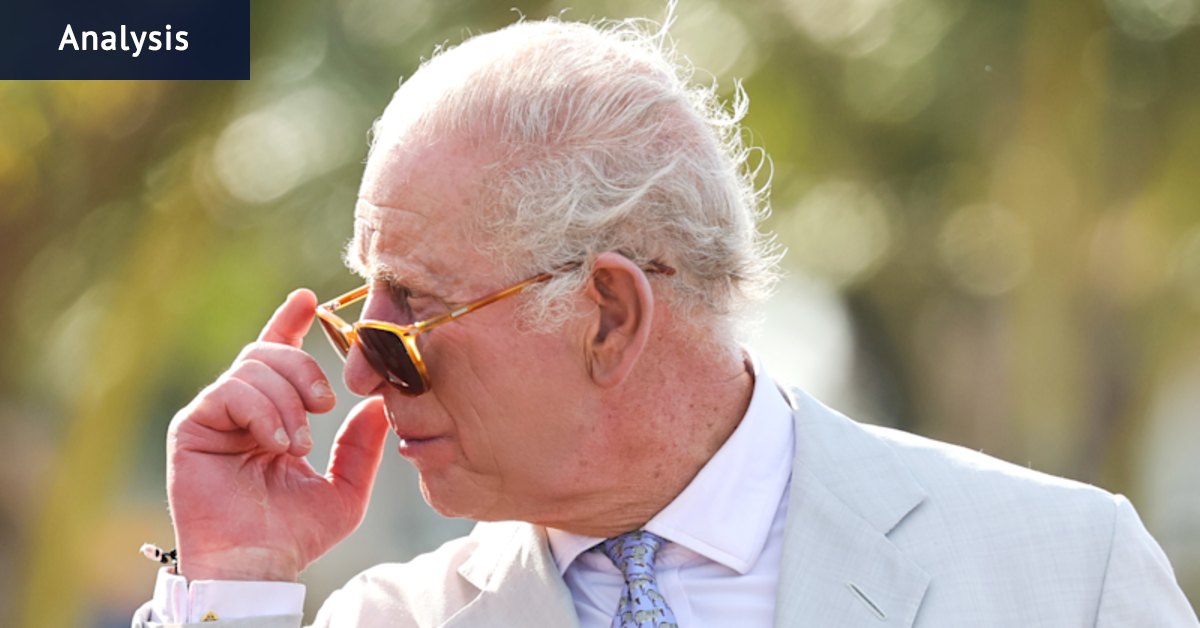
Photo via The Guardian

‘Reparations now’: King and Burnham face protests at Antigua Commonwealth summit

Read the original at The Guardian ↗
Cite

correspondent, N. D. C., & Georgetown, N. M. i. (2026, October 31). ‘Reparations now’: King and Burnham face protests at Antigua Commonwealth summit. The Guardian. https://www.theguardian.com/world/2026/oct/31/protests-expected-king-charles-reparations-slave-trade-commonwealth-summit-antigua

Dated from the outlet's own feed. Check the original for its byline.

The Guardian · collected 2026-10-31 · by Natricia Duncan Caribbean correspondent, Neil Marks in Georgetown

Quick Summary

At the upcoming Commonwealth leaders’ summit in Antigua, activists are organizing protests to demand slavery reparations from King Charles and UK Prime Minister Andy Burnham. Demonstrators will display messages like “The royal family enslaved us! Apologise now!” across St John’s. James Knight of Citizens for Reparatory Justice stated that the British government's refusal to acknowledge reparations and apologize has made such protests necessary. While Burnham offered to engage in a structured dialogue and consider formal apologies, this falls short of activists' demands, who see the summit as pivotal for addressing Britain’s role in the transatlantic slave trade and its ongoing impacts on Caribbean nations.
Written by AI on 2026-10-31, from this article's own text only (the story summary below draws on all the coverage).
See how they differ ↓

AI analysis

Story summary

King Charles III began his nine-day Caribbean tour on October 27, starting in the Bahamas where he acknowledged "the great suffering of the past" due to slavery but stopped short of issuing an official apology. Campaigners and activists have pressed for reparations and a formal apology from Britain for its role in the transatlantic slave trade during Charles's visits to Bahamas, Guyana, and Antigua. The tour is seen as particularly sensitive given historical grievances, with calls growing louder in several Caribbean nations to remove King Charles III as their head of state unless he addresses past injustices more directly.

During the Commonwealth Heads of Government Meeting (CHOGM) held in Antigua and Barbuda on November 5, the UK government agreed to engage in structured talks about Britain's legacy regarding slavery. This agreement was seen positively by some Caribbean leaders but did not settle demands for reparations or direct financial compensation. The UK also pledged £40 million over three years from existing budgets to speed up critical infrastructure investment, including green energy projects, in the Caribbean.

While King Charles's acknowledgment of past injustices is appreciated, many residents and activists argue that statements alone are insufficient, demanding concrete actions such as reparations and formal apologies.

Written for “UK Agrees to Slavery Talks” on 2026-11-21, grounded in this article and the 118 other(s) covering the same event.

How they differ

20 outlets covered “UK Agrees to Slavery Talks”.

What each outlet says

One AI summary per outlet of its latest article on this story, written from that article alone and checked against it. Open the article for the outlet's own words.

The GuardianThis outlet31 Oct

At the upcoming Commonwealth leaders’ summit in Antigua, activists are organizing protests to demand slavery reparations from King Charles and UK Prime Minister Andy Burnham. Demonstrators will display messages like “The royal family enslaved us! Apologise now!” across St John’s. James Knight of Citizens for Reparatory Justice stated that the British government's refusal to acknowledge reparations and apologize has…

‘Reparations now’: King and Burnham face protests at Antigua Commonwealth summit (this article)8 articles from The Guardian on this story
Evening Standard5 Nov

Prime Minister Burnham stated that the United Kingdom's agreement to hold talks about the harms caused by the slave trade has put the Commonwealth in a better position after the recent meeting in Antigua. The UK will engage in dialogue with affected parties over the transatlantic trafficking of enslaved Africans and its historical impacts, aiming for a process concluded within a year. Burnham indicated that while he…

Commonwealth in a better position after UK agreed to slavery talks, Burnham says →41 articles from Evening Standard on this story
Daily Mail5 Nov

Andy Burnham has agreed that Britain will participate in talks with Commonwealth nations regarding historical harms caused by the transatlantic slave trade during a Caribbean summit. Leaders from Ghana and Barbados, key figures in the reparations campaign, pushed for these discussions to address past wrongs. While Burnham emphasized there are no plans for direct financial reparations, he announced £40 million…

Burnham fuels reparations fears as he agrees to 'address' and apologise for Britain's slave trade legacy after tense talks with Commonwealth leaders →15 articles from Daily Mail on this story
BBC5 Nov

At the Commonwealth Heads of Government Meeting in Antigua, UK leaders committed to structured talks addressing historical harms from the transatlantic slave trade on a time-bound basis. The agreement includes welcoming "inclusive and good-faith dialogue" between the UK government and affected parties over approximately one year, with Foreign Secretary Ed Miliband indicating that a formal apology could be issued by…

UK commits to 'time-bound' talks on slavery apology →10 articles from BBC on this story
Sydney Morning Herald4 Nov

During the recent Commonwealth Heads of Government Meeting (CHOGM) in Antigua and Barbuda, Prime Minister Anthony Albanese faced criticism for attending a luxury retreat at Jumby Bay Island, perceived as out of touch amid economic hardships. The event cost around $11,700 per night for accommodations alone, highlighting the stark contrast between elite gatherings and citizens' struggles with declining living…

Marooned in paradise: Albanese and the summit that could not have come at a worse time →7 articles from Sydney Morning Herald on this story
CBC3 Nov

Prime Minister Mark Carney held a news conference during the Commonwealth Heads of Government Meeting in Antigua and Barbuda, addressing journalists' questions. The article does not provide specific details about the content of the questions or answers given.

Carney holds news conference at Commonwealth meeting →5 articles from CBC on this story
Show 14 more outlets
The Straits Times2 Nov

British Prime Minister Andy Burnham will attend the Commonwealth summit in Antigua and Barbuda on Tuesday to discuss a debt reset for developing countries within the organization and enhance trade relations among member states. He plans to address calls for slavery reparations by indicating openness to discussing a formal apology with affected communities, while emphasizing that any such apology would not include…

UK PM to raise debt reset and trade at Commonwealth summit →4 articles from The Straits Times on this story
Al Jazeera3 Nov

At the Commonwealth Heads of Government Meeting in Antigua and Barbuda, King Charles expressed profound sorrow over the transatlantic slave trade but stopped short of offering a formal apology. He acknowledged that the Royal Navy played a role in ending slavery but emphasized learning from the past by improving education, job creation, and climate resilience among Commonwealth nations. Many Caribbean leaders and…

UK’s King Charles expresses ‘sorrow’ in Antigua over slave trade →4 articles from Al Jazeera on this story
Toronto Star5 Nov

Ghana’s President John Mahama praised Canada during the Commonwealth summit in Antigua and Barbuda for advocating against what he termed a “rigged global system” that disadvantages African countries financially and environmentally. Mahama highlighted Canada's push for reforms to financing rules for developing nations, which often face high interest rates and heavy debt burdens exacerbated by climate change impacts…

Ghana thanks Carney for working to fix a 'rigged global system' for African countries →4 articles from Toronto Star on this story
Global News3 Nov

Prime Minister Mark Carney visited Antigua and Barbuda for a one-day meeting with Commonwealth leaders, focusing primarily on trade and diplomacy. His schedule included meetings with Prime Minister Gaston Browne, a working breakfast with Caribbean leaders, executive sessions at the Commonwealth meeting, and bilateral discussions with the leaders of Australia, Guyana, and Ghana. King Charles hosted lunch and dinner…

Carney meeting with Commonwealth leaders in Antigua and Barbuda →3 articles from Global News on this story
Times of India31 Oct

UK Prime Minister Andy Burnham has expressed willingness to issue a formal apology for Britain’s role in the transatlantic slave trade but rejected financial reparations, stating that current generations cannot be held accountable for historical wrongs. This stance comes ahead of the Commonwealth Heads of Government Meeting (CHOGM) in Antigua and Barbuda, where Caribbean leaders are expected to push for reparations…

UK PM rejects slavery reparations despite Caribbean demands, open to formal apology →3 articles from Times of India on this story
The Globe and Mail5 Nov

Ghana’s President John Mahama praised Canada during the Commonwealth summit in Antigua and Barbuda for advocating against what he termed a "rigged global system" that disadvantages African countries through debt and climate impacts. He highlighted Canada's support for financial reforms to help developing nations, particularly smaller island states facing climate challenges, and commended Prime Minister Mark Carney’s…

Ghana praises Canada for advocating against a ‘rigged global system’ for African countries →3 articles from The Globe and Mail on this story
South China Morning Post3 Nov

King Charles referred to the transatlantic slave trade as a "monstrous injustice" during his speech at the Commonwealth Heads of Government Meeting in Antigua and Barbuda. He expressed deep regret for Britain’s involvement, noting that slavery's legacy continues to affect many Commonwealth countries today. Prime Minister Andy Burnham is considering issuing an official apology for Britain's role in the slave trade.

UK’s King Charles calls slavery ‘monstrous injustice’, as PM mulls apology →2 articles from South China Morning Post on this story
New York Post2 Nov

Leaders from nearly 50 Commonwealth nations, representing a third of the world’s population, are gathering in Antigua this week for their biennial meeting amid global political instability. Secretary-General Shirley Botchwey highlights key issues such as conflict, economic shocks, and climate change affecting member states. Plans include initiatives to boost intra-Commonwealth trade and establish funds for digital…

Dozens of Commonwealth leaders descend on Antigua during global political turbulence →2 articles from New York Post on this story
ABC News (AU)5 Nov

Prime Minister Anthony Albanese faced criticism for attending the Commonwealth Heads of Government Meeting (CHOGM) in Antigua and Barbuda while Australia's economy was struggling, with the Reserve Bank expected to lift interest rates. During his trip, Albanese attempted to justify his presence by emphasizing discussions on managing UK backpacker migration and strengthening economic ties, but failed to secure any…

Albanese's Caribbean trip is no holiday as he faces grilling over economy →2 articles from ABC News (AU) on this story
Euronews29 Oct

King Charles III participated in the Junkanoo festival during his visit to the Bahamas, dancing with locals in an unprecedented display of informality. The event took place in Nassau, where King Charles also visited Parliament Square, interacted with vendors at market stalls, and met members of the public. This cultural celebration highlights the historical and constitutional connections between the Bahamas and…

Bahamas: King Charles III dances with locals during Caribbean visit →
CBS News29 Oct

King Charles III faces increasing pressure for a formal apology and reparations during his Caribbean tour, which began Tuesday in the Bahamas and continues through visits to Guyana and Antigua and Barbuda. Activists like Dr. Niambi Hall Campbell-Dean dismiss the king's acknowledgment of past suffering as insufficient, demanding concrete steps toward reparations. Experts warn that a formal apology could lead to legal…

King faces calls for apology, slavery reparations in Caribbean →
NBC News31 Oct

British Prime Minister Andy Burnham stated he is open to a formal apology for the U.K.’s role in the transatlantic slave trade but ruled out financial reparations. This shift comes amid King Charles III's tour of the Caribbean and ahead of next week’s Commonwealth Heads of Government Meeting in Antigua and Barbuda, where calls for acknowledgment of historical wrongdoings are expected. Mia Mottley of Barbados and…

U.K. PM open to slave trade apology but rules out financial reparations →
Dawn31 Oct

Prime Minister Andy Burnham expressed openness to the UK issuing a formal apology for its role in the transatlantic slave trade but ruled out financial reparations. Writing in The Guardian ahead of a Commonwealth leaders summit in Antigua and Barbuda, Burnham acknowledged that the slave trade was a “brutal and barbaric violation” and stated his government’s willingness to engage in dialogue with those affected by…

UK PM 'open' to slavery apology but not reparations →
The Hindu31 Oct

UK Prime Minister Andy Burnham has expressed openness to a formal apology from Britain for its role in the slave trade, ahead of the Commonwealth Heads of Government Meeting (CHOGM) next week. In an opinion piece published on October 30, 2026, Burnham stated that structured dialogue with affected nations would include considering such an apology but ruled out financial reparations. The article highlights historical…

Britain open to apologising for slavery, says Andy Burnham →

Compared with similar articles

This article reads unscored and hedges 7% of its claims. Each row says how that neighbour differs.
The Sydney Morning Herald
Leans left Hedges 5 of 54 claims Outlet record 61/100
Evening Standard
Hedges 0 of 7 claims Outlet record 64/100
“The articles describe different events: one is about protests demanding reparations during the Commonwealth summit, while the other is about the King and Queen attending a Sunday service.”
New York Post
Hedges 0 of 26 claims Outlet record 66/100
“While both articles refer to the Commonwealth leaders' summit in Antigua, Article A focuses on protests demanding reparations for slavery, whereas Article B is a general overview of leaders attending the summit.”
The Guardian
Hedges 1 of 34 claims Outlet record 64/100
“While both articles discuss reparations at a Commonwealth summit, they describe different aspects of the event: Article A focuses on protests and messages for reparations before the summit, while Article B covers responses from Caribbean leaders to UK's proposals during the summit.”
Al Jazeera
Hedges 0 of 22 claims Outlet record 60/100
“Article A describes protests and messages demanding reparations as King Charles travels to attend meetings, while Article B reports on King Charles's speech during the official opening of CHOGM expressing sorrow over the slave trade.”
The Guardian
Hedges 0 of 27 claims Outlet record 64/100
“Article A discusses King Charles's tour and visit to the Bahamas, while Article B mentions protests against King Charles and UK Prime Minister Andy Burnham during a Commonwealth summit in Antigua. These are separate events despite being related.”
CBC News
Hedges 0 of 35 claims Outlet record 72/100
“The articles describe different protests and statements made during King Charles' Caribbean tour, not a single incident.”
Evening Standard
Hedges 0 of 13 claims Outlet record 64/100
“While both articles discuss King Charles and Prime Minister Burnham's visit to Antigua in relation to slavery reparations, Article A focuses on the official discussions and policy changes, whereas Article B emphasizes the protests and public sentiment surrounding the issue.”
BBC News
Hedges 0 of 21 claims Outlet record 65/100
“While both articles discuss Andy Burnham's stance on slavery apology and reparations, Article A focuses on his comments and position, whereas Article B describes expected protests against King Charles and Prime Minister Burnham at the Commonwealth summit in Antigua.”

Story

UK Agrees to Slavery Talks
Politics · 119 article(s) covering the same event. See how they differ ↑
How this article was measured signals, leaning charts, publisher record, byline, topics and claims

Signals How these are calculated →

Claims extracted
46
sentences that state something as happening or true
Uncertain
7%
3 of 46 hedged ("reportedly", "may", "according to")
Leaning
withheld
no quote in the article backed the model's score
Publisher signals
64/100
The Guardian's corrections and hedging, across everything collected from it. Not a measure of accuracy.
Outlets on this story
119
Politics
Same framing elsewhere
1
articles that frame the event the way this one does
Analyzed 2026-10-31 · how these are computed

How this is being covered How these are calculated →

Article leaning vs. publisher reliability
Source leaning vs. consistency

Publisher

The Guardian · 3744 article(s) · 8 correction(s) detected
Running correction rate · 8 correction(s)

Who wrote this

Natricia Duncan Caribbean correspondent
5 article(s) here · 1 carrying a prediction
King Charles and the UK prime minister, Andy Burnham, will be greeted with messages as they travel through Antigua’s capital, St John’s, to attend meetings at the Commonwealth leaders’ summit next week.
King Charles has confirmed he will discuss the legacy of slavery at a summit with Commonwealth leaders as he begins his Caribbean tour.
Although the country prides itself in honouring freedom of speech, ranking 19 out of 180 countries in the 2025 Reporters Without Borders press freedom index, this year it fell 13 places to 32, and journalists say they are deeply concerned about whether they can protect whistleblowers and vulnerable sources who share information on the understanding that they will be protected.
The petition will be lodged with Charles, Jamaica’s head of state, on Monday.
Also by Natricia Duncan Caribbean correspondent
Nothing else under this byline is closely related to this article, so these are simply their most recent.
Neil Marks in Georgetown
1 article(s) here · 1 carrying a prediction
King Charles and the UK prime minister, Andy Burnham, will be greeted with messages as they travel through Antigua’s capital, St John’s, to attend meetings at the Commonwealth leaders’ summit next week.
The only article under this byline in the corpus.

Topics

Africans Antigua British Commonwealth Guardian

Subjects

British NORP · 5× Commonwealth ORG · 4× African NORP · 2× Africans NORP · 2× Antigua GPE · 2× Burnham PERSON · 2× Charles PERSON · 2× Guardian ORG · 2× Andy Burnham PERSON · 1× St John’s GPE · 1×

Narrative

“It is definitely necessary that we make known our deep sense of indignation in response to what has been announced ahead of the meeting by the British government and King Charles that there will be no apology, no reparations,” he said, “and to make that announcement when you’re coming to a meeting where people have been asking to have the matter discussed, to us, is extremely insulting [and] insensitive”.
framing: assertive · carried by 1 article(s) · first seen 2026-10-31
King Charles and the UK prime minister, Andy Burnham, will be greeted with messages as they travel through Antigua’s capital, St John’s, to attend meetings at the Commonwealth leaders’ summit next week.

Claims (46 extracted, 3 hedged)

“The royal family enslaved us! asserted
family → enslave → us
King Charles and the UK prime minister, Andy Burnham, will be greeted with messages as they travel through Antigua’s capital, St John’s, to attend meetings at the Commonwealth leaders’ summit next week. asserted
they → greet → summit
On billboards, placards and T-shirts, in letters and at a candlelight vigil for the thousands of Africans trafficked to Antigua and Barbuda during the transatlantic slave trade, the message from the Caribbean will be pervasive: slavery reparations is not an issue they “are going to be able to dodge”. asserted
they → traffic → Caribbean
James Knight of Citizens for Reparatory Justice, which is organising some of the demonstrations, said the king and UK government had made protest necessary. asserted
protest → organise → demonstrations
“It is definitely necessary that we make known our deep sense of indignation in response to what has been announced ahead of the meeting by the British government and King Charles that there will be no apology, no reparations,” he said, “and to make that announcement when you’re coming to a meeting where people have been asking to have the matter discussed, to us, is extremely insulting [and] insensitive”. asserted
matter → make → us
On Friday, Burnham went further than any previous British prime minister in an article for the Guardian, writing: “We are offering a structured dialogue with those affected by the transatlantic slave trade. asserted
We → go → trade
Listening to calls for a formal apology on behalf of the British state will form an important part of this process and I am open to them.” asserted
I → listen → them
While that does not pass the threshold that Knight set out, it will be viewed by some as a significant development. asserted
it → pass → development
The Commonwealth heads of government meeting (Chogm), usually a collegial gathering of leaders from the bloc’s 56 member countries, will be surrounded by reparations events. asserted
meeting → surround → events
Though outside the official agenda, protests, a beach vigil to remember the enslaved and the launch of a “global reparations caravan” – described by organisers as an international movement combining reparations advocacy, demonstrations and culture – are intended to ensure the issue is difficult to ignore. asserted
issue → remember → advocacy
For campaigners, this Chogm is the culmination of more than a decade of calls from Caribbean leaders for Britain to acknowledge its role in the enslavement of millions of Africans and the colonisation of African and Caribbean countries, and to address the enduring consequences. asserted
Britain → acknowledge → consequences
Last week, the chair of the Caribbean Community (Caricom) reparations commission, Hilary Beckles, emphasised that the absence of a dedicated official event did not mean reparations would remain peripheral. asserted
reparations → emphasise → event
He described the gathering as “the Chogm of reparations” and the “first round of reparations negotiations”. asserted
He → describe → negotiations
“This is the meeting of the Commonwealth in the Caribbean, and the number one item in the Caribbean as far as this gathering is concerned is reparatory justice,” Beckles said. asserted
Beckles → concern → Caribbean
The Guardian understands that organisations and groups supporting the reparations movement, including representatives from the Repair Campaign, the UK law firm Leigh Day, the Open Society Foundations, the African philanthropic organisation TrustAfrica and the UK’s all-party parliamentary group for Afrikan reparations, will get together outside the main meeting to discuss the issue. asserted
organisations → understand → issue
Caribbean leaders are also expected to push the issue during closed-door meetings. asserted
leaders → expect → meetings
But while the reparations movement views the summit as a potential turning point, successive British prime ministers have maintained that the UK will not pay slavery reparations, a position Burnham stuck to in his article, writing: “I do not think that British people today can be held liable for historical wrongs”. asserted
people → view → wrongs
The Caricom reparations commission has also revealed that the Caribbean was unable to secure unanimous Commonwealth agreement for foreign ministers to advance discussions on historical harms from the transatlantic slave trade through “structured, inclusive, and good faith dialogue”. asserted
ministers → reveal → dialogue
Meanwhile, Buckingham Palace has sought to draw a line between the monarch and government policy. asserted
Palace → seek → monarch
In a letter, seen by the Guardian, to the ambassador Dorbrene O’Marde, the chair of the Antigua and Barbuda reparations support commission, the palace said questions relating to the UK’s position on reparations were for the British government. asserted
questions → see → government
The response followed a letter from O’Marde describing “blanket ‘no apologies’ statements from both government and monarchy” as “shameful” and a refusal to accept historical responsibility. asserted
response → follow → responsibility
O’Marde said that despite strong declarations about the suffering caused by slavery and the monarch’s own calls for conversation and acknowledgment of the past, there had been no progression towards action. asserted
O’Marde → say → action
Instead, he said, the UK appeared to rely on “verbal gymnastics” to avoid an apology. asserted
UK → say → apology
“They’re all schooled not to make an apology,” he said. asserted
he → school → apology
But for O’Marde, the obstacles are unlikely to withstand the growing tide of international support for reparations, including a UN resolution in March describing the trafficking and racialised chattel enslavement of Africans as the gravest crime against humanity. asserted
obstacles → withstand → humanity
The resolution was backed by 123 countries. asserted
resolution → back → countries
Reparations, he said, now had a sound legal and political backbone that made progress increasingly plausible. asserted
progress → say → backbone
In September, Jamaican officials lodged a landmark petition to the king seeking legal advice on its claim for slavery reparations, which will be heard by the privy council in March. uncertain
which → lodge → March
Verene Shepherd, the vice-chair of the Caricom reparations commission, who was involved in drafting the 25 March UN resolution and an August recommendation from the UN committee on the elimination of racial discrimination (Cerd), said the developments reiterated that “crime does not rot”. asserted
crime → involve → discrimination
Shepherd said Cerd’s recommendation that countries are legally obliged to consider reparations for the transatlantic slave trade and take other measures to address the enduring legacy of racial discrimination was “grounded in international law and historical evidence” about slavery and colonisation and their continuing impact. asserted
countries → say → slavery
She described it as “a concrete step towards remedying historical wrongs against Africans and people of African descent”. asserted
She → describe → descent
“As far as former colonists and Africans are concerned, a crime does not rot. asserted
crime → concern → ?
It is carried forward until justice is achieved,” she said, adding that Cerd’s involvement “certainly strengthens the movement’s international legitimacy”. asserted
involvement → carry → legitimacy
The Caricom reparations commission’s manifesto and 10-point plan, which sets out what it describes as the “moral, ethical and legal case for reparations” for the enslavement of African people, puts a “full and formal apology” first. asserted
it → set → apology
For Shepherd, its importance lies in accepting responsibility. asserted
importance → lie → responsibility
“It would accept responsibility for these crimes, commit to non-repetition and pledge to repair the harms caused to the victims and their descendants, the men, the women, the children harmed by chattel enslavement. asserted
It → accept → enslavement
It would represent an ethical and legal acknowledgment of how present inequalities and racial injustices are rooted in the history of such criminal conduct,” she said. asserted
she → represent → conduct
O’Marde said an apology would create a pathway towards what the Caribbean ultimately wants: fruitful negotiations with the UK on reparations. asserted
Caribbean → say → reparations
But among Caribbean citizens there is still scepticism over whether even that would be enough. asserted
that → be → citizens
In Guyana, where the king visited on Thursday and Friday, Ron ChangYuen, a visual designer, said unless the king could shift the reparations conversation towards “actual results in some significant way”, he saw little point in the visit. uncertain
he → visit → visit
…and 6 more, not listed.
Give feedback · no sign-in needed

No sign-in needed for now. Your note is sent without a name, so it cannot be answered.

History Support