Photo via Times of India

How Iran targeted US air-defence network in the Gulf: Report

Read the original at Times of India ↗
Cite

Patnaik, P. (2026, November 1). How Iran targeted US air-defence network in the Gulf: Report. Times of India. https://timesofindia.indiatimes.com/world/middle-east/how-iran-targeted-us-air-defence-network-in-the-gulf-report/articleshow/135430878.cms

Dated from the outlet's own feed. Check the original for its byline.

Times of India · collected 2026-11-01 · by Prisha Patnaik

Quick Summary

The Associated Press analyzed satellite imagery revealing Iran’s attacks on 26 US military bases across the Middle East from April to August, with over 115 drone and missile strikes damaging or destroying radar installations and other critical infrastructure. Initially targeting detection systems like radar, Iran then expanded its assaults to include aircraft hangars, warehouses, and troop facilities, causing significant disruption to American defense capabilities in the region.
Written by AI on 2026-11-01, from this article's own text only (the story summary below draws on all the coverage).

AI analysis

Story summary

As of November 1, 2026, an analysis by the Associated Press based on satellite imagery indicates that Iran targeted US military installations across the Middle East, primarily focusing on systems designed to detect incoming attacks before expanding to aircraft, warehouses, and troop facilities. This campaign involved more than 115 drone and missile strikes, damaging or destroying structures at 26 US military bases between April 1 and August. The scale of damage led Washington to relocate critical assets out of the Persian Gulf region, according to regional officials cited by the AP.

Written for “Iran Targets US Air Defence Network” on 2026-11-21, grounded in this article and the 0 other(s) covering the same event.

Compared with similar articles

This article reads unscored and hedges 18% of its claims. Each row says how that neighbour differs.
Al Jazeera
Hedges 1 of 2 claims Outlet record 60/100
“The articles describe different aspects of Iran's actions: one focuses on Iranian IRGC reporting about tankers hitting mines in the Strait of Hormuz, while the other discusses a reported analysis of satellite imagery indicating attacks on US military installations.”
Al Jazeera
Leans left Hedges 7 of 40 claims Outlet record 60/100
“Article A discusses Iran's warnings and diplomatic efforts, while Article B reports on a specific retaliation against US military installations.”
Al Jazeera
Hedges 1 of 8 claims Outlet record 60/100
“The articles describe different events occurring at different times and locations: one details Iran's retaliation against U.S. military installations, while the other reports explosions on Qeshm Island in response to alleged US strikes.”
NBC News
Hedges 2 of 24 claims Outlet record 77/100
“The articles describe different events occurring at distinct times: Article A discusses Iran's retaliation against US military installations, while Article B reports on limited U.S. strikes in response to Iranian actions.”
BBC News
Leans right Hedges 3 of 16 claims Outlet record 65/100
“Article A describes Iran's retaliation against US military installations, while Article B reports on US strikes in response to Iranian actions. These are separate but related events occurring at different times.”
Al Jazeera
Leans right Hedges 10 of 52 claims Outlet record 60/100
“The articles describe different events: one about Iran's retaliation against US military installations and the other about a subsequent US strike on Qeshm Island.”
The Independent
Hedges 3 of 7 claims Outlet record 59/100
“The articles describe different aspects of a larger conflict involving Iran and the US, but do not specifically report on the same incident.”
Washington Examiner
Leans right Hedges 0 of 4 claims Outlet record 67/100
“Article A describes Iran's retaliation against US military installations, while Article B discusses US defensive strikes against Iran on a different date.”
Euronews
Leans left Hedges 1 of 14 claims Outlet record 60/100
“The articles describe different events: one about Iran targeting US military installations and another about US strikes on Qeshm Island.”
New York Post
Leans right Hedges 2 of 8 claims Outlet record 66/100
“The articles describe different stages of a conflict: Article A reports on preparations for potential US attacks on Iran, while Article B describes Iran's retaliatory strikes against US military installations.”

Story

Iran Targets US Air Defence Network
Politics · 1 article(s) covering the same event.
How this article was measured signals, leaning charts, publisher record, byline, topics and claims

Signals How these are calculated →

Claims extracted
40
sentences that state something as happening or true
Uncertain
18%
7 of 40 hedged ("reportedly", "may", "according to")
Leaning
not political
takes no side on a contested political question
Publisher signals
59/100
Times of India's corrections and hedging, across everything collected from it. Not a measure of accuracy.
Outlets on this story
1
Politics
Same framing elsewhere
1
articles that frame the event the way this one does
Analyzed 2026-11-01 · how these are computed

How this is being covered How these are calculated →

Article leaning vs. publisher reliability
Source leaning vs. consistency

Publisher

Times of India · 5461 article(s) · 6 correction(s) detected
Running correction rate · 6 correction(s)

Who wrote this

Prisha Patnaik
131 article(s) here · 1 carrying a prediction
The UK- and France-led exercise, called Koalicja 2026, involves 11 countries from the West's Coalition of the Willing.
However, RDM disputed comparisons with the European attacks, saying exploiting its systems would have required physical access to specific hardware.
The criticism came hours before US president Donald Trump was due to arrive in Shenzhen for the Asia-Pacific Economic Cooperation (APEC) summit, where he is expected to meet Chinese president Xi Jinping.
The approach could help generate cleaner energy, address waste disposal challenges and free up land currently used for dumping.
She said the Belgian capital would be a more appropriate venue because the question of funding Ukraine had become a major point of debate across Europe.
Trump said the meeting could take place during his visit to China, but indicated that it would depend on whether Kim was willing to attend and on Chinese President Xi Jinping's role. Speaking to reporters at the White House before leaving for the Philippines and China, Trump said he could meet Kim alongside his planned engagements with Xi and Russian president Vladimir Putin. “We may meet with Kim Jong Un also,” Trump said.
Pakistan's jailed former prime minister Imran Khan has appealed to the country's top courts for urgent medical treatment for himself and his wife, warning that his health has deteriorated to the point where he fears he may not survive.
Investigators also found chemical substances at a premises used by one of the teenagers that could potentially be used to manufacture explosives.
China and Southeast Asian nations have pledged to avoid actions that could escalate tensions in the disputed South China Sea, as leaders met in Manila on Monday to push forward negotiations on a long-delayed code of conduct for the strategic waterway.
The claim could not be independently verified, and the Guards did not identify either vessel or disclose their country of origin.
Also by Prisha Patnaik
Nothing else under this byline is closely related to this article, so these are simply their most recent.
All 131 articles by Prisha Patnaik →

Topics

American Iran Jordan Saudi Arabia the Associated Press

Subjects

Iran GPE · 6× Jordan GPE · 3× Saudi Arabia GPE · 3× Bahrain GPE · 2× Kuwait GPE · 2× Qatar GPE · 2× American NORP · 1× Iranian NORP · 1× Washington GPE · 1× the Associated Press ORG · 1×

Narrative

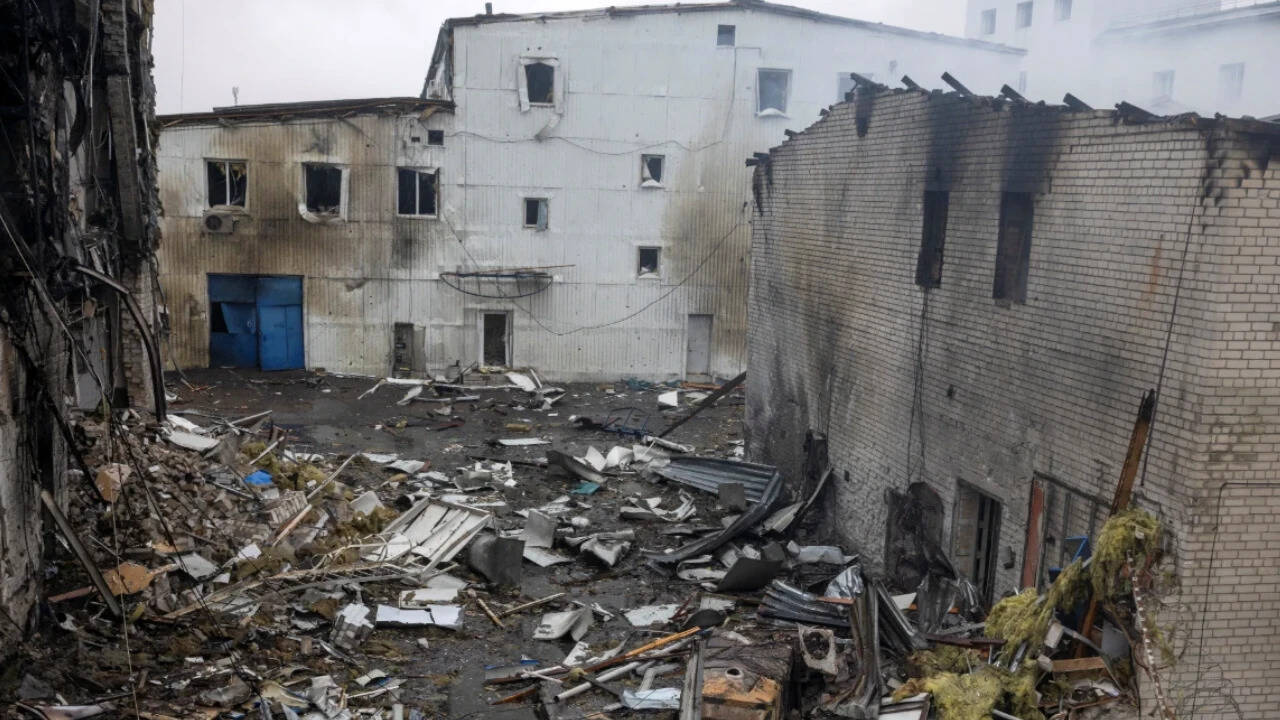
An analysis of satellite imagery carried out by the Associated Press has found that Iran’s retaliation against US military installations across the Middle East focused first on the systems designed to detect incoming attacks, before expanding to aircraft, warehouses and troop facilities.
framing: assertive · carried by 1 article(s) · first seen 2026-11-01
The figure includes operational spending and a projected $29 billion to replace munitions already used in the conflict, but excludes the cost of repairing US military bases damaged by Iranian attacks and the fuel used by ships and aircraft.
2026-11-01 · Times of India
How Iran targeted US air-defence network in the Gulf: Report · assertive framing

Claims (40 extracted, 7 hedged)

An analysis of satellite imagery carried out by the Associated Press has found that Iran’s retaliation against US military installations across the Middle East focused first on the systems designed to detect incoming attacks, before expanding to aircraft, warehouses and troop facilities. asserted
retaliation → carry → aircraft
The strikes damaged or destroyed structures at 26 US military bases and other sites holding American equipment, with the scale of the damage prompting Washington to move aircraft, air defence systems and other assets out of the Persian Gulf, according to regional officials cited by the AP. uncertain
scale → damage → AP
The analysis independently verified damage using satellite imagery from multiple providers and drew on interviews with four regional officials who were briefed on the attacks or had direct knowledge of the sites. asserted
who → verify → sites
It identified more than 115 drone and missile strikes, claimed by Iran or Iranian-backed militias, that damaged or destroyed structures at the 26 locations through August. asserted
that → identify → August
Iran initially concentrated on aircraft hangars and systems used to detect incoming strikes, the AP found, before widening its attacks to warehouses, accommodation for troops and other facilities. asserted
AP → concentrate → troops
The early targets included radar installations that form a critical part of the US air defence network. asserted
that → include → network
Within the first two days of the war, Iran destroyed protective enclosures for US radar systems at Camp Arifjan in Kuwait and Naval Support Activity Bahrain. asserted
Iran → destroy → Kuwait
It also struck portable radars at Prince Sultan Air Base in Saudi Arabia and Muwaffaq Salti Air Base in Jordan. asserted
It → strike → Jordan
Iran’s focus on these systems was significant because they are difficult and expensive to replace. asserted
they → replace → systems
N.R. Jenzen-Jones, director of the technical intelligence consultancy Armament Research Services, told the AP that Tehran had targeted the backbone of the US air defence system. asserted
Tehran → tell → system
Striking such sites was likely intended to disrupt the ability of the US and its allies to respond to further attacks, he said. asserted
he → strike → attacks
A radar in Jordan was reportedly destroyed. uncertain
radar → destroy → Jordan
It was one of only 13 AN/TPY-2 radars held by the US Army globally, according to manufacturer Raytheon, with budget documents putting the cost of each at around $500 million. uncertain
documents → hold → million
A separate radar in Qatar was also significantly damaged, although it remains unclear whether it was destroyed. uncertain
it → damage → Qatar
After the initial attacks on radar systems, Iran carried out more than 50 successful strikes on 18 locations holding US military equipment during the first month of the war, the AP analysis found. asserted
analysis → carry → war
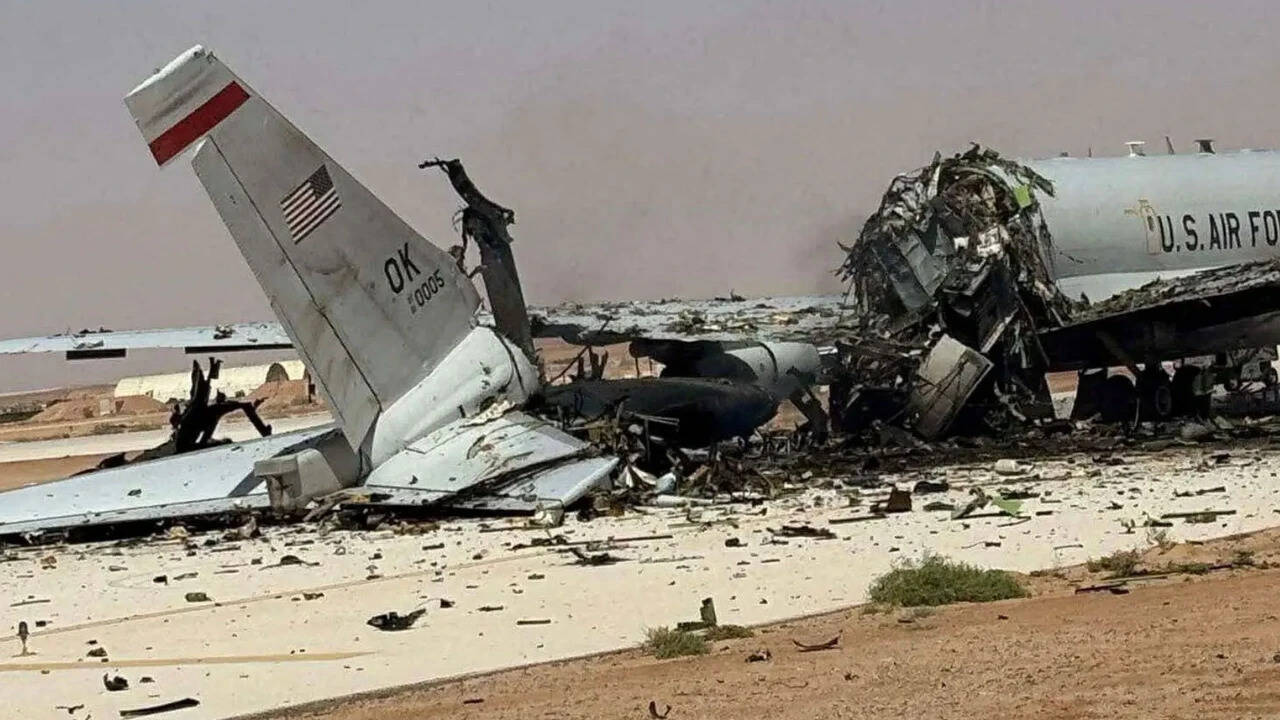
At Prince Sultan Air Base in Saudi Arabia, a March strike damaged the rear section of a Boeing E-3 Sentry surveillance aircraft and also hit a CIA unit at the US Embassy in Riyadh, according to regional officials cited by the AP. uncertain
strike → damage → AP
The attack damaged several other aircraft, including two aerial refuelling tankers. asserted
attack → damage → tankers
A Congressional Research Service report updated in October said 15 US aircraft had been damaged at regional bases. asserted
aircraft → update → bases
Kuwait bore the brunt of the attacks. asserted
Kuwait → bear → attacks
Ali Al Salem Air Base was struck at least 30 times, damaging or destroying at least 15 aircraft hangars, numerous warehouses and 10 buildings near a residential area. asserted
Base → strike → area
Camp Buehring sustained extensive damage, with most of its hangars rendered inoperable. asserted
most → sustain → hangars
Its gym was destroyed in March, while a store for troops was hit in late July. asserted
store → destroy → July
Regional officials also described severe damage to a garage and dining facility at the base. asserted
officials → describe → base
US sites in Bahrain, Iraq, Jordan, Oman, Qatar, Saudi Arabia and the United Arab Emirates were also targeted. asserted
sites → target → Bahrain
At Al Dhafra Air Base in the UAE, strikes damaged infrastructure including hangars and other installations, as well as equipment such as an early-warning radar system and surveillance drones. asserted
strikes → damage → system
The damage has raised questions about the resilience of the US military footprint in the region. asserted
damage → raise → region
Two regional officials told the AP that Washington had moved many of its assets out of the Persian Gulf, including aircraft, air defence and communications systems. asserted
Washington → tell → aircraft
US Central Command, which oversees American military operations in the region, declined to comment on the damage, citing operational security. asserted
which → oversee → security
The Pentagon has offered little detail about the toll on US equipment and personnel. asserted
Pentagon → offer → equipment
Its spokesman Sean Parnell said American forces and bases were “well protected” and that the military was stronger than ever. asserted
military → say → ?
The financial cost of the conflict is also mounting. asserted
cost → mount → conflict
The Pentagon told US lawmakers that the war had cost American taxpayers at least $47.1 billion as of October 16. asserted
war → tell → October
The figure includes operational spending and a projected $29 billion to replace munitions already used in the conflict, but excludes the cost of repairing US military bases damaged by Iranian attacks and the fuel used by ships and aircraft. asserted
figure → include → ships
The $47.1 billion estimate is higher than the $38 billion forecast by the Congressional Budget Office in September and the $37.5 billion figure given by Defence Secretary Pete Hegseth in July. asserted
estimate → give → July
The CBO has estimated that the war could cost an additional $2 billion to $3 billion every month for as long as it continues. uncertain
it → estimate → billion
The financial and military toll comes as US president Donald Trump weighs the possibility of further strikes after the US midterm elections. asserted
Trump → come → elections
Tehran has vowed major retaliation if hostilities resume. asserted
hostilities → vow → retaliation
The damage already inflicted on US bases could shape Washington’s decisions about whether to rebuild its military infrastructure in the region once the war ends. uncertain
war → inflict → region
The AP also noted that public verification of the damage has been complicated by delays in the release of satellite imagery. asserted
verification → note → imagery
Major providers with US government contracts restricted or delayed the publication of images at the request of American officials, limiting independent assessment of the strikes. asserted
providers → restrict → strikes

Give feedback · no sign-in needed

No sign-in needed for now. Your note is sent without a name, so it cannot be answered.

History Support