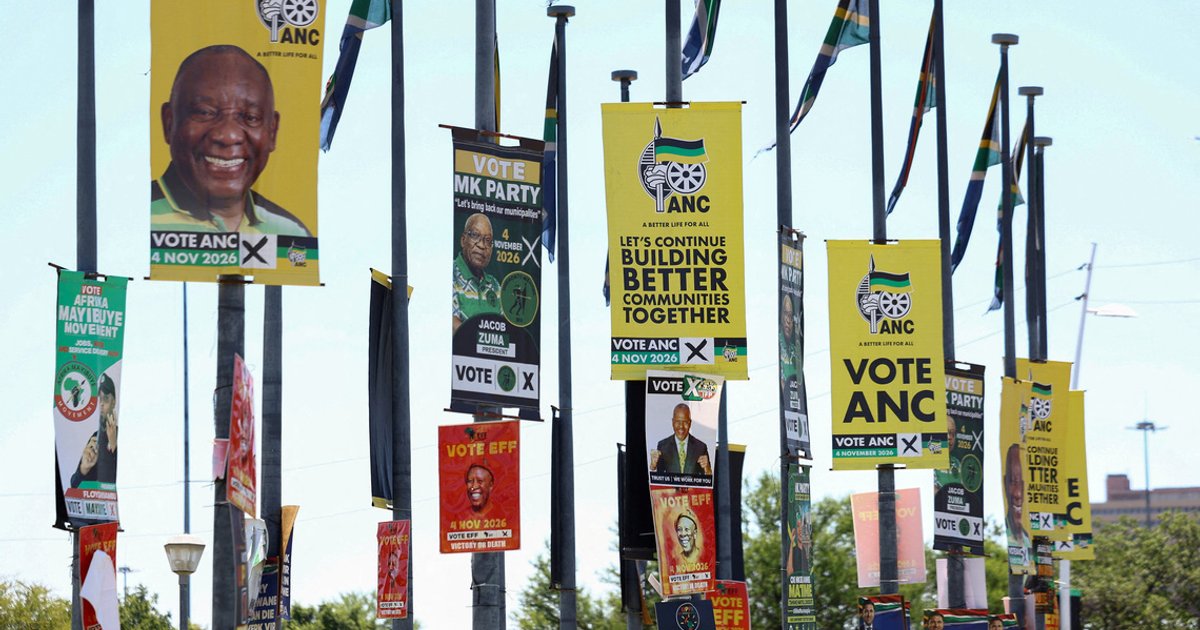
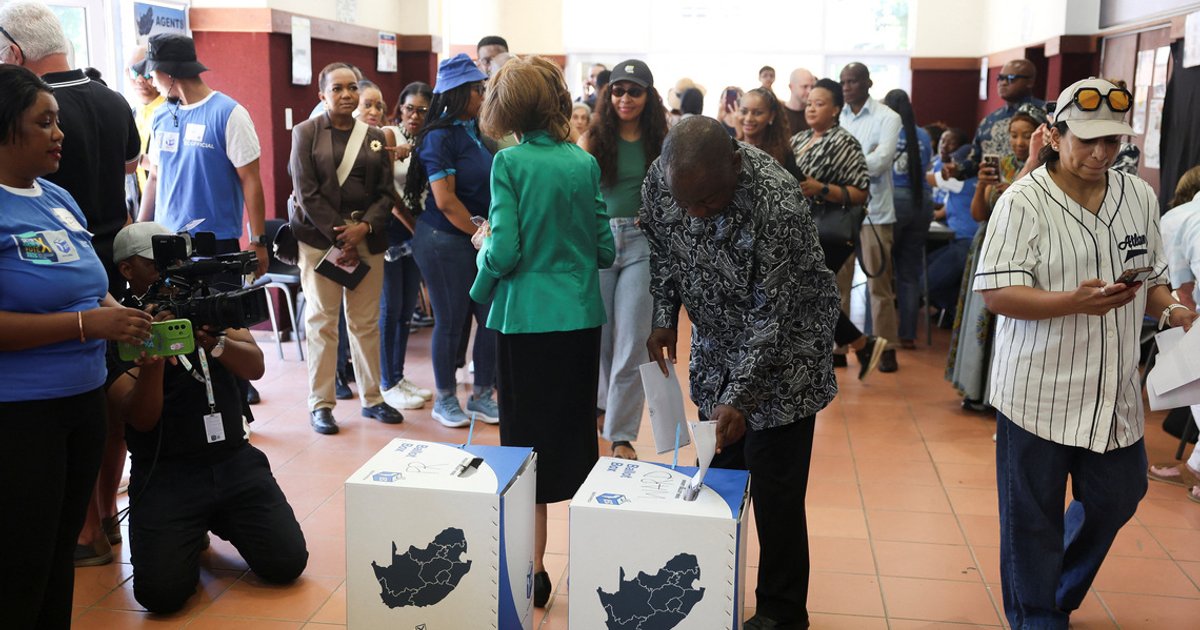
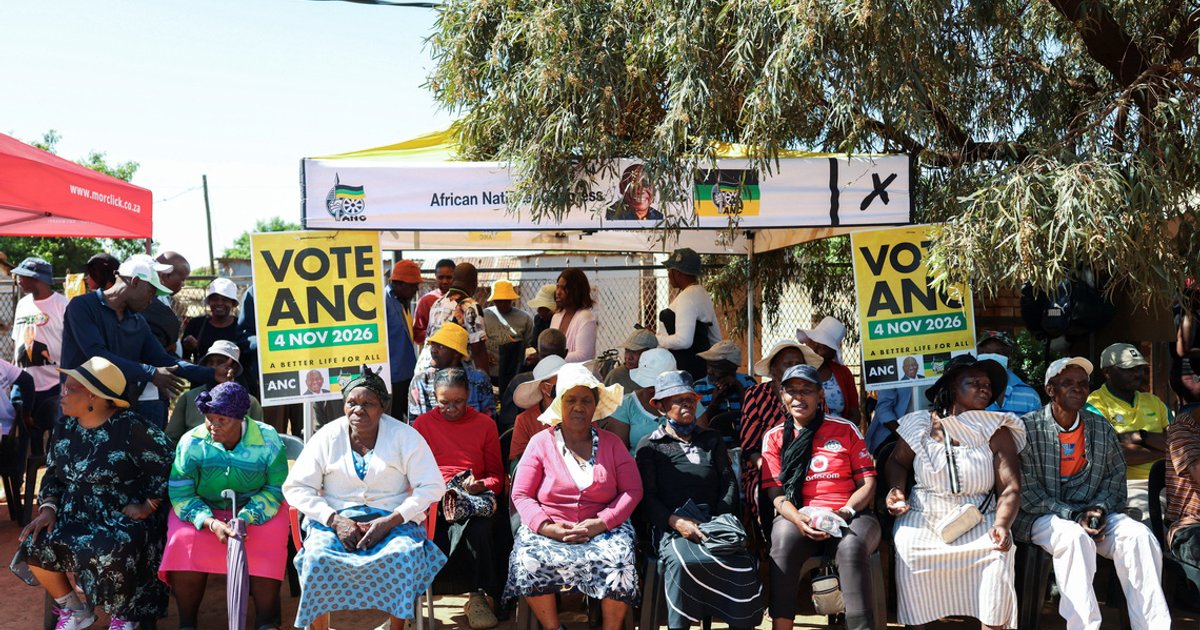
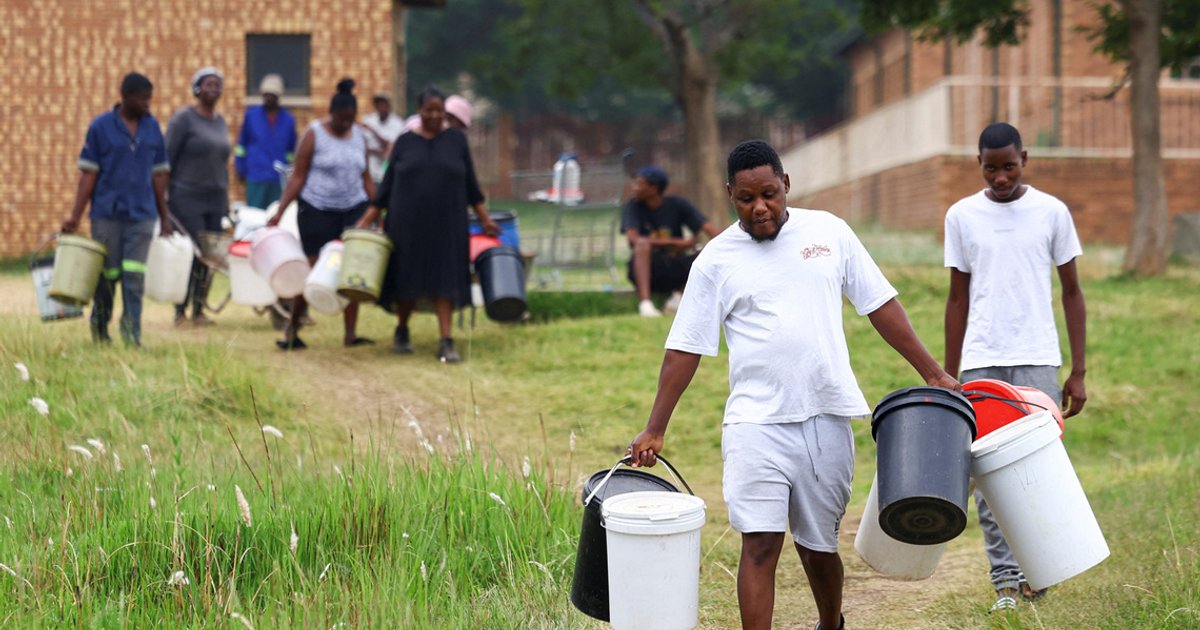
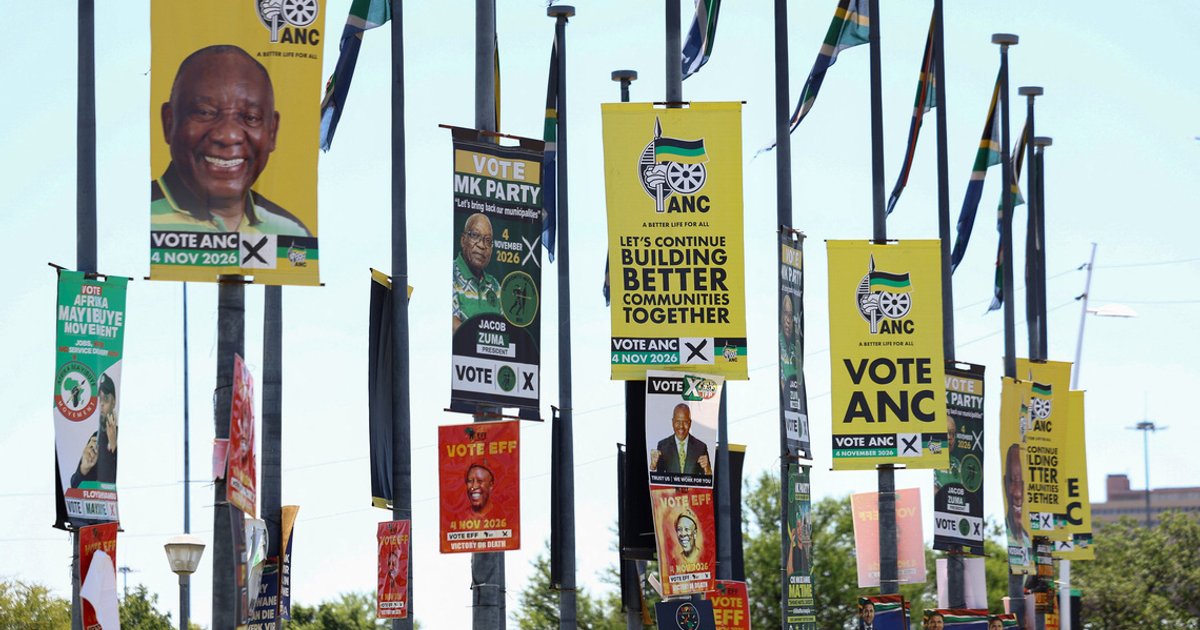
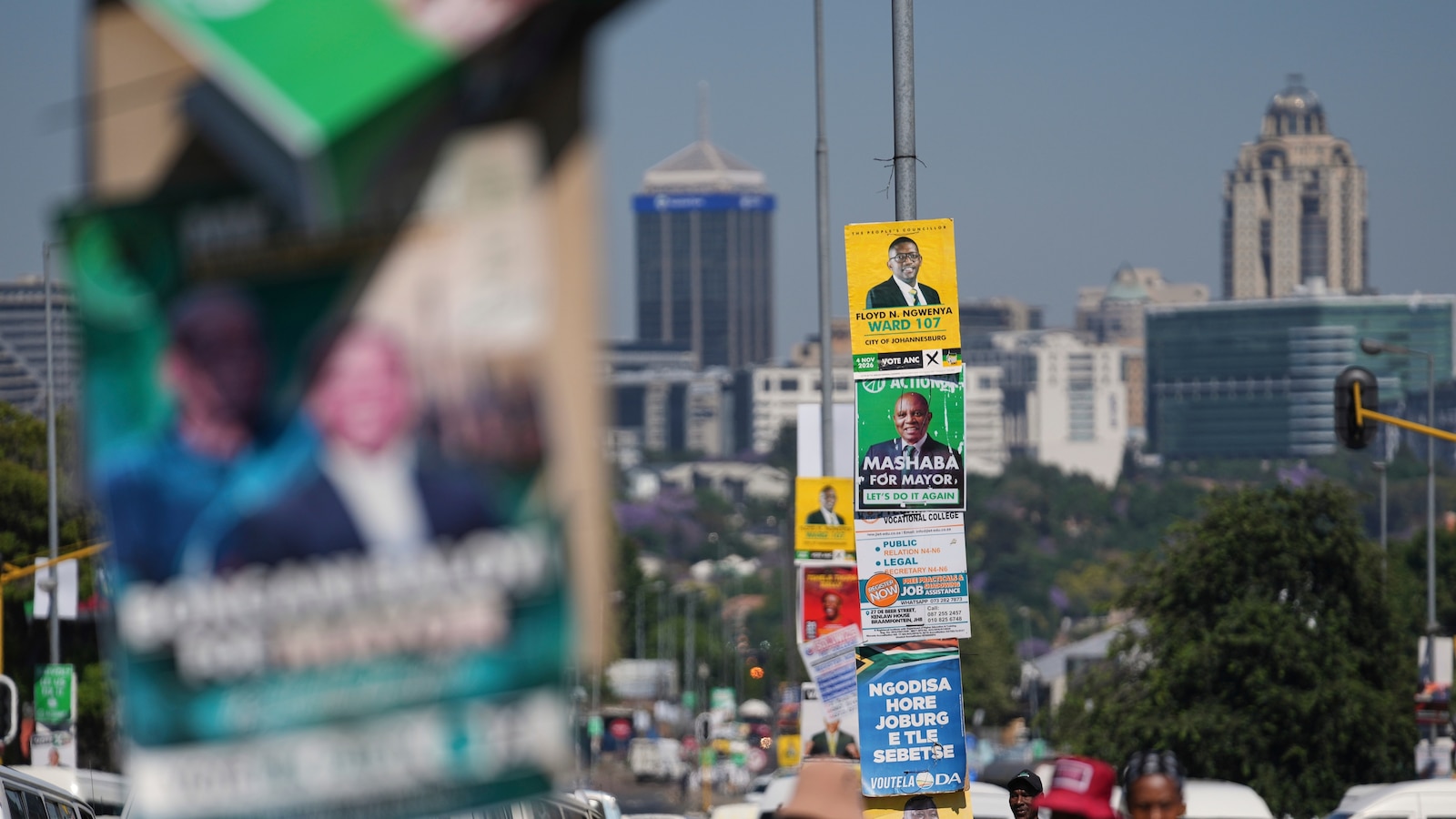
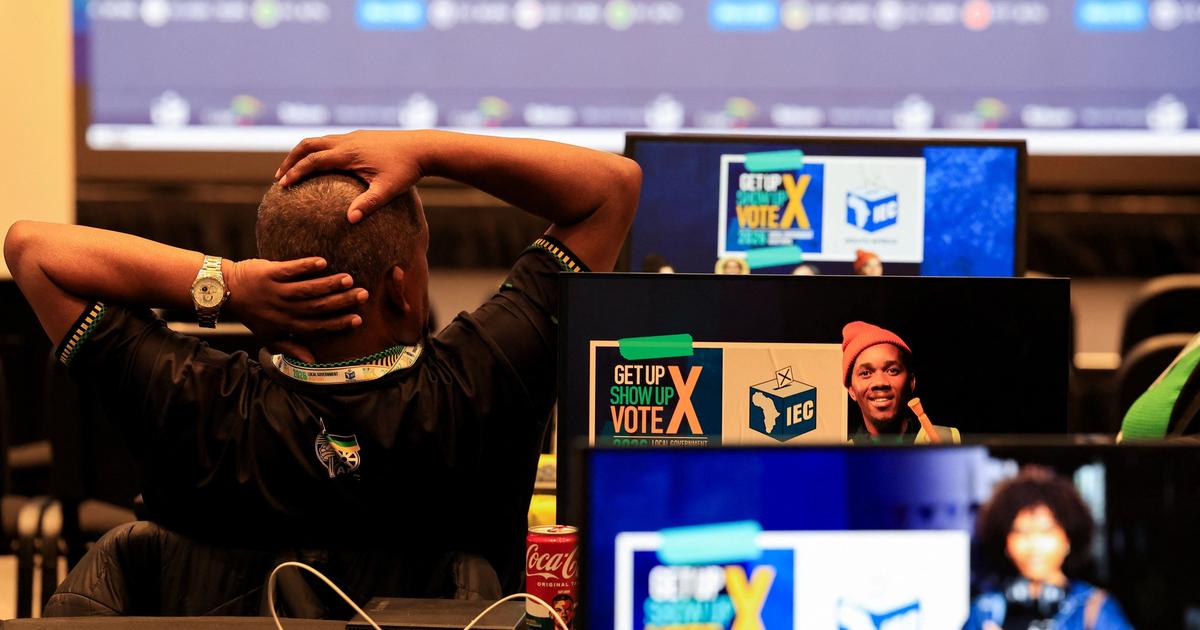
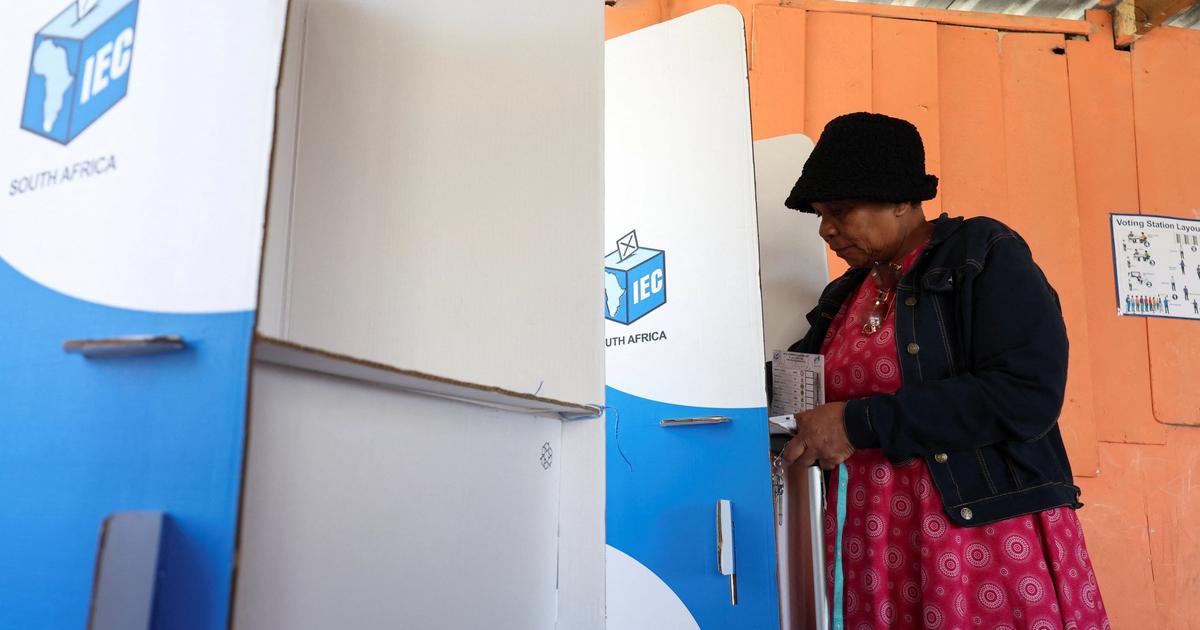
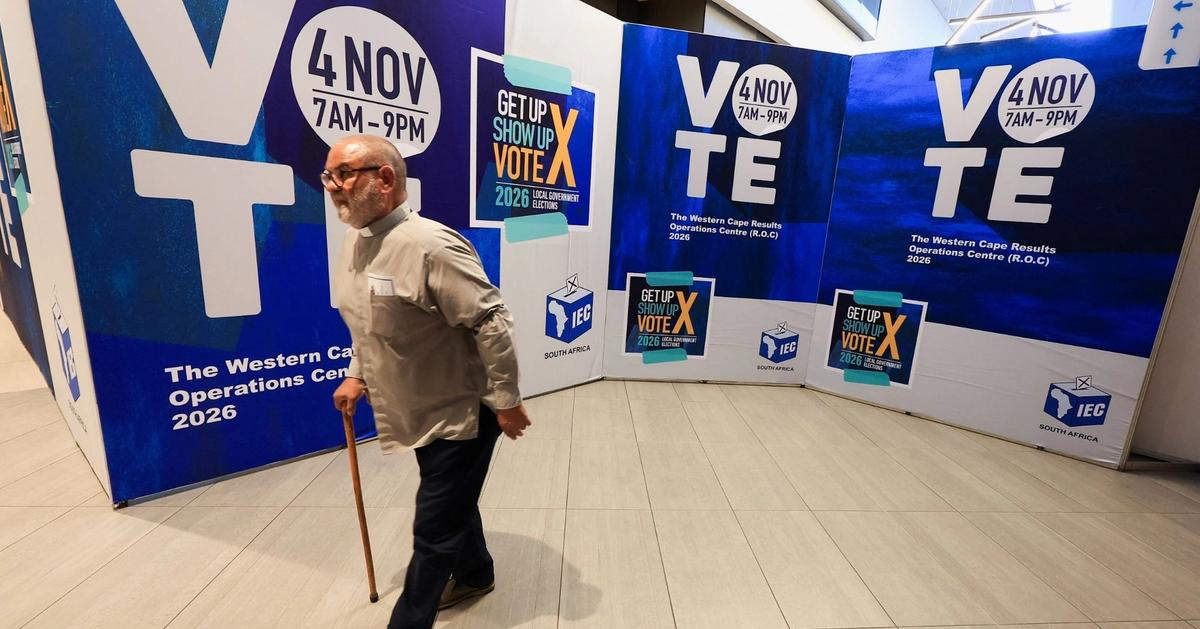
Photo via Semafor

The ANC set to lose South African cities

Read the original at Semafor ↗
Cite

Motsoeneng, T. (2026, November 2). The ANC set to lose South African cities. Semafor. https://www.semafor.com/article/11/02/2026/the-anc-set-to-lose-south-african-cities

Dated from the outlet's own feed. Check the original for its byline.

Semafor · collected 2026-11-02 · by Tiisetso Motsoeneng

Quick Summary

South Africa’s African National Congress (ANC) is projected to lose control of most major cities in upcoming local elections, according to recent polling data. In key urban areas like Johannesburg and Tshwane, support for the ANC hovers around 30%, while in Durban it falls to just 10%. The Ipsos poll conducted between September 12 and October 13 reveals the party’s national support at a record low of 30%. This decline indicates growing opposition influence in urban centers crucial to South Africa's economy, potentially reshaping political dynamics both locally and nationally.
Written by AI on 2026-11-02, from this article's own text only (the story summary below draws on all the coverage).
See how they differ ↓

AI analysis

Story summary

The African National Congress (ANC) suffered its worst electoral setback in South Africa's recent local government elections, securing under 31% of the vote, a significant decline from previous results. This outcome is viewed as catastrophic by party leaders, who now face a political landscape where the ANC's dominance is severely diminished, particularly in urban areas. The party's control of major cities such as Johannesburg, the commercial hub, and Ekurhuleni is at risk, potentially leading to coalition governments with other political parties. Voters expressed deep discontent over issues like water outages, power cuts, and crumbling infrastructure, highlighting years of frustration over unfulfilled promises and poor service delivery. As a result, the ANC has acknowledged the need for change and is in high-stakes coalition talks to determine their future leadership roles in the country's cities.

Written for “ANC's Worst Election Results” on 2026-11-21, grounded in this article and the 25 other(s) covering the same event.

How they differ

9 outlets covered “ANC's Worst Election Results”.

What each outlet says

One AI summary per outlet of its latest article on this story, written from that article alone and checked against it. Open the article for the outlet's own words.

SemaforThis outlet2 Nov

South Africa’s African National Congress (ANC) is projected to lose control of most major cities in upcoming local elections, according to recent polling data. In key urban areas like Johannesburg and Tshwane, support for the ANC hovers around 30%, while in Durban it falls to just 10%. The Ipsos poll conducted between September 12 and October 13 reveals the party’s national support at a record low of 30%. This…

The ANC set to lose South African cities (this article)3 articles from Semafor on this story
Al Jazeera14 Nov

This analysis argues that the African National Congress’s decline in the 2026 local government elections, where its vote share dropped to 32.5 percent, was the result of three distinct nine-year leadership phases. The author traces this trajectory from the "developing years" of Thabo Mbeki, which saw 5.4 percent GDP growth and a 65.7 percent electoral share, to the "devastating years" of Jacob Zuma characterized by…

The ANC’s implosion was decades in the making →6 articles from Al Jazeera on this story
The Straits Times9 Nov

South African voters rejected the ruling African National Congress (ANC) in local elections on November 4, with the party winning less than a third of votes—its worst result since leading South Africa out of apartheid. The election marked a shift towards coalition politics, weakening the ANC's dominance and strengthening rival parties like the Democratic Alliance (DA). Analysts suggest that this outcome reflects…

South African voters rebuff ANC, accelerating shift to coalition politics →5 articles from The Straits Times on this story
The Hindu10 Nov

The African National Congress (ANC), which led South Africa's anti-apartheid struggle and has dominated national politics since Nelson Mandela’s presidency, suffered its worst electoral performance in local body polls, winning only 30.76% of the vote. The article attributes this decline to corruption allegations and internal divisions within the party, highlighting a significant loss of support for the ANC that…

The fall of the ANC: how Mandela’s party slid to its worst-ever result | Explained →3 articles from The Hindu on this story
Toronto Star13 Nov

South African political parties are engaged in critical coalition negotiations following local elections where the African National Congress (ANC) experienced its lowest support, dropping to just over 30% of the national vote. This decline means the ANC must form alliances with other parties to maintain control over major cities such as Johannesburg and Tshwane, which includes Pretoria.

South African parties in high-stakes coalition talks after ANC's worst election results →2 articles from Toronto Star on this story
BBC9 Nov

In South Africa's recent local elections, the ruling African National Congress (ANC) recorded its lowest voter support since the end of apartheid, winning only 31% of the overall vote compared to 46% in 2021. This decline has led to the ANC losing control of several cities and provinces, with significant gains made by opposition parties like the Democratic Alliance and former president Jacob Zuma's party. Political…

'Devastating message' as ANC records worst-ever result in South Africa election →2 articles from BBC on this story
Show 3 more outlets
The Guardian6 Nov

In South Africa’s local elections, the African National Congress (ANC) is projected to receive under a third of the national vote with over 80% of ballots counted, marking a significant decline from its previous performance. The ANC faces challenges in two populous provinces, Gauteng and KwaZulu-Natal, where it may lose its status as the largest party. Turnout increased to 54.5%, up from 46% five years ago, with the…

ANC faces bruising defeat in South African local elections with 80% of ballots counted →2 articles from The Guardian on this story
Deutsche Welle13 Nov

This analysis explores the political implications following the African National Congress (ANC) securing under 31% of the vote in South Africa's local government elections, its worst electoral setback to date. The piece attributes this "catastrophic" decline to years of public frustration regarding skyrocketing unemployment, poor service delivery, and high-level corruption. Research and eyewitness accounts cited in…

After suffering its worst election result, what's next for the ANC — and for South Africa? →2 articles from Deutsche Welle on this story
ABC News (US)4 Nov

South Africans are voting in local elections that could further diminish the African National Congress (ANC)’s influence, particularly in major cities like Johannesburg. These elections will determine leadership for South Africa’s main city municipalities, district councils, and local councils. In Johannesburg, the ANC faces challenges from the Democratic Alliance (DA), which is using publicity stunts to highlight…

South Africans vote in local elections that could continue decline of ANC →

Where they agree and split

Framing

How the first headlines put it

Stated as fact2
The headlines (2)

South Africans to vote in key local elections seen as a tough test for ruling ANC Toronto Star · stated as fact

The ANC set to lose South African cities Semafor · stated as fact

Words to watch (1)

'Devastating message' as ANC records worst-ever result in South Africa election BBC

The full story: what happened, how it changed, and all 26 articles →

Compared with similar articles

This article reads unscored and hedges 9% of its claims. Each row says how that neighbour differs.
Toronto Star
Leans left Hedges 2 of 34 claims Outlet record 64/100
The Straits Times
Hedges 2 of 11 claims Outlet record 64/100
The Straits Times
Hedges 1 of 4 claims Outlet record 64/100
“Article A discusses pre-election polling and predictions, while Article B reports on early election results from actual voting.”
The Guardian
Hedges 2 of 26 claims Outlet record 64/100
The Straits Times
Hedges 1 of 8 claims Outlet record 64/100
“Article A discusses predictions before the election on November 2nd, while Article B reports on results after more than two-thirds of votes were counted on November 6th.”
BBC News
Leans left Hedges 5 of 71 claims Outlet record 65/100
“While both articles discuss the upcoming local elections that will impact the African National Congress's control in South Africa, they describe different aspects and times leading up to the election results.”
The Straits Times
Hedges 2 of 16 claims Outlet record 64/100
“While both articles discuss issues relevant to South African municipal elections on November 4, Article A focuses on key voter concerns in major cities, while Article B reports on polling data predicting the ANC's performance and potential shift in power dynamics.”
The Straits Times
Hedges 2 of 28 claims Outlet record 64/100
“While both articles discuss a similar trend in South Africa's local elections, they do not describe the exact same specific election or vote outcome occurring at the same time and place.”
ABC News (US)
Leans right Hedges 1 of 19 claims Outlet record 66/100
“While both articles discuss the local elections in South Africa where the ANC is expected to lose control, they are written on different dates and describe the setup or results of the election rather than a single specific incident occurring at the same time.”
Al Jazeera
Hedges 3 of 25 claims Outlet record 60/100
“While both articles discuss local elections in South Africa, they describe different stages or aspects of the event rather than the exact same specific incident.”

Story

ANC's Worst Election Results
Politics · 26 article(s) covering the same event. Compare every outlet's account →
How this article was measured signals, leaning charts, publisher record, byline, topics and claims

Signals How these are calculated →

Claims extracted
34
sentences that state something as happening or true
Uncertain
9%
3 of 34 hedged ("reportedly", "may", "according to")
Leaning
not political
takes no side on a contested political question
Publisher signals
64/100
Semafor's corrections and hedging, across everything collected from it. Not a measure of accuracy.
Outlets on this story
26
Politics
Same framing elsewhere
1
articles that frame the event the way this one does
Analyzed 2026-11-02 · how these are computed

How this is being covered How these are calculated →

Article leaning vs. publisher reliability
Source leaning vs. consistency

Publisher

Semafor · 1931 article(s) · 7 correction(s) detected
Running correction rate · 7 correction(s)

Who wrote this

Tiisetso Motsoeneng
22 article(s) here · 1 carrying a prediction
Telecoms giant MTN revived its $2 billion pursuit of state-backed rival Telkom, a buyout that would present a tricky choice for South Africa’s government and regulators.
2026-11-16 · assertive framing · MTN eyes $2B takeover of state-backed rival Telkom
The roadshow will throw him into the backyard of Elon Musk, the world’s richest man, whose regulatory clash with Pretoria is at the center of a widening diplomatic rift with Washington.
It also means the biggest cities, key drivers of growth in Africa’s largest economy, will mostly be governed by coalitions.
2026-11-09 · assertive framing · South African voters punish ANC with worst-ever result
That said, Ramaphosa sees an opening, saying he predicted a “new era in world relations,” after Democrats captured both houses of Congress.
2026-11-06 · mixed framing · US midterms offer South Africa false comfort
Farmers and exporters warned, however, that the wine and citrus sectors could face job losses as their products become less competitive The decision deepens a rupture between Pretoria and Washington, entangling a trade dispute with the two countries’ wider political differences, raising the prospect of a prolonged standoff that gives South African an incentive to pursue opportunities in markets including China.
2026-11-04 · assertive framing · South Africa downplays AGOA blow
The French company, which took control of Mopane in September, will decide in 2028 whether it should be developed after the drilling.
The local government vote will decide who runs 250-plus municipalities responsible for basic service provision including water, sanitation, and refuse collection.
2026-11-02 · assertive framing · The ANC set to lose South African cities
Absa CEO Kenny Fihla said the office, which is looking to benefit from advisory and credit-arrangement fees, would help “connect capital from the region and from wider international markets with opportunities across Africa.”
2026-10-30 · assertive framing · South African lender Absa opens Gulf office
The proposed connection of the Western-backed Lobito Corridor with China-backed TAZARA would stretch between ports on Angola’s Atlantic coast and Tanzania’s Indian Ocean coast through Zambia and DR Congo, home to Africa’s richest deposits of copper and cobalt — minerals deemed vital to economic security amid the global energy transition.
“We want to be in Hillside for the long term,” William Oplinger, Alcoa’s CEO, told investors what he’d said to President Cyril Ramaphosa in a recent meeting.
2026-10-26 · assertive framing · Business less skeptical than Trump on South Africa
Also by Tiisetso Motsoeneng
Nothing else under this byline is closely related to this article, so these are simply their most recent.
All 22 articles by Tiisetso Motsoeneng →

Topics

ANC Ipsos Johannesburg News South Africa’s

Subjects

ANC ORG · 7× Ipsos ORG · 3× Johannesburg GPE · 2× South Africa’s GPE · 2× Durban GPE · 1× News ORG · 1× Pretoria GPE · 1× The African National Congress ORG · 1× Tshwane GPE · 1× uMkhonto weSizwe Party ORG · 1×

Narrative

The spending pressure is hardly hypothetical, with Finance Minister Enoch Godongwana saying government departments have asked for more than 700 billion rand ($41 billion) in additional spending over the next three years, more than a third of everything the government expected to spend this year.
framing: assertive · carried by 1 article(s) · first seen 2026-11-02
The local government vote will decide who runs 250-plus municipalities responsible for basic service provision including water, sanitation, and refuse collection.
2026-11-02 · Semafor
The ANC set to lose South African cities · assertive framing

Claims (34 extracted, 3 hedged)

The African National Congress is on course to lose control of most of South Africa’s major cities in Wednesday’s local elections, according to polling data, potentially disrupting power dynamics in the national coalition government. uncertain
Congress → lose → government
Several polls suggest the party’s remaining support is increasingly concentrated in smaller towns and rural provinces as opposition parties make deeper inroads in the biggest cities that drive Africa’s largest economy. asserted
that → suggest → economy
The local government vote will decide who runs 250-plus municipalities responsible for basic service provision including water, sanitation, and refuse collection. asserted
who → decide → water
It is the ANC’s first nationwide test since falling support forced it to share power in 2024 after losing its parliamentary majority — unprecedented in the democratic era. asserted
support → fall → era
The latest Ipsos poll, conducted between Sept. 12 and Oct. 13, put the ANC’s national support at an “all-time low” of 30%, reflecting just how far its backing in urban areas has fallen. asserted
backing → conduct → areas
Roughly 30% of respondents in Johannesburg, the nation’s commercial hub, and Tshwane, home of the capital Pretoria, said they would vote for the ANC. asserted
they → say → ANC
And that figure fell to just 10% in the port city of Durban, where the populist uMkhonto weSizwe Party (or MK), which is pressing for sweeping state control of the economy and built around former president Jacob Zuma, is comfortably ahead in polls. asserted
which → fall → polls
Support for the ANC, the party once led by Nelson Mandela, remains near 60% in Limpopo and the Eastern Cape, vast provinces of villages, small towns, and dispersed settlements that remain far less urbanized than Gauteng or the Western Cape, an earlier Ipsos poll showed. asserted
poll → lead → Gauteng
“After 30 years of democracy, voting patterns are changing and we are moving into a completely new reconfiguration of the political spectrum,” said Andre Duvenhage, a political analyst at South Africa’s North-West University. asserted
Duvenhage → change → University
The Ipsos survey and several other polls — if replicated on voting day — indicate that most metropolitan municipalities would require coalition governments after the local elections. asserted
municipalities → replicate → elections
This broadly matches the assessment of think tank Oxford Economics, which has predicted that voting in six of the eight metros would fail to produce an outright winner, creating the need for coalition negotiations. asserted
voting → match → negotiations
A poor ANC showing would “upend the power dynamics” inside the national coalition government, said William Gumede, a political analyst and governance professor at the Johannesburg-based University of Witwatersrand. asserted
Gumede → upend → Witwatersrand
He argued that if the ANC’s share of the vote was close to or fell below the Democratic Alliance, it would force the former liberation movement to treat its junior partner “as an equal power” in policy-making and government decisions. asserted
it → argue → making
The two parties became governing partners after the 2024 general election for the first time, bringing ideological rivals into the same government where the ANC remains committed to state-led economic transformation policies while the DA has pushed for bigger private investment. asserted
DA → become → investment
Political parties have entered the final stretch of campaigning with failures of local government providing much of the ammunition. asserted
government → enter → ammunition
Unreliable water supplies, deteriorating roads, corruption, and mismanagement of municipal finances, have left many councils struggling to provide basic services. asserted
supplies → deteriorate → services
Companies are increasingly paying for the failures, said Busi Mavuso, CEO of lobby group Business Leadership South Africa, whose members account for nearly a third of the country’s $490 billion GDP. asserted
members → pay → GDP
She said businesses are investing in backup water storage, private security, and road repairs to remain operational. asserted
businesses → say → storage
“Capital is not sentimental,” she said, warning that investors can redirect money when infrastructure and municipalities fail. asserted
infrastructure → say → money
That makes the quality of municipal governments formed after the election important to investors, according to Awongiwe Booi, a fixed income analyst at South African lender Investec. uncertain
quality → make → Investec
“The alignment and performance of the coalition post the election will matter more than the poll results themselves,” she said. asserted
she → matter → results
South Africa’s eight metros house about 40% of the population and account for an outsized share of economic activity. asserted
metros → house → activity
That deserves testing. asserted
That → deserve → testing
For starters, there is a risk over what the party does to win voters back or retain those largely rural areas, where official data shows that these countryside towns accounted for nearly 60% of the country’s poor in 2023. asserted
towns → be → 2023
Under such circumstances the ANC, in its effort to recover voters and shore up support, would have every reason to demonstrate that the government can deliver more on its campaign promises to expand public employment and automatically enrol grant-receiving households for free basic services. asserted
government → recover → services
The spending pressure is hardly hypothetical, with Finance Minister Enoch Godongwana saying government departments have asked for more than 700 billion rand ($41 billion) in additional spending over the next three years, more than a third of everything the government expected to spend this year. asserted
government → say → everything
“That money simply doesn’t exist,” he told a local radio station last month. asserted
he → exist → station
Even so, an electoral decline makes saying no politically harder, creating a longer term political risk. asserted
decline → make → risk
It might just embolden those arguing that a post-President Cyril Ramaphosa ANC should move toward MK Party and Economic Freedom Fighters, a radical left movement advocating for nationalization of mines and banks, and ditch the market friendly DA, which has long struggled to shake off its image seen by many Black voters as a party of white interests. uncertain
which → embolden → interests
There’s nothing irrational about voters demanding more from a state where a third of the work force is unemployed and ranks highest in the World Bank inequality index. asserted
third → ’ → index
The problem is that political need does not create fiscal space. asserted
need → create → space
David Omojomolo, Africa economist at research house Capital Economics, said fears about the coalition government stability after the election are overdone, and expects the macroeconomic impact of the vote to be limited, with borrowing costs constraining the recovery remaining on track. asserted
costs → say → track
His comment rests on the DA, rather than MK or the EFF, picking up the ANC losses, which the polls support in Gauteng. asserted
DA → rest → Gauteng
“That should compel the next ANC leader to continue to follow business-and-investor-friendly policies, including the commitment to fiscal consolidation,” he said. asserted
he → compel → consolidation
Give feedback · no sign-in needed

No sign-in needed for now. Your note is sent without a name, so it cannot be answered.

History Support