Photo via Deutsche Welle

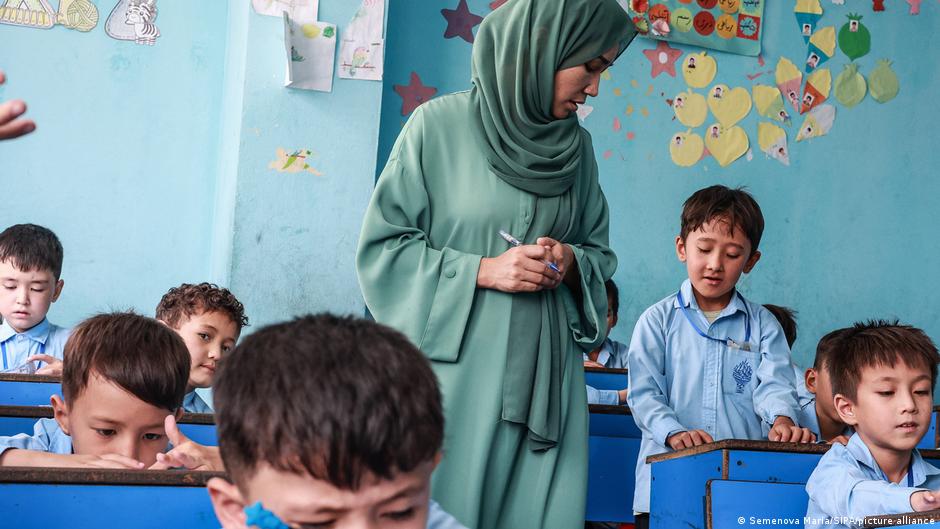
Afghanistan: Only 5% of labor market are women under Taliban

Read the original at Deutsche Welle ↗
Cite

Hallam, M. (2026, August 19). Afghanistan: Only 5% of labor market are women under Taliban. Deutsche Welle. https://www.dw.com/en/afghanistan-only-5-of-labor-market-are-women-under-taliban/a-78415895?maca=en-rss-en-world-4025-rdf

Dated when The Aporia collected the article, usually within hours of publication. Check the original for its exact date and byline.

Deutsche Welle · collected 2026-08-19 · by Mark Hallam

Quick Summary

The International Labour Organization (ILO) reports that women's participation in Afghanistan's labor market has fallen dramatically since the Taliban returned to power in 2021. According to the ILO, only 5.1% of Afghan workers are women, making it one of the lowest rates globally, just above Yemen. The report also notes a significant increase in young women not participating in education, employment, or training, with 84% falling into this category compared to below 30% for young men. The ILO is urging urgent action to address women's exclusion from the labor market and boost economic resilience.
Written by AI on 2026-08-19, from this article's own text only (the story summary below draws on all the coverage).

AI analysis

Story summary

Under the Taliban rule, only 5% of Afghanistan's labor market is made up of women, according to a report by the International Labour Organization (ILO). This is a significant drop from 16.5% in 2020 when the US and NATO forces were still present, and marks one of the lowest rates of female labor force participation worldwide. The ILO warns that this "severe exclusion" of women from the workforce is exacerbating the country's economic woes, with remittance inflows expected to halve from 4% of GDP in 2020 to 2% by 2025 due to a surge in emigration back to Afghanistan. The report notes that the Taliban's return to power has led to "significant demographic and institutional changes" in the labor market, with women facing severe restrictions on access to education and employment.

Written for “Women's Role Under Taliban” on 2026-11-27, grounded in this article and the 0 other(s) covering the same event.

Compared with similar articles

This article reads leans left and hedges 12% of its claims. Each row says how that neighbour differs.
BBC News
Leans left Hedges 0 of 101 claims Outlet record 67/100
“Article A describes a specific workshop run by Najia in a village south of Kabul, while Article B reports on a broader statistic from the International Labour Organization about the female labor force participation rate in Afghanistan”

Story

Women's Role Under Taliban
World · 1 article(s) covering the same event.
How this article was measured signals, leaning charts, publisher record, byline, topics and claims

Signals How these are calculated →

Claims extracted
25
sentences that state something as happening or true
Uncertain
12%
3 of 25 hedged ("reportedly", "may", "according to")
Leaning
Leans left
of the writing, not the subject · beta estimate
Publisher signals
95/100
Deutsche Welle's corrections and hedging, across everything collected from it. Not a measure of accuracy.
Outlets on this story
1
World
Same framing elsewhere
1
articles that frame the event the way this one does
Analyzed 2026-08-19 · how these are computed

How this is being covered How these are calculated →

Article leaning vs. publisher reliability
Source leaning vs. consistency

Publisher

Deutsche Welle · 792 article(s) · 0 correction(s) detected
No corrections detected for this publisher. That may mean careful reporting, or simply that nothing has been checked.

Who wrote this

Mark Hallam
59 article(s) here · 1 carrying a prediction
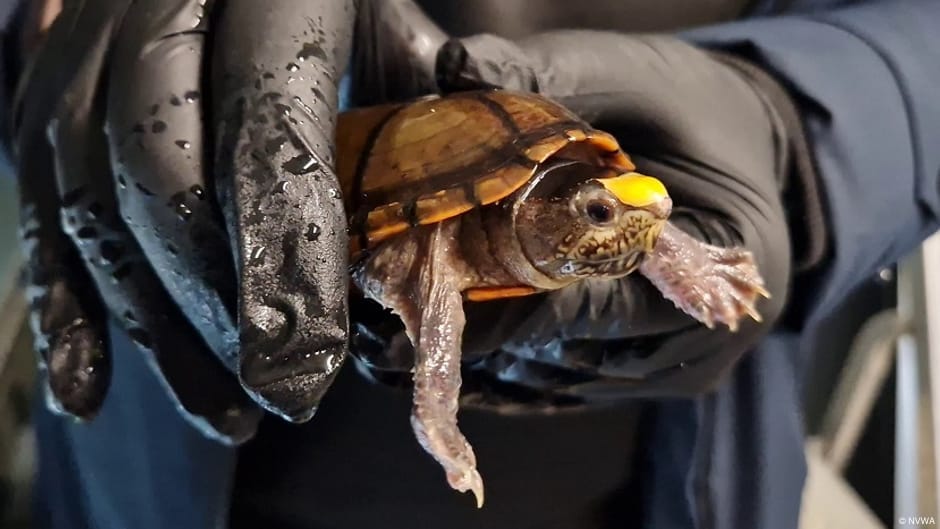
"The suspected poaching of 26 of these turtles from the wild may have reduced the population by nearly 10%," the NVWA wrote, basing its figure on the estimated population of around 300 of the turtles in the wild.
Initially the company said it planned to contest this claim, which would have rendered it effectively unable to operate.
He said the measures reflected Iraq's "independent national will."
Infantino is the favorite for an election on March 18, when he is expected toface challenges from Kohzo Tashima of Japan and Philippe Diallo of France.
Iwasawa also said that some civilian participation in the clearance operations could not necessarily be considered state-ordered or state-sanctioned behavior.
Suzanne Nora Johnson, a former vice chair at Goldman Sachs, will chair the committee, joined by fellow directors Stephen Neal, a former CEO of a law firm, John Dabiri, a professor of aeronautics and mechanical engineering at the California Institute of Technology (Caltech).
The two men were accused of visiting addresses linked to their targets, taking photos and videos, and using platforms such as ChatGPT to research them online "Thankfully, the defendants were stopped before any attack could take place," prosecutor Ferguson said.
Trinidadian authorities argued that because the 1986 laws were passed with a super-majority and constituted criminal penalties that dated back to colonial times, prior to the constitution, they could be considered "existing law" and override the individual constitutional rights in certain circumstances. But the Privy Council judges found that the so-called "proviso" for this special status — "unless the Act is shown not to be reasonably justifiable in a society that has proper respect for the rights and freedoms of the individual" — had not been met.
France summons ambassador, says it rules 'nothing' out in response French Foreign Minister Jean-Noel Barrot said on Tuesday that his government would "rule nothing out and will take all measures — including those we may not disclose publicly — that we deem proportionate and necessary to deter any further attacks."
Last month, when first announcing that the paper would close, Sokolov said the outlet had "been killed."
Also by Mark Hallam
Nothing else under this byline is closely related to this article, so these are simply their most recent.
All 59 articles by Mark Hallam →

Topics

Afghan Afghanistan ILO Taliban the International Labour Organization

Subjects

Afghanistan GPE · 10× ILO ORG · 7× Iran GPE · 5× Taliban ORG · 4× Afghan NORP · 2× Afghans NORP · 2× Pakistan GPE · 2× Islamist NORP · 1× NATO ORG · 1× the International Labour Organization ORG · 1×

Narrative

Employment numbers have started to rise in absolute terms, but not fast enough to keep up with population growth — either domestic or as a result of emigrant returns — meaning the share of people in work is flatlining at just under one-third of the population.
framing: assertive · carried by 1 article(s) · first seen 2026-08-19
More than 6 million Afghans returned from Iran and Pakistan between 2023 and the end of May this year, with the surge driven "by a combination of policy, economic and security factors." The report noted World Bank projections suggesting that this could halve the influence of remittance inflows into the Afghan economy, from around 4% of GDP in 2020 to around 2% of economic output by 2025.
2026-08-19 · Deutsche Welle
Afghanistan: Only 5% of labor market are women under Taliban · assertive framing

Claims (25 extracted, 3 hedged)

The share of women in Afghanistan's labor market has falled to around one worker in 20 in the five years since the Taliban returned to power, according to a report published by the International Labour Organization (ILO) on Tuesday. uncertain
Taliban → fall → Tuesday
"Afghanistan is estimated to have the second lowest female labor force participation rate worldwide, at only 5.1% in 2026, against the backdrop of severe restrictions in women's access to education and employment," the ILO wrote. asserted
ILO → estimate → education
It called for urgent steps to counter women's "severe exclusion," also saying this was essential to buttress the Afghan economy's resilience more generally. asserted
this → call → resilience
The Taliban rapidly returned to power in August 2021 amid a pullout by the US and other NATO forces, ending a 20-year period when women enjoyed comparatively improved economic and educational liberty after years of hardline Islamist rule. asserted
women → return → rule
What did the ILO say about women in Afghanistan's labor market? asserted
ILO → say → market
The UN organization warned of "significant demographic and institutional changes" in the labor market since 2021, many of them disadvantaging women. - asserted
many → warn → women
Female labor force participation had dipped from 16.5% in 2020 to 5.1% in 2026 - asserted
participation → dip → 2026
Young women "NEETs" — people "not in education, employment or training" — represented 84% of the cohort, compared to 76% in 2020 and 68% in 2019 - asserted
women → represent → 2019
Among young men, the NEET figure was below 30%, and falling compared to the recent high-point of the COVID pandemic in 2020 - asserted
figure → fall → 2020
The UN's Development Agency meanwhile said one rare boom area was businesses owned by women - asserted
area → say → women
These had increased in prevalence roughly tenfold, albeit precisely because other employment options were so scarce " asserted
options → increase → prevalence
Afghanistan cannot build a resilient labor market while such a large share of its population remains excluded from economic activity," said Tite Habiyakare, senior coordinator and head of the ILO office for Afghanistan. asserted
Habiyakare → build → Afghanistan
What did the ILO say about Afghanistan's economy more generally? asserted
ILO → say → economy
The report said that Afghanistan's labor market remained "under considerable pressure" five years after the Taliban takeover, having only moderately recovered from the crash of 2021. asserted
market → say → 2021
Afghanistan's GDP tumbled by around 15% when the Taliban returned amid the COVID pandemic and western troops and funds flowed out. asserted
troops → tumble → pandemic
It remained deep in negative territory in 2022 and had just barely clawed its way into positive growth territory since, falling well short of returning to its pre-Taliban levels. asserted
It → remain → levels
Employment numbers have started to rise in absolute terms, but not fast enough to keep up with population growth — either domestic or as a result of emigrant returns — meaning the share of people in work is flatlining at just under one-third of the population. asserted
share → start → population
The paper also called for increased investment in representative labor force data-gathering, warning that its data was reliant on modeling estimates that "are subject to considerable uncertainty and should be interpreted with appropriate caution. asserted
that → call → caution
" How are external factors like the war in Iran and migrant returns impacting the situation? asserted
factors → impact → situation
Large-scale returns of emigrants, particularly from Iran and Pakistan, have become "one of the defining labor market challenges facing Afghanistan," the report said. asserted
report → become → Afghanistan
More than 6 million Afghans returned from Iran and Pakistan between 2023 and the end of May this year, with the surge driven "by a combination of policy, economic and security factors." The report noted World Bank projections suggesting that this could halve the influence of remittance inflows into the Afghan economy, from around 4% of GDP in 2020 to around 2% of economic output by 2025. uncertain
this → return → 2025
"Since February 2026, the Middle East crisis has added further uncertainty for Afghans residing in Iran, alongside the continued implementation of returns policies," the ILO said. asserted
ILO → add → policies
Finally, the ILO warned that the war in Iran posed additional risks for Afghanistan — in terms of general inflation, food and fuel prices, trade and transport disruptions, and increased potential returns from Iran. asserted
war → warn → Iran
Around 70% of workers, partiularly less skilled ones, were at least moderately exposed to factors relevant to the crisis like energy prices, the report found, with roughly 30% facing only slight exposure. asserted
% → expose → exposure
It noted a steep rise in inflation figures in the past 12 months, rising from less than 1% in May 2025 to around 8% by May 2026, and warned that such increases "disproportionately affect poorer households and reduce real earnings, particularly among informal workers." If you rely on our team for trusted reporting, please take a moment to select us as your Preferred Source on Google, so you'll always see our verified news first. uncertain
you → note → news

Give feedback · no sign-in needed

No sign-in needed for now. Your note is sent without a name, so it cannot be answered.

History Support