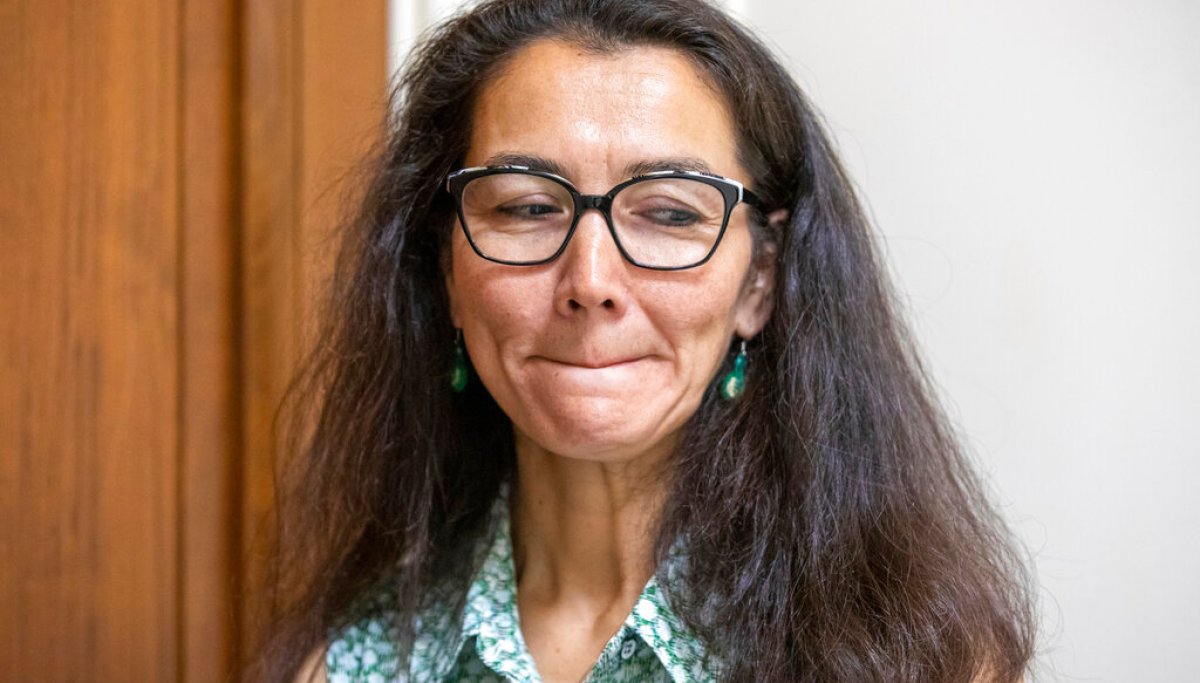
Photo via New York Post

The New York Times rushes to apologize for its outbreak of journalism

Read the original at New York Post ↗
Cite

Post Editorial Board. (2026, November 3). The New York Times rushes to apologize for its outbreak of journalism. New York Post. https://nypost.com/2026/11/02/opinion/the-new-york-times-apologizes-for-its-outbreak-of-journalism/

Dated from the outlet's own feed. Check the original for its byline.

New York Post · collected 2026-11-03 · by Post Editorial Board

Quick Summary

The New York Times issued an apology after reporting on alleged unethical campaigning tactics used by Democratic candidate Mary Peltola in Alaska’s Senate race, a story that upset its usual readership. The article details how criticism arose from the paper's audience, who expected biased coverage favoring Democrats and discrediting Republicans. In response, the Times provided explanations about its journalistic practices and decision-making process regarding the timing and content of the story, highlighting an internal shift towards accommodating reader expectations over independent reporting.
Written by AI on 2026-11-03, from this article's own text only (the story summary below draws on all the coverage).

AI analysis

Story summary

The New York Times has issued a series of apologies and explanations for its coverage of the Senate race in Alaska, where Democratic candidate Mary Peltola's campaign allegedly recruited a strawman candidate to potentially manipulate ranked-choice voting rules. This move outraged the paper’s core audience, who expected biased reporting favoring Democrats over Republicans. The Times defended its stance by publishing additional articles detailing how Peltola was unaware of her aides' actions and highlighting that both sides engage in similar tactics. These efforts aim to mitigate damage from readers’ criticism and maintain journalistic integrity despite initial backlash.

Written for “New York Times Apology” on 2026-11-21, grounded in this article and the 0 other(s) covering the same event.

Compared with similar articles

This article reads leans strongly right and hedges 7% of its claims. Each row says how that neighbour differs.
Daily Mail
Hedges 1 of 23 claims Outlet record 69/100
“Article A describes Mary Peltola's response to a New York Times report about election fraud claims, while Article B discusses The New York Times' apology for their reporting on the same issue. These are different stages of coverage regarding the same topic but not the exact same event.”
The Dispatch
Centre further left than this Hedges 1 of 20 claims Outlet record 61/100
“The articles discuss different aspects of the Alaska Senate race, with Article A focusing on confusion caused by two candidates named Dan Sullivan and Republican efforts in the midterms, while Article B focuses on The New York Times' coverage of Democratic candidate Mary Peltola's campaign strategy.”
New York Post
Leans strongly right Hedges 4 of 32 claims Outlet record 66/100
The Guardian
Hedges 0 of 1 claims Outlet record 64/100
“Article A discusses The New York Times' coverage of a Democratic candidate's campaign tactics in Alaska, while Article B is about discussing the effects of election events on midterms in general.”
BBC News
Outlet record 65/100
“Article A discusses The New York Times' coverage of a Senate race in Alaska, while Article B seems to cover general reactions and headlines from multiple papers regarding midterms.”
Fox News
Hedges 5 of 22 claims Outlet record 66/100
“Article A reports on the initial investigation and its timing relative to voting, while Article B discusses The New York Times' apology for their reporting on the same incident.”
Washington Examiner
Leans strongly left further left than this Hedges 2 of 4 claims Outlet record 67/100
“While both articles discuss a political controversy related to the Senate race in Alaska involving a candidate with the same name as the incumbent, they describe different aspects: Article A focuses on Democrats recruiting an impostor Dan Sullivan, while Article B discusses The New York Times' coverage of Mary Peltola's campaign tactics.”
Fox News
Hedges 2 of 18 claims Outlet record 66/100
“Article A reports on Alaska's governor ordering an investigation after a New York Times report, while Article B discusses The New York Times' apology for their reporting on the Senate race in Alaska. Although related, they describe different specific occurrences.”
Washington Examiner
Hedges 1 of 2 claims Outlet record 67/100
“Article A reports on Byron York criticizing Mary Peltola's campaign strategy for the Alaska Senate race, while Article B discusses The New York Times' reporting and subsequent criticism of that coverage.”
Washington Examiner
Hedges 0 of 2 claims Outlet record 67/100
“Article A discusses Sarah Bedford's analysis of the New York Times report on Dan Sullivan allegations, while Article B describes The New York Times' apology for their reporting on the same incident. They are discussing related but distinct events.”

Story

New York Times Apology
Politics · 1 article(s) covering the same event.
How this article was measured signals, leaning charts, publisher record, byline, topics and claims

Signals How these are calculated →

Claims extracted
15
sentences that state something as happening or true
Uncertain
7%
1 of 15 hedged ("reportedly", "may", "according to")
Leaning
Leans strongly right
of the writing, not the subject · beta estimate
Publisher signals
66/100
New York Post's corrections and hedging, across everything collected from it. Not a measure of accuracy.
Outlets on this story
1
Politics
Same framing elsewhere
1
articles that frame the event the way this one does
Analyzed 2026-11-03 · how these are computed

How this is being covered How these are calculated →

Article leaning vs. publisher reliability
Source leaning vs. consistency

Publisher

New York Post · 21720 article(s) · 41 correction(s) detected
Running correction rate · 41 correction(s)

Who wrote this

Post Editorial Board
161 article(s) here · 1 carrying a prediction
With the City Council gearing up to dramatically hike Amazon’s delivery costs in the five boroughs, the company started alerting local customers that this would boost its delivery prices . . . and New York’s political class exploded in hilarious outrage. It’s Econ 101, but nobody at City Hall ever even heard of that course. By preventing the retail behemoth from subcontracting out “last mile” deliveries and instead forcing it to hire unionized drivers, the proposed Delivery Protection Act could add up to $5 per package.
The “highly partisan” probes will focus on “Trump figures” who’ve “enriched themselves” or “been involved in policy initiatives that Democrats find objectionable” or, “even tangentially, in the Jeffrey Epstein matter.”
Post Editorial Board Published Nov. 18, 2026, 5:00 a.m. ET New figures from the Department of Finance make it painfully clear: Gov. Kathy Hochul and Mayor Zohran Mamdani had no idea what they were doing when they pushed through their pied-à-terre tax.
Yes: Maryland Sen. Chris Van Hollen, who challenged Schumer only after realizing his presidential bid would fall flat, has seized on Chuck’s opposition to President Barack Obama’s nuclear deal with Iran’s rulers, the 2015 Joint Comprehensive Plan of Action, as supposedly disqualifying.
If Dems don’t focus on economic issues but instead chase “impeachment and culture wars,” those voters will “go right back to where they were only two years ago” — and Democrats won’t have Trump to run against in 2028.
Trump insists America is “having a very good relationship with China right now,” yet he can’t even seem to take a side in the blatant division between Treasury Secretary Scott Bessent and Commerce Secretary Howard Lutnick in the fallout over Nvidia founder Jensen Huang’s affair with a potential Chinese spy, who may have facilitated Beijing’s chip-smuggling.
Ouch: On the day Mayor Zohran Mamdani announced his plans to replace the Strategic Response Unit with civilians, two unarmed peace officers got shot while doing a simple wellness check in a Co-op City apartment, a taste of how badly his scheme will turn out . . . eventually.
2026-11-17 · mixed framing · In nixing the SRG, Mamdani made sure HE’D be OK
Yes, our industry’s changes present challenges, but the ever-more-powerful Post brand will beat them all: It’s why we’ve outlasted dozens of competitors and defied predictions of our demise for at least the last century.
The “investigation into the Jason Arday affair” at Cambridge “will not consider” the “allegations” against Arday, “whether, for example, he was a plagiarist, or whether his work had any academic value,” notes City Journal’s Theodore Dalrymple.
Mayor Zohran Mamdani last week signed a law that serves as a test case of getting away with constitution-defying socialism.
2026-11-14 · assertive framing · Mamdani’s test case for law-defying socialism
Wire or desk byline, not an individual reporter.
Also by Post Editorial Board
Nothing else under this byline is closely related to this article, so these are simply their most recent.
All 161 articles by Post Editorial Board →

Topics

Democrats Republicans Senate The New York Times Times

Subjects

Times ORG · 4× Democrats NORP · 3× Peltola PERSON · 2× Republicans NORP · 2× Alaska GPE · 1× Democratic NORP · 1× Mary Peltola PERSON · 1× Republican NORP · 1× Senate ORG · 1× The New York Times ORG · 1×

Narrative

No, the Times did not offer readers such backroom details of source-checking, timing, standards and so on in its coverage of the Trump-Russia allegations — which were thoroughly exposed as fiction long after the paper won a Pulitzer for pushing them. (Then again, most Democrats still don’t realize it was all lies.)
framing: assertive · carried by 1 article(s) · first seen 2026-11-03
The paper last month impressed its usual critics by tracking down damning details of how Democratic candidate Mary Peltola’s campaign recruited a strawman candidate sharing the same name as the Republican incumbent, a ploy that, in concert with the state’s ranked-choice-voting rules, could make her the winner even if more people meant to vote for the real Dan Sullivan.
2026-11-03 · New York Post
The New York Times rushes to apologize for its outbreak of journalism · assertive framing

Claims (15 extracted, 1 hedged)

Having outraged its core audience, The New York Times is rushing to explain how it managed to commit journalism in covering the Senate race in Alaska. asserted
it → outrage → Alaska
The paper last month impressed its usual critics by tracking down damning details of how Democratic candidate Mary Peltola’s campaign recruited a strawman candidate sharing the same name as the Republican incumbent, a ploy that, in concert with the state’s ranked-choice-voting rules, could make her the winner even if more people meant to vote for the real Dan Sullivan. uncertain
people → impress → Sullivan
Since Peltola’s core appeal is as an outsider, not another politician, the story of her efforts to defraud the voting public was extra-damning. asserted
story → defraud → public
But Times readers on social media and in its comment section howled about this betrayal of their expectation that the paper of record will confirm all their biases, especially “Democrats good, Republicans evil” — offering “All the news that’s fit to think.” asserted
that → howl → news
The paper’s been rushing to control the damage with various followup offerings, including an earnest report on how Peltola had no idea what her top aides were doing and a newsletter dispatch about how “both sides do it.” asserted
sides → rush → it
The capper was the most unusual item, “Inside The Times’s Decisions on the Alaska Senate Race Story,” a long mea culpa about why the paper made such a big deal over “a strategy considered legal that has been used by Democrats and Republicans alike” and explaining how it dropped the bomb so close to Election Day. asserted
it → make → Day
No, the Times did not offer readers such backroom details of source-checking, timing, standards and so on in its coverage of the Trump-Russia allegations — which were thoroughly exposed as fiction long after the paper won a Pulitzer for pushing them. (Then again, most Democrats still don’t realize it was all lies.) asserted
it → offer → them
That’s because Times readers expect “news” that confirms their prior beliefs and are outraged when anything in their beloved mirror challenges their prejudices. asserted
anything → ’ → prejudices
Americans once counted on newspapers to investigate rumors and tips, source the facts and present a narrative describing what happened. asserted
what → count → narrative
New stuff — that’s why they called it “news.” asserted
they → ’ → it
But in a transition that accelerated around 2015, much of the press declared a national emergency when Donald Trump emerged on the scene. asserted
Trump → accelerate → scene
“Reporting the news” became a quaint practice from the days before “our democracy” was threatened by . . . the exercise of democracy that yielded the “wrong” results. asserted
that → report → results
It got to the point where “right”-minded people were pushing the suppression of “disinformation” that happened to be true, but inconvenient. asserted
that → get → disinformation
The Times still employs a lot of talented people who persist in doing real journalism, but a pack of propagandists operate under the same job titles, the same roof. asserted
pack → employ → titles
And you know which group is on top when the paper apologizes for telling the truth. asserted
paper → know → truth

Give feedback · no sign-in needed

No sign-in needed for now. Your note is sent without a name, so it cannot be answered.

History Support