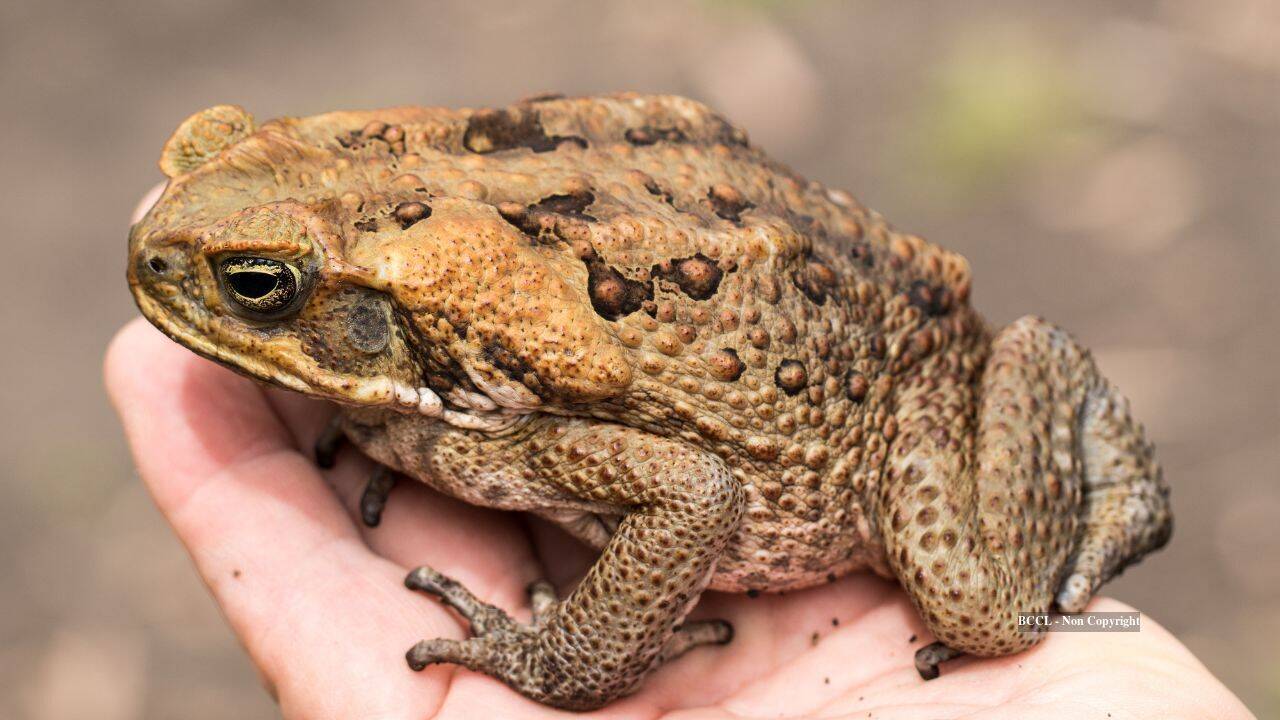
Photo via ABC News (AU)

Last-ditch bid to halt cane toad invasion of WA getting underway

Read the original at ABC News (AU) ↗
Cite

Littler, R. (2026, November 3). Last-ditch bid to halt cane toad invasion of WA getting underway. ABC News (AU). https://www.abc.net.au/news/2026-11-03/bid-to-stop-cane-toads-entering-the-pilbara/107336504

Dated from the outlet's own feed. Check the original for its byline.

ABC News (AU) · collected 2026-11-03 · by Ruby Littler

Quick Summary

Western Australia is launching a $28 million project to construct a 7,500-square-kilometer “waterless barrier” south of Broome to halt the spread of cane toads. The initiative involves modifying water points on six pastoral stations in the Pilbara region and will begin construction in 2027, funded by Rio Tinto and Curtin University. Scientists hope this method of removing water sources will prevent further invasion, as cane toads are currently about 100 kilometers from Broome and pose a threat to native wildlife.
Written by AI on 2026-11-03, from this article's own text only (the story summary below draws on all the coverage).
See how they differ ↓

AI analysis

Story summary

A $28 million project aimed at stopping cane toads from invading the Pilbara region in Western Australia has commenced. The initiative involves constructing a 7,500-square-kilometer "waterless barrier" south of Broome between the Indian Ocean and the Great Sandy Desert. Funded by Rio Tinto and the Rhodes Ridge joint venture, with support from Curtin University, this project seeks to modify artificial water points across six pastoral stations to prevent the invasive species' spread. Cane toads are currently about 100km from Broome, posing a significant threat to native wildlife and ecosystems in the Pilbara region. Indigenous rangers like Roberta Hunter have expressed concerns over the impact of cane toads on their land, emphasizing the need for conservation efforts to protect local fauna and water sources.

Written for “Australia Launches Cane Toad Project” on 2026-11-21, grounded in this article and the 2 other(s) covering the same event.

How they differ

3 outlets covered “Australia Launches Cane Toad Project”.

What each outlet says

One AI summary per outlet of its latest article on this story, written from that article alone and checked against it. Open the article for the outlet's own words.

ABC News (AU)This outlet3 Nov

Western Australia is launching a $28 million project to construct a 7,500-square-kilometer “waterless barrier” south of Broome to halt the spread of cane toads. The initiative involves modifying water points on six pastoral stations in the Pilbara region and will begin construction in 2027, funded by Rio Tinto and Curtin University. Scientists hope this method of removing water sources will prevent further invasion…

Last-ditch bid to halt cane toad invasion of WA getting underway (this article)
BBC3 Nov

Rio Tinto has committed A$28 million (£14.5 million) to build a "toad containment zone" in Western Australia’s Pilbara region to prevent cane toads from spreading south, which threatens local ecosystems and native species such as the northern quoll, goanna lizard, and ghost bat. The project aims to block access to water sources over 7,500 square kilometers of land by constructing barriers that the toads cannot cross…

Mining giant joins fight to stop killer toad march across Australia →
Times of India5 Nov

Australia is launching a A$28 million project involving Curtin University, Rio Tinto, and the Rhodes Ridge Joint Venture to prevent cane toads from invading the Pilbara region of Western Australia. The initiative aims to create a 7,500-square-kilometer "waterless barrier" south of Broome by modifying or containing 685 pastoral water infrastructure pieces across six stations, making it impossible for cane toads to…

Australia launches A$28 million project to stop invasive cane toads from reaching Pilbara after 1935 introduction →

Compared with similar articles

This article reads unscored and hedges 0% of its claims. Each row says how that neighbour differs.
BBC News
Hedges 1 of 18 claims Outlet record 65/100

Story

Australia Launches Cane Toad Project
Environment · 3 article(s) covering the same event. See how they differ ↑
How this article was measured signals, leaning charts, publisher record, byline, topics and claims

Signals How these are calculated →

Claims extracted
26
sentences that state something as happening or true
Uncertain
0%
0 of 26 hedged ("reportedly", "may", "according to")
Leaning
not political
takes no side on a contested political question
Publisher signals
67/100
ABC News (AU)'s corrections and hedging, across everything collected from it. Not a measure of accuracy.
Outlets on this story
3
Environment
Same framing elsewhere
1
articles that frame the event the way this one does
Analyzed 2026-11-03 · how these are computed

How this is being covered How these are calculated →

Article leaning vs. publisher reliability
Source leaning vs. consistency

Publisher

ABC News (AU) · 6163 article(s) · 11 correction(s) detected
Running correction rate · 11 correction(s)

Who wrote this

Ruby Littler
8 article(s) here · 1 carrying a prediction
Mr Bada said he was excited about what next year would bring, with high hopes for the studio.
In short A $28 million attempt to stop cane toads invading the Pilbara will see a 7,500-square-kilometre "waterless barrier" constructed south of Broome.
Mr D'Silva, who stepped down from the CEO position for a period of time this year, said he was uncertain when services would operate again.
The landmark beach in Broome, 2,000 kilometres north of Perth, is a major state and national tourists drawcard with its famous camel rides and sunsets a feature of West Australian tourist campaigns. But the long-term redevelopment of the precinct, which will see a water park, amphitheatre, new beach access and other features added, has left access to much of the area restricted since 2023.
The entire park is now open, excluding water access, and will remain open throughout the northern wet season. 'Hurts a little less' The flood destroyed significant cultural sites for Bunuba traditional owners, who manage the park with DBCA. Danggu Bunuba traditional owner Kerry Wallis said it had been a tough three years. "It was a sad sight to see after the flood; we had such a beautiful park there, and it was a site for everybody to come, sit and enjoy; now it's a little bit different," she said.
Businesses across Western Australia's north are worried recent visa changes will mean fewer backpackers choose to work in remote regions where they are most needed.
An independent roundtable meeting will convene in Perth later this week, facilitated by Commissioner Sue-Anne Hunter.
"I thought, 'This will be a cracking shot if I can get the dog in the middle of the bow.'
2026-09-05 · assertive framing · Broome disappears into thick fog as WA wet season nears
Also by Ruby Littler
Nothing else under this byline is closely related to this article, so these are simply their most recent.
All 8 articles by Ruby Littler →

Topics

Broome Curtin University Rio Tinto Western Australia Western Australia's

Subjects

Broome GPE · 3× Curtin University ORG · 3× Rio Tinto ORG · 2× Australia GPE · 1× Australian NORP · 1× Ben Phillips PERSON · 1× Indigenous NORP · 1× Perth GPE · 1× Western Australia GPE · 1× Western Australia's GPE · 1×

Narrative

"The loss of these animals from across that landscape is a national tragedy and it's a loss of natural heritage and cultural heritage for Indigenous landowners," Curtin University biologist Ben Phillips said. "The Pilbara is another region of Australia chock-full of plants and animals found nowhere else on the planet.
framing: assertive · carried by 1 article(s) · first seen 2026-11-03
In short A $28 million attempt to stop cane toads invading the Pilbara will see a 7,500-square-kilometre "waterless barrier" constructed south of Broome.
2026-11-03 · ABC News (AU)
Last-ditch bid to halt cane toad invasion of WA getting underway · assertive framing

Claims (26 extracted, 0 hedged)

In short A $28 million attempt to stop cane toads invading the Pilbara will see a 7,500-square-kilometre "waterless barrier" constructed south of Broome. asserted
barrier → stop → Broome
The plan involves modifying water points across six pastoral stations in Western Australia's north to stop the toads spreading. asserted
toads → involve → north
Rio Tinto is fully funding the Toad Containment Zone project, in partnership with Curtin University, with works starting in 2027. asserted
works → fund → 2027
The latest bid to halt the ongoing cane toad invasion of northern Western Australia is set to begin after final funding and approval. asserted
bid → halt → funding
The current estimated front line of the toad's spread has the pests around 100km from Broome, 2,200km north of Perth. asserted
line → estimate → Perth
Scientists are now hoping a "waterless barrier" across WA's northern Pilbara will help halt the further spread of the invasive species. asserted
barrier → hop → species
The barrier proposal, to be implemented south of Broome, will see artificial watering holes such as dams and storage tanks cut off, in turn removing the toads' water supply. asserted
holes → implement → supply
This project involves modifying water points across six pastoral stations, which cover 7,500 square kilometres of land. asserted
which → involve → land
An additional $28m funding injection from Rio Tinto and the Rhodes Ridge joint venture will see official work on the containment zone start next year. asserted
work → see → zone
The toads have already killed millions of Australian native animals, ranging from snakes to goannas and crocodiles. asserted
toads → kill → goannas
"The loss of these animals from across that landscape is a national tragedy and it's a loss of natural heritage and cultural heritage for Indigenous landowners," Curtin University biologist Ben Phillips said. "The Pilbara is another region of Australia chock-full of plants and animals found nowhere else on the planet. asserted
Pilbara → say → planet
Cane toads will thrive in the Pilbara." asserted
toads → thrive → Pilbara
Professor Phillips said the project represented the best opportunity to prevent the worst from happening. asserted
project → say → worst
Curtin University ecologist Judy Dunlop said toad-proofing water points had proven successful in other locations. asserted
points → say → locations
"By removing the critical thing they need, which is water, we prevent them from continuing their spread," Dr Dunlop said. asserted
Dunlop → remove → spread
"The build itself will take the next two to five years and we will be doing a lot of work on the sidelines as well as monitoring animals." asserted
we → take → animals
Protecting native wildlife Karajarri Traditional Lands Association chief executive Martin Bin Rashid said traditional owners had been consulted throughout the process. asserted
owners → protect → process
"We've got a ranger program, we have a heritage team that are going to assist the project leads and construction workers," he said. "Making sure we also look after those special water holes that hold significant stories and Dreamtime stories for our people and give life to country." asserted
that → get → country
"It's a big station so there's plenty of water points; it ends up being about 100 waterless barriers," Anna Plains Station owner David Stoate said. asserted
Stoate → be → points
"It took a bit of time to come around to the idea of the project because it's such a big job. asserted
it → take → project
"A journey of 1,000 miles starts with a single step, so that's very much what we're doing with this project." asserted
we → start → project
Funding commitment The waterless barrier proposal has been floated since 2016, with the Barnett Liberal-National government at the time allocating about $340,000 in funding for community consultation. asserted
government → float → consultation
Funding for the conservation initiative initially reached $12 million, with the Rio/Rhodes Ridge contribution, to be allocated over five years, more than doubling that figure. asserted
contribution → reach → figure
Rio Tinto's Chris Osborn said the Pilbara was a special place and important to protect. asserted
Pilbara → say → ?
"I think it's a model for how really critical problems can be solved when you get the right partners involved," he said. asserted
he → think → ?
"Science-based solutions with practical input from traditional owner groups, from pastoralists, [that] will help this project be a success." asserted
project → base → pastoralists

Give feedback · no sign-in needed

No sign-in needed for now. Your note is sent without a name, so it cannot be answered.

History Support