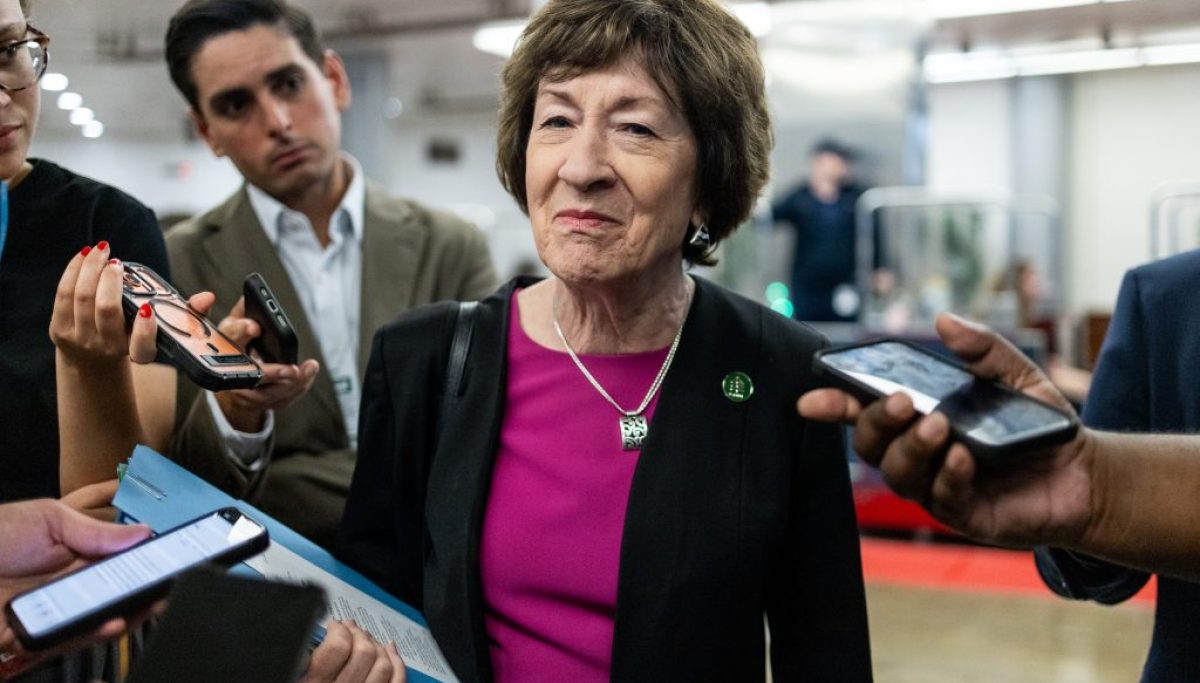
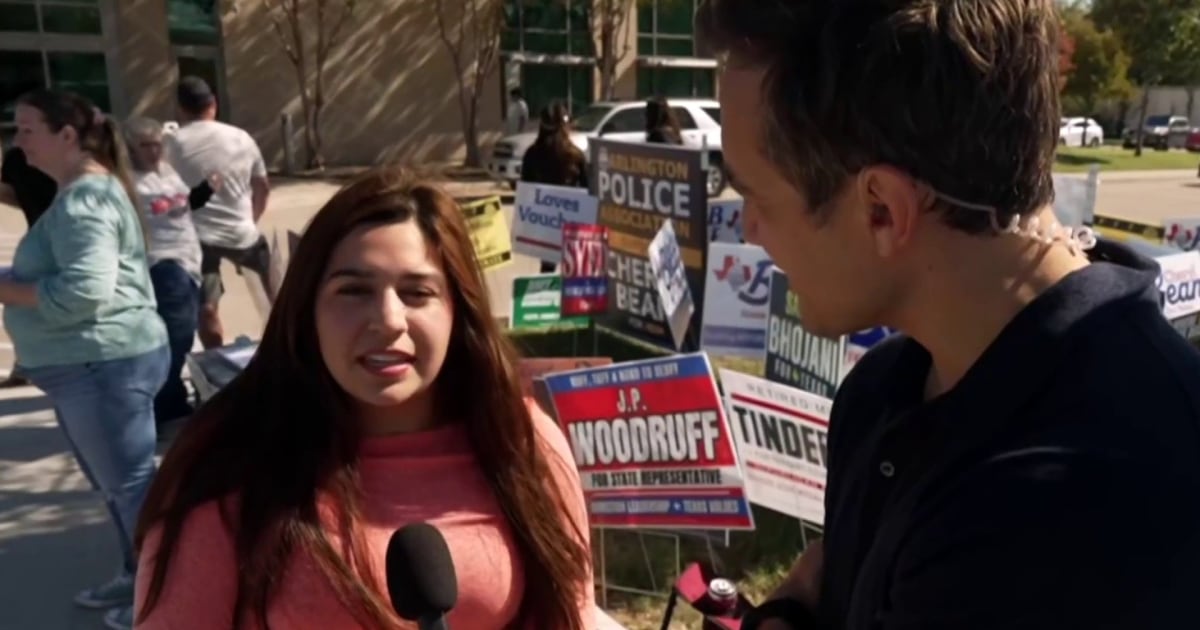
Photo via Washington Examiner

The Senate map looks better for Republicans than the polls suggest

Read the original at Washington Examiner ↗
Cite

Doescher, T. L. (2026, November 3). The Senate map looks better for Republicans than the polls suggest. Washington Examiner. https://www.washingtonexaminer.com/opinion/4788027/senate-map-looks-better-republicans-than-polls-suggest/

Dated from the outlet's own feed. Check the original for its byline.

Washington Examiner · collected 2026-11-03 · by Tiana Lowe Doescher

Quick Summary

This article is an analysis suggesting that polls may understate Republican chances in Senate races due to potential sampling bias against white Republican voters. The author reviews early voting data from several key states to reassess the race's dynamics, finding that Republicans might perform better than polls indicate in Kansas and South Carolina but could face tougher contests in Ohio and Alaska.
Written by AI on 2026-11-03, from this article's own text only (the story summary below draws on all the coverage).

AI analysis

Story summary

As of November 3, 2026, with fewer than 24 hours until Election Day, Tiana Lowe Doescher from the Washington Examiner argues that Republicans have better odds in the U.S. Senate elections than polls suggest. The New York Times acknowledged an undersampling bias in its polls, indicating registered white Democrats were 30% likelier to respond compared to registered white Republicans. This suggests potential systemic skewing against Republican chances.

Analyzing early and absentee voter data from states that release party registration details, Doescher concludes that Republicans face less serious threats in states like Kansas and South Carolina but are less likely to secure victories in Ohio and Alaska. Despite this, the race for the U.S. Senate remains tight across much of the map, with polling results within the margin of error.
Written for “Senate Map Favoring Republicans” on 2026-11-20, grounded in this article and the 0 other(s) covering the same event.

Compared with similar articles

This article reads leans right and hedges 17% of its claims. Each row says how that neighbour differs.
NBC News
Outlet record 78/100
“The articles discuss different aspects of Senate elections; Article A focuses on polling biases, while Article B covers voter sentiment at polls in specific states.”
Semafor
Leans left further left than this Hedges 0 of 11 claims Outlet record 64/100
“The articles describe different time periods and aspects of the election: Article A discusses pre-election polling biases, while Article B reports on early vote counting results.”
Washington Examiner
Leans left further left than this Hedges 2 of 18 claims Outlet record 67/100
“Article A discusses the general outlook for Republicans in the lead-up to the midterms, while Article B analyzes specific polling biases and Senate race dynamics on the eve of Election Day.”
Washington Examiner
Leans left further left than this Hedges 0 of 3 claims Outlet record 67/100
“The articles discuss different aspects of polling and election predictions leading up to Election Day, but do not describe the same specific incident or occurrence.”
New York Post
Leans left further left than this Hedges 1 of 36 claims Outlet record 66/100
“The articles discuss different aspects of election predictions and outcomes for the House and Senate, rather than describing a single specific incident.”
The Guardian
Leans left further left than this Hedges 9 of 113 claims Outlet record 64/100
“The articles discuss different aspects related to the midterms and Senate elections rather than describing a single specific incident.”
NBC News
Leans strongly left further left than this Hedges 3 of 66 claims Outlet record 78/100
“The articles discuss different aspects of upcoming midterm elections and their polling results, not a single specific incident.”
Silver Bulletin
Leans right Hedges 15 of 108 claims
“The articles discuss different aspects of election coverage and analysis spanning over a period from two days before Election Day to an update very close to it, indicating they cover distinct phases or updates rather than the same specific event.”
Dawn
Leans left further left than this Hedges 6 of 71 claims Outlet record 67/100
“The articles discuss different aspects of polling and election predictions leading up to Election Day, rather than reporting on a single specific event or incident.”
Fox News
Leans left further left than this Hedges 2 of 24 claims Outlet record 67/100
“The articles discuss different aspects of the election (House and Senate) on different days.”

Story

Senate Map Favoring Republicans
Politics · 1 article(s) covering the same event.
How this article was measured signals, leaning charts, publisher record, byline, topics and claims

Signals How these are calculated →

Claims extracted
6
sentences that state something as happening or true
Uncertain
17%
1 of 6 hedged ("reportedly", "may", "according to")
Leaning
Leans right
of the writing, not the subject · beta estimate
Publisher signals
67/100
Washington Examiner's corrections and hedging, across everything collected from it. Not a measure of accuracy.
Outlets on this story
1
Politics
Same framing elsewhere
1
articles that frame the event the way this one does
Analyzed 2026-11-03 · how these are computed

How this is being covered How these are calculated →

Article leaning vs. publisher reliability
Source leaning vs. consistency

Publisher

Washington Examiner · 5185 article(s) · 11 correction(s) detected
Running correction rate · 11 correction(s)

Who wrote this

Tiana Lowe Doescher
14 article(s) here · 1 carrying a prediction
And despite President Donald Trump offering the most sympathetic possible defense that Huang “had absolutely no idea that the person in question was a spy,” the national security and corruption implications for Nvidia could very well jeopardize America’s entire AI-fueled economic revolution.
In May, Secretary of State Marco Rubio sent President Donald Trump and top Cabinet members a classified memorandum detailing the relationship between the Huangs and the intelligence indicating that Alice Huang was a Chinese spy.
Voters handed Democrats sweeping congressional majorities that could reach 260 in the House and up to 56 Democratic senators.
But what may differentiate an ordinary blue wave from the evident indigo tsunami that voters delivered to Republicans is how uniquely President Donald Trump manufactured the dismantling of his own Senate majority.
The New York Times conceded in publishing its last battleground polls that registered white Democrats were 30% likelier to respond than registered white Republicans, indicating an undersampling bias that, if systemic, could be dramatically skewing the data to disfavor GOP odds.
So, I laughed out loud at the response a Freedom Caucus member gave me after asking him, eight days before the Nov. 3 midterm elections, what his plan for Social Security and its looming insolvency would be: “Ask me next Wednesday.”
Democrats will gloat at Washington’s abysmal fiscal performance under Trump, but their preferred proposal — taxing the rich, obviously — will only exacerbate the problem.
Zachary Faria is correct that Democrats are accepting the accuser’s newly filed lawsuit far too credulously, without vetting Jane Doe’s claims, which would be galling if true.
For months now, Republican Judiciary Committee members have argued that the Biden White House was communicating and collaborating with Fulton County District Attorney Fani Willis, who was prosecuting the state-level case against Trump.
This campaign was kick-started when Jacob Coxon, a 27-year-old Anthropic researcher of four months, resigned from the company and publicly announced that artificial intelligence may kill us all.
Also by Tiana Lowe Doescher
How should a woman age past 45? Don’t!
2026-11-13 · Washington Examiner
Nothing else under this byline is closely related to this article, so these are simply their most recent.
All 14 articles by Tiana Lowe Doescher →

Topics

Democrats GOP Republicans The New York Times the U.S. Senate

Subjects

Democrats NORP · 2× Republicans NORP · 2× GOP ORG · 1× House ORG · 1× Kansas GPE · 1× Ohio GPE · 1× Republican NORP · 1× South Carolina GPE · 1× The New York Times ORG · 1× the U.S. Senate ORG · 1×

Narrative

And after looking at the data, I’m much less convinced that Republicans face a serious threat in states such as Kansas and South Carolina, but I’m less confident in Republican victories in Ohio and Alaska.
framing: assertive · carried by 1 article(s) · first seen 2026-11-03
The New York Times conceded in publishing its last battleground polls that registered white Democrats were 30% likelier to respond than registered white Republicans, indicating an undersampling bias that, if systemic, could be dramatically skewing the data to disfavor GOP odds.
2026-11-03 · Washington Examiner
The Senate map looks better for Republicans than the polls suggest · assertive framing

Claims (6 extracted, 1 hedged)

With fewer than 24 hours until Election Day, I did a deep dive into the final sweep of available results for the U.S. Senate. asserted
I → do → Senate
The New York Times conceded in publishing its last battleground polls that registered white Democrats were 30% likelier to respond than registered white Republicans, indicating an undersampling bias that, if systemic, could be dramatically skewing the data to disfavor GOP odds. uncertain
that → concede → odds
While Democrats are overwhelmingly likely to obtain control of the House, polling of the upper chamber remains within the margin of error across much of the map. asserted
polling → obtain → map
Thus, I tried to deduce the state of the race from the actual data on ballots already cast. asserted
I → try → ballots
While many states do not release party registration data for early and absentee voters, looking at data from states that do and models for states that do not can give us a clearer picture of the race. asserted
that → release → race
And after looking at the data, I’m much less convinced that Republicans face a serious threat in states such as Kansas and South Carolina, but I’m less confident in Republican victories in Ohio and Alaska. asserted
I → look → Ohio
Give feedback · no sign-in needed

No sign-in needed for now. Your note is sent without a name, so it cannot be answered.

History Support