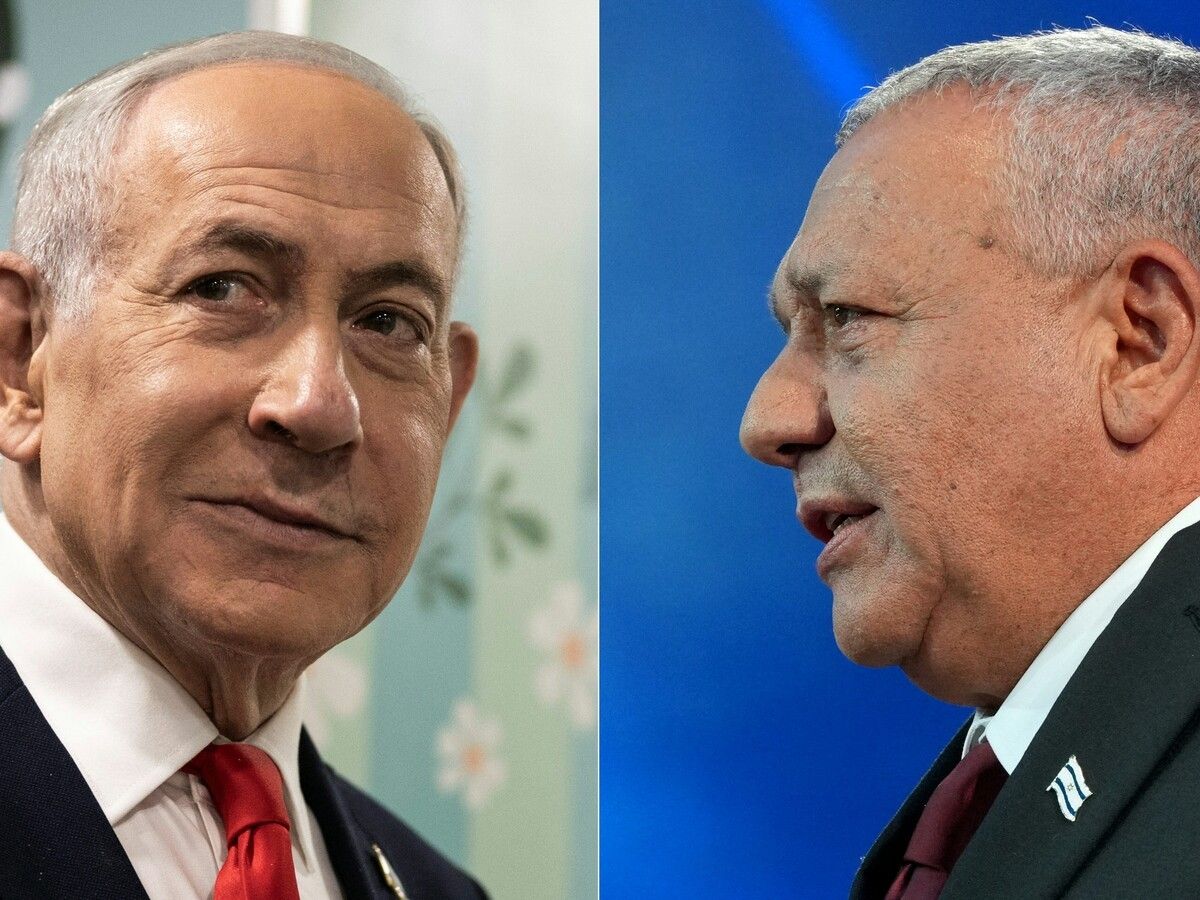
Photo via The Dispatch

The Paths to Israel’s Next Government, Explained

Read the original at The Dispatch ↗
Cite

Almagor, T. (2026, November 4). The Paths to Israel’s Next Government, Explained. The Dispatch. https://thedispatch.com/article/netanyahu-eisenkot-knesset-election-majority-government/

Dated from the outlet's own feed. Check the original for its byline.

The Dispatch · collected 2026-11-04 · by Tomer Almagor

Quick Summary

Israeli voters have delivered a complex outcome in the recent election, with parties opposing Prime Minister Benjamin Netanyahu securing 67 seats in the Knesset, just six more than the required majority of 61 to form a new government. Despite this numerical advantage, forming a coalition without Netanyahu remains difficult and uncertain.
Written by AI on 2026-11-04, from this article's own text only (the story summary below draws on all the coverage).

AI analysis

Story summary

As of November 4, 2026, despite a majority of Israeli voters casting ballots against Prime Minister Benjamin Netanyahu’s government, parties opposing him secured 67 Knesset seats, which is six more than the required 61 for forming a new government. However, forming a coalition without Netanyahu remains uncertain and challenging according to The Dispatch. The election results indicate that while a majority of voters want change, the political landscape makes it difficult to actually oust Netanyahu from power.

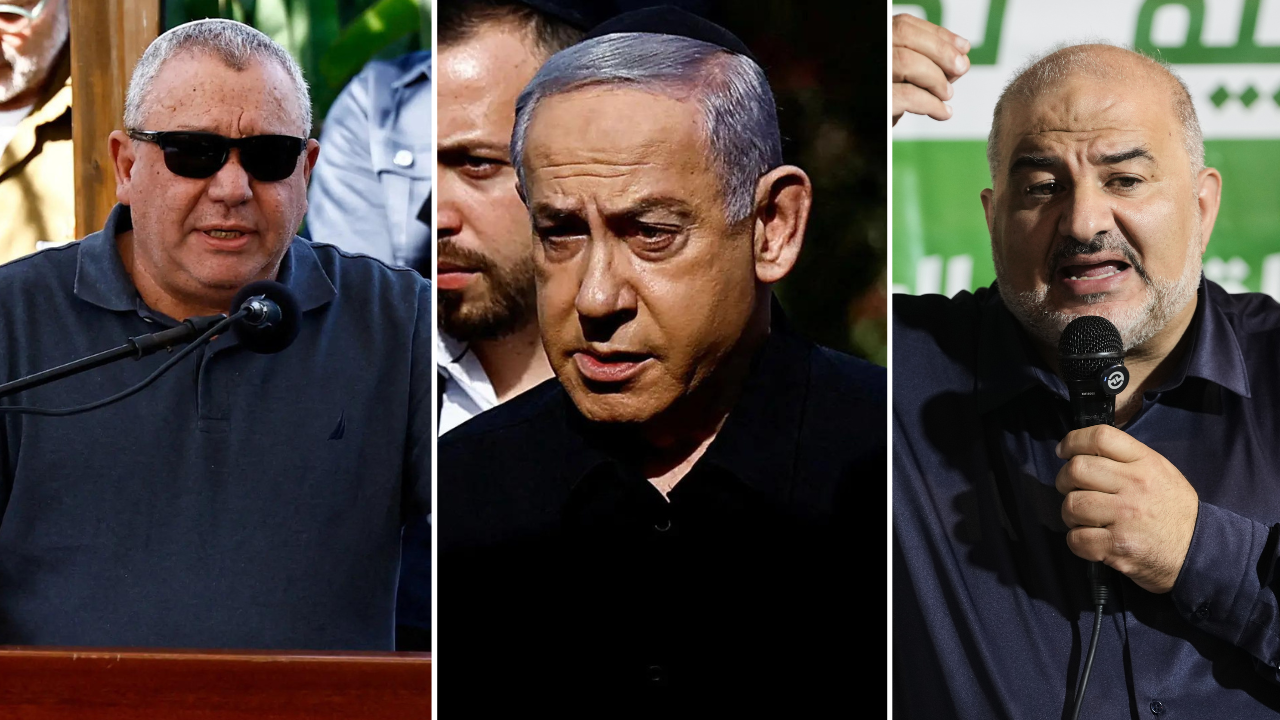
Written for “Israel's Next Government Paths” on 2026-11-21, grounded in this article and the 0 other(s) covering the same event.

Compared with similar articles

This article reads unscored and hedges 0% of its claims. Each row says how that neighbour differs.
The Guardian
Leans left Hedges 10 of 79 claims Outlet record 64/100
“The articles discuss the outcome of Israel's election but describe different aspects and timelines, with Article A focusing on the immediate aftermath and implications, while Article B provides a more detailed analysis several days later.”
Times of India
Hedges 16 of 43 claims Outlet record 59/100
“The articles describe different stages of the political aftermath following an election; Article A reports on the immediate results showing no clear majority, while Article B discusses the broader implications and uncertainties for forming a new government.”
National Post
Leans left Hedges 6 of 25 claims Outlet record 60/100
“While both articles discuss Israel's election, they cover different aspects of it — one focuses on the implications of a lack of decisive leadership post-election, and the other explains the challenges in forming a new government.”
Al Jazeera
Hedges 0 of 4 claims Outlet record 60/100
“The articles discuss similar political situations in Israel but describe different time periods and developments.”
The Hindu
Leans right Hedges 1 of 29 claims Outlet record 78/100
“The articles cover different aspects of Israel's political situation and election results, not the same specific incident or outcome.”
South China Morning Post
Leans left Hedges 1 of 3 claims Outlet record 62/100
“The articles describe the aftermath of an election in Israel, but Article A focuses on a meeting between opposition party leaders discussing their strategy post-election, while Article B provides a broader analysis of the electoral results and the challenges facing the opposition.”
The Straits Times
Hedges 7 of 24 claims Outlet record 64/100
“While both articles discuss the political situation following an election in Israel, they describe different aspects of the ongoing process rather than a single specific incident.”
Dawn
Hedges 5 of 26 claims Outlet record 66/100
Al Jazeera
Leans strongly left Hedges 2 of 32 claims Outlet record 60/100
“The articles discuss different aspects of Israeli politics and its relation to US midterm elections but do not describe the same specific incident or occurrence.”
Times of India
Hedges 7 of 34 claims Outlet record 59/100

Story

Israel's Next Government Paths
Politics · 1 article(s) covering the same event.
How this article was measured signals, leaning charts, publisher record, byline, topics and claims

Signals How these are calculated →

Claims extracted
2
sentences that state something as happening or true
Uncertain
0%
0 of 2 hedged ("reportedly", "may", "according to")
Leaning
withheld
no quote in the article backed the model's score
Publisher signals
61/100
The Dispatch's corrections and hedging, across everything collected from it. Not a measure of accuracy.
Outlets on this story
1
Politics
Same framing elsewhere
1
articles that frame the event the way this one does
Analyzed 2026-11-04 · how these are computed

How this is being covered How these are calculated →

Article leaning vs. publisher reliability
Source leaning vs. consistency

Publisher

The Dispatch · 541 article(s) · 2 correction(s) detected
Running correction rate · 2 correction(s)

Who wrote this

Tomer Almagor
6 article(s) here · 0 carrying a prediction
In September 2025, Israeli Prime Minister Benjamin Netanyahu delivered what became known as his “Sparta speech,” offering a remarkably bleak forecast of Israel’s future.
Israel’s Tuesday election could reshape that relationship.
2026-10-27 · mixed framing · The U.S. Alliance Is on the Ballot in Israel
Also by Tomer Almagor
Who Will Lead Israel Now?
2026-10-29 · The Dispatch
Nothing else under this byline is closely related to this article, so these are simply their most recent.
All 6 articles by Tomer Almagor →

Topics

Israel Israeli Knesset

Subjects

Benjamin Netanyahu PERSON · 1× Israel GPE · 1× Israeli NORP · 1× Knesset ORG · 1× Netanyahu PERSON · 1×

Narrative

Although a majority of Israeli voters cast their ballots against Prime Minister Benjamin Netanyahu’s government, giving parties opposed to him 67 Knesset seats—six more than the 61 needed to form a government—the path to replacing Netanyahu remains uncertain and challenging.
framing: assertive · carried by 1 article(s) · first seen 2026-11-04
2026-11-04 · The Dispatch
The Paths to Israel’s Next Government, Explained · assertive framing

Claims (2 extracted, 0 hedged)

The votes have been counted, the dust has settled, and one thing has become clear about Israel’s election: Neither side has managed to checkmate the other. asserted
side → count → other
Although a majority of Israeli voters cast their ballots against Prime Minister Benjamin Netanyahu’s government, giving parties opposed to him 67 Knesset seats—six more than the 61 needed to form a government—the path to replacing Netanyahu remains uncertain and challenging. asserted
path → cast → Netanyahu
Give feedback · no sign-in needed

No sign-in needed for now. Your note is sent without a name, so it cannot be answered.

History Support