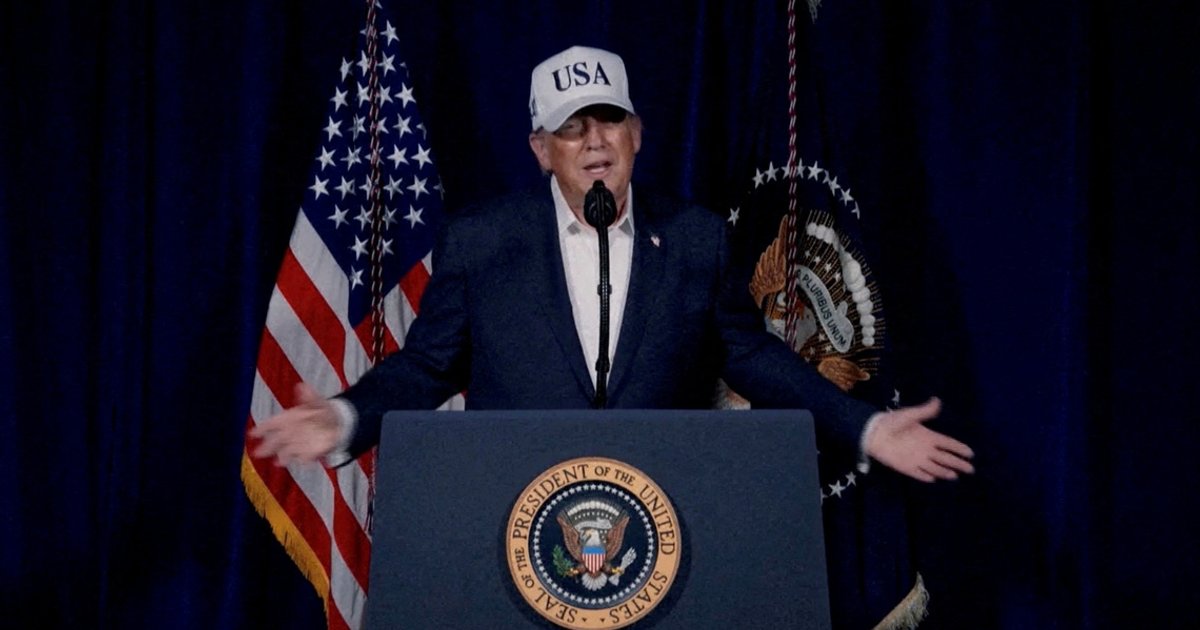
Photo via Washington Examiner

It’s farcical to blame the Iran war’s costs on stopping the war

Read the original at Washington Examiner ↗
Cite

Rogan, T. (2026, November 5). It’s farcical to blame the Iran war’s costs on stopping the war. Washington Examiner. https://www.washingtonexaminer.com/opinion/beltway-confidential/4793585/farcical-to-blame-iran-conflict-costs-on-stopping-war/

Dated from the outlet's own feed. Check the original for its byline.

Washington Examiner · collected 2026-11-05 · by Tom Rogan

Quick Summary

The article argues against conservative claims that critics of the war with Iran are responsible for its negative consequences, calling such arguments farcical. It notes that the conflict began in February amid debates about its necessity and was initially framed by supporters as a necessary move to prevent an imminent nuclear threat from Iran and quickly lead to regime change, based on assurances by President Trump and Israeli Prime Minister Netanyahu.
Written by AI on 2026-11-06, from this article's own text only (the story summary below draws on all the coverage).

AI analysis

Story summary

The war with Iran, which began in February, is being criticized by conservatives for its negative consequences despite initial support from President Donald Trump and Israeli Prime Minister Benjamin Netanyahu. Proponents of the war argued that it would prevent an imminent Iranian nuclear threat to the United States and promised a quick and relatively painless outcome for the U.S., but these claims have since been questioned. The Washington Examiner notes that blaming opponents of the war for its negative impacts is misleading, especially given the disastrous impact on the Republican Party's midterm election performance.
Written for “Iran War Costs Controversy” on 2026-11-21, grounded in this article and the 0 other(s) covering the same event.

Compared with similar articles

This article reads leans left and hedges 20% of its claims. Each row says how that neighbour differs.
The Straits Times
Hedges 0 of 8 claims Outlet record 64/100
“The articles discuss different aspects of the Iran war's impact on politics; Article A focuses on Trump's comments about the election results, while Article B critiques the blame placed on opponents for negative consequences of the war.”
New York Post
Hedges 1 of 14 claims Outlet record 66/100
“The articles discuss different aspects of the Iran situation, with Article A focusing on Iranian officials' reaction to the US midterm election results, while Article B discusses broader criticism and debate about the war's consequences.”
Al Jazeera
Hedges 0 of 3 claims Outlet record 60/100
“The articles discuss different aspects of the Iran war's impact on US politics, rather than describing the same specific incident.”
Dawn
Leans left Hedges 18 of 50 claims Outlet record 66/100
“While both articles discuss the impact of the Iran war on US midterm elections, they describe different aspects: Article A focuses on the overall outcome and implications for foreign policy, while Article B critiques the blame placed on opponents of the war for its negative consequences.”
The Hindu
Leans left Hedges 1 of 8 claims Outlet record 78/100
“While both articles discuss the impact of a war with Iran on Republican electoral losses, they focus on different aspects: one attributes the loss to the war's costs (Vance's view), and the other critiques blaming opponents for those costs.”
Washington Examiner
Hedges 0 of 3 claims Outlet record 67/100
“The articles discuss different aspects related to Iran and U.S.-Iran relations, with Article A focusing on reactions in Iran to Trump's loss in the midterm elections, while Article B discusses the consequences of a hypothetical war with Iran.”
Al Jazeera
Hedges 2 of 29 claims Outlet record 60/100
“Article A discusses the reaction of Iranian leaders to the US midterm election results, while Article B focuses on the debate surrounding the Iran war and its costs. Although both articles mention the Iran war and its impact on politics, they describe different aspects and are not reporting on a single specific incident.”
The Straits Times
Hedges 0 of 10 claims Outlet record 64/100
“Article A reports on a statement by Trump regarding the Iran war's impact on midterm elections, while Article B discusses broader criticism of blaming the war for election losses.”
Washington Examiner
Hedges 0 of 3 claims Outlet record 67/100
“While both articles discuss the political aftermath and blame surrounding the Iran war, they describe different moments in time - Article A focuses on the broader post-mortem analysis after midterm elections, while Article B specifically mentions Vice President JD Vance's X post reaction.”
South China Morning Post
Leans strongly left further left than this Hedges 1 of 3 claims Outlet record 62/100
“The articles discuss different aspects of the Iran war, with Article A focusing on the blame for negative consequences post-midterm election defeat and Article B focusing on Trump's lack of options to end the war following the midterm results.”

Story

Iran War Costs Controversy
Politics · 1 article(s) covering the same event.
How this article was measured signals, leaning charts, publisher record, byline, topics and claims

Signals How these are calculated →

Claims extracted
5
sentences that state something as happening or true
Uncertain
20%
1 of 5 hedged ("reportedly", "may", "according to")
Leaning
Leans left
of the writing, not the subject · beta estimate
Publisher signals
67/100
Washington Examiner's corrections and hedging, across everything collected from it. Not a measure of accuracy.
Outlets on this story
1
Politics
Same framing elsewhere
1
articles that frame the event the way this one does
Analyzed 2026-11-06 · how these are computed

How this is being covered How these are calculated →

Article leaning vs. publisher reliability
Source leaning vs. consistency

Publisher

Washington Examiner · 5274 article(s) · 11 correction(s) detected
Running correction rate · 11 correction(s)

Who wrote this

Tom Rogan
27 article(s) here · 1 carrying a prediction
While the bridge’s railway link remains operational, the heavy destruction caused by two days of Ukrainian attacks will add to Russian difficulties in Crimea and its war effort at large.
2026-11-20 · assertive framing · A Crimean bridge Ukraine had to break
After last week’s U.S.-Russia-Ukraine talks in Abu Dhabi, President Volodymyr Zelensky said that American negotiators had asked him a hypothetical question: “What if Ukraine joins NATO? Would Ukraine withdraw from Donbas?”
Come January, with their large majorities in the House and Senate, Democrats will cut funding for combat operations.
In a press conference at the Pentagon, his first since May, Hegseth also underlined his interest in running for the 2028 Republican presidential nomination.
They believed in President Donald Trump and Israeli Prime Minister Benjamin Netanyahu’s claim that the regime would fall in relatively short — and U.S. painless — order.
Worf orders his crew, “Maybe today is a good day to die.
Contrary to Tucker Carlson’s claims, it is extraordinarily unlikely that President Donald Trump will order a nuclear strike on Iran.
Absent major spending cuts, the U.K. will suffer a systemic crisis like that afflicting France.
The violent chaos rippling through France will become the Fifth Republic’s new norm.
We would not see Irkutsk residents going about their lives normally were authorities concerned about a mass outbreak of either pneumonic plague or some weaponized version of the plague.
Also by Tom Rogan
A Crimean bridge Ukraine had to break
2026-11-20 · Washington Examiner
Nothing else under this byline is closely related to this article, so these are simply their most recent.
All 27 articles by Tom Rogan →

Topics

Iran Iranian Israeli the Republican Party’s the United States

Subjects

Benjamin Netanyahu PERSON · 1× Donald Trump PERSON · 1× Iran GPE · 1× Iranian NORP · 1× Israeli NORP · 1× U.S. GPE · 1× the Republican Party’s ORG · 1× the United States GPE · 1×

Narrative

Yet, notwithstanding debates surrounding the necessity or otherwise of the war, it is farcical for its proponents to blame the war’s negative consequences on its opponents.
framing: assertive · carried by 1 article(s) · first seen 2026-11-06
They believed in President Donald Trump and Israeli Prime Minister Benjamin Netanyahu’s claim that the regime would fall in relatively short — and U.S. painless — order.
2026-11-06 · Washington Examiner
It’s farcical to blame the Iran war’s costs on stopping the war · assertive framing

Claims (5 extracted, 1 hedged)

The war with Iran is at the forefront of the conservative post-mortem following the Republican Party’s disastrous midterm election showing. asserted
war → follow → showing
Yet, notwithstanding debates surrounding the necessity or otherwise of the war, it is farcical for its proponents to blame the war’s negative consequences on its opponents. asserted
proponents → surround → opponents
The war was controversial from the day it began in February. asserted
it → begin → February
Its supporters presented the regime-change-focused military action as the key to preventing an imminent Iranian nuclear threat to the United States. asserted
supporters → present → States
They believed in President Donald Trump and Israeli Prime Minister Benjamin Netanyahu’s claim that the regime would fall in relatively short — and U.S. painless — order. uncertain
regime → believe → order
Give feedback · no sign-in needed

No sign-in needed for now. Your note is sent without a name, so it cannot be answered.

History Support