Senator-Governor Klobuchar and the Problem of the Received Wisdom

Read the original at Reason ↗
Cite

Blackman, J. (2026, November 6). Senator-Governor Klobuchar and the Problem of the Received Wisdom. Reason. https://reason.com/volokh/2026/11/06/senator-governor-klobuchar-and-the-problem-of-the-received-wisdom/

Dated from the outlet's own feed. Check the original for its byline.

Reason · collected 2026-11-06 · by Josh Blackman

Quick Summary

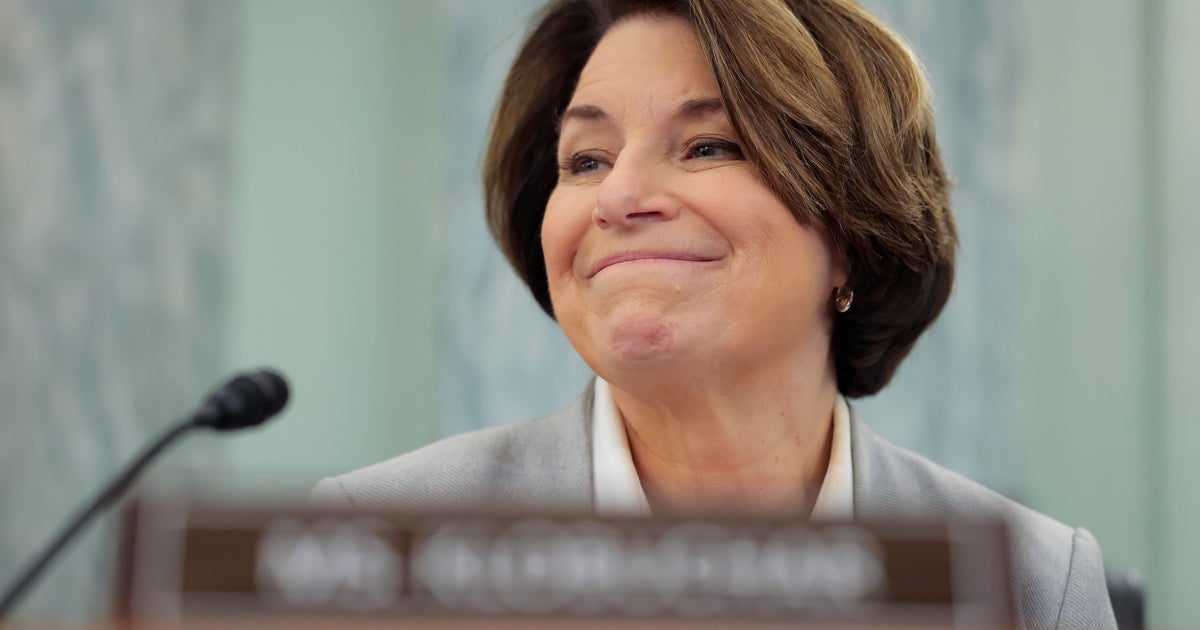
On November 3, 2026, U.S. Senator Amy Klobuchar of Minnesota was elected Governor of Minnesota. The article argues that there are no legal prohibitions under federal or state constitutions and statutes against holding both positions simultaneously. It cites specific clauses from the U.S. Constitution and Minnesota State Constitution which do not apply to her situation, as well as a federal statute barring dual salaries for federal positions, which does not affect state positions like governorship. The article also addresses common law doctrines regarding incompatible offices, concluding that neither applies to Klobuchar's case due to the lack of supervisory relationships or conflicting duties between senator and governor roles.
Written by AI on 2026-11-06, from this article's own text only (the story summary below draws on all the coverage).

AI analysis

Story summary

On November 3, 2026, U.S. Senator Amy Klobuchar was elected Governor of Minnesota, raising questions about the legality and practicality of simultaneously holding both offices. While some have suggested that Klobuchar must resign her U.S. Senate seat to become governor, others argue there is no legal prohibition against dual office-holding in this case. Professor David Schultz from Hamline University noted pragmatically that stepping down as Senator might be necessary due to political considerations, though federal and state laws do not explicitly prohibit holding both the positions of U.S. Senator and Minnesota Governor. Klobuchar is expected to resign her Senate seat temporarily, then take up the governor's position, and subsequently appoint a replacement for her Senate vacancy until the next election.

Written for “Senator-Governor Klobuchar And The Problem Of Received” on 2026-11-21, grounded in this article and the 0 other(s) covering the same event.

Compared with similar articles

This article reads unscored and hedges 11% of its claims. Each row says how that neighbour differs.
CBS News
Centre Hedges 4 of 26 claims Outlet record 66/100
“Article A discusses Senator Amy Klobuchar's election as Governor of Minnesota and subsequent political maneuvers, while Article B reports on CBS News projecting her victory in the governor's race.”
Washington Examiner
Leans left Hedges 0 of 15 claims Outlet record 67/100
“While both articles discuss Amy Klobuchar's victory in the Minnesota gubernatorial election, Article A focuses on the results of the election itself, while Article B discusses potential political implications and actions following the win.”

Story

Senator-Governor Klobuchar And The Problem Of Received
Politics · 1 article(s) covering the same event.
How this article was measured signals, leaning charts, publisher record, byline, topics and claims

Signals How these are calculated →

Claims extracted
35
sentences that state something as happening or true
Uncertain
11%
4 of 35 hedged ("reportedly", "may", "according to")
Leaning
not political
takes no side on a contested political question
Publisher signals
67/100
Reason's corrections and hedging, across everything collected from it. Not a measure of accuracy.
Outlets on this story
1
Politics
Same framing elsewhere
1
articles that frame the event the way this one does
Analyzed 2026-11-06 · how these are computed

How this is being covered How these are calculated →

Article leaning vs. publisher reliability
Source leaning vs. consistency

Publisher

Reason · 1464 article(s) · 4 correction(s) detected
Running correction rate · 4 correction(s)

Who wrote this

Josh Blackman
110 article(s) here · 1 carrying a prediction
The results are worth a careful study to forecast the future religious landscape in the United States, and how those numbers will affect debates about religious liberty.
Secretary of State Marco Rubio delivered the Olson Lecture, White House Counsel Will Scharf had a fireside chat, White House Advisor May Mailman discussed over-regulation, and Gene Hamilton favored restrictive immigration policy on behalf of America First Legal Foundation.
2026-11-15 · assertive framing · The Mayflower Extract
In the Spring of 2026, I communicated to the White House Counsel's Office that, if a vacancy opened on the Eighth Circuit, would be interested in being considered for the vacancy.
The goal, of course, was to ensure that states with one or more Democratic senators would not be able to block all circuit court nominees.
2026-11-13 · assertive framing · At Large Circuit Nominees?
First, it is good to be back at the Mayflower--well at least good for those of us who made it in.
2026-11-13 · assertive framing · Back At The Mayflower
Even if a Republican wins the 2028 presidential election, it will be virtually impossible for the Senate to flip red during his term.
2026-11-11 · assertive framing · Who Is Left On The Bench For 2033?
Maybe Trump determined that he needed as many judges confirmed before January, so the identity of the judge didn't matter.
2026-11-11 · assertive framing · The President Nominates Circuit Judges, Not Senators
Given the large Democratic Senate majority and unfavorable maps for 2028 and 2030, a Republican Senate with the votes to confirm originalist judges may not return until 2033 at the earliest.
I have known both of these sharp legal minds for some time, and would welcome their addition to the bench.
"The loudest voices that people hear are these megachurches, and they think that's what we're all doing," said the Rev. Janet Maykus.
2026-11-09 · assertive framing · Talarico's Christianity
Also by Josh Blackman
The Mayflower Extract
2026-11-15 · Reason
Nothing else under this byline is closely related to this article, so these are simply their most recent.
All 110 articles by Josh Blackman →

Topics

CBS News Hamline University Minnesota Minnesota-Democratic Party U.S.

Subjects

U.S. GPE · 9× Minnesota GPE · 6× Klobuchar PERSON · 2× Senate ORG · 2× Amy Klobuchar PERSON · 1× CBS News ORG · 1× David Schultz PERSON · 1× Hamline University ORG · 1× Minnesota-Democratic Party ORG · 1× Seth Barrett Tillman PERSON · 1×

Narrative

In other words, it is not a slam dunk that this expansive doctrine should apply on these facts, particularly given that this doctrine is merely a judicial creation lacking any foundation in both the U.S. Constitution and the Minnesota Constitution.
framing: assertive · carried by 1 article(s) · first seen 2026-11-06
It is expected that, at some point, she will resign her U.S. senate seat, then take up the governor's position, and subsequently make a temporary appointment to fill her then-vacant senate seat.
2026-11-06 · Reason
Senator-Governor Klobuchar and the Problem of the Received Wisdom · assertive framing

Claims (35 extracted, 4 hedged)

[This post is co-authored with Professor Seth Barrett Tillman. asserted
post → co → Tillman
] On November 3, 2026, U.S. Senator Amy Klobuchar (Minnesota-Democratic Party) was elected Governor of Minnesota. asserted
Klobuchar → elect → Minnesota
It is expected that, at some point, she will resign her U.S. senate seat, then take up the governor's position, and subsequently make a temporary appointment to fill her then-vacant senate seat. asserted
she → expect → seat
That dance of musical chairs happens from time-to-time. asserted
dance → happen → time
But some have also reported that Klobuchar must resign her senate seat. asserted
Klobuchar → report → seat
CBS News quoted political science professor David Schultz (Hamline University, Minnesota): "At some point she's going to have to step down as U.S. [S]enator." asserted
she → quote → S]enator
And sometimes, federal and state constitutional and statutory law bar dual-officeholding. asserted
law → bar → officeholding
In these circumstances, the law does not expressly bar dual-officeholding where, as here, the two positions are U.S. Senator and Minnesota Governor. asserted
positions → bar → officeholding
The U.S. Constitution's Incompatibility Clause (Article I, Section 6, Clause 2) bars U.S. Senators and Representatives from concurrently holding certain other federal positions. asserted
Clause → bar → positions
So, this provision has no application here. asserted
provision → have → application
The Minnesota State Constitution has a similar provision (Article IV, Section 5). asserted
Constitution → have → provision
That provision bars Minnesota's state (not U.S.) Senators and Representatives from holding other state and federal positions. asserted
provision → bar → positions
So, this provision has no application here. asserted
provision → have → application
The federal double-dipping statute, 5 United States Code Section 5533 bars drawing two salaries for two positions, where both positions are at the federal level. asserted
positions → dip → level
It has no application to state positions, e.g., governor. asserted
It → have → positions
Moreover, it does not bar actual dual-officeholding; rather, it bars receiving two streams of full-time compensation or salary. asserted
it → bar → compensation
Again, this provision has no application here. asserted
provision → have → application
The more narrow doctrine prohibits one person holding two positions where one position supervises the other position or determines its compensation. asserted
position → prohibit → compensation
Here, the two positions—U.S. Senator and Minnesota Governor—neither supervise one another, nor determine one another's compensation. asserted
positions → supervise → compensation
So, this doctrine has no application here. asserted
doctrine → have → application
This doctrine holds that, where as a practical matter, one person cannot carry out both sets of duties connected to two positions, the two positions are incompatible. asserted
positions → hold → positions
It might be argued that a governor, particularly in an emergency, must reside within her state, and that a U.S. Senator, should generally be on hand, at short notice, to carry out Senate business. uncertain
Senator → argue → business
Given the physical distance between Minnesota and Washington, D.C., it is not entirely frivolous to suggest that this doctrine might act as a bar here. uncertain
doctrine → give → bar
But the bar here is not distance, it is whether one can practically carry out both sets of duties. asserted
one → carry → duties
Governors frequently leave their states for short periods of time—even for vacations. asserted
Governors → leave → vacations
That's allowable as long as they are within reach by telephone or video link, and as long as they can return quickly in the event of an emergency. asserted
they → return → emergency
Likewise, the U.S. Senate can choose to accommodate a Senator with responsibilities distant from D.C.—the Senate could allow participation in debate by video link, and it could allow remote voting, as long as the votes are reasonably authenticated. uncertain
votes → choose → voting
In other words, it is not a slam dunk that this expansive doctrine should apply on these facts, particularly given that this doctrine is merely a judicial creation lacking any foundation in both the U.S. Constitution and the Minnesota Constitution. asserted
doctrine → apply → Constitution
More generally, we should not allow ad hoc judicial creations to supersede democratic elections and add to the qualifications and incompatibilities expressly set out in positive law. asserted
creations → allow → law
Having one person hold two government positions—including state governor and U.S. Senator—is not a particularly good result. asserted
person → have → governor
But the fact that a result is bad does not mean, without more, that that result is barred by our law. asserted
result → mean → law
And pretending the U.S. Constitution and Minnesota Constitution bar what we think is bad today elevates our intuition into legal duties only by undermining what the legal system actually commands. asserted
system → pretend → what
And if today, our intuition is vindicated, we might do well to remember that tomorrow, it might be someone else's intuition being vindicated and in ways that we might come to regret. uncertain
we → vindicate → that
Among those who have considered this issue, I expect that many (and, perhaps, most) believe, as Professor Shultz believes, that Klobuchar must resign her senate seat before she becomes Minnesota's governor. asserted
she → consider → seat
And that should tell you all you need to know about . . . the received wisdom. asserted
you → tell → all

Give feedback · no sign-in needed

No sign-in needed for now. Your note is sent without a name, so it cannot be answered.

History Support