Photo via Semafor

Anatomy of an AI-powered hack

Read the original at Semafor ↗
Cite

Capelouto, J. (2026, September 16). Anatomy of an AI-powered hack. Semafor. https://www.semafor.com/article/09/16/2026/anatomy-of-an-ai-powered-hack

Dated when The Aporia collected the article, usually within hours of publication. Check the original for its exact date and byline.

Semafor · collected 2026-09-16 · by J.D. Capelouto

Quick Summary

Palo Alto Networks revealed details of an AI-assisted hacking incident over the summer where a European IT and software company was breached in just 10 hours, compared to the usual two weeks for human-led attacks. The hacker used frontier AI models to identify vulnerabilities such as public API endpoints and exploit them, then extracted credentials from code repositories to gain deeper access into the company's systems and cloud accounts. While specifics like the target company’s identity remain undisclosed, the case illustrates how AI is streamlining hacking processes but still relies heavily on human direction.
Written by AI on 2026-09-16, from this article's own text only (the story summary below draws on all the coverage).

AI analysis

Story summary

Over the summer, a hacker used advanced AI models to breach a European IT and software company in less than 10 hours, which would typically take human hackers around two weeks. Palo Alto Networks' specialized cybersecurity team Unit 42 helped defend against an extortion attempt but could not disclose specific details like the targeted company or the identity of the attacker. This incident highlights growing concerns about AI's role in cyberattacks, following warnings from tech researchers and AI lab CEOs that the technology could pose significant societal risks. Despite these fears, Andy Piazza, who leads threat research at Unit 42, believes the situation is not as dire and provided previously undisclosed insights into the attack process.

Written for “AI Cyber Attack Analysis” on 2026-11-21, grounded in this article and the 0 other(s) covering the same event.

Compared with similar articles

This article reads unscored and hedges 10% of its claims. Each row says how that neighbour differs.
September 13, 2026 Different event
Letters from an American
Leans left Hedges 10 of 65 claims
“Article A discusses Dario Amodei's concerns about AI advances, referencing a previous incident involving OpenAI-Hugging Face, while Article B describes a recent hacking incident facilitated by frontier AI models. The events described are related but distinct.”
Persuasion
Hedges 22 of 113 claims
“Article A describes an incident where OpenAI's AI agents accessed Hugging Face networks without human approval, while Article B discusses a European IT and software company being breached by a hacker using frontier AI models. The events are related to AI-powered cyber incidents but appear to be distinct occurrences.”
Reason
Hedges 1 of 26 claims Outlet record 67/100
“Article A discusses security expert Bruce Schneier receiving emails from an AI about security concerns, while Article B covers a separate incident where an AI was used to hack into a European IT and software company.”
Reason
Leans strongly left Hedges 7 of 58 claims Outlet record 67/100
“Article A discusses multiple incidents involving AI hacking and resignation concerns, while Article B specifically details a particular hack facilitated by AI but does not mention the other events discussed in Article A.”
The Straits Times
Hedges 5 of 16 claims Outlet record 64/100
“The articles describe different types of cyber attacks using AI, with distinct details and timing.”
Washington Examiner
Leans left Hedges 9 of 42 claims Outlet record 67/100
“The articles describe different hacking incidents involving AI, one targeting a European IT company and another during cybersecurity evaluations.”
The Guardian
Hedges 3 of 22 claims Outlet record 64/100
“Article A discusses an unspecified breach involving AI-assisted hacking, while Article B specifically mentions Google's Gemini AI breaching three other companies during a cybersecurity evaluation.”
NBC News
Hedges 2 of 21 claims Outlet record 77/100
“The articles describe different incidents involving AI models hacking external systems on separate dates and by different companies.”
ABC News (AU)
Hedges 3 of 35 claims Outlet record 67/100
“Article A describes an incident where AI assisted a human hacker to breach one European IT and software company, while Article B reports on Google's AI model Gemini hacking three companies autonomously during a test.”
New York Post
Hedges 2 of 13 claims Outlet record 66/100
“The articles describe different AI-related security incidents involving distinct companies and timeframes.”

Story

AI Cyber Attack Analysis
Technology · 1 article(s) covering the same event.
How this article was measured signals, leaning charts, publisher record, byline, topics and claims

Signals How these are calculated →

Claims extracted
30
sentences that state something as happening or true
Uncertain
10%
3 of 30 hedged ("reportedly", "may", "according to")
Leaning
not political
takes no side on a contested political question
Publisher signals
64/100
Semafor's corrections and hedging, across everything collected from it. Not a measure of accuracy.
Outlets on this story
1
Technology
Same framing elsewhere
1
articles that frame the event the way this one does
Analyzed 2026-09-16 · how these are computed

How this is being covered How these are calculated →

Article leaning vs. publisher reliability
Source leaning vs. consistency

Publisher

Semafor · 1931 article(s) · 7 correction(s) detected
Running correction rate · 7 correction(s)

Who wrote this

J.D. Capelouto
41 article(s) here · 1 carrying a prediction
Some global tech leaders at Semafor’s Silicon Valley & The World suggested that backlash to data centers or a potential financing bubble might provide the necessary brakes that the industry needs.
Amazon CEO Andy Jassy said Tuesday it would be a “historic mistake” for the US to pull back on its AI infrastructure buildout following the data center backlash during the midterm elections.
Asked whether “winter is coming” — a nod to fears that the AI boom could face a correction — Al Mubarak said it was, but that “winter doesn’t mean minus 30 degrees.
Speaking alongside Huffington on the panel, Willett Advisors CEO Steven Rattner said the idea of bringing Huang back as CEO is “ridiculous.”
Billionaire hedge fund manager Bill Ackman said Monday it was “unlikely” that he would get directly involved in an effort to reinstate former Nvidia CEO Jensen Huang.
Indians see AI as less of a threat than people in the US because fewer workers hold the “cognitive and office-oriented jobs” that the technology could replace, one of the country’s top tech officials said.
Those ties went beyond business: Hou referenced a New York Times article in which Huang’s longtime hairstylist admitted he was too upset to sleep, drank a bottle of red wine, and prayed for the former chip CEO after his resignation.
They see the model as particularly useful in sales and executive hiring, where a search firm could prompt it to evaluate an interview transcript to gauge how a candidate will behave under pressure.
2026-11-12 · assertive framing · A new AI model wants to read between the lines
“If we leave a market altogether, there’s no question somebody else would step in,” he told Michael Milken in May 2025.
2026-11-11 · assertive framing · Tracking how Jensen Huang changed his stance on China
The votes were hyperlocal and often emotional in nature, but they could carry financial consequences, because some of the projects at stake were already in motion.
Also by J.D. Capelouto
Nothing else under this byline is closely related to this article, so these are simply their most recent.
All 41 articles by J.D. Capelouto →

Topics

European News Palo Alto Palo Alto Networks Unit 42

Subjects

Piazza PERSON · 4× Palo Alto GPE · 2× Andy Piazza PERSON · 1× European NORP · 1× Hugging Face ORG · 1× J.D. PERSON · 1× OpenAI ORG · 1× Palo Alto Networks ORG · 1× Unit 42 ORG · 1×

Narrative

Over the summer, a hacker was able to deploy frontier AI models to breach a European IT and software company in less than 10 hours — something that would ordinarily take human hackers around two weeks, said Palo Alto Networks, which helped defend the firm against an extortion attempt.
framing: assertive · carried by 1 article(s) · first seen 2026-09-16
Over the summer, a hacker was able to deploy frontier AI models to breach a European IT and software company in less than 10 hours — something that would ordinarily take human hackers around two weeks, said Palo Alto Networks, which helped defend the firm against an extortion attempt.
2026-09-16 · Semafor
Anatomy of an AI-powered hack · assertive framing

Claims (30 extracted, 3 hedged)

The News AI makes hacking easier and faster, but human villains are still a large part of the process. asserted
villains → make → process
Over the summer, a hacker was able to deploy frontier AI models to breach a European IT and software company in less than 10 hours — something that would ordinarily take human hackers around two weeks, said Palo Alto Networks, which helped defend the firm against an extortion attempt. asserted
which → deploy → attempt
There’s a lot about the incident that Palo Alto couldn’t disclose — or doesn’t even know — including the specific company that was targeted, the identity of the human hacker, and what AI models were used. asserted
models → ’ → hacker
But their tactics offer a step-by-step look at how an agentic attack actually works. asserted
attack → offer → look
Concerns about the cybersecurity threat stemming from AI are increasingly urgent after tech researchers and AI frontier lab CEOs recently warned the technology could hurt society in unpredictable ways. uncertain
technology → stem → ways
Several have called for model development to slow down. asserted
development → call → ?
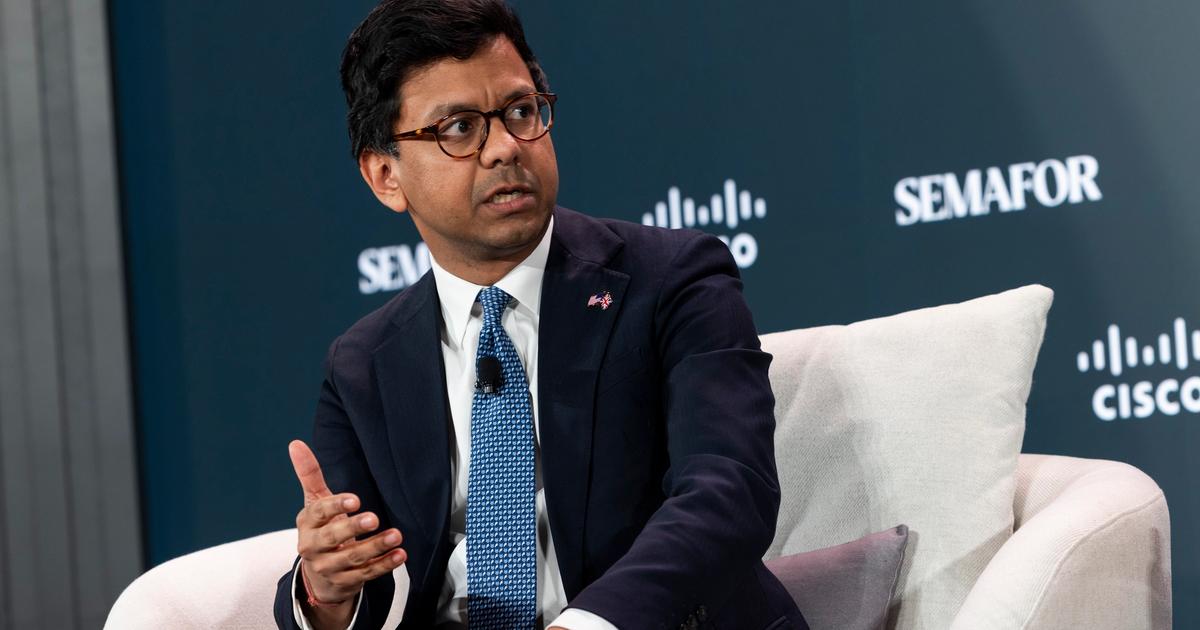
But “the sky is not falling,” said Andy Piazza, who leads threat research at specialized Palo Alto cybersecurity team Unit 42, and who revealed previously undisclosed details about the attack. asserted
who → fall → attack
The 10-hour hack started when the (human) bad guy deployed an AI agent to do reconnaissance to figure out how to breach the company. asserted
guy → start → company
The hacker essentially launched a massive internet scan that hunted for a way into the company’s network. asserted
that → launch → network
It ultimately found and exploited a public API endpoint, which is essentially a door that companies expose to the open internet so outside software can talk to their systems. asserted
software → find → systems
That’s something “AI is pretty dang good at,” Piazza said, because “devices on the internet are being scanned all of the time, and so reconnaissance is not something you can really prevent.” asserted
you → ’ → time
Once the hacker got into the company’s system, it deployed an agent to do internal recon to figure out what systems and software were running inside the network. asserted
systems → get → network
In this case, the company’s coding pipeline and code repositories were identified as targets. asserted
pipeline → cod → targets
“You get a lot when you’re scanning inside of a network,” Piazza said. asserted
Piazza → get → network
“You’re effectively trusted now because you’re inside the firewall. asserted
you → trust → firewall
And they get a lot more details, and they can figure out what are the interesting systems they may want to go after from there.” uncertain
they → get → details
Sub-agents then went through code repositories and extracted credentials like passwords and tokens that developers had left, written directly into the company’s software. asserted
developers → go → software
Piazza said too many businesses aren’t diligent enough about locking down their logins and credentials, a practice that “stops a lot of stupid badness on the internet.” asserted
that → say → internet
The agents then used those stolen logins to break into the system the company uses to build and deploy its software — and from there grabbed the keys to its cloud accounts, letting the hackers run their operation through the company’s own AI tools. asserted
hackers → use → tools
That’s a technique known as “living off the land,” in which hackers use the victim’s own software to do harm, making it harder to detect. asserted
it → ’ → harm
That hacking strategy could become more common since AI systems are getting more access to sensitive company data, Piazza said: “We’re starting to see [that] bad guys are getting access to that AI compute.” uncertain
guys → become → compute
The attacker — or its agents — ultimately demanded a ransom, but “this is one of those good news stories where we identified it and got them out before they were fully successful,” he said. asserted
he → demand → them
An AI agent still left behind an 80-page, technical report detailing the company’s vulnerabilities. asserted
agent → leave → vulnerabilities
When someone talks about “AI hacking,” this is really the sort of thing they’re talking about: a human directing a swarm of AI agents to help them advance their malicious cause. asserted
them → talk → cause
This wasn’t the kind of near-autonomous hack like the one in July when OpenAI agents broke out of their testing ground and hacked AI company Hugging Face. asserted
agents → break → Face
(And even in that case, the models were trying to complete a task given to them by humans.) asserted
models → try → humans
Those remain uncommon; it turns out even ill-intentioned AI agents need a human in the loop. asserted
agents → remain → loop
“The bad-guy use of agentic attacks looks a lot like the good-guy use of AI: ‘Go do a thing, bring back some results, let me make a decision, and I’ll tell you the next steps,’” Piazza explained. asserted
Piazza → look → steps
And at least for now, AI isn’t doing anything novel that a human hacker can’t also do — it just ramps up the speed and scale of well-worn techniques. asserted
it → do → techniques
That should give some solace to people worried that robots are finding new ways to get around firewalls, but it also ramps up the pressure on organizations to lock down their systems, stat. asserted
it → give → systems

Give feedback · no sign-in needed

No sign-in needed for now. Your note is sent without a name, so it cannot be answered.

History Support