Photo via The Independent

A quiet loophole could kill the Electoral College forever and Democrats are inches away from pulling it off

Read the original at The Independent ↗
Cite

Bauer, S., & Riccardi, N. (2026, November 10). A quiet loophole could kill the Electoral College forever and Democrats are inches away from pulling it off. The Independent. https://www.independent.co.uk/news/world/americas/us-politics/democrats-electoral-college-popular-vote-b3082242.html

Dated from the outlet's own feed. Check the original for its byline.

The Independent · collected 2026-11-10 · by Scott Bauer, Nicholas Riccardi

Quick Summary

Democrats now control six states that hold a total of 71 Electoral College votes after Tuesday's elections. These states—Arizona, Michigan, Minnesota, Nevada, Pennsylvania, and Wisconsin—are crucial for advancing the National Popular Vote Interstate Compact, which would allocate their electoral votes to the candidate who wins the national popular vote. With eighteen states already part of this compact (accounting for 222 Electoral College votes), only two more states are needed to reach the threshold of 270 electoral votes required to implement the plan. Governors in Pennsylvania and Wisconsin have expressed interest in joining, but not all newly elected officials support it, and legal challenges from conservative groups are expected if the compact moves forward.
Written by AI on 2026-11-10, from this article's own text only (the story summary below draws on all the coverage).

AI analysis

Story summary

Democrats have recently won full control over six states that collectively hold 71 Electoral College votes, bringing them closer to implementing the National Popular Vote Interstate Compact (NPVIC). This agreement binds participating states' electoral votes to the presidential candidate who wins the national popular vote. Currently, eighteen Democratic-run states with a total of 222 Electoral College votes have already joined the compact. With the addition of these six newly controlled states, supporters see an increased likelihood that enough states will join to reach the threshold of 270 electoral votes, effectively requiring presidential candidates to win the national popular vote to secure victory. This development could potentially transform future U.S. presidential elections into a nationwide contest rather than one focused on swing states.

Written for “Electoral College Loophole Debate” on 2026-11-21, grounded in this article and the 0 other(s) covering the same event.

Compared with similar articles

This article reads leans left and hedges 16% of its claims. Each row says how that neighbour differs.
Washington Examiner
Leans strongly left further left than this Hedges 0 of 3 claims Outlet record 67/100
“While both articles discuss Democrats' efforts to change or bypass the Electoral College using state-level victories, they describe different stages or aspects of this broader trend rather than a single specific incident.”
Washington Examiner
Leans strongly right further right than this Hedges 0 of 7 claims Outlet record 67/100
“The articles discuss the National Popular Vote Interstate Compact but do not describe a single specific occurrence or development of it happening on the same day.”
Washington Examiner
Hedges 0 of 2 claims Outlet record 67/100
“While both articles discuss the National Popular Vote Interstate Compact, they describe different aspects: Article A is about the potential for Democrats to bring the compact within reach, while Article B focuses on Nevada's governor-elect's stance on joining the compact.”
Mother Jones
Leans strongly left further left than this Hedges 6 of 36 claims Outlet record 60/100
“The articles discuss related political developments but refer to different times - Article A is about the implications after the elections on November 10th, while Article B discusses the results of an earlier election on November 5th.”
The Daily Wire
Leans left Hedges 2 of 16 claims Outlet record 60/100
“While both articles discuss the National Popular Vote Interstate Compact and its potential impact after a midterm election, they describe different stages of the development: Article A discusses immediate post-election plans, while Article B elaborates on the specific states' actions following their electoral victories.”
The Daily Wire
Hedges 0 of 26 claims Outlet record 60/100
“Article A discusses a broader trend and strategy regarding the National Popular Vote Interstate Compact, while Article B focuses on an interview with an incoming Wisconsin governor expressing personal views.”
Blaze Media
Leans left Hedges 3 of 34 claims Outlet record 94/100
“The articles discuss the potential for Democrats to achieve the National Popular Vote Interstate Compact, but they refer to different stages and outcomes of the process, with Article A mentioning the possibility after a specific election date and Article B discussing the broader implications of the Democrats' control of state legislatures.”

Story

Electoral College Loophole Debate
Politics · 1 article(s) covering the same event.
How this article was measured signals, leaning charts, publisher record, byline, topics and claims

Signals How these are calculated →

Claims extracted
45
sentences that state something as happening or true
Uncertain
16%
7 of 45 hedged ("reportedly", "may", "according to")
Leaning
Leans left
of the writing, not the subject · beta estimate
Publisher signals
59/100
The Independent's corrections and hedging, across everything collected from it. Not a measure of accuracy.
Outlets on this story
1
Politics
Same framing elsewhere
2
articles that frame the event the way this one does
Analyzed 2026-11-10 · how these are computed

How this is being covered How these are calculated →

Article leaning vs. publisher reliability
Source leaning vs. consistency

Publisher

The Independent · 4787 article(s) · 10 correction(s) detected
Running correction rate · 10 correction(s)

Who wrote this

Scott Bauer
14 article(s) here · 1 carrying a prediction
A police officer who shot and killed a 38-year-old Black man on a bike in Madison in July will not face criminal charges, a prosecutor announced Thursday.
“We must, and we will, ensure that every single one of those positions is immediately filled,” said New York City Council Speaker Julie Menin, a Democrat.
Six states that swung to full Democratic control in Tuesday's elections hold 71 Electoral College votes, and their new governments could bring a plan to sidestep the Electoral College within reach.
Due to the number of state governments that have flipped to Democratic control, they also could change the way the U.S. elects a president.
The party took full control — both statehouse chambers and governors’ offices — in Minnesota and Wisconsin and could pick up more states to earn additional trifectas.
Tiffany breaks with Trump on Iran and data centers Tiffany has been a longtime ally of Trump but in recent months has taken steps to distance himself from the unpopular Republican president. Tiffany voted five times against resolutions in the U.S. House that would’ve prohibited Trump from continuing military activities in Iran without congressional approval, but in May he said it was time to “wrap up” the war.
Elections officials in battleground Wisconsin on Thursday approved guidance for local clerks to help them know what to do if federal law enforcement officials show up at the polls on Election Day, as some activists fear might happen.
The shooting was not at a school-sponsored event, said Sherrod Willaford, superintendent of the Dooly County School System.
Political power in legislatures and governors’ offices is at stake in the November elections in more than one-third of the states, creating down-ballot drama in the midterms that could have significant implications for President Donald Trump’s agenda.
Democrats see his race as one that could break their way if the blue wave they’re working toward turns into a tsunami.
Also by Scott Bauer
Nothing else under this byline is closely related to this article, so these are simply their most recent.
All 14 articles by Scott Bauer →
Nicholas Riccardi
29 article(s) here · 1 carrying a prediction
The Alaska Supreme Court had already ruled that the second Sullivan's candidacy is legal and that he could be on the ballot.
When Democrats started planning a post-midterms conference in Denver months ago, political consultant Stephanie Valencia figured it would be more of the same — a bunch of strategists poring over the latest results and plotting a path forward in a country dominated by President Donald Trump.
DENVER (AP) — Maryland Sen. Chris Van Hollen said Friday that he’s no longer considering a run for the White House and will focus instead on his bid to become Senate majority leader as he makes the case to Democratic colleagues.
Fresh off the best electoral performance in half a century, Democratic officials and strategists will converge on Denver starting Thursday to plot a further course for the party and revel in their gains.
For the first time ever, Democrats will hold all of Nevada's congressional seats.
Six states that swung to full Democratic control in Tuesday's elections hold 71 Electoral College votes, and their new governments could bring a plan to sidestep the Electoral College within reach.
For the first time ever, all of Nevada’s congressional seats will be held by Democrats.
Due to the number of state governments that have flipped to Democratic control, they also could change the way the U.S. elects a president.
Sullivan, a key ally of President Donald Trump, is competing against Democratic former U.S. Rep. Mary Peltola in a pivotal contest that could determine Senate control.
"More fundamentally, the United States provides no workable plan as to how it proposes to segregate ballots cast for Daniel J. Sullivan on Election Day and then conduct a court-ordered unspecified "investigation" of those ballots in a manner that would preserve voter secrecy," she wrote.
Also by Nicholas Riccardi
Nothing else under this byline is closely related to this article, so these are simply their most recent.
All 29 articles by Nicholas Riccardi →

Topics

Arizona Democratic Electoral College Pennsylvania the Electoral College

Subjects

Democratic NORP · 13× Nevada GPE · 5× the Electoral College ORG · 4× Arizona GPE · 3× Democrats NORP · 3× Electoral College ORG · 3× Michigan GPE · 3× Pennsylvania GPE · 3× Wisconsin ORG · 3× Minnesota GPE · 2×

Narrative

“Look, I will tell you, top of mind for me, from talking to voters across the state, is addressing the affordability issues, continuing to find ways to lower costs, to secure the border, to protect our water and continuing to protect public education,” said Hobbs, whose office declined to comment further.
framing: assertive · carried by 2 article(s) · first seen 2026-11-10
Six states that swung to full Democratic control in Tuesday's elections hold 71 Electoral College votes, and their new governments could bring a plan to sidestep the Electoral College within reach.

Claims (45 extracted, 7 hedged)

Six states that swung to full Democratic control in Tuesday's elections hold 71 Electoral College votes, and their new governments could bring a plan to sidestep the Electoral College within reach. uncertain
governments → swing → reach
The plan is the National Popular Vote Interstate Compact, an agreement under which participating states would commit their electoral votes to whichever presidential candidate wins the most votes nationwide. asserted
candidate → participate → votes
Eighteen Democratic-run states have already signed on, accounting for 222 Electoral College votes. asserted
states → sign → votes
Once states holding the 270 votes needed to win the presidency have joined, the arrangement would effectively require a candidate to win the national popular vote to secure an Electoral College majority. asserted
candidate → hold → majority
Supporters of the compact see reason to be optimistic in the sweep of Democratic wins for governor and in state legislatures. asserted
Supporters → see → legislatures
In Tuesday's elections, Democrats won full control in Arizona, Michigan, Minnesota, Nevada, Pennsylvania and Wisconsin. asserted
Democrats → win → Arizona
Minnesota, which has 10 electoral votes, had already joined the compact under its previous period of full Democratic control in 2023. asserted
which → have → 2023
If the compact goes ahead, the battle for the presidency would become a nationwide vote, rather than a contest concentrated on a half dozen or so swing states. asserted
battle → go → states
It is not certain, though, that every newly elected lawmaker and governor in the key states backs the strategy, and legal challenges from conservative groups are almost certain. asserted
challenges → elect → groups
If it proceeds, the plan could end up before the conservative-majority Supreme Court. uncertain
plan → proceed → Court
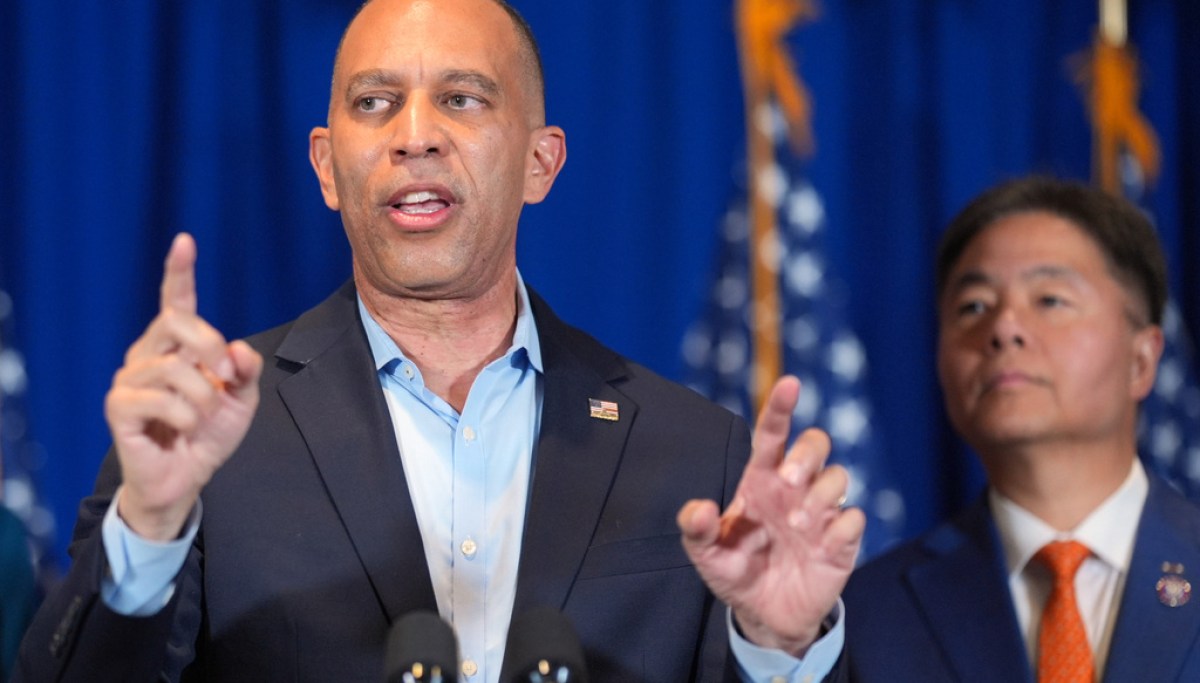
Some governors express support while others are noncommittal “We can do away with it,” Wisconsin's new Democratic Gov. David Crowley said of the Electoral College, now that his party controls the legislature for the first time in 16 years. asserted
party → express → years
“I am interested in having those conversations with the state Legislature.” asserted
I → have → Legislature
Over the weekend, Pennsylvania Gov. Josh Shapiro, a likely 2028 contender for the Democratic presidential nomination, said he would like his newly Democratic legislature to take steps toward making the Electoral College obsolete. asserted
College → say → steps
"I think that the national popular vote makes sense. asserted
vote → think → sense
My views on that have not changed," Shapiro said on a liberal podcast. asserted
Shapiro → change → podcast
"I’ll work with lawmakers to figure out what the right mechanism is for moving forward on that." The arithmetic is straightforward for the compact's backers. asserted
arithmetic → work → backers
If Pennsylvania and Wisconsin signed on, just two of the remaining three Democratic flips of Arizona, Michigan and Nevada would be enough to reach the 270 threshold and make winning the Electoral College contingent on winning the popular vote. asserted
winning → sign → vote
Not every Democratic governor is embracing the push, at least for now. asserted
governor → embrace → push
In a television interview on Monday, Arizona Gov. Katie Hobbs declined to say whether she favored her state joining the compact. asserted
state → decline → compact
“Look, I will tell you, top of mind for me, from talking to voters across the state, is addressing the affordability issues, continuing to find ways to lower costs, to secure the border, to protect our water and continuing to protect public education,” said Hobbs, whose office declined to comment further. asserted
office → look → education
Nevada's previous experience with the issue also serves as a cautionary tale for supporters. asserted
experience → serve → supporters
In 2019, then-Democratic Gov. Steve Sisolak vetoed a measure that would have committed Nevada to joining the compact after Democratic majorities in both houses of the Legislature passed it. asserted
majorities → veto → it
Sisolak said at the time that the popular vote idea would diminish the influence of smaller-population states like Nevada in national elections. asserted
idea → say → elections
Democrats passed another measure to join the compact in 2023, but couldn't figure out a way around the state's then-Republican governor. asserted
Democrats → pass → governor
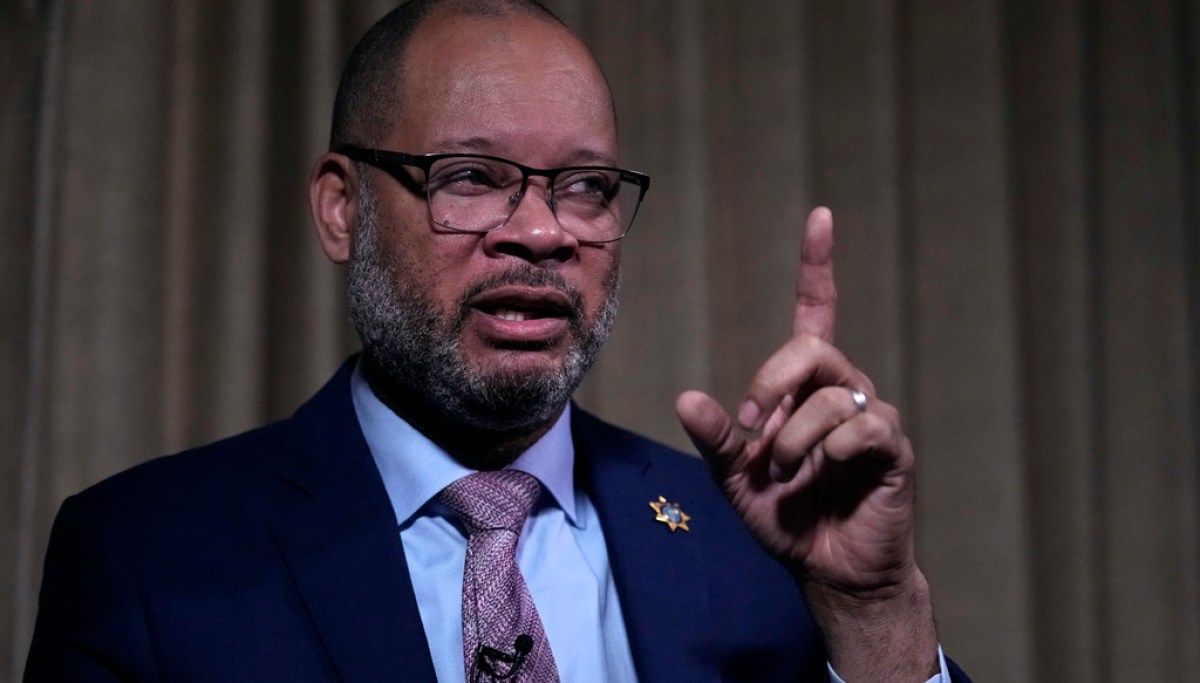
The incoming administration of its new Democratic governor, Aaron Ford, did not respond to requests for comment, nor did Michigan's new Democratic governor, Jocelyn Benson. asserted
governor → respond → comment
Two presidents 16 years apart lost the popular vote The push for a national popular vote gained traction among Democrats after Republican George W. Bush won the 2000 presidential election by inching ahead of Democrat Al Gore in the Electoral College even while losing the popular vote. asserted
Bush → lose → vote
It gained momentum again after Republicans won the White House that way in 2016, with Donald Trump's victory over Democrat Hillary Clinton. asserted
Republicans → gain → Clinton
There's nothing inherently partisan about the idea, said Patrick Rosenstiel, a Republican strategist in Minnesota and senior consultant to the popular vote movement. asserted
Rosenstiel → be → movement
Occasionally, GOP-majority legislative chambers, including the Oklahoma Senate, have passed proposals to join the compact, but the bills haven't gone further. asserted
bills → include → compact
Rosenstiel said his own presidential vote is essentially meaningless because Minnesota has reliably voted Democratic in presidential elections for decades, leaving him with no say in the outcome and steering most candidates' attention elsewhere. asserted
Minnesota → say → attention
“I don't believe I've ever been relevant in the outcome of a presidential election,” he said. asserted
he → believe → election
“National popular vote forces campaigns to focus on every persuadable voter in every precinct across the nation,” Rosenstiel said, adding that the national popular vote campaign has been revving up to push the issue as newly Democratic state legislatures convene at the start of the year. asserted
legislatures → force → year
He said the organization has already lined up legislative sponsors. asserted
organization → say → sponsors
The compact could create constitutional concerns Republicans no longer have the power to stop the change in Democratic-controlled states, but some conservative groups are prepared to fight. uncertain
groups → create → states
The change “disenfranchises voters in member states if enacted, violates the United States Constitution, and undermines America’s Founders’ intent,” wrote analysts for the America First Policy Institute, a pro-Trump think tank, in September. asserted
analysts → disenfranchise → September
There is also no guarantee the proposals will pass. asserted
proposals → be → ?
Derek Muller, a Notre Dame law professor who is skeptical of the idea, said some might have second thoughts now that it's gone from a symbolic protest vote to a real possibility. uncertain
it → say → possibility
He said there will also be constitutional concerns that will likely lead to legal challenges. asserted
that → say → challenges
The Constitution lets states run elections, and the Supreme Court has ruled that states can require electors to vote for the presidential candidate they're pledged to, in a case involving electors who sought a substitute for Trump in 2016. asserted
who → let → 2016
Muller flagged several potential legal hurdles to the popular vote plan. asserted
Muller → flag → plan
…and 5 more, not listed.

Give feedback · no sign-in needed

No sign-in needed for now. Your note is sent without a name, so it cannot be answered.

History Support