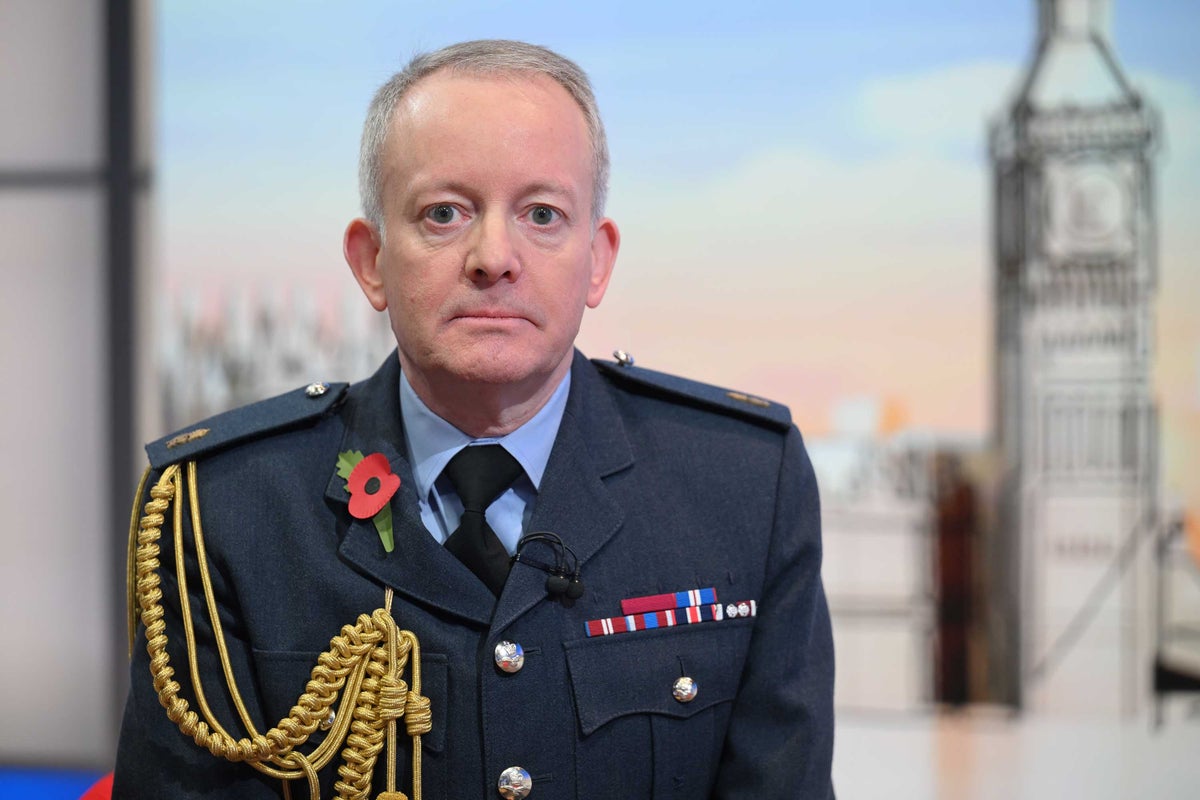
Photo via The Guardian

Russian naval aggression prompts new defensive initiative with ‘beer-drinking nations’

Read the original at The Guardian ↗
Cite

Oslo, D. S. i. (2026, November 10). Russian naval aggression prompts new defensive initiative with ‘beer-drinking nations’. The Guardian. https://www.theguardian.com/uk-news/2026/nov/10/russian-naval-aggression-defensive-initiative-beer-drinking-nations

Dated from the outlet's own feed. Check the original for its byline.

The Guardian · collected 2026-11-10 · by Dan Sabbagh in Oslo

Quick Summary

A British defence minister reported a 41% increase in Russian naval activity around the UK from January to September this year. In response, the Royal Navy is planning to enhance its cooperation with other “beer-drinking nations” like the Netherlands and Baltic states through shared use of maritime drones and warships. Luke Pollard, the minister for defence readiness, emphasized that these measures would boost the effectiveness of naval forces in light of anticipated reductions in British frigate numbers over the next decade.
Written by AI on 2026-11-10, from this article's own text only (the story summary below draws on all the coverage).
See how they differ ↓

AI analysis

Story summary

Britain announced on November 10 that it would spend £90 million (S$155 million) to develop drones, sensors, and artificial intelligence systems to counter Russian undersea threats in the North Atlantic. This investment aims to enhance surveillance capabilities for critical infrastructure protection, such as undersea cables carrying global internet traffic and supporting financial transactions. The plan follows a 41% increase in Russian naval activity around Britain this year compared to previous years, according to British Defence Minister Luke Pollard. To address these threats, the Northern Navies Initiative, led by Britain, will integrate maritime defense capabilities among 10 countries, including the UK, Netherlands, and Baltic and Nordic nations, enabling autonomous systems from different allies to work interchangeably with warships for a unified surveillance capability.

Written for “Northern Europe Drone And Warship Plan” on 2026-11-21, grounded in this article and the 2 other(s) covering the same event.

How they differ

3 outlets covered “Northern Europe Drone And Warship Plan”.

What each outlet says

One AI summary per outlet of its latest article on this story, written from that article alone and checked against it. Open the article for the outlet's own words.

The GuardianThis outlet10 Nov

A British defence minister reported a 41% increase in Russian naval activity around the UK from January to September this year. In response, the Royal Navy is planning to enhance its cooperation with other “beer-drinking nations” like the Netherlands and Baltic states through shared use of maritime drones and warships. Luke Pollard, the minister for defence readiness, emphasized that these measures would boost the…

Russian naval aggression prompts new defensive initiative with ‘beer-drinking nations’ (this article)
The Straits Times10 Nov

On November 10, Britain announced a £90 million (S$155 million) investment to develop drones, sensors, and AI systems for the Royal Navy to monitor Russian submarine activities in the North Atlantic. This initiative aims to enhance surveillance capabilities around critical undersea infrastructure like internet cables and pipelines, following increased warnings from Western officials about heightened Russian activity…

Britain to invest S$155 million in drones, sensors to counter Russian undersea threats →
Al Jazeera11 Nov

The United Kingdom has launched the Northern Navies Initiative, a defense framework involving ten countries including the UK's Joint Expeditionary Force nations, aimed at countering perceived threats from Russia by sharing sea drones and warships. The plan involves spending £90 million on autonomous systems to enhance surveillance capabilities in response to increased Russian naval activity around the UK, which rose…

What is northern Europe’s new drone and warship plan to counter Russia? →

Compared with similar articles

This article reads unscored and hedges 10% of its claims. Each row says how that neighbour differs.
The Independent
Hedges 0 of 21 claims Outlet record 59/100
“The articles discuss related topics but describe different incidents: one is a warning by a UK military chief about Russian threats, while the other reports on increased Russian naval activity and a defensive initiative by allied nations.”
The Straits Times
Hedges 0 of 8 claims Outlet record 64/100
Al Jazeera
Leans right Hedges 6 of 46 claims Outlet record 60/100
Daily Mail
Hedges 1 of 31 claims Outlet record 69/100
“While both articles discuss increased Russian naval activity and the response by the Royal Navy, they describe different aspects of the situation and do not clearly refer to the same specific incident or time.”

Story

Northern Europe Drone And Warship Plan
Politics · 3 article(s) covering the same event. See how they differ ↑
How this article was measured signals, leaning charts, publisher record, byline, topics and claims

Signals How these are calculated →

Claims extracted
20
sentences that state something as happening or true
Uncertain
10%
2 of 20 hedged ("reportedly", "may", "according to")
Leaning
withheld
no quote in the article backed the model's score
Publisher signals
64/100
The Guardian's corrections and hedging, across everything collected from it. Not a measure of accuracy.
Outlets on this story
3
Politics
Same framing elsewhere
1
articles that frame the event the way this one does
Analyzed 2026-11-10 · how these are computed

How this is being covered How these are calculated →

Article leaning vs. publisher reliability
Source leaning vs. consistency

Publisher

The Guardian · 3760 article(s) · 8 correction(s) detected
Running correction rate · 8 correction(s)

Who wrote this

Dan Sabbagh in Oslo
1 article(s) here · 1 carrying a prediction
A future Royal Navy would combine warships and drones “because that would increase our lethality”, Pollard said, sidestepping a debate about the number of UK frigates – which could drop from 12 in 2021 to three by 2030.
The only article under this byline in the corpus.

Topics

British Netherlands Russia Russian the Royal Navy

Subjects

Pollard PERSON · 6× Russian NORP · 5× British NORP · 4× Russia GPE · 4× Ukraine GPE · 2× the Royal Navy ORG · 2× Danish NORP · 1× Luke Pollard PERSON · 1× Netherlands GPE · 1× Nordic NORP · 1×

Narrative

The plan is for sea drones from the UK and other countries to be able to work interchangeably with warships from countries across the Northern Navies Initiative at a time when the number of British frigates is falling. “The model that we want is where British autonomy [drones] can be teamed with a British warship or a Danish warship or a Norwegian warship and can hand that autonomy off to an allied nation’s warship,” Pollard said.
framing: assertive · carried by 1 article(s) · first seen 2026-11-10
A future Royal Navy would combine warships and drones “because that would increase our lethality”, Pollard said, sidestepping a debate about the number of UK frigates – which could drop from 12 in 2021 to three by 2030.

Claims (20 extracted, 2 hedged)

Russian naval activity around the UK has increased by 41% in the first nine months of the year, a British defence minister said, as the Royal Navy announced plans to step up a 10-country maritime defensive effort in response. asserted
Navy → increase → response
Luke Pollard, minister for defence readiness, described the figure as “a huge increase”, justifying a new drone and warship initiative from “the alliance of beer-drinking nations” – the UK, the Netherlands and the Baltic and Nordic countries. asserted
Pollard → describe → nations
The plan is for sea drones from the UK and other countries to be able to work interchangeably with warships from countries across the Northern Navies Initiative at a time when the number of British frigates is falling. “The model that we want is where British autonomy [drones] can be teamed with a British warship or a Danish warship or a Norwegian warship and can hand that autonomy off to an allied nation’s warship,” Pollard said. asserted
Pollard → work → warship
A future Royal Navy would combine warships and drones “because that would increase our lethality”, Pollard said, sidestepping a debate about the number of UK frigates – which could drop from 12 in 2021 to three by 2030. uncertain
which → combine → 2030
Last month, the cross-party defence select committee warned that the navy risked failing to deter Russian aggression in the seas around the UK because of shortfalls in the number and availability of warships and submarines. asserted
navy → warn → warships
Pollard blamed the Conservatives for capacity shortfalls, accusing them of cutting budgets and delaying investment when they were in government. asserted
they → blame → government
“Now, because of the decisions taken 10, 15 years ago, we have fewer ships and fewer submarines than I would like available,” the minister said. asserted
minister → take → ships
An extra £10bn a year allocated to defence in 2030 by chancellor John Healey in October’s budget means that the UK could “send a clear demand signal to industry”, the minister said, to help tackle the Russian threat. uncertain
minister → allocate → threat
However, since the budget announcement, there have been no major defence spending announcements, with the UK sticking to the defence investment plan which was announced in June and fully funded in the budget. asserted
which → stick → budget
That included a £1.5bn investment in sea drones over four years. asserted
That → include → years
Russian spy ships, such as the Yantar, have been sailing near UK waters this year trying to obtain “an increased picture of our critical national infrastructure”, Pollard said, as well as “mapping our undersea cables”. asserted
Pollard → sail → cables
Its frigates have also been active in the North Sea and the Channel throughout 2026, often escorting oil tankers and other trade vessels, and at one point firing shots near a pleasure yacht south of the Isle of Wight in June. asserted
frigates → escort → June
Oil tankers linked to Russia remained active, though were now often “sailing around the UK” to avoid coming through the Channel, Pollard said, after the seizure of one Russia-linked tanker, the Smyrtos, in the same month as the shooting incident. asserted
Pollard → link → incident
The minister insisted that, if necessary, the Royal Navy was “ready to fight tonight”, even though it took three weeks for the UK to send a destroyer to Cyprus in the spring after the UK base at Akrotiri was struck by a drone fired by an Iranian proxy. asserted
base → insist → proxy
Russia’s northern fleet, based in the Barents Sea, retains “a really formidable undersea presence”, Pollard said, adding that Moscow had continued to invest in it throughout the Ukraine war as a means of threatening the UK. asserted
Moscow → base → UK
The minister was speaking at the navy’s International Sea Power conference held on the Prince of Wales aircraft carrier in Oslo. asserted
minister → speak → Oslo
Sailing the warship to Norway was “a really important deterrent signal that we stand ready to defend every single inch of Nato territory”, he said. asserted
he → sail → territory
A further £90m will be spent on underwater drones and sensors to monitor the Greenland-Iceland-UK gap for Russian submarine activity, considered to be a strategic choke point in what the navy describes as the “high north”. asserted
navy → spend → north
Ukraine has used cheap sea drones to destroy around a third of Russia’s Black Sea fleet, forcing it to relocate from Sevastopol in occupied Crimea to Novorossiysk, on the eastern Black Sea. asserted
Ukraine → use → Sea
The former head of the country’s military, Valerii Zaluzhnyi, now Ukraine’s ambassador to the UK, said the increasingly complex use of sea drones meant that “it is likely that the world’s navies are on the verge of the most radical transformation since the rise of torpedo technology”. asserted
navies → say → technology
Give feedback · no sign-in needed

No sign-in needed for now. Your note is sent without a name, so it cannot be answered.

History Support