The US Embassy in Yemen has pushed back against Houthi claims that a Saudi-led blockade is restricting access to the country.
uncertain
blockade → push → country
Khaled Wolfsberg, spokesperson for the US Embassy in Yemen, released an Arabic-language video on the mission’s official Instagram account on Tuesday evening, arguing that goods are still flowing into areas of Yemen under Houthi control.
asserted
goods → release → control
Recommended Stories
list of 4 items- list 1 of 4Yemeni gov’t forces report advances as Houthis say deadly strikes hit Sanaa
- list 2 of 4Saudi Aramco building in Riyadh damaged in ‘attempted’ attack
- list 3 of 4Yemen government forces claim new advances as Houthi border attacks resume
- list 4 of 4Yemeni forces, Houthis exchange attacks, claim to inflict heavy losses
The Houthis, an armed group also known as Ansar Allah (Arabic for Supporters of God), captured the capital, Sanaa, in September 2014.
uncertain
Houthis → report → September
They have since seized large parts of western and northern Yemen.
asserted
They → seize → Yemen
An offensive on coastal areas in September this year saw the rebel group take the port city of Mocha.
asserted
group → see → Mocha
Wolfsberg presented operational figures showing that 272 commercial ships successfully unloaded their cargo at the ports of Hodeidah, as-Salif, and Ras Isa – all under Houthi control – between January and September 2026.
asserted
all → present → January
This data directly counters the Houthi narrative that Saudi Arabia and its allies have enacted a full-scale siege of Yemen’s Red Sea ports, preventing aid from reaching civilians.
asserted
Arabia → counter → civilians
The US claims align with operational analyses released by the United Nations Verification and Inspection Mechanism for Yemen, which monitors and facilitates commercial shipping to the region.
uncertain
which → align → region
Throughout the first nine months of 2026, the UN mechanism regularly cleared dozens of vessels each month to sail to the Houthi-controlled ports.
asserted
mechanism → clear → ports
The UN data confirms that 272 vessels sailed to these ports during this period.
asserted
vessels → confirm → period
The maritime traffic peaked in January and March, with 34 vessels sailing each month.
asserted
vessels → peak → January
Even during slower periods, such as July, 25 vessels successfully made the journey.
asserted
vessels → make → journey
These ships delivered millions of tonnes of essential cargo, primarily food.
asserted
ships → deliver → cargo
March recorded the highest volume of food deliveries, with more than 737,000 tonnes discharged.
asserted
tonnes → record → deliveries
January also saw significant deliveries, with nearly 630,000 tonnes of food reaching the ports.
asserted
tonnes → see → ports
More recent data from August and September show continued food deliveries of more than 511,000 tonnes and 495,000 tonnes, respectively.
asserted
data → show → tonnes
Alongside bulk shipments, containerised cargo continued to arrive at Hodeidah this year.
asserted
cargo → continue → Hodeidah
In January, four container vessels discharged 1,231 containers, followed by three container vessels unloading 851 containers in March.
asserted
vessels → discharge → March
Another three vessels discharged 1,268 containers in April.
asserted
vessels → discharge → April
While container traffic fluctuated later in the year, particularly after the most recent bout of fighting, September still saw one container vessel discharging 182 containers.
asserted
vessel → fluctuate → containers
Fuel and other cargo also reached the ports throughout the year, although in varying quantities.
asserted
Fuel → reach → quantities
For instance, February saw more than 149,000 tonnes of fuel discharged, while September recorded no fuel deliveries but maintained high volumes of food and other goods.
asserted
September → see → food
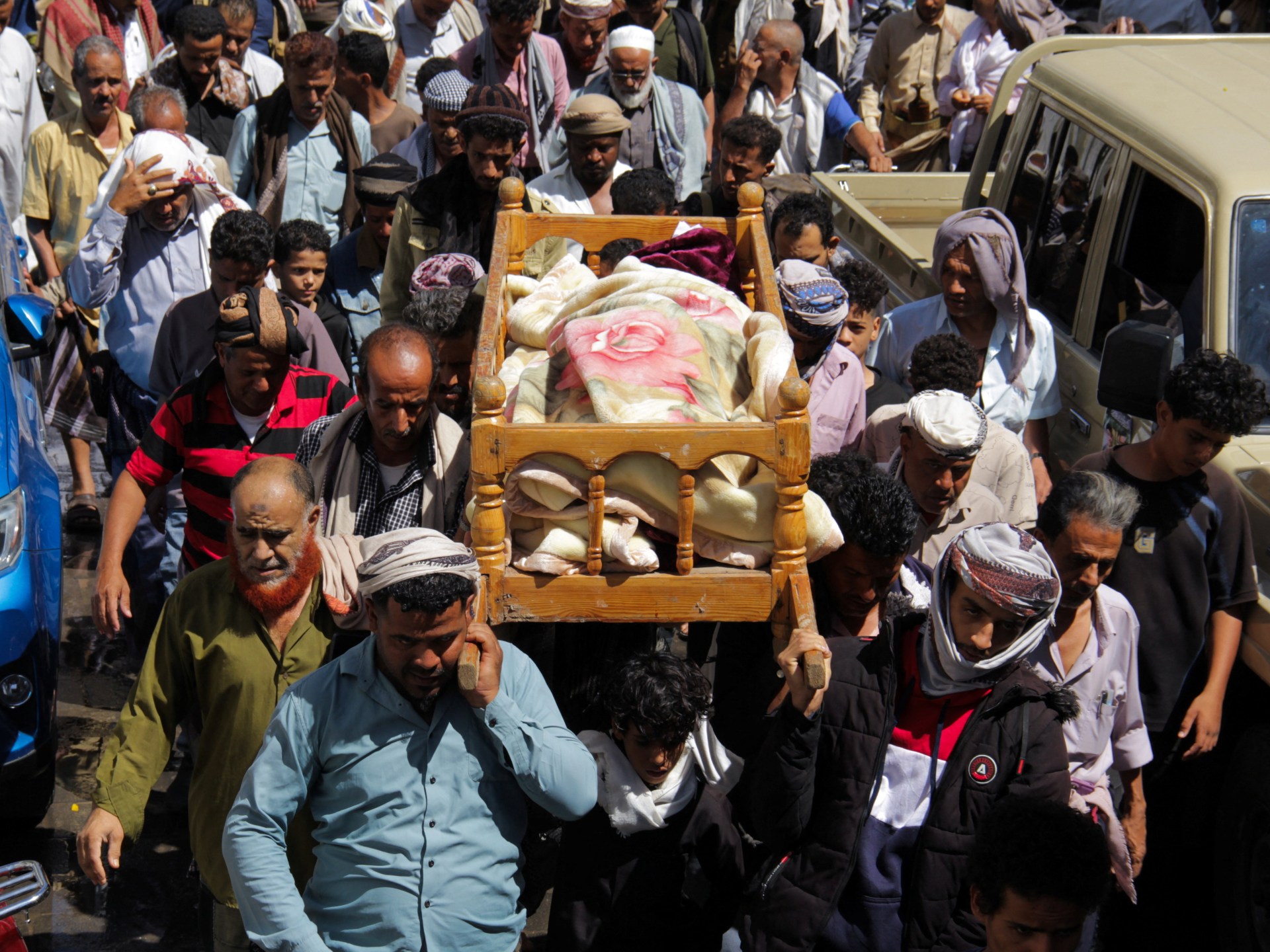
Despite this, the UN has warned that recent fighting has worsened the humanitarian situation in Yemen, including in the besieged city of Taiz, which is under government control but fully surrounded by the Houthis.
asserted
which → warn → Houthis
In the US embassy video, Wolfsberg accused the Houthis of blocking food and fuel from reaching hospitals and water stations in Taiz.
asserted
Wolfsberg → accuse → Taiz
He described the conditions faced by Taiz residents as a genuine siege, shifting the blame for localised shortages onto the Houthi forces encircling the area.
“The only real blockade is the one cruelly imposed by the militia on Taiz by preventing the entry of food and essential supplies for citizens,” Wolfsberg said.
asserted
Wolfsberg → describe → citizens
 The Aporia