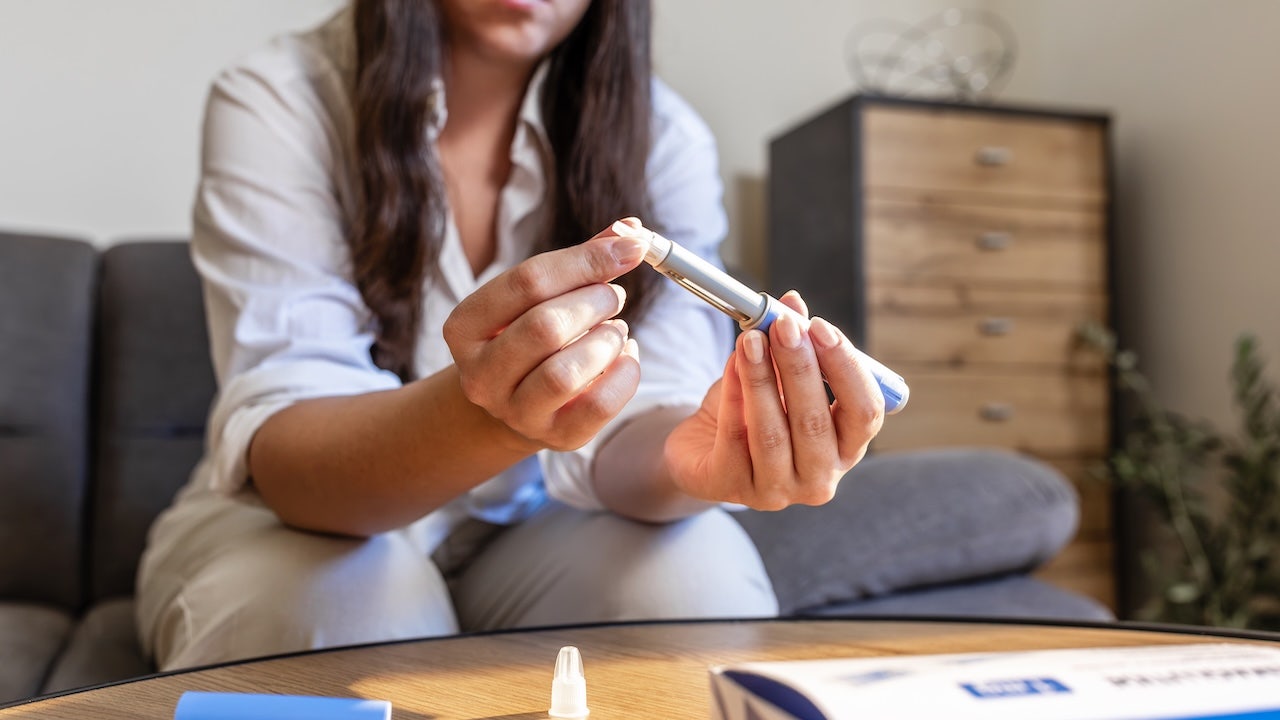
Photo via Global News

Stopping GLP-1 drugs could increase heart attack risk for some, study says

Read the original at Global News ↗
Cite

Previl, S. (2026, November 11). Stopping GLP-1 drugs could increase heart attack risk for some, study says. Global News. https://globalnews.ca/news/12146191/glp-1-weight-loss-diabetes-heart-attack-risk/

Dated from the outlet's own feed. Check the original for its byline.

Global News · collected 2026-11-11 · by Sean Previl

Quick Summary

A new study published in the Lancet Regional Health Europe finds that people with type 2 diabetes who stop taking GLP-1 weight loss medications face a doubled risk of heart attack, stroke, or death compared to those who continue their medication. The research, conducted over two decades and involving more than 80,000 Italians, shows that about four in every hundred patients who discontinued the drugs experienced these severe health events annually, whereas only two in a hundred continued users faced similar risks. Additionally, individuals with a BMI of 30 or higher showed a particularly elevated risk if they stopped their GLP-1 treatment.
Written by AI on 2026-11-11, from this article's own text only (the story summary below draws on all the coverage).
See how they differ ↓

AI analysis

Story summary

A new study published in The Lancet Regional Health — Europe suggests that people with type 2 diabetes who start and then stop GLP-1 drugs may face an increased risk of heart attack, stroke, or death compared to those who continue taking the medication. The study, which followed more than 80,000 Italians between 2004 and 2024, found that individuals who discontinued GLP-1 treatments had a risk double that of those who remained on the medication. For those who stopped treatment, four in every 100 experienced a non-fatal heart attack, stroke, or death annually, compared to about two in 100 among those who stayed on the medication. Lead author Antonio Ceriello, head of diabetes research at IRCCS MultiMedica in Italy, noted the association was "not a complete surprise." However, some experts caution that the study cannot prove causation and lacks data on why people stopped using the drugs.

Written for “GLP-1 Rebound Risks Warning” on 2026-11-21, grounded in this article and the 3 other(s) covering the same event.

How they differ

4 outlets covered “GLP-1 Rebound Risks Warning”.

What each outlet says

One AI summary per outlet of its latest article on this story, written from that article alone and checked against it. Open the article for the outlet's own words.

Global NewsThis outlet11 Nov

A new study published in the Lancet Regional Health Europe finds that people with type 2 diabetes who stop taking GLP-1 weight loss medications face a doubled risk of heart attack, stroke, or death compared to those who continue their medication. The research, conducted over two decades and involving more than 80,000 Italians, shows that about four in every hundred patients who discontinued the drugs experienced…

Stopping GLP-1 drugs could increase heart attack risk for some, study says (this article)
ABC News (AU)9 Nov

A new international study published in The Lancet Regional Health—Europe indicates that people with type 2 diabetes who start and then stop using GLP-1 receptor agonists, like Ozempic, may face an increased risk of heart attack, stroke, or death compared to those who continue taking the medication. The research followed over 80,000 Italian participants between 2004 and 2024 and found that approximately four in every…

Study links heart issues to starting and stopping Ozempic-like drugs →
Fox News12 Nov

Internal medicine physician Dr. Frank Dumont explains the medical risks and side effects associated with GLP-1 medications like Ozempic and Zepbound during an interview with Fox News Digital. He identifies six potential risks after discontinuing the drugs, including the return of intense "food noise" and weight regain, noting that participants in the STEP 1 trial regained about two-thirds of their lost weight within…

Ozempic and Zepbound users face 6 rebound risks after stopping, doctor warns →
New York Post12 Nov

Fox News reports on the risks associated with discontinuing GLP-1 weight-loss drugs like Ozempic and Wegovy. Dr. Frank Dumont, an internal medicine physician, highlights that many patients stop using these medications within a year, citing side effects such as nausea and serious concerns like acute pancreatitis. He lists six potential risks of stopping GLP-1 drugs, including the immediate return of intense hunger…

GLP-1 users face 6 rebound risks after stopping the weight-loss drugs →

Compared with similar articles

This article reads unscored and hedges 22% of its claims. Each row says how that neighbour differs.
ABC News (AU)
Hedges 10 of 41 claims Outlet record 67/100
Fox News
Hedges 11 of 48 claims Outlet record 66/100
“Article A reports on a specific study published in a journal, while Article B reports on a doctor's warning based on general research trends and does not reference the exact same study.”
New York Post
Hedges 9 of 45 claims Outlet record 66/100

Story

GLP-1 Rebound Risks Warning
Health · 4 article(s) covering the same event. See how they differ ↑
How this article was measured signals, leaning charts, publisher record, byline, topics and claims

Signals How these are calculated →

Claims extracted
27
sentences that state something as happening or true
Uncertain
22%
6 of 27 hedged ("reportedly", "may", "according to")
Leaning
not political
takes no side on a contested political question
Publisher signals
63/100
Global News's corrections and hedging, across everything collected from it. Not a measure of accuracy.
Outlets on this story
4
Health
Same framing elsewhere
1
articles that frame the event the way this one does
Analyzed 2026-11-11 · how these are computed

How this is being covered How these are calculated →

Article leaning vs. publisher reliability
Source leaning vs. consistency

Publisher

Global News · 3540 article(s) · 13 correction(s) detected
Running correction rate · 13 correction(s)

Who wrote this

Sean Previl
79 article(s) here · 1 carrying a prediction
- What could more Chinese steel and aluminum mean for Canadians?
Prior to the website going down, an image of Russian players appeared alongside a message accusing the federation of banning a team its opponents couldn’t beat, according to the Associated Press. In a statement on X, the IIHF didn’t comment on the message that was briefly on its website but said it condemned the attack and was taking necessary steps. -
On Monday, Porter told Global News its operation was “back on track,” though added it could not provide more details.
Tiff Macklem, the governor of the Bank of Canada, says he will not be seeking a second term, setting up a search for the next person to lead the country’s central bank into the next decade.
Canadians’ phones, TVs and radios are set to sound off on Wednesday as the country’s national emergency alert system performs its second test of the year.
Sunday’s decision comes days after the Prime Minister’s Office reiterated Ottawa’s stance saying, “athletes from Russia and Belarus will not be able to compete for their countries in Canada so long as the unjustified war against Ukraine continues.”
After initially announcing an investigation into the allegations, Nvidia announced Thursday that Chief Financial Officer Colette Kress would take over as interim CEO as Nvidia looks for a permanent successor.
The province’s River Forecast Centre put the Sea-to-Sky corridor and Pemberton Valley under a flood warning on Thursday, but that was downgraded on Friday morning.
The meeting was weeks in the making, following a stand-off when Premier Paul St-Pierre Plamondon said he would only hold his first meeting with the prime minister in Quebec City.
Along with postwar security guarantees for both countries, other key hurdles are the fate of Russian-occupied Ukrainian territory and what role European countries will play in an eventual settlement.
Also by Sean Previl
Nothing else under this byline is closely related to this article, so these are simply their most recent.
All 79 articles by Sean Previl →

Topics

BMJ British Italians Lancet the Lancet Regional Health Europe

Subjects

Lancet ORG · 3× BMJ ORG · 2× Labos PERSON · 2× Wainwright GPE · 2× British NORP · 1× Canada GPE · 1× Christopher Labos PERSON · 1× Italians NORP · 1× McGill University ORG · 1× the Lancet Regional Health Europe ORG · 1×

Narrative

Mortgage rules need to change for first-time home buyers, report says The Lancet study says it only included a small group of semaglutide users, with most patients using liraglutide or dulaglutide: all of which are types of GLP-1 medications. Tirzepatide, also known as Mounjaro for type 2 diabetes users and Zepbound for weight loss, was released after the period of the study and was not included. Type 2 diabetes patients who stopped GLP-1 treatment found their weight, blood sugar concentrations and blood pressure changed “only modestly,” the study says.
framing: mixed · carried by 1 article(s) · first seen 2026-11-11
Stopping treatment of type 2 diabetes with GLP-1 weight loss medications may lead to a doubled risk of heart attack, stroke or death, a new study shows.

Claims (27 extracted, 6 hedged)

Stopping treatment of type 2 diabetes with GLP-1 weight loss medications may lead to a doubled risk of heart attack, stroke or death, a new study shows. uncertain
study → stop → attack
The study, published Monday in the Lancet Regional Health Europe, looked at more than 80,000 Italians with type 2 diabetes and no established heart disease. asserted
study → publish → diabetes
Data was collected between 2004 and 2024. asserted
Data → collect → 2004
Researchers found four in every 100 of those people a year who stopped taking GLP-1 treatments had a non-fatal heart attack or stroke, or died, compared to about two in 100 of the people who stayed on the medication. asserted
who → find → medication
Those with a body mass index of 30 or more, people considered medically obese, also showed a higher risk among those who stopped treatment than those under that BMI range. asserted
who → consider → range
Of the more than 80,000 people who started GLP-1s, those who stayed on treatment did so for about three years. asserted
who → start → years
The group that did not stay on treatment, about 60 per cent, is reported to have stopped use after about one year. asserted
that → stay → year
But while the study raises questions about what factors could be behind that increase for some, researchers caution that as an observational study there are certain factors they couldn’t determine. uncertain
they → raise → study
An analysis by the British Medical Journal notes the study could not determine if discontinuing GLP-1 drugs directly caused the increased risk, or if people who experienced a higher risk of health events were already in poorer health. uncertain
who → note → health
The BMJ also cautioned the study did not analyze why people stopped taking the drugs, such as potential gastrointestinal side effects, the high cost some drugs have, or potential illnesses. asserted
drugs → caution → effects
Some patients may have stopped because they were already in poor health, the journal added. uncertain
journal → stop → health
Dr. Christopher Labos, cardiologist and epidemiologist at McGill University, stressed the Lancet study compared two groups of diabetic patients. “In one sense, what you’re saying is that these medications actually have a very clear cardiovascular benefit, which is known, and if you stop them, you don’t get that cardiovascular benefit,” Labos said. asserted
Labos → stress → benefit
Some previous studies have shown weight-loss drugs could lead to regaining weight when people stop using the medication. uncertain
people → show → medication
A study published in the BMJ in January 2026 showed weight-loss drug users on average regain weight at a rate of 0.4 kilograms or 0.88 pounds per month after they stop. asserted
they → publish → month
That study reviewed 63 trials covering more than 9,000 individuals up to February 2025. asserted
study → review → February
Patients who went on the drugs then stopped them regained their entire baseline weight on average about 20 months after they stopped taking the medications. asserted
they → go → medications
Labos noted the Lancet study further underscores these are chronic medications for chronic conditions and should only be stopped due to issues such as side effects or ineffectiveness. asserted
these → note → effects
“If you’re stopping them just because you think they’ve worked and now you want to stop, number one, you are probably going to see a regain of the weight,” he said. asserted
he → stop → weight
“Number two, you’re putting yourself to an increased risk because you no longer are having the metabolic benefits that are coming from the weight loss and the cardiovascular protection that goes with it.” asserted
that → put → it
- Intimate partner violence up 15% over 8 years in Canada, StatCan says - Atlantic Canadian padres honour Wainwright soldiers in Remembrance Day speeches - Family of CFB Wainwright burn victim honour him at Remembrance Day in St. Albert - asserted
Family → say → Albert
Mortgage rules need to change for first-time home buyers, report says The Lancet study says it only included a small group of semaglutide users, with most patients using liraglutide or dulaglutide: all of which are types of GLP-1 medications. Tirzepatide, also known as Mounjaro for type 2 diabetes users and Zepbound for weight loss, was released after the period of the study and was not included. Type 2 diabetes patients who stopped GLP-1 treatment found their weight, blood sugar concentrations and blood pressure changed “only modestly,” the study says. asserted
study → need → treatment
Similar amounts were seen in patients whether they went on to have a heart attack, stroke, or died. asserted
they → see → attack
Researchers also cautioned the heightened risk of heart attack, stroke or death if you stop taking GLP-1s may not affect people without type 2 diabetes who take the drugs for weight loss or other conditions. uncertain
who → caution → loss
Further research is needed into whether stopping GLP-1 medications can directly cause increased cardiovascular risk or if it instead represents “a marker of higher underlying risk rather than a direct cause of adverse outcomes,” the study says. asserted
study → need → outcomes
The study should not be taken to imply the drugs are dangerous, instead Labos said people should understand it outlines how the GLP-1 medications should be taken. asserted
medications → take → ?
“If the interpretation that you draw from this is that, oh, these medications are potentially dangerous I think that’s the wrong interpretation,” he said. asserted
he → draw → this
“If the interpretation you draw from this is that you shouldn’t just be starting and stopping these medications on a whim, I think that’s the correct interpretation.” asserted
that → draw → whim
Give feedback · no sign-in needed

No sign-in needed for now. Your note is sent without a name, so it cannot be answered.

History Support