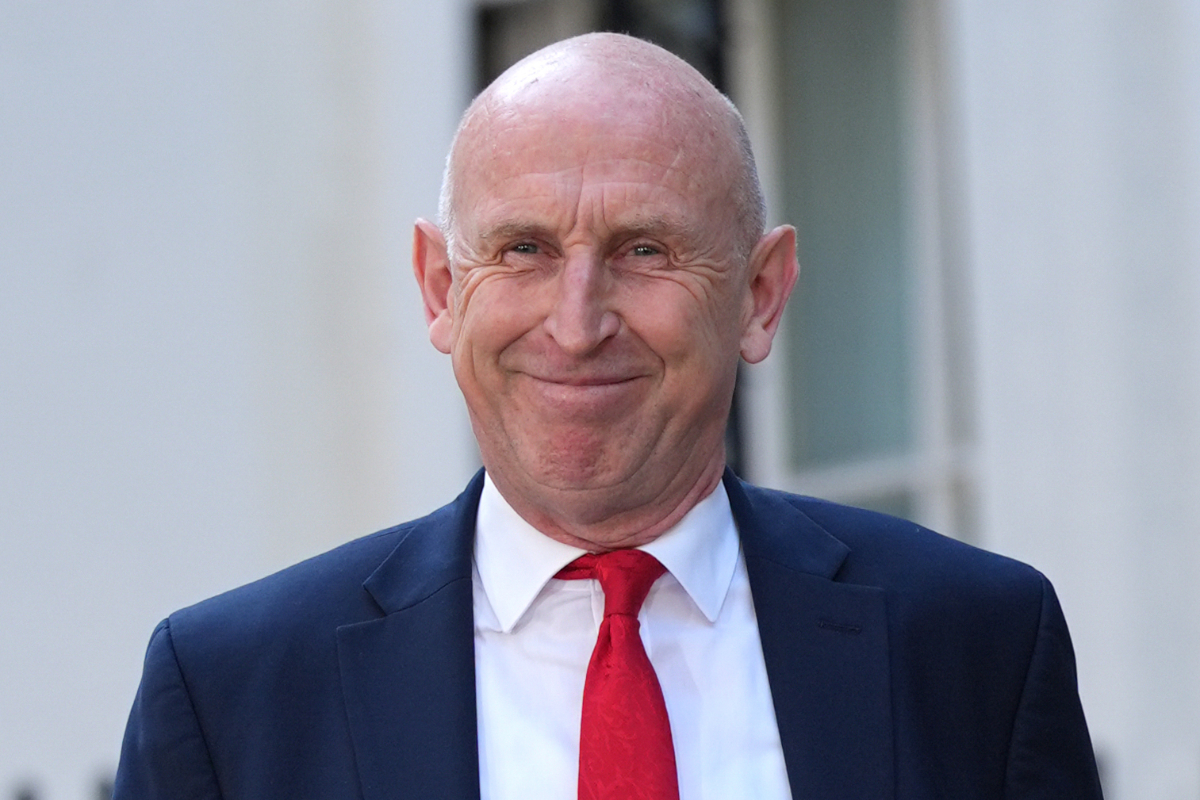
Photo via The Guardian

UK economy grows by 0.7% in third quarter despite high oil prices

Read the original at The Guardian ↗
Cite

Inman, P. (2026, November 12). UK economy grows by 0.7% in third quarter despite high oil prices. The Guardian. https://www.theguardian.com/business/2026/nov/12/uk-economy-grows-third-quarter-oil-price-ons-gdp

Dated from the outlet's own feed. Check the original for its byline.

The Guardian · collected 2026-11-12 · by Phillip Inman

Quick Summary

The UK economy grew by 0.7% in the third quarter, as predicted by financial analysts, despite high oil and gas prices following conflicts in the Middle East. The Office for National Statistics reported that economic growth was 0.2% in September but revised August's growth rate to zero from an initial estimate of 0.1%. Oil prices rose above $100 a barrel in September while natural gas prices were about three times higher than in February before the conflict.
Written by AI on 2026-11-12, from this article's own text only (the story summary below draws on all the coverage).
See how they differ ↓

AI analysis

Story summary

The UK economy expanded by 0.7% in the third quarter of 2026 (between July and September), marking its fastest rate of quarterly growth in more than two years. This expansion accelerated from the 0.5% growth recorded in the previous quarter, confirming forecasts made by City analysts. The Office for National Statistics attributed this growth to a spending drive on AI and defence, as well as a boost in the hospitality and healthcare sectors. Despite these gains, a re-escalation of conflict in the Middle East caused a jump in the cost of petrol, diesel, and natural gas, which acted to restrict some of the potential growth. The UK also benefited from its burgeoning green energy industry to help shield the economy from these energy shocks. While some observers point to a 29.9% growth in aircraft and spacecraft repair and a boost in aerospace manufacturing since Labour took power, critics argue that the growth figures may not reflect improved living standards. Additionally, shadow chancellor Andrew Griffith argued that the rising GDP figures are not a direct result of Labour policies but rather a sign of resilience in the face of economic headwinds.

Written for “UK economic growth” on 2026-11-20, grounded in this article and the 18 other(s) covering the same event.

How they differ

6 outlets covered “UK economic growth”.

What each outlet says

One AI summary per outlet of its latest article on this story, written from that article alone and checked against it. Open the article for the outlet's own words.

The GuardianThis outlet12 Nov

The UK economy grew by 0.7% in the third quarter, as predicted by financial analysts, despite high oil and gas prices following conflicts in the Middle East. The Office for National Statistics reported that economic growth was 0.2% in September but revised August's growth rate to zero from an initial estimate of 0.1%. Oil prices rose above $100 a barrel in September while natural gas prices were about three times…

UK economy grows by 0.7% in third quarter despite high oil prices (this article)2 articles from The Guardian on this story

Evening Standard12 Nov

The UK economy grew by 0.7% in the third quarter between July and September 2026, according to the Office for National Statistics (ONS), marking its fastest quarterly rate since early 2024. This growth was largely driven by a surge in tech services linked to AI adoption and cloud computing, with computer programming and consultancy growing by 4.4%. Prime Minister Andy Burnham welcomed the figures but acknowledged…

UK economy grows at fastest quarterly rate in more than two years →7 articles from Evening Standard on this story
City A.M.13 Nov

Shadow Chancellor Andrew Griffith offers an analysis arguing that recent GDP growth is not a result of Labour's policies but rather a reflection of a mixed economic picture. While the UK saw a 0.7 per cent growth in Q3 of 2026, the author highlights that this was driven primarily by the tech and business services sectors—specifically the AI boom—rather than domestic sectors like construction, which shrank by 0.7 per…

Britain is growing in spite of Labour, not because of it →5 articles from City A.M. on this story
BBC12 Nov

This analysis argues that the UK economy is demonstrating unexpected resilience despite global energy disruptions and rising borrowing costs. The UK grew at a rate of 0.7% in the three months to September, significantly exceeding the 0.1% forecast and making it the second fastest-growing G7 economy after the US. The author attributes this "strikingly strong" performance to spending on AI and technology, a resilient…

Faisal Islam: Why the UK economy is surprisingly resilient →2 articles from BBC on this story
Daily Mail13 Nov

This opinion piece argues that the 0.7 per cent economic growth recorded between July and September is a "cynical trick" rather than a sign of genuine prosperity. The author highlights that while public sector investment jumped by almost 14 per cent, business investment grew by only 0.4 per cent, suggesting the figures rely on extravagant government spending and a volatile AI sector. The piece critiques Chancellor…

DAILY MAIL COMMENT: There might be good news on the economy...but Labour's 'growth' is just a cynical trick →2 articles from Daily Mail on this story
Semafor12 Nov

The UK and Germany are both projected to exceed previous growth forecasts despite broader economic headwinds and stagnation in Europe. The UK reported its fastest quarterly growth in years due to AI-driven spending, consumer resilience against energy shocks, and a growing green energy industry. German experts project the economy will grow at more than twice the rate expected in the spring, driven by significant…

UK and Germany expected to beat growth forecasts →

Where they agree and split

Framing

How the first headlines put it

Stated as fact5
The headlines (5)

UK economic growth expected to have picked up amid AI and defence drive Evening Standard · stated as fact

FTSE 100 Live: Stocks to gain; economic growth tipped to speed up City A.M. · stated as fact

UK economy grows at fastest rate for more than two years BBC · stated as fact

UK economy grows by 0.7 per cent as spending on AI and defence staves off cost-of-living slowdown Daily Mail · stated as fact

UK economy grows by 0.7% in third quarter despite high oil prices The Guardian · stated as fact

The full story: what happened, how it changed, and all 19 articles →

Compared with similar articles

This article reads unscored and hedges 0% of its claims. Each row says how that neighbour differs.
BBC News
Hedges 1 of 3 claims Outlet record 65/100
Evening Standard
Hedges 1 of 16 claims Outlet record 64/100
Evening Standard
Hedges 1 of 16 claims Outlet record 64/100
City AM
Hedges 4 of 17 claims Outlet record 95/100
Daily Mail
Leans right Hedges 0 of 6 claims Outlet record 69/100
Evening Standard
Hedges 2 of 11 claims Outlet record 64/100
Evening Standard
Hedges 2 of 11 claims Outlet record 64/100
Evening Standard
Hedges 0 of 3 claims Outlet record 64/100
Evening Standard
Hedges 1 of 20 claims Outlet record 64/100
Evening Standard
Hedges 0 of 10 claims Outlet record 64/100

Story

UK economic growth
Economy/Business · 19 article(s) covering the same event. Compare every outlet's account →
How this article was measured signals, leaning charts, publisher record, byline, topics and claims

Signals How these are calculated →

Claims extracted
8
sentences that state something as happening or true
Uncertain
0%
0 of 8 hedged ("reportedly", "may", "according to")
Leaning
not political
takes no side on a contested political question
Publisher signals
64/100
The Guardian's corrections and hedging, across everything collected from it. Not a measure of accuracy.
Outlets on this story
19
Economy/Business
Same framing elsewhere
1
articles that frame the event the way this one does
Analyzed 2026-11-12 · how these are computed

How this is being covered How these are calculated →

Article leaning vs. publisher reliability
Source leaning vs. consistency

Publisher

The Guardian · 3728 article(s) · 8 correction(s) detected
Running correction rate · 8 correction(s)

Who wrote this

Phillip Inman
12 article(s) here · 0 carrying a prediction
With inflation also at 3.5% and expected to rise for a fourth consecutive month to 3.7% when figures are released on Wednesday, the average worker faces a fall in real wages growth to zero or even into negative territory.
With the latest forecasts by the central bank showing inflation rising to 5% next spring, another increase in the cost of borrowing seems inevitable, and may come as soon as next month.
The Bank of England will probably need to raise interest rates next month and again in early 2027 to combat rising inflation, its chief economist has said.
“Inflation is set to rise above 4% in the new year, just as most pay awards for 2027 are being agreed, so the risk that it becomes embedded is rising. “
Many people will be incredulous when they hear of the decision to increase the cost of borrowing by 0.25 percentage points, looking around their neighbourhood for signs of a booming economy. The official figures show the economy has proved resilient in response to the jump in oil and gas prices after the outbreak of war in Iran, but UK high streets are struggling and the underlying drivers of inflation are absent.
The Resolution Foundation said on Thursday that measures to ease household gas and electricity costs would still leave energy bills higher this year than during the last energy shock.
John Healey will present his first budget on Wednesday, which will set the tone for Andy Burnham’s premiership.
The threat of a renewed round of inflation from the persistently high cost of oil has spooked investors, who believe central banks will be forced to raise rates in the coming months to prevent price increases from becoming embedded.
The UK is losing out on annual exports to the EU that could be worth as much as £6.5bn without a deal with Brussels that allows manufacturers to jettison duplicate product testing.
Attacks on the government’s independent economic forecaster from left and right of the political spectrum are akin to “shooting the messenger”, according to an influential group of MPs.
Also by Phillip Inman
Nothing else under this byline is closely related to this article, so these are simply their most recent.
All 12 articles by Phillip Inman →

Topics

City Iran Israel ONS The Office for National Statistics

Subjects

ONS ORG · 2× City GPE · 1× Iran GPE · 1× Israel GPE · 1× John Healey PERSON · 1× The Office for Budget Responsibility ORG · 1× The Office for National Statistics ORG · 1× the Bank of England ORG · 1×

Narrative

The Office for National Statistics said a jump in the cost of petrol, diesel and natural gas prices following the re-escalation of the conflict in the Middle East played an important role in restricting economic growth in the three months to the end of September.
framing: assertive · carried by 1 article(s) · first seen 2026-11-12
2026-11-12 · The Guardian
UK economy grows by 0.7% in third quarter despite high oil prices · assertive framing

Claims (8 extracted, 0 hedged)

The UK economy grew by 0.7% in the third quarter, as expected by City analysts, confirming that consumers and businesses remained resilient despite high oil and gas prices. asserted
consumers → grow → prices
The Office for National Statistics said a jump in the cost of petrol, diesel and natural gas prices following the re-escalation of the conflict in the Middle East played an important role in restricting economic growth in the three months to the end of September. asserted
jump → say → September
In a boost to the chancellor, John Healey, the ONS also said the economy grew by 0.2% in September, though the ONS revised down the growth rate in August from 0.1% to zero. asserted
ONS → say → zero
Economists had expected month-on-month growth of 0% in September and a jump of 0.7% over the three months to the end of September. asserted
Economists → expect → September
Oil prices have dropped in recent days, but in September rose above $100 a barrel, remaining above that threshold until earlier this month. asserted
prices → drop → month
The Office for Budget Responsibility said at the time of the budget in November that it expected the economy to expand by 1.2% this year, which already looks out of date as growth continues to exceed expectations. asserted
growth → say → expectations
Policymakers at the Bank of England voted last week to raise interest rates by a quarter of a percentage point to 4% to cool inflationary pressures in the economy. asserted
Policymakers → vote → economy
Inflation has risen this year mostly in response to higher motor fuel prices, which in the UK have pushed the cost of petrol above £1.70 a litre and diesel towards an average of £2 a litre. asserted
which → rise → 2
Give feedback · no sign-in needed

No sign-in needed for now. Your note is sent without a name, so it cannot be answered.

History Support