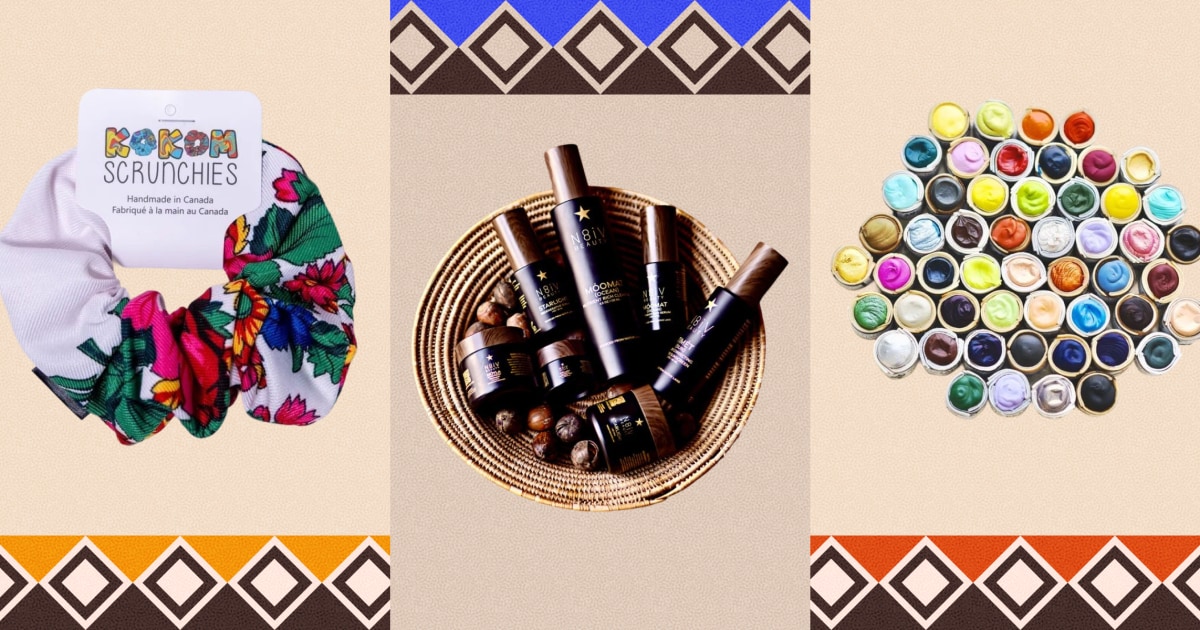
Mya Beaudry is 15 years old and already six years into owning her business, Kokom Scrunchies.
asserted
Beaudry → own → business
Beaudry is Algonquin from Kitigan Zibi Anishinabeg First Nation, an identity she says is a big part of who she is and “at the heart of Kokom Scrunchies.”
asserted
she → say → Scrunchies
Beaudry’s mother, Marcie, taught her to sew at nine years old as a creative way to raise money and host Indigenous youth events in her community.
asserted
mother → teach → community
She began making scrunchies from fabric inspired by the floral scarves commonly worn by kokoms, which means “grandmother” in Algonquin, says Beaudry.
asserted
Beaudry → begin → Algonquin
Indigenous peoples speak more than 4,000 of the world’s approximately 6,700 languages, but the United Nations estimates that one Indigenous language dies every two weeks.
asserted
language → speak → languages
Many of the Indigenous business owners I spoke to say languages are central to Indigenous peoples’ identities, cultures and worldviews, and several on this list incorporate their cultures, traditions and communities into their work.
asserted
several → speak → work
Like Beaudry, many Indigenous business owners on this list draw inspiration from their Indigenous identities and traditions.
asserted
owners → draw → identities
In the United States, November is Native American Heritage Month, but you can support Indigenous-owned businesses year-round.
asserted
you → support → businesses
I talked with more than 60 business owners about their Indigenous identity, biggest challenges and the inspiration behind their brands, and compiled a list of Indigenous-owned brands spanning the United States, Canada, Australia and Latin America that we think you should know about.
asserted
you → talk → that
For its business statistics, the Census Bureau defines ownership as having at least 51% of the stock or equity in a business, and its racial ownership categories include American Indian or Alaska Native businesses.
asserted
categories → define → businesses
For this story, I used that majority-ownership definition and confirmed with each brand that it’s at least 51% Indigenous-owned.
asserted
it → use → brand
A vivid dream of young Indigenous girls dolled up with colorful lip glosses is what led Anishinaabe founder Jenn Harper to launch Cheekbone Beauty, which offers lipstick, eyeshadow, blush and other makeup products.
asserted
which → dolle → lipstick
Harper’s goal was to create a beauty brand where Indigenous shoppers could see themselves represented.
uncertain
themselves → create → brand
Cheekbone is also a part of the PACT Mail Back Program, where customers can ship empty products like lipstick and highlighter back to Cheekbone to be properly recycled.
asserted
customers → ship → Cheekbone
Ruth-Ann Thorn, who is Payómkawichum and Luiseño, was shopping at Sephora with her daughter when she realized the lack of Indigenous representation in beauty.
asserted
she → shop → beauty
“We were standing in a store filled with beauty brands, on our own ancestral continent, and I couldn’t point to a brand that represented our people,” she says.
asserted
she → stand → people
“I wanted my daughter to see that we belong in those spaces and that [our] knowledge [of plants and nature] has value.”
asserted
knowledge → want → value
This inspired Thorn to create N8iV, offering serums, cleansers and more.
asserted
This → inspire → serums
In 2018, founder Lynn-Marie Angus was working in high-rise construction, facing a great deal of racism and sexism from colleagues, according to Angus.
uncertain
Angus → work → Angus
Her sister was pregnant and at risk of becoming homeless, so they came together to create Sisters Sage, a wellness brand making soaps, smokeless smudge sprays and other bath, body and wellness products to embrace the sisters’ Indigenous Gitxaała, Nisga’a and Métis cultures and traditions..
asserted
they → become → cultures
Sister Sky was founded 27 years ago by sisters Monica Simeon and Marina TurningRobe, members of the Spokane Tribe of Indians.
asserted
Sky → found → Indians
They have mixed texture hair and struggled to find products that worked, inspiring them to create hair care designed for a variety of textures.
asserted
that → mix → textures
“There was a whole community of women whose hair care needs weren’t being met,” says Simeon.
asserted
Simeon → be → women
They’ve spent over two decades growing their company and say the biggest challenge is finding what makes the products special to others.
asserted
products → spend → others
“Over the years, we’ve learned that you don’t have to appeal to everyone.
asserted
you → learn → everyone
What matters is being genuine about what you offer and building a community of customers and partners who truly value it,” Simeon and TurningRobe told me in a joint email.
asserted
Simeon → matter → email
Through these challenges, the sisters say their heritage has kept them grounded.
asserted
heritage → say → them
“One of the greatest lessons our culture has taught us is the importance of community.
asserted
culture → teach → community
We’re all part of something bigger than ourselves.”
asserted
We → ’re → ourselves
Sister Sky offers a variety of hair products, including shampoo, conditioner, hair mist, detangler and hair brushes.
asserted
Sky → offer → shampoo
Dr. Leigh Joseph is an ethnobotanist and researcher from the Squamish Nation who turned to Indigenous plant science to formulate skin care products, including cleansers, face creams and bath salts.
asserted
who → turn → cleansers
Products incorporate plants like wild rose, devil’s club, stinging nettle and sage.
asserted
Products → incorporate → rose
Christine Marie founded Awasis, a Cree word meaning “child,” while she was a stay-at-home mother to her two children.
asserted
she → found → children
Marie began sewing bibs and aprons while caring for her children, a passion project that grew into a line of onesies, t-shirts and blankets for newborns, toddlers and children four years and older.
asserted
that → begin → children
Awasis also carries select t-shirts in adult sizes.
asserted
Awasis → carry → sizes
Ginew originated from co-founders Erik Brodt and Amanda Bruegl’s wedding ceremony.
asserted
Ginew → originate → ceremony
“My father shot a buffalo for the wedding and we prepared the hide from the buffalo in the garage,” says Brodt.
asserted
Brodt → shoot → garage
Then, the couple made the hide into belts as a meaningful gift to those who helped with the ceremony.
asserted
who → make → ceremony
During a trip to West Texas, Brodt began thinking about the clothing people needed as their work shifted from hunting to agriculture.
asserted
work → begin → agriculture
“The Heritage Coat, our first apparel item, [was born] on a napkin in the common space at El Cosmico,” says Brodt
asserted
Brodt → bear → Cosmico
…and 78 more, not listed.
 The Aporia