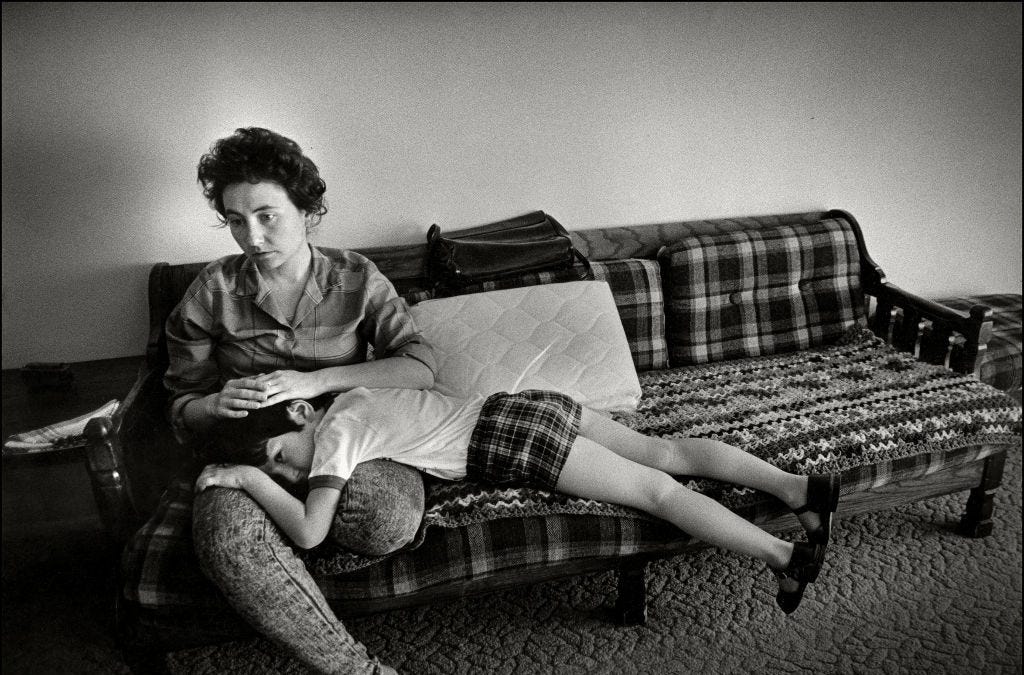
Photo via The Free Press

Tough Love: My Kid Has Gone ‘No Contact’

Read the original at The Free Press ↗
Cite

Shrier, A. (2026, November 12). Tough Love: My Kid Has Gone ‘No Contact’. The Free Press. https://www.thefp.com/p/tough-love-kid-parenting-abigail-shrier

Dated from the outlet's own feed. Check the original for its byline.

The Free Press · collected 2026-11-12 · by Abigail Shrier analysis

Quick Summary

A father writes to an advice columnist about his 21-year-old daughter who hasn’t communicated with him or his wife for a year, except for brief exchanges on practical matters and a recent request to retrieve a personal item. The daughter had a significant argument with her mother that involved the police and an ambulance, after which she stopped contacting her family. The columnist suggests that the daughter's behavior is typical of young adults today who distance themselves from over-involved parents, reflecting broader trends in parental over-monitoring and subsequent estrangement.
Written by AI on 2026-11-15, from this article's own text only (the story summary below draws on all the coverage).

AI analysis

Story summary

A 21-year-old daughter has not spoken to her parents for nearly a year, maintaining limited contact only on practical matters. The daughter, after an argument with her mother that escalated to calling the police and leaving in an ambulance (though no physical altercation occurred), has blocked her parents on social media and moved an hour and a half away. She recently asked her father to retrieve a personal item left behind in their home for an upcoming internship, describing her prolonged absence as an "active effort to distance myself from our family." The parents are conflicted about how to respond to this request, feeling it may be giving in but also considering it petty not to do so. The daughter has a job and has declared personal bankruptcy, although the specifics of her current situation remain undisclosed to her parents.

Written for “My Kid Has Gone No Contact” on 2026-11-26, grounded in this article and the 0 other(s) covering the same event.

Compared with similar articles

Nothing to compare against. No article is close enough to this one for the pipeline to have linked or judged the pair.

Story

My Kid Has Gone No Contact
Other · 1 article(s) covering the same event.
How this article was measured signals, leaning charts, publisher record, byline, topics and claims

Signals How these are calculated →

Claims extracted
19
sentences that state something as happening or true
Uncertain
0%
0 of 19 hedged ("reportedly", "may", "according to")
Leaning
not political
takes no side on a contested political question
Publisher signals
96/100
The Free Press's corrections and hedging, across everything collected from it. Not a measure of accuracy.
Outlets on this story
1
Other
Same framing elsewhere
1
articles that frame the event the way this one does
Analyzed 2026-11-15 · how these are computed

How this is being covered How these are calculated →

Article leaning vs. publisher reliability
Source leaning vs. consistency

Publisher

The Free Press · 564 article(s) · 0 correction(s) detected
No corrections detected for this publisher. That may mean careful reporting, or simply that nothing has been checked.

Who wrote this

Abigail Shrier
5 article(s) here · 1 carrying a prediction
We met and married in the U.S., but four years ago we decided we wanted to move to Australia to raise our family—so that our kids could grow up near cousins; my husband could have a job that didn’t require him to travel; and I could stay home with the kids full-time until they started school.
2026-11-19 · assertive framing · Tough Love: I Live in Australia. My Parents Hate It.
Yesterday she wrote to ask if I would bring her one of her belongings that she left behind in our house.
2026-11-12 · assertive framing · Tough Love: My Kid Has Gone ‘No Contact’
Other kids his age with the same syndrome are doing all these things, though they may be a bit behind their peers cognitively.
2026-10-29 · assertive framing · Tough Love: Is Having a Disabled Kid Making Me Bitter?
Some of you may know that the idea for this advice column came from a single paragraph, which Abigail wrote last spring.
2026-09-11 · assertive framing · Tough Love: My Brother’s Love Life Is Going Nowhere
I didn’t think I could find anyone else better than him, so I stuck around as long as he would have me.
2026-09-04 · assertive framing · Tough Love: Did My Ex-Husband Ever Love Me?
Also by Abigail Shrier
Tough Love: Did My Ex-Husband Ever Love Me?
2026-09-04 · The Free Press
Nothing else under this byline is closely related to this article, so these are simply their most recent.

Topics

the Foreign Service the Merchant Marine the Peace Corps

Subjects

Abigail PERSON · 1× Kidless PERSON · 1× Kidless in New England PERSON · 1× the Foreign Service ORG · 1× the Merchant Marine ORG · 1× the Peace Corps ORG · 1×

Narrative

I’ll spare you the full details, but she had an argument with her mother that ended with her calling the police and leaving in an ambulance (nothing physical had occurred between them—she essentially used the ambulance to get a ride off our property).
framing: assertive · carried by 1 article(s) · first seen 2026-11-15
Yesterday she wrote to ask if I would bring her one of her belongings that she left behind in our house.
2026-11-15 · The Free Press
Tough Love: My Kid Has Gone ‘No Contact’ · assertive framing

Claims (19 extracted, 0 hedged)

My 21-year-old daughter pretty much hasn’t spoken to me or my wife in one year. asserted
daughter → speak → year
I say “pretty much” because she has exchanged short texts on practical matters, and she did agree to see us when we offered to let her say goodbye to the family dog, who was dying. asserted
who → say → dog
But otherwise she won’t tell us anything about what she’s doing or where she’s living. asserted
she → tell → what
She has blocked us on social media, but we know from other family members that she has a job, has declared personal bankruptcy, and is living an hour and a half away. asserted
she → block → bankruptcy
Yesterday she wrote to ask if I would bring her one of her belongings that she left behind in our house. asserted
she → write → house
She’s doing an internship in a few days and wants the item for the new job. asserted
She → do → job
She called the request “a shot in the dark,” and described her behavior over the past year as “an active effort to distance myself from our family.” asserted
She → call → family
Doing her this favor feels like giving in. asserted
Doing → do → favor
But not doing it feels petty, as does trying to use it as leverage to get her to open up about her reasons for walking away. asserted
her → do → reasons
I’ll spare you the full details, but she had an argument with her mother that ended with her calling the police and leaving in an ambulance (nothing physical had occurred between them—she essentially used the ambulance to get a ride off our property). asserted
she → spare → property
When we subsequently refused a “safety plan” to allow her to return home, she basically went “no contact,” as the kids say. asserted
kids → refuse → contact
Now she’s asking us for this favor, and I just don’t know what to do. asserted
I → ask → what
Each was an attempt to put down stakes on a tract of adulthood. asserted
Each → put → adulthood
The calling was always the same: to go where your parents can’t follow. asserted
parents → go → ?
Today, young adults don’t leave their parents’ home—not really. asserted
adults → leave → home
From the time they were little, we conditioned them to life inside the cage: tracked, monitored, and, by the standards of past generations, unimaginably tied to their mothers’ apron strings. asserted
we → condition → strings
Even in college, they check in constantly via text. asserted
they → check → text
This is the first generation to hand their phones to a professor or boss, with Mom waiting on the line to argue on the ostensible adult’s behalf. asserted
Mom → hand → behalf
The anxious over-involvement of today’s parents turns out to be intimately connected to the rise in estrangement—young adults going “no contact” and cutting off their parents. asserted
adults → turn → parents

Give feedback · no sign-in needed

No sign-in needed for now. Your note is sent without a name, so it cannot be answered.

History Support