Photo via NPR

These two voter turnout trends explain what happened across the South in the election

Read the original at NPR ↗
Cite

Fowler, S. (2026, November 13). These two voter turnout trends explain what happened across the South in the election. NPR. https://www.npr.org/2026/11/13/nx-s1-6038701/midterm-election-voter-turnout-south

Dated from the outlet's own feed. Check the original for its byline.

NPR · collected 2026-11-13 · by Stephen Fowler

Quick Summary

NPR analyzed voter turnout data to explain Democratic victories in southern states during the midterm elections. In Louisiana, Mississippi, Alabama, Georgia, South Carolina, and North Carolina, turnout dropped by 19% in counties won by Kamala Harris compared to 26% in counties won by Trump. This differential turnout was a key factor in Democrats flipping Senate seats in North Carolina, South Carolina, and Mississippi. Additionally, majority-Black counties had higher voter turnout, with some seeing significant increases, such as Clay County, Mississippi, which saw a 17-point increase in voter turnout.
Written by AI on 2026-11-15, from this article's own text only (the story summary below draws on all the coverage).

AI analysis

Story summary

In the 2026 midterm elections, Democratic victories in the South were significantly influenced by voter turnout trends. According to an NPR analysis, counties that voted for former Vice President Kamala Harris in the 2024 presidential election maintained higher voter participation rates compared to those that voted for President Trump. In Louisiana, Mississippi, Alabama, Georgia, South Carolina, and North Carolina, turnout dropped by 19% in Harris-won areas and 26% in Trump-won areas. This differential turnout contributed to Democrats flipping Senate seats in North Carolina, South Carolina, and Mississippi, and narrowed the expected margins in several races. Across these six states, the swing towards Democrats averaged 22 points, exceeding the national average swing of 14.5 points. The surge in Black voter participation, partly due to a Supreme Court decision that weakened parts of the Voting Rights Act, played a crucial role in these outcomes.

Written for “Voter Turnout Trends South Election” on 2026-11-21, grounded in this article and the 0 other(s) covering the same event.

Compared with similar articles

This article reads leans left and hedges 3% of its claims. Each row says how that neighbour differs.
ABC News (US)
Hedges 7 of 49 claims Outlet record 66/100
“The articles discuss different aspects of the election trends in the South and do not describe the same specific incident or occurrence.”

Story

Voter Turnout Trends South Election
Politics · 1 article(s) covering the same event.
How this article was measured signals, leaning charts, publisher record, byline, topics and claims

Signals How these are calculated →

Claims extracted
31
sentences that state something as happening or true
Uncertain
3%
1 of 31 hedged ("reportedly", "may", "according to")
Leaning
Leans left
of the writing, not the subject · beta estimate
Publisher signals
60/100
NPR's corrections and hedging, across everything collected from it. Not a measure of accuracy.
Outlets on this story
1
Politics
Same framing elsewhere
1
articles that frame the event the way this one does
Analyzed 2026-11-15 · how these are computed

How this is being covered How these are calculated →

Article leaning vs. publisher reliability
Source leaning vs. consistency

Publisher

NPR · 1384 article(s) · 5 correction(s) detected
Running correction rate · 5 correction(s)

Who wrote this

Stephen Fowler
11 article(s) here · 0 carrying a prediction
Democrats will enter the next Congress with one of the largest majorities in a generation, flipping dozens of House districts and at least seven Senate seats in mainly Trump-won communities.
In the aftermath of a Supreme Court ruling earlier this year that gutted part of the Voting Rights Act, Republican-led Southern states rushed to redraw House maps to create additional seats that would better withstand a midterm environment where voters punished the party in power.
Votes are still being counted to see who will represent Mississippi in the Senate Votes are still being counted to see who will represent Mississippi in the Senate Audio will be available later today.
Four types of House races to watch on election night to know how it might go Midterms coverage: Live results | What to know | Stories around the country Stay connected:
Loading... That includes more than $10 million each in toss up districts in Michigan, North Carolina, New York and Florida; seven figure ad buys in deep-red communities across Tennessee, Oklahoma and Arkansas and last-minute resources to districts where gerrymandering by Republicans could backfire.
"We are confident that Mississippians will once again send Cindy Hyde-Smith to the U.S. Senate," Jake Monssen said.
With just under a month to go until Election Day, financial decisions made by both parties appear to suggest the question being asked is not if Democrats take control of the House, but how large the majority may be.
Puccini's opera "Nessun dorma" ends with a triumphant proclamation: "vincerò," or "I will win!"
Still, polling averages — which are a snapshot in time — suggest the likeliest outcome is that Democrats take control of the House, as more voters say they would prefer to have a Democrat represent them in Congress than a Republican.
Also by Stephen Fowler
Nothing else under this byline is closely related to this article, so these are simply their most recent.
All 11 articles by Stephen Fowler →

Topics

Democrats Louisiana Mississippi North Carolina Republican

Subjects

Democratic NORP · 6× Louisiana GPE · 6× Trump PERSON · 6× North Carolina GPE · 5× Republican NORP · 5× Democrats NORP · 4× Mississippi GPE · 4× Senate ORG · 4× Georgia GPE · 3× South Carolina GPE · 3×

Narrative

Black voters showed up In special elections and primaries leading up to the midterms, voting data and polls showed a surge in Black voter participation, spurred in part by a Supreme Court decision that gutted part of the Voting Rights Act.
framing: assertive · carried by 1 article(s) · first seen 2026-11-15

Claims (31 extracted, 1 hedged)

These two voter turnout trends explain what happened across the South in the election Democratic victories in the South this year were driven just as much by who showed up to vote as who stayed home, according to an NPR analysis of turnout data. Loading... Midterm elections normally have lower voter participation than presidential contests. uncertain
elections → explain → contests
But from Louisiana to the Carolinas, counties that voted for former Vice President Kamala Harris in 2024 came closer to matching — and in some cases exceeding — presidential turnout. asserted
that → vote → turnout
At the same time, counties won by President Trump saw a much sharper decline in turnout and fewer Republican votes. asserted
counties → win → turnout
In six southern states — Louisiana, Mississippi, Alabama, Georgia, South Carolina and North Carolina — turnout dropped by 19% in Harris-won counties compared to 26% in Trump-won counties. asserted
turnout → drop → counties
(In Louisiana, counties are called parishes). asserted
counties → call → Louisiana
Across the South, the six states analyzed swung an average of 22 points towards Democrats, larger than the national swing of about 14.5 points. asserted
states → analyze → points
This differential turnout was a key factor in Democrats flipping Senate seats in North Carolina, South Carolina and Mississippi, and contributed to the closer-than-expected margin in Louisiana's Senate race. asserted
Democrats → flip → race
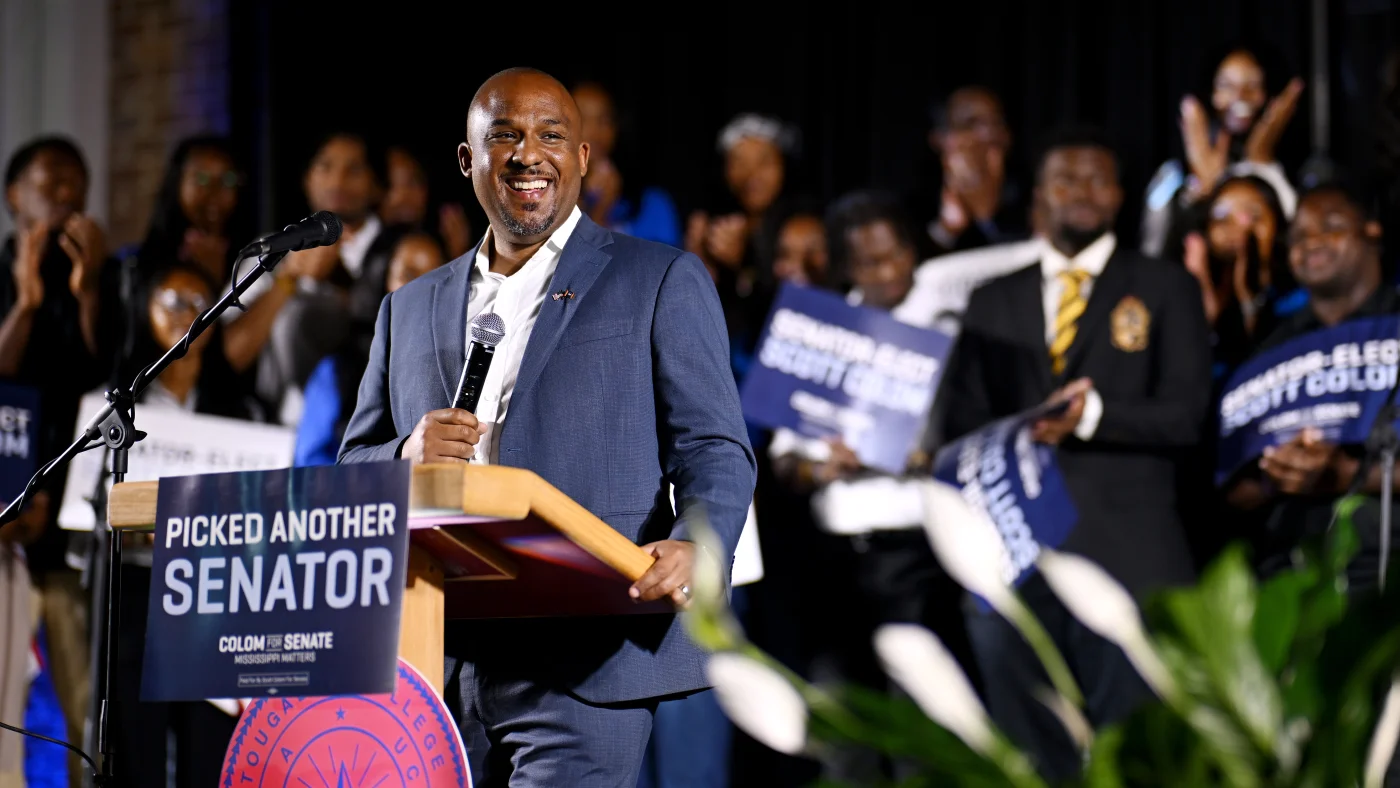
In Mississippi, Democrat Scott Colom outperformed Harris, earning roughly 8,100 more votes than she did in 2024. asserted
she → outperform → 2024
Colom's margin over incumbent Republican Sen. Cindy Hyde-Smith is just over 5,600 votes as final ballots are being tallied. asserted
ballots → tally → Smith
Democratic Senate nominees in those six states earned more raw votes than Harris in 170 counties. asserted
nominees → earn → counties
On the flip side, the Republican nominees garnered hundreds of thousands fewer votes than Trump. asserted
nominees → garner → Trump
Black voters showed up In special elections and primaries leading up to the midterms, voting data and polls showed a surge in Black voter participation, spurred in part by a Supreme Court decision that gutted part of the Voting Rights Act. asserted
that → show → Act
The Louisiana v. Callais decision led to changed congressional maps across the South, including Tennessee, Alabama, Louisiana and North Carolina. asserted
decision → lead → Tennessee
After redrawing boundary lines in a way that aimed to elect an 11-3 Republican majority delegation, North Carolina Democrats are now on track to hold an 11-3 majority. asserted
Democrats → redrawe → majority
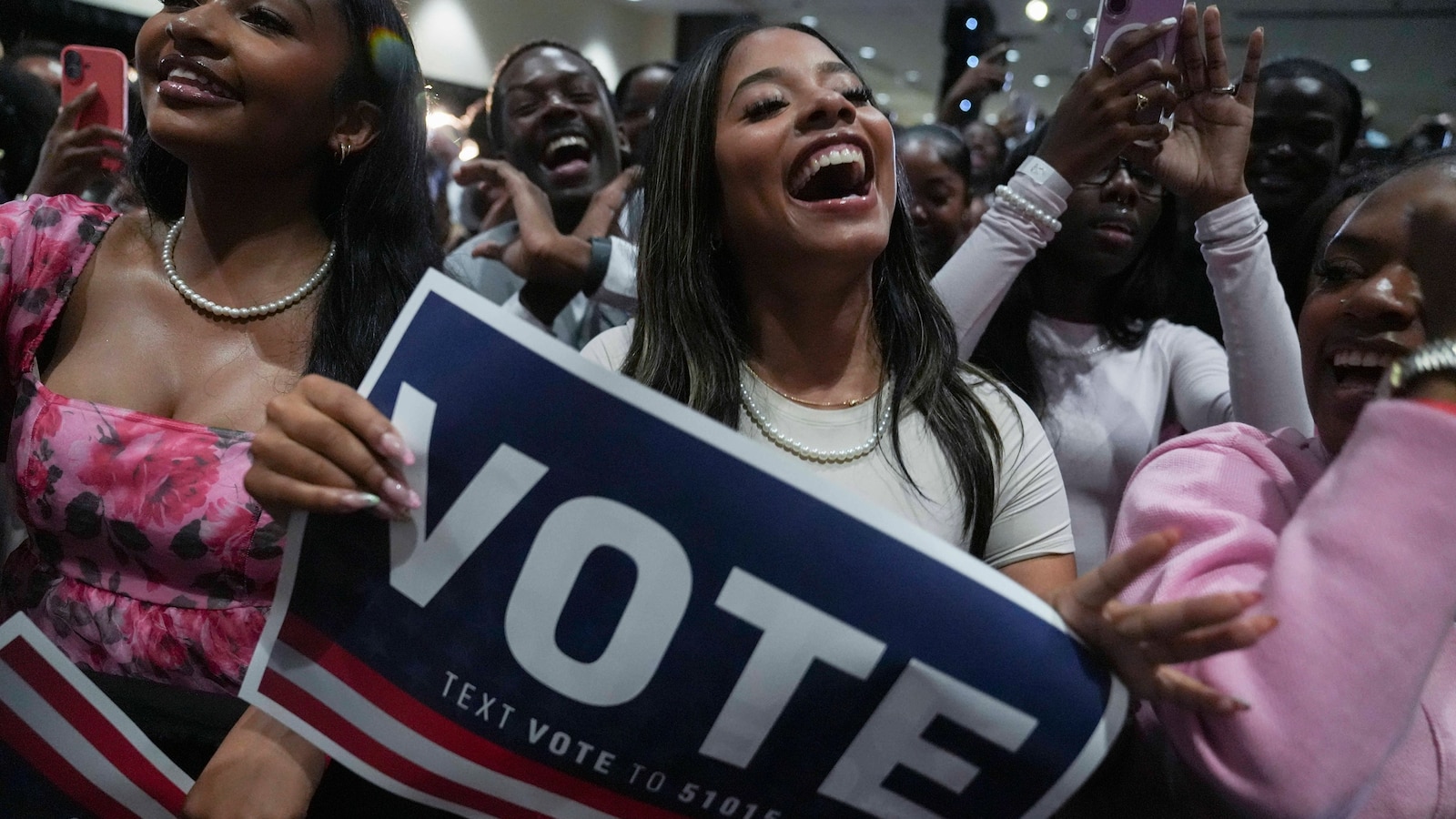
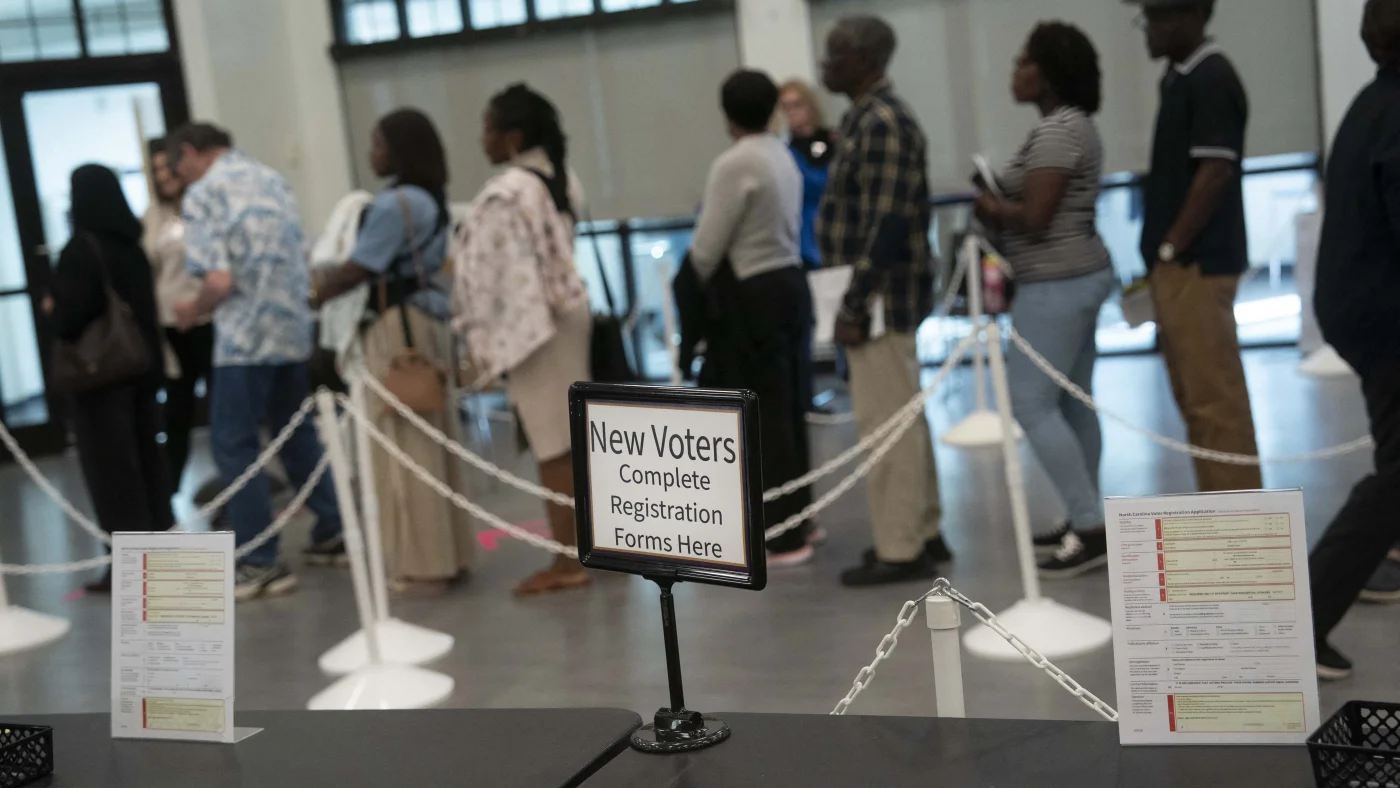
Loading... Majority-Black counties overall had a higher voter turnout with about 85% compared to 76% for white, non-Hispanic majority counties. asserted
counties → load → counties
Sixteen majority-Black counties had more Democratic votes than during the 2024 election, with 12 of them in Mississippi. asserted
counties → have → Mississippi
Clay County, Miss., had the largest voter turnout increase — by 17 points from 2024 to 2026. asserted
County → have → 2026
Beyond majority-Black turnout, Democratic candidates in these southern states benefitted from a smaller drop in turnout from the 2024 election. asserted
candidates → benefit → election
In Georgia, Democratic Sen. Jon Ossoff finished with roughly 79,000 fewer votes than former Vice President Kamala Harris won in the state two years prior, despite there being more than a million fewer total votes overall. asserted
Harris → finish → state
All 159 counties in Georgia shifted towards Democrats. asserted
counties → shift → Democrats
Ossoff flipped a dozen of them, including suburban Fayette County, on the way to a 14 point victory. asserted
Ossoff → flip → victory
South Carolina had some of the largest Democratic voter turnout, with Greenville, Spartanburg, and Lexington counties having the largest increases in raw Democratic votes from the 2024 election. asserted
Carolina → have → election
Greenville, which backed Trump by 20 points two years ago, flipped to support Sen.-elect Annie Andrews by about two points. asserted
which → back → points
Republicans voters did not Nowhere was the Republican drop off more stark than in North Carolina, where former Gov. Roy Cooper flipped the Senate race by a 20 point margin. asserted
Cooper → do → margin
Former Republican National Committee Chair Michael Whatley earned 1.25 million fewer votes than Trump did when he carried the state in 2024, a roughly 43% drop in GOP support. asserted
he → earn → support
No county or parish across these southern states came close to matching Trump 2024 vote totals. asserted
county → come → totals
The lowest drop off came in Greene County, Ga. with 83%, the only one of 518 counties where Republicans earned more than 80% of Trump's 2024 raw votes. asserted
Republicans → come → votes
The largest drop off came in North Carolina, which saw only two-thirds of the Republican votes they did in 2024. asserted
they → come → 2024
Wake and Mecklenburg counties, home to the two largest cities — Raleigh and Charlotte — saw the biggest drops, with about 100,000 and 90,000 fewer GOP voters respectively. asserted
counties → see → voters
Atlanta and its suburbs also saw a notable decline in support for Republicans, with Fulton, Gwinnett, Cobb, DeKalb and Cherokee counties losing between 35,000 and 77,000 GOP votes each. asserted
counties → see → votes
Democrats saw smaller losses in those areas, with slight gains in votes for Gwinnett and Cherokee counties. asserted
Democrats → see → counties

Give feedback · no sign-in needed

No sign-in needed for now. Your note is sent without a name, so it cannot be answered.

History Support