Photo via Euronews

Qatar and Turkey sign defence agreement for “unified position” facing external attacks

Read the original at Euronews ↗
Cite

Barabas, P. (2026, November 14). Qatar and Turkey sign defence agreement for “unified position” facing external attacks. Euronews. https://www.euronews.com/2026/11/14/qatar-and-turkey-sign-defence-agreement-for-unified-position-facing-external-attacks

Dated from the outlet's own feed. Check the original for its byline.

Euronews · collected 2026-11-14 · by Peter Barabas

Quick Summary

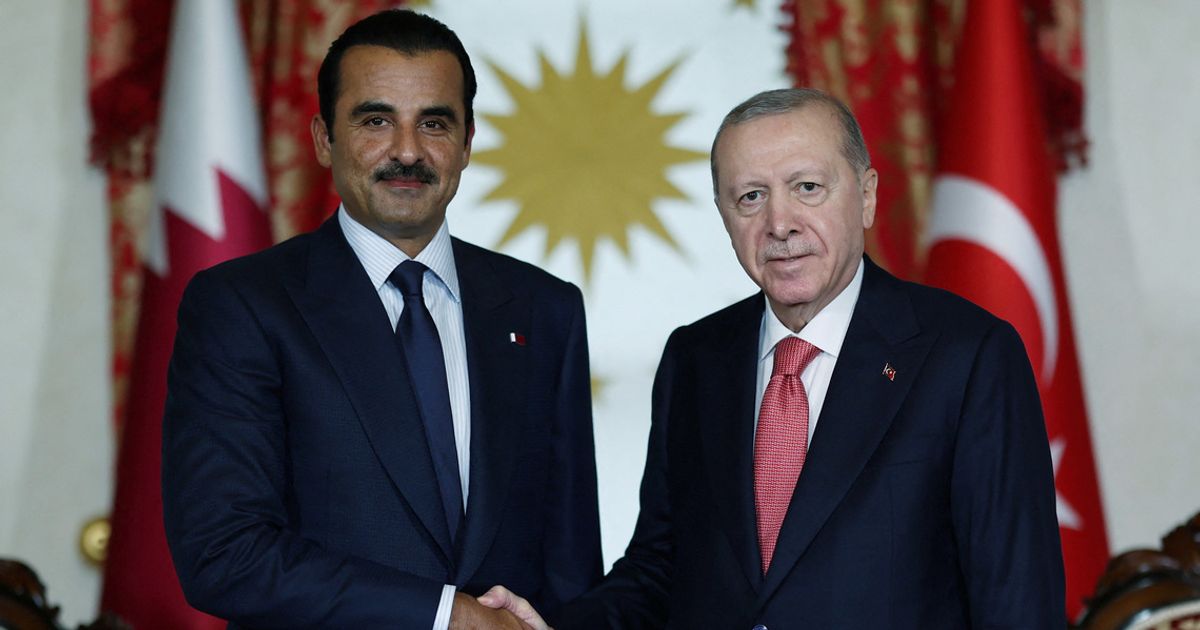
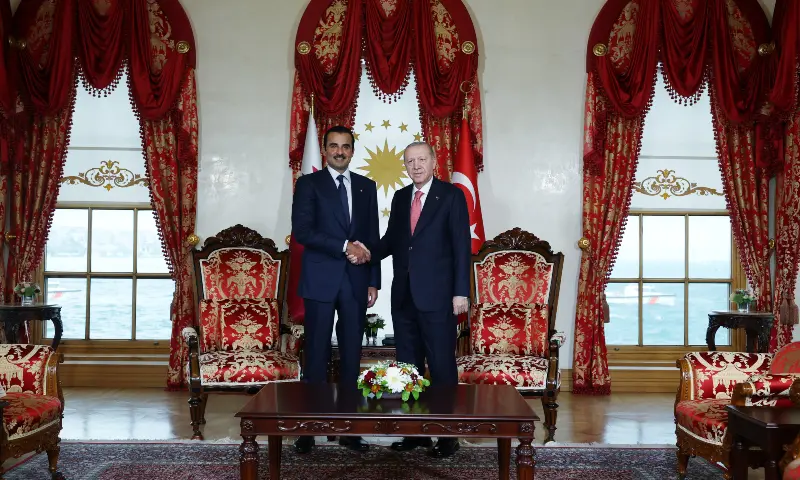
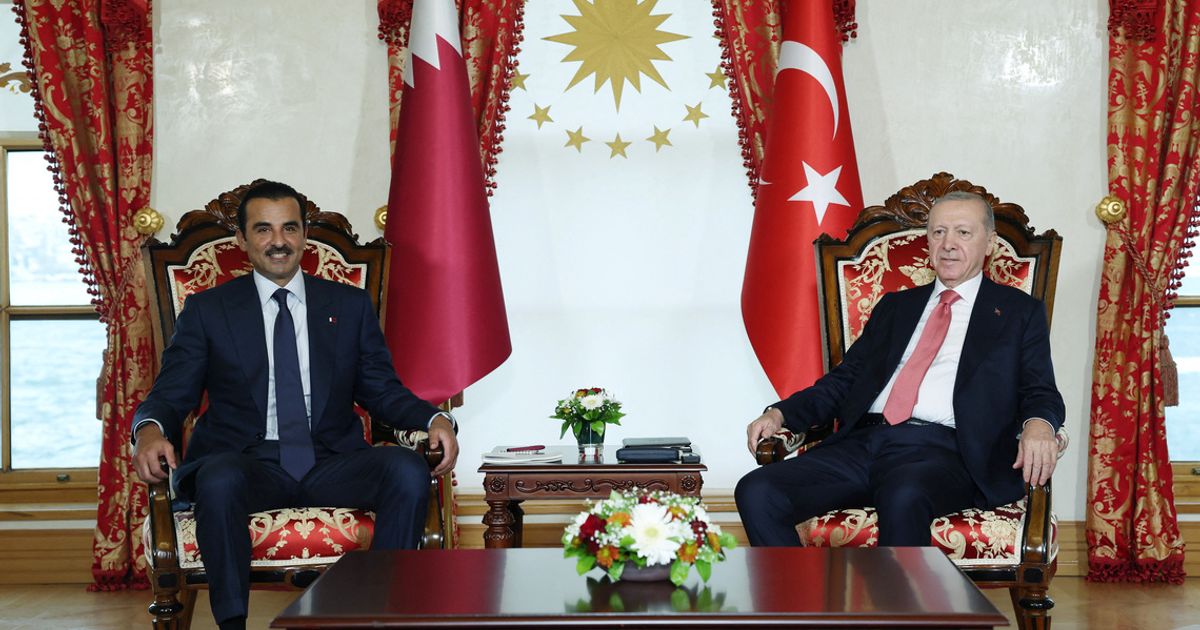
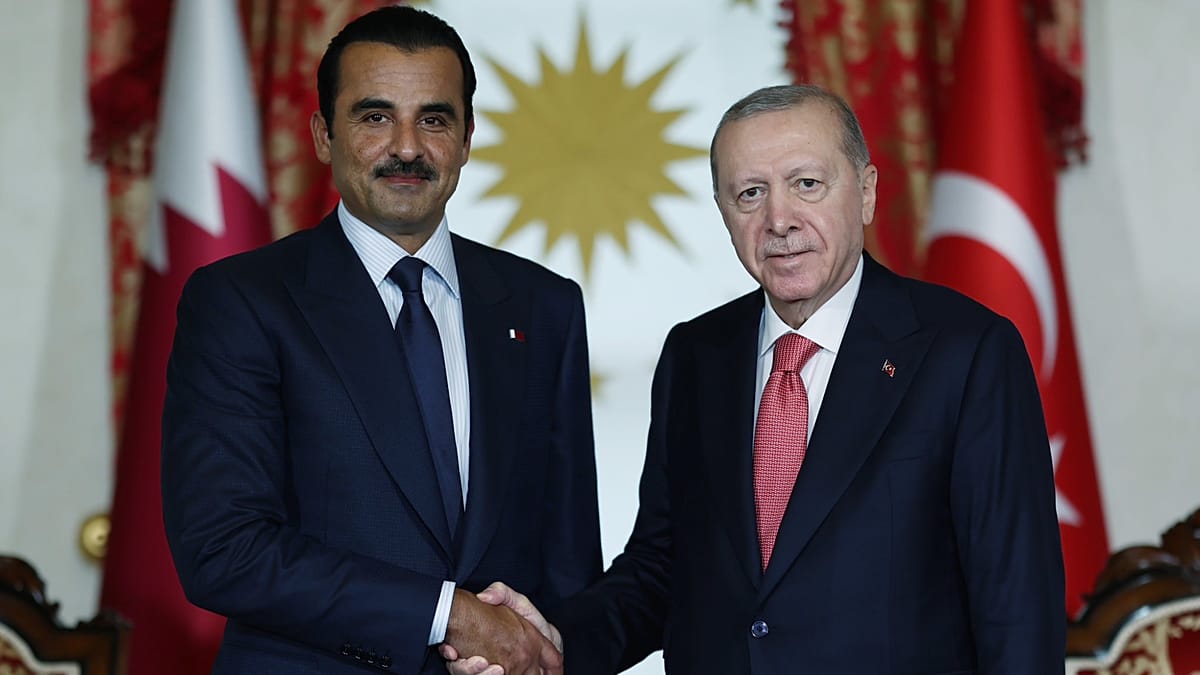
Turkish President Recep Tayyip Erdogan and Qatar’s Emir Sheikh Tamim bin Hamad Al Thani signed a landmark mutual defence agreement in Istanbul on Friday to establish a unified position against external armed attacks. The agreement includes commitments to joint military exercises, cooperation in defence industries, and personnel training to bolster regional security and stability. The report frames this move as part of a rapid reshaping of the Middle East security landscape, where Gulf nations are widening their defence strategies to diversify beyond the traditional United States security umbrella.
Written by AI on 2026-11-14, from this article's own text only (the story summary below draws on all the coverage).
See how they differ ↓

AI analysis

Story summary

On November 13, 2026, Turkiye and Qatar signed a mutual defence agreement aimed at bolstering collective defence and achieving regional security and stability. The pact was signed during a meeting between Turkish President Tayyip Erdogan and Qatari Emir Sheikh Tamim bin Hamad al-Thani in Istanbul. The agreement commits both nations to a unified stance against any external armed attack targeting either country, reflecting their shared vision of contributing to a more secure regional order. The deal follows the Turkiye-Qatar Supreme Strategic Committee meeting, which emphasized the importance of dialogue and peace in the Gulf region. This move signals a strategic shift in the region's security architecture amid the ongoing conflict in Yemen and the evolving role of the United States in the Middle East.

Written for “Turkey, Qatar Sign Mutual Defence Agreement” on 2026-11-21, grounded in this article and the 8 other(s) covering the same event.

How they differ

5 outlets covered “Turkey, Qatar Sign Mutual Defence Agreement”.

What each outlet says

One AI summary per outlet of its latest article on this story, written from that article alone and checked against it. Open the article for the outlet's own words.

EuronewsThis outlet14 Nov

Turkish President Recep Tayyip Erdogan and Qatar’s Emir Sheikh Tamim bin Hamad Al Thani signed a landmark mutual defence agreement in Istanbul on Friday to establish a unified position against external armed attacks. The agreement includes commitments to joint military exercises, cooperation in defence industries, and personnel training to bolster regional security and stability. The report frames this move as part…

Qatar and Turkey sign defence agreement for “unified position” facing external attacks (this article)
Al Jazeera14 Nov

Qatar and Turkiye signed a mutual defence agreement following a high-level meeting in Istanbul between President Recep Tayyip Erdogan and Emir Sheikh Tamim bin Hamad Al Thani. The pact commits both nations to a common position against external armed attacks while establishing plans for expanded joint military exercises, defence industry collaboration, and personnel training. The agreement is framed as a defensive…

Qatar and Turkiye sign a mutual defence pact: What do we know? →4 articles from Al Jazeera on this story
The Straits Times13 Nov

Turkey and Qatar signed a mutual defence agreement on November 13 following a meeting between President Recep Tayyip Erdogan and Emir Sheikh Tamim bin Hamad Al Thani in Istanbul. The agreement mandates a unified position against external armed attacks and includes commitments to joint military exercises, defence industry collaboration, and personnel training to bolster regional security. This reporting highlights…

Turkey, Qatar sign mutual defence agreement, Turkish presidency says →2 articles from The Straits Times on this story
Dawn13 Nov

President Recep Tayyip Erdogan and Qatari Emir Sheikh Tamim bin Hamad Al Thani signed a mutual defence agreement in Istanbul on Friday to strengthen ties and expand cooperation in the defence industry. The leaders discussed regional issues including the humanitarian situation in Gaza, developments in Libya, and efforts toward normalization in Syria. While the statement provided no specific details on the agreement's…

Turkiye, Qatar sign defence agreement: Turkish presidency →
The Hindu13 Nov

President Tayyip Erdogan and Qatari Emir Sheikh Tamim bin Hamad al-Thani signed a mutual defence agreement on Friday, November 13, 2026, during a meeting in Istanbul. The Turkish presidency reported that the pact aims to prevent the resurgence of war in the Gulf region while expanding existing cooperation in energy and the defence industry. The report highlights this new agreement alongside a previous August pact…

Turkiye, Qatar sign mutual defence agreement, Turkish presidency says →

Where they agree and split

Framing

How the first headlines put it

Attributed to a source2
Stated as fact2
The headlines (4)

Turkey, Qatar sign mutual defence agreement, Turkish presidency says The Straits Times · attributed to a source

Turkiye, Qatar sign mutual defence agreement, Turkish presidency says The Hindu · attributed to a source

Turkiye and Qatar sign mutual defence agreement Al Jazeera · stated as fact

Turkiye, Qatar sign defence agreement: Turkish presidency Dawn · stated as fact

The full story: what happened, how it changed, and all 9 articles →

Compared with similar articles

This article reads leans left and hedges 12% of its claims. Each row says how that neighbour differs.
The Straits Times
Hedges 3 of 18 claims Outlet record 64/100
The Hindu
Hedges 0 of 7 claims Outlet record 78/100
Al Jazeera
Leans left Hedges 7 of 45 claims Outlet record 60/100
Dawn
Hedges 1 of 11 claims Outlet record 67/100
Al Jazeera
Hedges 0 of 4 claims Outlet record 60/100
Al Jazeera
Hedges 0 of 3 claims Outlet record 60/100
The Straits Times
Hedges 0 of 8 claims Outlet record 64/100
Fox News
Hedges 8 of 56 claims Outlet record 66/100
“The articles describe different events occurring on different dates and involving different actions by various countries and leaders.”
The Straits Times
Leans right further right than this Hedges 1 of 9 claims Outlet record 64/100
“The articles describe different agreements between different sets of countries and organizations on different dates.”
Al Jazeera
Hedges 0 of 3 claims Outlet record 60/100

Story

Turkey, Qatar Sign Mutual Defence Agreement
Politics · 9 article(s) covering the same event. Compare every outlet's account →
How this article was measured signals, leaning charts, publisher record, byline, topics and claims

Signals How these are calculated →

Claims extracted
17
sentences that state something as happening or true
Uncertain
12%
2 of 17 hedged ("reportedly", "may", "according to")
Leaning
Leans left
of the writing, not the subject · beta estimate
Publisher signals
60/100
Euronews's corrections and hedging, across everything collected from it. Not a measure of accuracy.
Outlets on this story
9
Politics
Same framing elsewhere
1
articles that frame the event the way this one does
Analyzed 2026-11-14 · how these are computed

How this is being covered How these are calculated →

Article leaning vs. publisher reliability
Source leaning vs. consistency

Publisher

Euronews · 1552 article(s) · 1 correction(s) detected
Running correction rate · 1 correction(s)

Who wrote this

Peter Barabas
22 article(s) here · 1 carrying a prediction
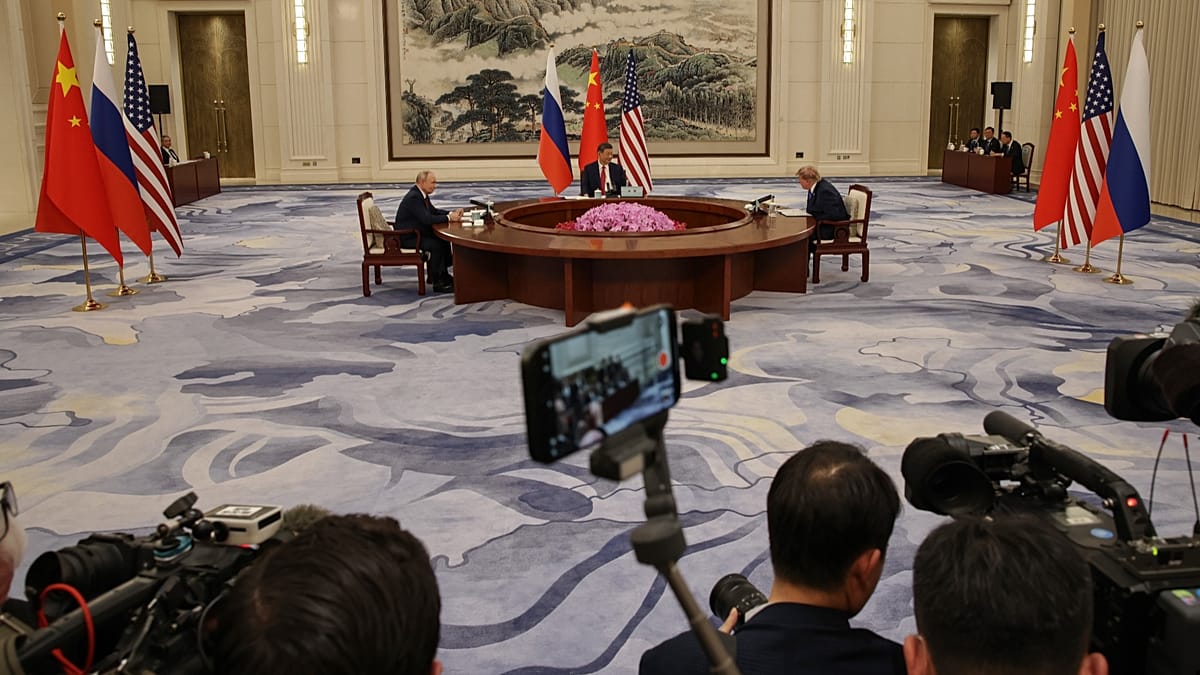
At the start of the summit, Putin said that Russia’s war in Ukraine would be part of the talks, stating that “we have shared interests in Ukraine.”
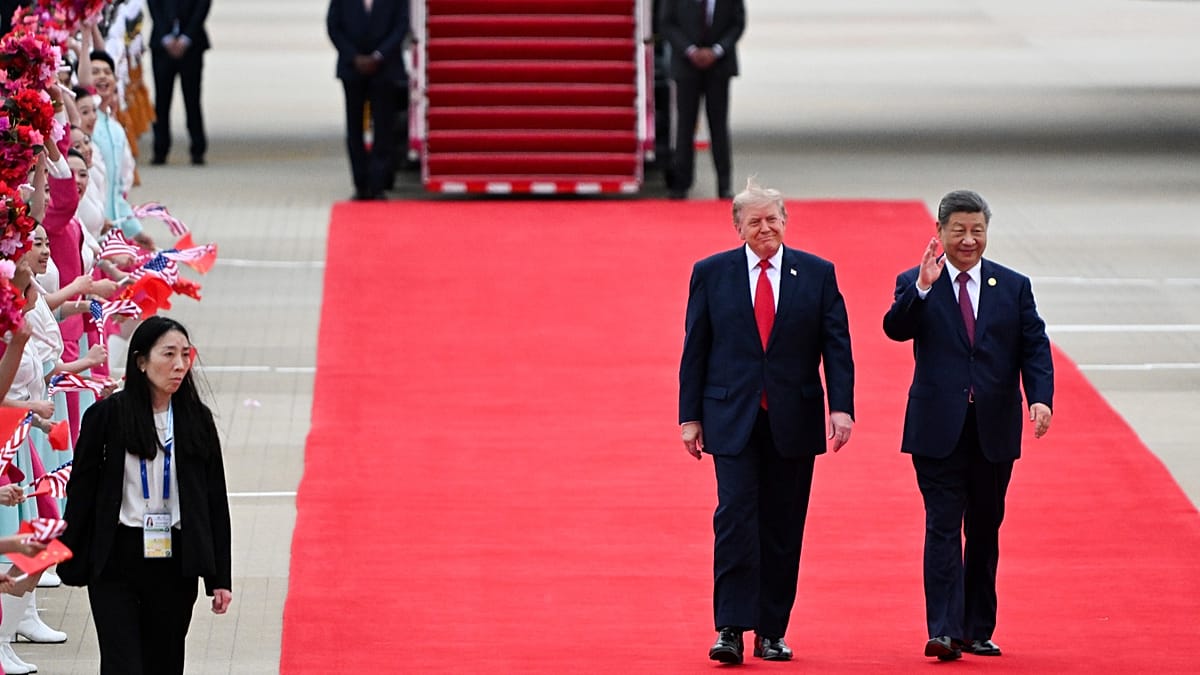
Chinese President Xi Jinping welcomed US President Donald Trump in Shenzhen on Wednesday for a high-stakes Asia-Pacific Economic Cooperation (APEC) summit, which will culminate on Thursday with a crucial trilateral encounter between Trump, Russia's Vladimir Putin and Xi — the first such summit between three global powers.
The Iranian regime has continued its threats against renewed US wide-scale attacks, with military officials telling Iranian Tabnak News on Sunday that "Iran's new offensive military doctrine means that the country will no longer be limited to calculated retaliation and will break the cycle of escalation," and threatening US bases in Europe too.
Both countries said that their agreement underlines their shared vision of a more secure and stable regional order, with Erdogan’s office stating that it will “add a new dimension to the brotherly ties between the two countries."
“They built a little bit of an anti-aircraft device and we knocked it out in about 15 minutes, maybe five," Trump said.
It comes as urgent diplomatic efforts continue to avoid a new all-out Iran war, which would have devastating consequences for the Middle East and beyond.
Against the backdrop of growing speculation over the last weeks that the US and Israel may launch a new attack against Iran before or after the mid-term elections in the US and next week’s elections in Israel, a new US Department of State travel alert issued on Wednesday evening was relayed by news agencies and wider media as an urgent signal as to the imminence of war restarting, with the Gulf nations bearing the brunt of a potentially larger conflict.
French President Emmanuel Macron issued a stern warning on Wednesday in Doha about the Gulf's fragile security situation, urging “extreme caution” to avoid escalating tensions that could reignite conflict, after talks with Qatar’s Emir Sheikh Tamim bin Hamad Al Thani.
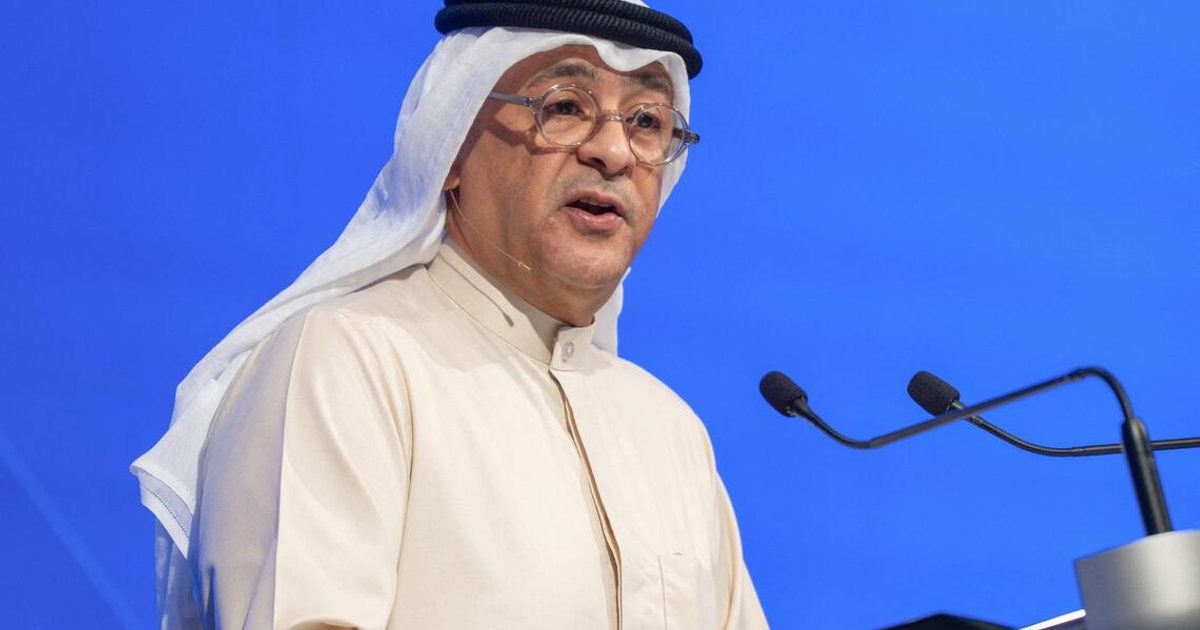
Qatar will soon announce a new defence partnership, Deputy Prime Minister Sheikh Saoud bin Abdulrahman Al Thani said on Monday, while also calling for talks and closer economic ties with Iran to prevent further conflict.
“Iran and groups supportive of Iran may target other US interests overseas or at locations associated with the United States and Americans throughout the world, including US businesses and other institutions,” the alert said.
Also by Peter Barabas
Nothing else under this byline is closely related to this article, so these are simply their most recent.
All 22 articles by Peter Barabas →

Topics

Qatar Saudi Arabia Turkey Turkish the Iran war

Subjects

Turkey GPE · 9× Qatar GPE · 7× Pakistan GPE · 5× Erdogan PERSON · 3× Saudi Arabia GPE · 3× Turkish NORP · 3× Indonesia GPE · 2× Istanbul GPE · 1× Recep Tayyip Erdogan PERSON · 1× Tamim bin Hamad Al Thani PERSON · 1×

Narrative

The Gulf nations have been clear that the United States' regional security umbrella continues to be central to their security architecture, but with Washington signalling its own global realignment, the Gulf countries are now widening their defence strategies, in the context of the ongoing "no war, no peace" reality.
framing: assertive · carried by 1 article(s) · first seen 2026-11-14
Both countries said that their agreement underlines their shared vision of a more secure and stable regional order, with Erdogan’s office stating that it will “add a new dimension to the brotherly ties between the two countries."

Claims (17 extracted, 2 hedged)

A fast-moving reshape of the Gulf and Middle East multilateral security landscape is underway, triggered by the Iran war and the US signals that it is adapting its long-standing security presence in the region. asserted
it → move → region
Turkey and Qatar signed a landmark mutual defence agreement on Friday, strengthening their strategic and security partnership for deterrence amid a rapidly changing security landscape of the Gulf and the Middle East. asserted
Turkey → sign → Gulf
Turkish president President Recep Tayyip Erdogan and Qatar’s Emir Sheikh Tamim bin Hamad Al Thani met in Istanbul on Friday to co-chair the Supreme Strategic Committee between Qatar and Turkey, concluding a wide range of bilateral agreements. asserted
Erdogan → meet → agreements
The two leaders adopted the mutual defence agreement "aimed at bolstering collective defence and achieving regional security and stability, as well as adopting a unified position in the face of any external armed attack targeting either or both parties", according to a joint statement released by the two countries. uncertain
leaders → adopt → countries
"The two parties agreed to hold consultations on threats to their security... and to strengthen cooperation through joint military exercises, collaboration in the field of defence industries, and the exchange of personnel training," the statement said. asserted
statement → agree → training
Both countries said that their agreement underlines their shared vision of a more secure and stable regional order, with Erdogan’s office stating that it will “add a new dimension to the brotherly ties between the two countries." asserted
it → say → countries
"President Erdogan stated that we would continue working together to prevent the resurgence of war in the Gulf region and establish a basis for dialogue and achieve peace," according to a Turkish presidency statement on X, and that the agreement will expand defence industry cooperation between the two countries. uncertain
agreement → state → countries
Turkey and Qatar would continue working together "to prevent a renewed outbreak of war in the Gulf region and to promote dialogue and peace", Erdogan said. asserted
Erdogan → continue → dialogue
The leaders discussed Israel's attacks on Gaza and the humanitarian situation in the Palestinian territory, efforts towards normalisation in Syria and the latest developments in Libya, the statement added. asserted
statement → discuss → Libya
Qatar and Turkey also signed multiple agreements on trade and energy cooperation as well as diplomacy, education and culture. asserted
Qatar → sign → cooperation
A new map of regional defensive alliances is taking shape The new partnership comes at a time of rapid regional defence realignments triggered by the Iran war as Turkey, Qatar, Saudi Arabia, Pakistan and Indonesia have been shaping a new map of defence alliances in the region in a matter of a few months. asserted
Turkey → take → months
The Gulf nations have been clear that the United States' regional security umbrella continues to be central to their security architecture, but with Washington signalling its own global realignment, the Gulf countries are now widening their defence strategies, in the context of the ongoing "no war, no peace" reality. asserted
countries → continue → reality
In August, Turkey, Pakistan and Saudi Arabia signed the “Mecca Joint Defence Agreement,” a regional defence pact under which the three countries would come to each other's aid if one of them came under attack. asserted
one → sign → attack
Ratified by the Turkish parliament last week, the pact links NATO member Turkey, which has the alliance's second-largest military, with Pakistan, the Muslim world's only nuclear-armed state, and Saudi Arabia, the Gulf's leading power. asserted
which → ratify → Pakistan
Turkey has said the agreement is not aimed at any other country and remains open to other states, including Egypt. asserted
agreement → say → Egypt
Also in August, Pakistan and Kuwait signed a joint defence and military cooperation agreement. asserted
Pakistan → sign → agreement
In October, Qatar, Turkey, Pakistan and Indonesia signed the “Badr” multilateral memorandum of understanding on defence industry cooperation. asserted
Qatar → sign → cooperation
Give feedback · no sign-in needed

No sign-in needed for now. Your note is sent without a name, so it cannot be answered.

History Support