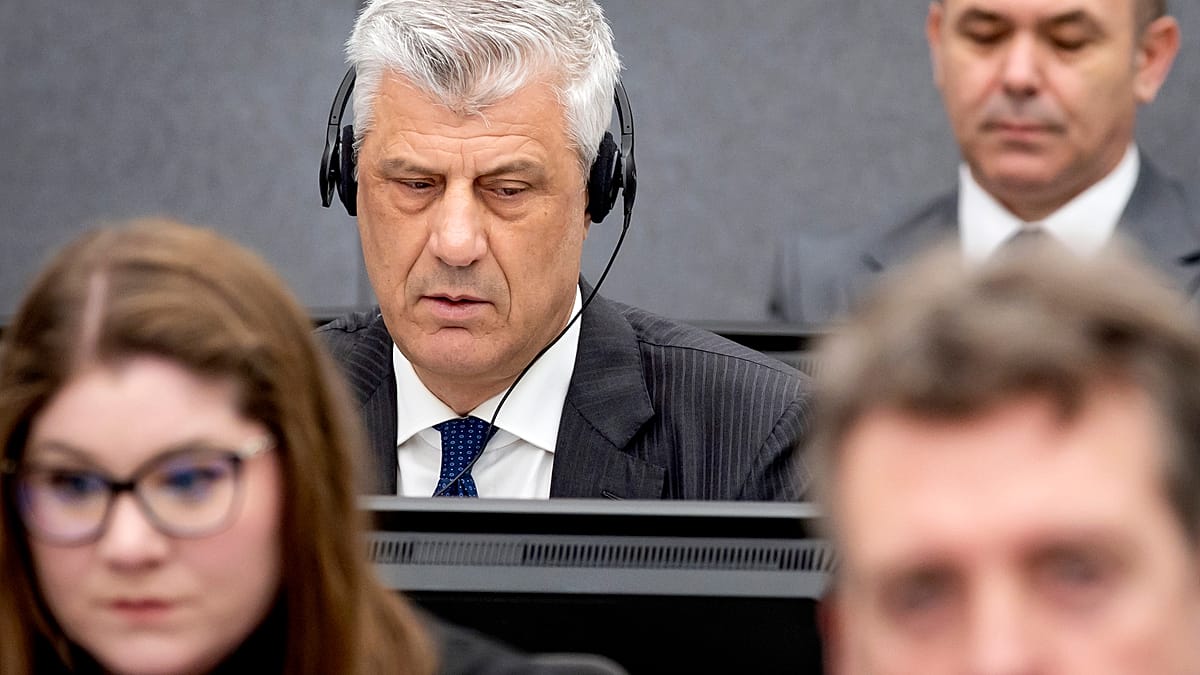
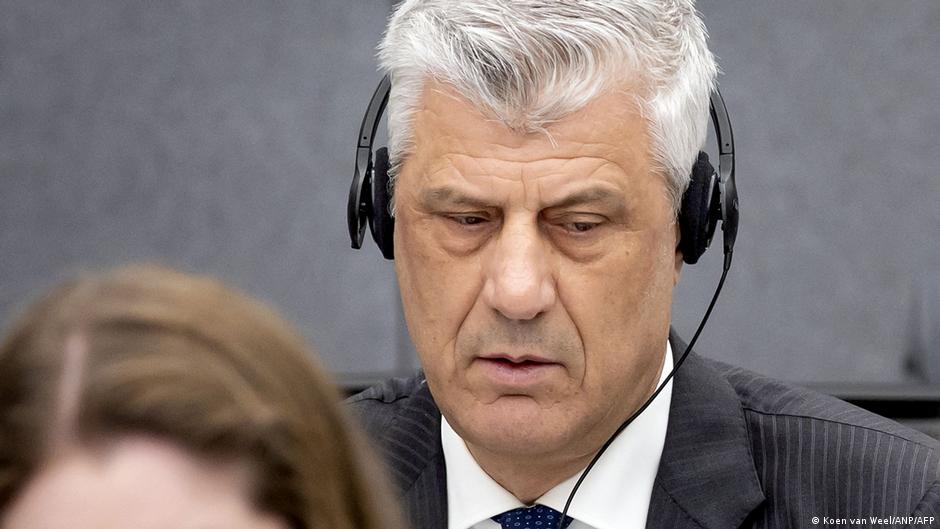
Photo via The Hindu

Why was the former President of Kosovo convicted by The Hague? Explained

Read the original at The Hindu ↗
Cite

Cherian, J. S. (2026, September 17). Why was the former President of Kosovo convicted by The Hague? Explained. The Hindu. https://www.thehindu.com/news/international/why-was-the-former-president-of-kosovo-convicted-by-the-hague-explained/article71475621.ece

Dated when The Aporia collected the article, usually within hours of publication. Check the original for its exact date and byline.

The Hindu · collected 2026-09-17 · by Joan Sony Cherian

Quick Summary

Hashim Thaci, former President of Kosovo, has been sentenced to 25 years in prison for war crimes committed during the late 1990s when he served as a senior commandant of the Kosovo Liberation Army (KLA). The conviction by an EU-backed court at The Hague includes charges like murder and torture against Serbian targets during the KLA insurgency. Thaci was part of efforts to secure independence for ethnic Albanians in Kosovo from Serbia's control, which led to widespread conflict with significant casualties—nearly 13,000 people died, mostly ethnic Albanians.
Written by AI on 2026-09-17, from this article's own text only (the story summary below draws on all the coverage).
See how they differ ↓

AI analysis

Story summary

On September 16, The Hague-based Kosovo Specialist Chambers convicted former Kosovo President Hashim Thaci of war crimes including murder, torture, and illegal detention during the 1998–1999 conflict. He was sentenced to 25 years in prison. The court found Thaci guilty of orchestrating the murders of 96 people, torturing 303 individuals, cruel treatment of 49 people, and arbitrarily detaining 385 people, none of whom were active combatants at the time.

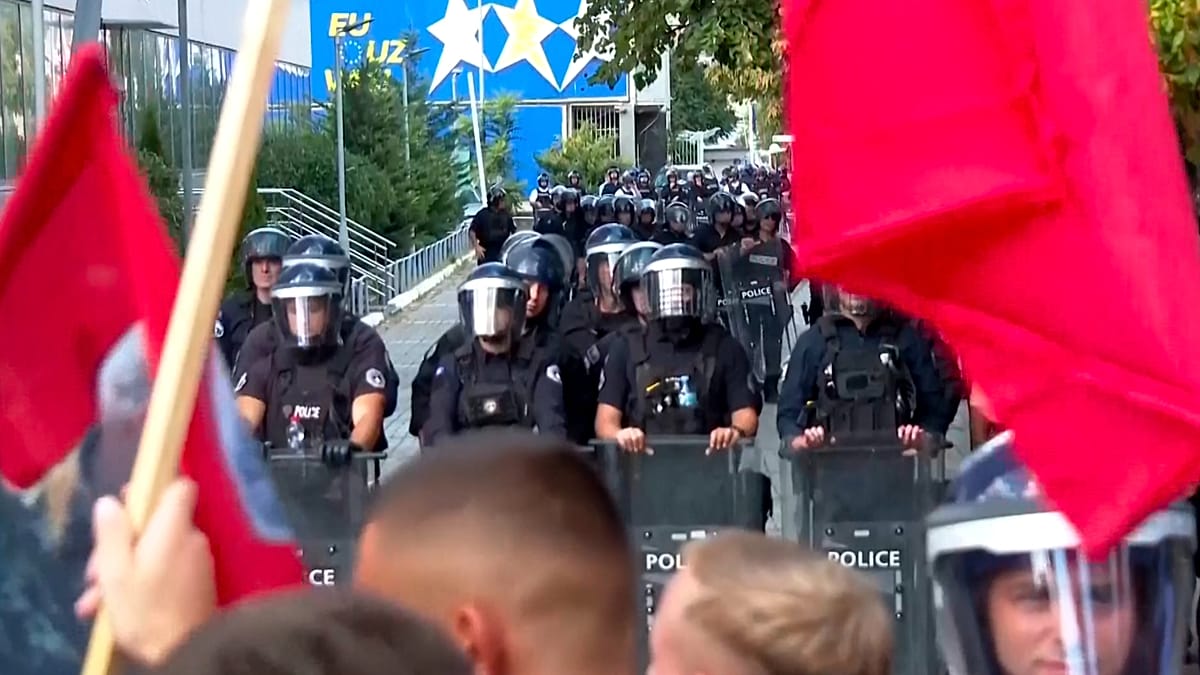
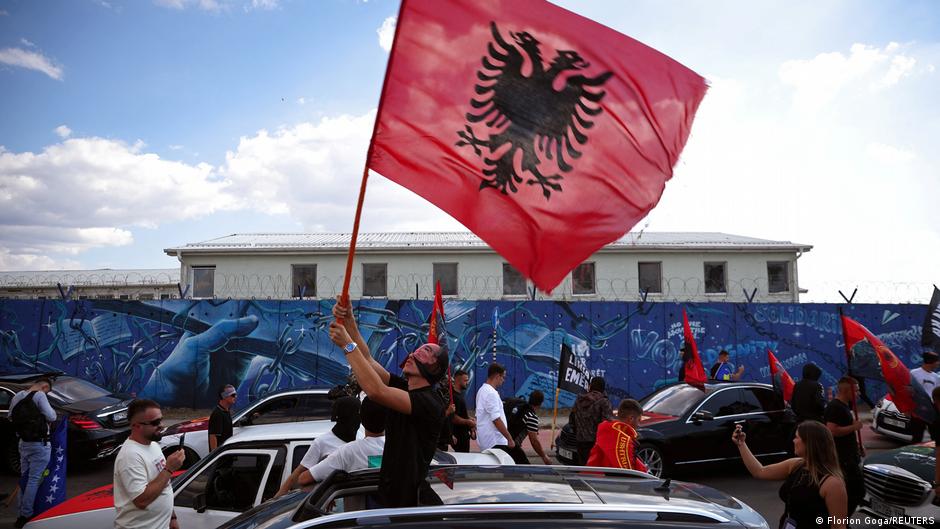
The ruling sparked shock and anger in Kosovo, where thousands gathered in central Pristina to protest the verdict. Some protesters clashed with riot police outside the headquarters of the European Union's Rule of Law Mission (EULEX). Meanwhile, Serbian President Aleksandar Vucic criticized the tribunal for not convicting Thaci and other former KLA leaders of crimes against humanity.

Thaci remains a revered figure among many Kosovo Albanians despite his conviction; he was seen as a hero of Kosovo’s independence movement. The verdict deepens tensions between ethnic Albanian Kosovars and Serbs, both within Kosovo and in Serbia.

Written for “Kosovo War Crimes Verdict” on 2026-11-21, grounded in this article and the 7 other(s) covering the same event.

How they differ

4 outlets covered “Kosovo War Crimes Verdict”.

What each outlet says

One AI summary per outlet of its latest article on this story, written from that article alone and checked against it. Open the article for the outlet's own words.

The HinduThis outlet17 Sep

Hashim Thaci, former President of Kosovo, has been sentenced to 25 years in prison for war crimes committed during the late 1990s when he served as a senior commandant of the Kosovo Liberation Army (KLA). The conviction by an EU-backed court at The Hague includes charges like murder and torture against Serbian targets during the KLA insurgency. Thaci was part of efforts to secure independence for ethnic Albanians in…

Why was the former President of Kosovo convicted by The Hague? Explained (this article)2 articles from The Hindu on this story
Deutsche Welle17 Sep

On Wednesday, a tribunal in The Hague convicted four former Kosovo Liberation Army (KLA) leaders of war crimes during the 1998–99 conflict, sentencing them to a combined total of 81 years in prison for various acts against civilians but acquitting them of crimes against humanity. Serbian President Aleksandar Vucic criticized the court's decision, arguing that it did not want to undermine the KLA's credibility and…

Serbian President Vucic criticizes Kosovo war crimes verdict →3 articles from Deutsche Welle on this story
Euronews17 Sep

The Kosovo Specialist Chambers in The Hague convicted former president Hashim Thaçi and three other former Kosovo Liberation Army leaders of war crimes on Wednesday, sentencing them to prison terms ranging from 13 to 25 years for murder, torture, and illegal detention during the 1998-1999 conflict. This verdict sparked significant anger in Prishtina, where protests turned violent with clashes between riot police and…

Anger over Thaçi war crimes sentence spills into protests at Kosovo EU mission →2 articles from Euronews on this story
New York Post16 Sep

Hashim Thaci, former president of Kosovo and top commander of the Kosovo Liberation Army (KLA) during the 1990s conflict, was sentenced to 25 years in prison by a war crimes tribunal in The Hague for murder, torture, and illegal detention. He was convicted of murdering 96 people, illegally detaining 385 individuals, torturing 303 others, and cruelly treating 49 victims who were not active combatants during the…

Former Kosovo president sentenced to 25 years for war crimes →

Where they agree and split

Framing

How the first headlines put it

Stated as fact4
The headlines (4)

Former Kosovo president sentenced to 25 years for war crimes New York Post · stated as fact

Shock and anger in Kosovo as former president convicted Deutsche Welle · stated as fact

Kosovo war crimes court jails ex-president Hashim Thaçi for 25 years, sparking mass protests Euronews · stated as fact

Why was the former President of Kosovo convicted by The Hague? Explained The Hindu · stated as fact

The full story: what happened, how it changed, and all 8 articles →

Compared with similar articles

This article reads unscored and hedges 0% of its claims. Each row says how that neighbour differs.
New York Post
Hedges 0 of 24 claims Outlet record 66/100
Euronews
Hedges 0 of 8 claims Outlet record 60/100
The Hindu
Hedges 1 of 6 claims Outlet record 60/100
Deutsche Welle
Hedges 1 of 36 claims Outlet record 95/100
Deutsche Welle
Hedges 1 of 36 claims Outlet record 95/100
Euronews
Leans right Hedges 1 of 33 claims Outlet record 60/100
“While both articles discuss Hashim Thaci's conviction for war crimes and his sentencing, Article A focuses on explaining the background and outcome of the trial, whereas Article B describes the protests that occurred after the verdict was announced. They describe related but distinct events.”
Deutsche Welle
Hedges 1 of 37 claims Outlet record 95/100
“While both articles discuss the conviction and sentencing of Hashim Thaci and other former Kosovo Liberation Army leaders for war crimes, Article A focuses on the public reaction to the verdict announcement in Kosovo, while Article B provides background information and explains the details of the trial and sentences.”

Story

Kosovo War Crimes Verdict
Politics · 8 article(s) covering the same event. Compare every outlet's account →
How this article was measured signals, leaning charts, publisher record, byline, topics and claims

Signals How these are calculated →

Claims extracted
39
sentences that state something as happening or true
Uncertain
0%
0 of 39 hedged ("reportedly", "may", "according to")
Leaning
not political
takes no side on a contested political question
Publisher signals
60/100
The Hindu's corrections and hedging, across everything collected from it. Not a measure of accuracy.
Outlets on this story
8
Politics
Same framing elsewhere
1
articles that frame the event the way this one does
Analyzed 2026-09-17 · how these are computed

How this is being covered How these are calculated →

Article leaning vs. publisher reliability
Source leaning vs. consistency

Publisher

The Hindu · 907 article(s) · 2 correction(s) detected
Running correction rate · 2 correction(s)

Who wrote this

Joan Sony Cherian
9 article(s) here · 0 carrying a prediction
After defeating Karen Bass, the incumbent Mayor of the second most populous city of the U.S., Nithya Raman wrote on X, “Los Angeles, I am deeply honored to be your next mayor.”
2026-11-08 · assertive framing · Nithya Raman | The urban planner
If you are already a registered user of The Hindu and logged in, you may continue to engage with our articles.
2026-10-28 · assertive framing · Daily Quiz | On Luiz Inácio Lula da Silva
While the first (and last!) press briefing of Katie Zacharia on October 13 will go down in history as the reason for someone holding the shortest stint ever as White House Press Secretary, another reason why it was memorable was that it announced to the world that the Trump administration had asked Kimberly Guilfoyle, the U.S. Ambassador to Greece, to resign amid allegations of corruption and misconduct.
2026-10-17 · assertive framing · Kimberly Guilfoyle | The flashy diplomat
In the run-up to the elections (the final round will be conducted on October 25), his campaign team, in a statement wrote that Mr. Lula’s profile was prevented from promoting posts on Instagram which severely affected his reach.
For people watching across these islands — for people watching around the world — there could be no clearer sign that Westminster’s time is coming to an end.”
2026-10-01 · assertive framing · The significance of the Cardiff MoU
It will not even have one seat in the regional Parliament — the first such instance in more than 70 years of modern German history.
If you are already a registered user of The Hindu and logged in, you may continue to engage with our articles.
2026-09-17 · assertive framing · Daily Quiz | On war criminals
Also by Joan Sony Cherian
Nithya Raman | The urban planner
2026-11-08 · The Hindu
Student List | The young Serb unrest
2026-10-31 · The Hindu
Nothing else under this byline is closely related to this article, so these are simply their most recent.
All 9 articles by Joan Sony Cherian →

Topics

Albanians KLA Kosovo Serbia Serbian

Subjects

Kosovo GPE · 10× KLA ORG · 9× Serbia GPE · 5× Serbian NORP · 5× Albanians NORP · 4× The Hague GPE · 3× European Union ORG · 2× Milošević PERSON · 2× Yugoslavia GPE · 2× Yugoslavian NORP · 2×

Narrative

The need for such a tribunal arose after Swiss politician Dick Marty authored a Council of Europe report, known as the Marty report, in 2010, which alleged that the KLA placed many Serbians in secret detention centres where they were subjected to inhuman and degrading treatment, before ultimately “disappearing”.
framing: assertive · carried by 1 article(s) · first seen 2026-09-17

Claims (39 extracted, 0 hedged)

The story so far: Hashim Thaci, the former President of Kosovo, has been sentenced to 25 years in prison after being found guilty of war crimes by a special European Union-backed court at The Hague. asserted
Thaci → sentence → Hague
The trial found him guilty of crimes including murder, arbitrary detention, illegal arrests, torture etc during the Kosovo war in the late 1990s as a senior commandant of the Kosovo Liberation Army (KLA). asserted
him → find → Army
Three other former KLA commanders were also sentenced for several different charges. asserted
commanders → sentence → charges
What happened? asserted
What → happen → ?
Thaci was a former commandant of the KLA, a militant ethnic Albanian force, formed in the early 1990s, which strove for the independence of Kosovo, composed primarily of ethnic Albanians, from Yugoslavia and Serbia. asserted
which → form → Yugoslavia
Post the Second World War, the Kingdom of Yugoslavia was reconstituted as the Socialist Federal Republic of Yugoslavia under the leadership of Josip Broz Tito. asserted
Kingdom → reconstitute → Tito
While Tito was able to unify the multiple republics, which included Croatia, Montenegro, Serbia, Slovenia, Bosnia and Herzegovina, and Macedonia, and the autonomous provinces of Kosovo and and Vojvodina, under a centralised government, following his death, this centralised system started coming under pressure. asserted
system → unify → pressure
Multiple factors such as divisions between the republics, rising nationalist movements, economic pressure, the disintegration of the Soviet Union all contributed to the eventual dissolution of Yugoslavia in 2003. asserted
factors → rise → 2003
One of the primary nationalist trends which spearheaded the Yugoslavian dissolution was the Serbian nationalist movement led by Slobodan Milošević in the late 1980s. asserted
which → spearhead → 1980s
Riding on Serbian nationalist tendencies, Milošević pushed through policies which stripped other Republics and provinces such as Kosovo of their autonomy. asserted
which → rid → autonomy
He also brought in policies which were discriminatory in nature against Albanians. asserted
which → bring → Albanians
The KLA was first formed in such an atmosphere, in order to fight for the independence of ethnic Albanians in Kosovo, then a province within Serbia. asserted
KLA → form → Serbia
There was an insurgency against the Yugoslavian state within Kosovo, spearheaded by the KLA which attacked Serbian governmental buildings and police stations. asserted
which → be → buildings
This eventually led to all-out war in 1998-1999 with the Serbian controlled federal republic brutally cracking down on the KLA. asserted
republic → lead → KLA
The war led to the displacement of thousands of people and the death of nearly 13,000 people, mostly ethnic Albanians. asserted
war → lead → people
The war finally ended with the intervention of NATO (the North Atlantic Treaty Organization) which carried out air raids and bombardments against Serbian targets which forced the federal republic to end hostilities and move out of Kosovo. asserted
which → end → Kosovo
NATO subsequently deployed peacekeeping forces to the region. asserted
NATO → deploy → region
Milošević eventually stood trial for his crimes against humanity, genocide, and war crimes committed during the Yugoslav Wars of the 1990s, in The Hague in 2002. asserted
Milošević → stand → 2002
However, he died in prison before a judgment was reached. asserted
judgment → die → prison
In 2008, Kosovo declared independence from Serbia and was recognised by the U.S., and several other European nations. asserted
Kosovo → declare → U.S.
However, Serbia does not recognise Kosovo as an independent nation and still considers it a part of itself even though it has no administrative control over it. asserted
it → recognise → it
India also does not recognise Kosovo as an independent nation. asserted
India → recognise → nation
The trial was heard by the European Union-backed Kosovo Specialist Chambers, a special tribunal court constituted in The Hague in 2016, to hear the crimes committed by the KLA during the period of insurgency and subsequent war of the 1990s. asserted
trial → hear → 1990s
The need for such a tribunal arose after Swiss politician Dick Marty authored a Council of Europe report, known as the Marty report, in 2010, which alleged that the KLA placed many Serbians in secret detention centres where they were subjected to inhuman and degrading treatment, before ultimately “disappearing”. asserted
they → arise → treatment
Of particular note was the allegation that the KLA had harvested the organs of such prisoners in order to sell them in the international market. asserted
KLA → harvest → market
The report, in effect, coloured the larger imagination of the KLA and the Kosovo independence movement. asserted
report → colour → KLA
The narrative changed from the KLA being seen as a champion of self-determination to an inhumane militia which had committed human rights abuses against Serbian nationals. asserted
which → change → nationals
At least 15 people have been charged by the Chambers, out of which Thaci is the most senior figure. asserted
Thaci → charge → which
Charges were brought against him in 2020, when he was President of Kosovo, following which he had to resign from the position and stand trial as an ordinary citizen. asserted
he → bring → citizen
The central question the court dealt with was to analyse the extent of control the commandants had over the KLA and whether the crimes amounted to a pattern of abuse. asserted
crimes → deal → abuse
Finally, presiding judge Charles Smith stated that Thaçi had “actively participated in and encouraged crimes” adding that, “the scale and nature of the crimes committed were very serious”. asserted
scale → preside → crimes
However, the judge insisted that the trial was “not about the legitimacy of the Kosovo Liberation Army” or its ultimate goal of securing independence for Kosovo. asserted
trial → insist → Kosovo
The verdict is a significant fall for Thaci, who was once regarded by Western powers as central to Kosovo’s post-war future. asserted
who → regard → future
In Kosovo, where Thaci is still seen as a revolutionary and revered figure, the verdict was met with outrage and tears. asserted
verdict → see → outrage
Kosovo’s Prime Minister Albin Kurit said the verdict was “a travesty of justice”. asserted
verdict → say → justice
People who had poured into the streets of Pristina, the capital of Kosovo, to hear the verdict on a big screen were shocked and shouted slogans in support of the KLA and Thaci. asserted
who → pour → KLA
However, the Serbian side has welcomed the judgement. asserted
side → welcome → judgement
Serbia’s Deputy Prime Minister Ivica Dacic called the verdicts a “warning” to Pristina “that a fake state cannot be built on mass graves of murdered Serbs”. asserted
state → call → Serbs
Thaci and the three other commandants have the right to appeal the decision. asserted
Thaci → have → decision
Give feedback · no sign-in needed

No sign-in needed for now. Your note is sent without a name, so it cannot be answered.

History Support