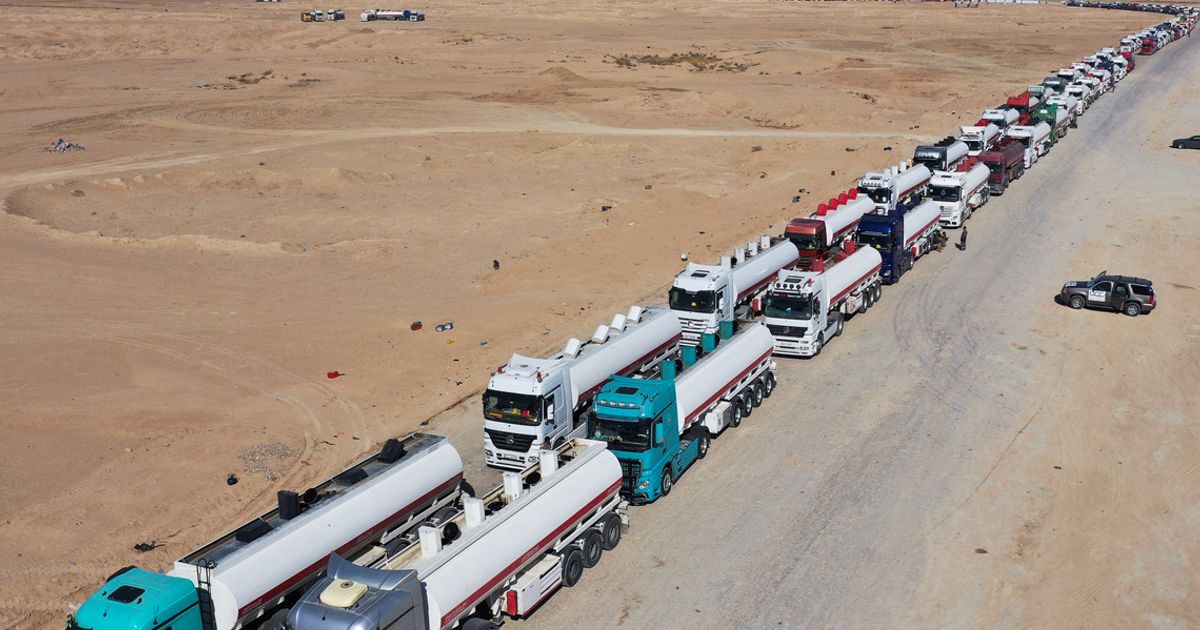
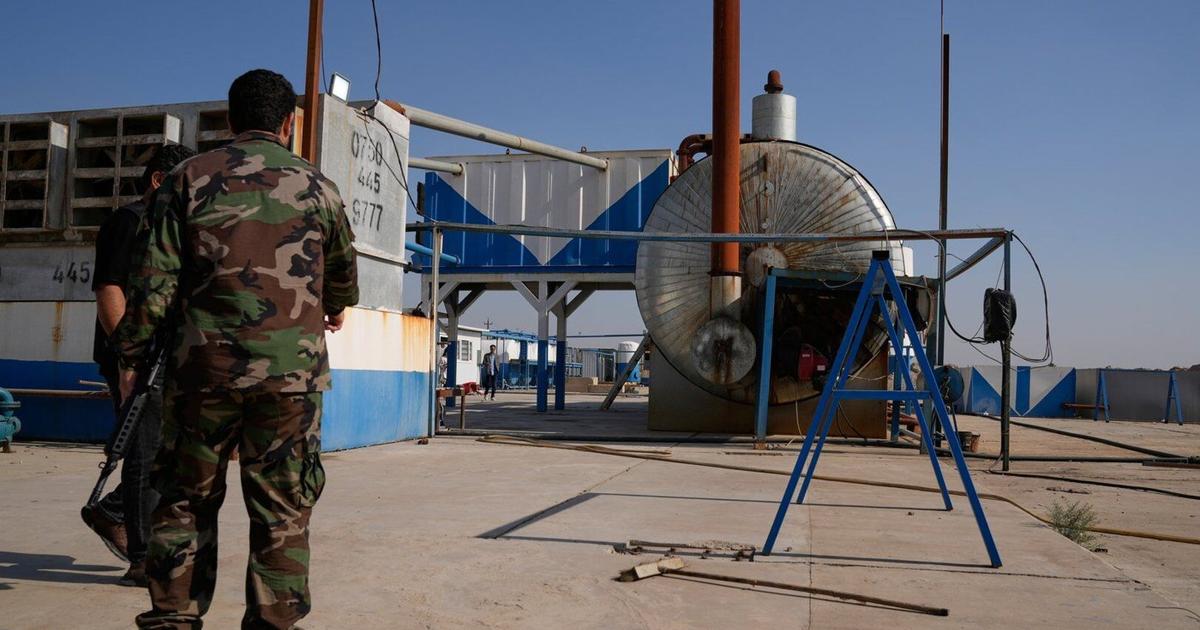
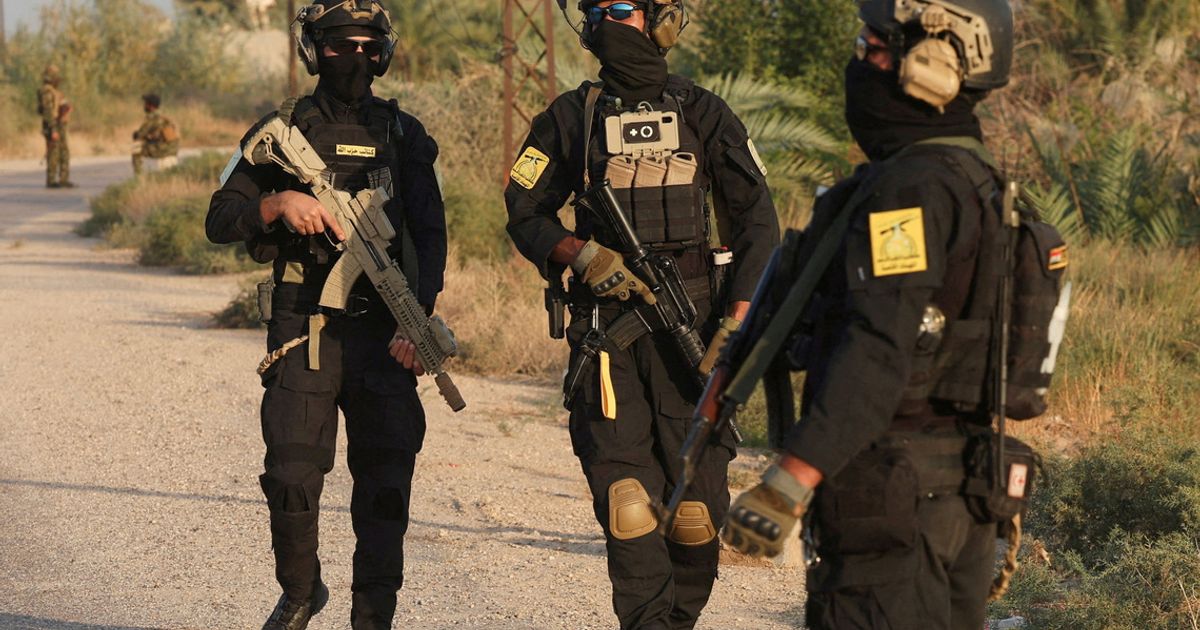
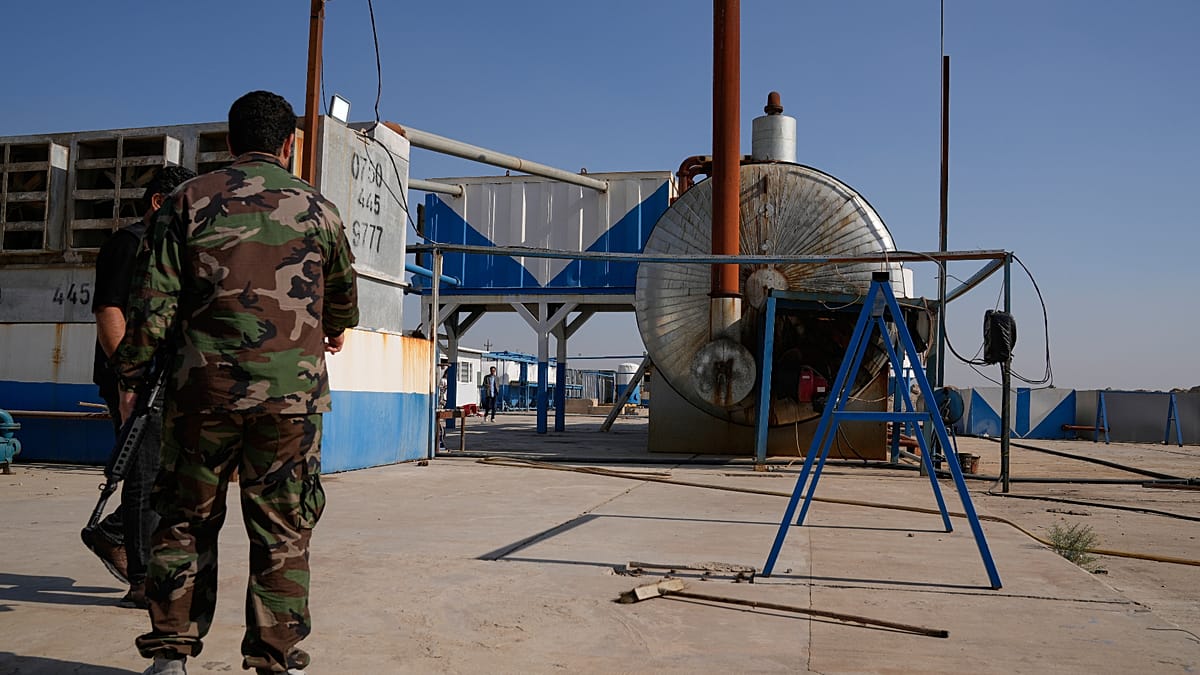
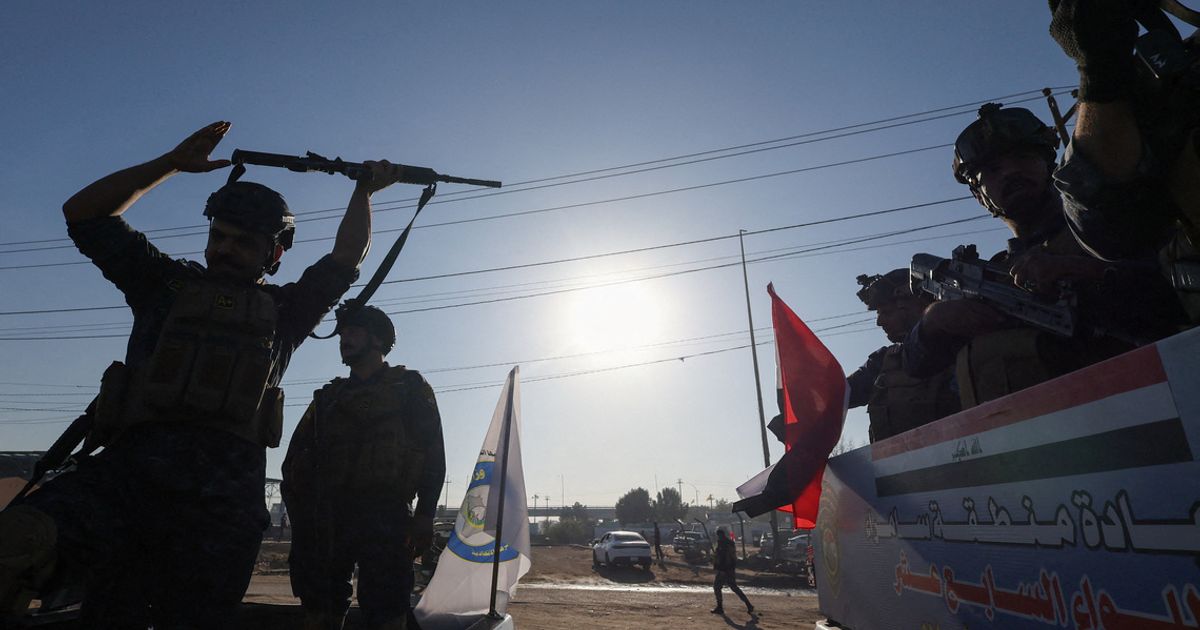
Photo via Al Jazeera

Will Iraq’s oil smuggling crackdown disarm militias without a conflict?

Read the original at Al Jazeera ↗
Cite

Mansour, M. (2026, November 15). Will Iraq’s oil smuggling crackdown disarm militias without a conflict? Al Jazeera. https://www.aljazeera.com/news/2026/11/15/will-iraqs-oil-smuggllng-crackdown-disarm-militias-without-a-conflict?traffic_source=rss

Dated from the outlet's own feed. Check the original for its byline.

Al Jazeera · collected 2026-11-15 · by Mohammad Mansour

Quick Summary

Iraqi Prime Minister Ali al-Zaidi has initiated an anticorruption campaign targeting Jurf al-Sakhar, a stronghold of Iran-linked militias near Baghdad, dismissing nine senior officials and sacking top security directors. This move is seen by analysts as an attempt to cut off financial support for militias that refuse to integrate into the state apparatus, rather than just an effort to curb oil smuggling and protect public funds. The town, previously under militia control since 2014, houses illicit oil refineries and is strategically important due to its proximity to a Shia pilgrimage route.
Written by AI on 2026-11-15, from this article's own text only (the story summary below draws on all the coverage).
See how they differ ↓

AI analysis

Story summary

Iraqi Prime Minister Ali al-Zaidi dismissed nine senior security officials on November 14, 2026, in response to an alleged oil smuggling network worth up to $30 million monthly, targeting a stronghold of the Iran-backed Kataib Hezbollah group in Jurf al-Nasr, Babil province. The move followed an investigation that uncovered illegal oil refineries and evidence of manipulation linked to smuggling activities. The prime minister also ordered the dismissal of security and intelligence officers in Babil province, the Interior Ministry commander, and the director of the Oil Pipelines Company at the Ministry of Oil. Kataib Hezbollah, however, denied its involvement and called the probe a "lie," accusing the government of fabricating falsehoods to force its disarmament.

Written for “Iraq PM Cracks Down on Oil Smuggling” on 2026-11-21, grounded in this article and the 4 other(s) covering the same event.

How they differ

2 outlets covered “Iraq PM Cracks Down on Oil Smuggling”.

What each outlet says

One AI summary per outlet of its latest article on this story, written from that article alone and checked against it. Open the article for the outlet's own words.

Al JazeeraThis outlet15 Nov

Iraqi Prime Minister Ali al-Zaidi has initiated an anticorruption campaign targeting Jurf al-Sakhar, a stronghold of Iran-linked militias near Baghdad, dismissing nine senior officials and sacking top security directors. This move is seen by analysts as an attempt to cut off financial support for militias that refuse to integrate into the state apparatus, rather than just an effort to curb oil smuggling and protect…

Will Iraq’s oil smuggling crackdown disarm militias without a conflict? (this article)4 articles from Al Jazeera on this story
The Straits Times16 Nov

Prime Minister Ali al-Zaidi of Iraq is taking action against Kataib Hezbollah, a powerful Iranian-backed militia, by cracking down on its oil smuggling activities that have been ongoing since 2021. The smuggling has reportedly cost the Iraqi government hundreds of millions of dollars. Security and oil officials have dismissed nine senior officials in response to the investigation. Kataib Hezbollah denies the…

Iran’s proxy in Iraq rakes in hundreds of millions through oil smuggling →

Compared with similar articles

This article reads leans right and hedges 10% of its claims. Each row says how that neighbour differs.
Al Jazeera
Hedges 0 of 2 claims Outlet record 60/100
Al Jazeera
Leans right Hedges 0 of 21 claims Outlet record 60/100
The Straits Times
Leans strongly right further right than this Hedges 4 of 25 claims Outlet record 64/100
Al Jazeera
Leans right Hedges 0 of 12 claims Outlet record 60/100
“While both articles discuss the anticorruption crackdown targeting Iran-linked militias in Iraq's Jurf al-Sakhar area, Article A focuses on the government's actions and dismissals, whereas Article B reports the denial and response from the Kataib Hezbollah group.”
Al Jazeera
Leans right Hedges 2 of 18 claims Outlet record 60/100
“While both articles refer to actions taken by the Iraqi government in Jurf al-Sakhar against Iran-backed militias and oil smuggling, the specific events described are different: one focuses on dismissals and judicial referrals, while the other describes a military deployment and deadline for militia withdrawal.”
Toronto Star
Leans right Hedges 0 of 25 claims Outlet record 64/100
“While both articles discuss the same region and the confrontation between the Iraqi government and Iran-backed militias, they describe different aspects of the situation: Article A focuses on the anticorruption crackdown, while Article B focuses on the militias' warning against government forces entering the area.”
Al Jazeera
Hedges 0 of 13 claims Outlet record 60/100
“While both articles mention the Jurf al-Sakhar area and the Iraqi government's actions against militias, they describe different specific events: Article A focuses on the dismissal and judicial referral of officials accused of corruption, while Article B reports on the establishment of a joint operations center as a compromise with Kataib Hezbollah.”
The Straits Times
Leans right Hedges 1 of 19 claims Outlet record 64/100
“While both articles involve the Iraqi government's actions against Iran-linked militias and corruption related to oil smuggling, they describe different stages or outcomes of the situation, likely occurring at different times.”
Euronews
Hedges 2 of 37 claims Outlet record 60/100
“While both articles discuss actions against Iran-linked militias and oil smuggling in the Jurf al-Sakhar area, Article A focuses on the dismissal and judicial referral of officials, while Article B reports on an order for armed factions to withdraw from a strategic area by a specific deadline.”
The Straits Times
Leans right Hedges 0 of 19 claims Outlet record 64/100
“Article A reports on the dismissal and judicial referral of officials accused of corruption, while Article B discusses the deployment of Iraqi security forces in Jurf al-Sakhar under a compromise deal to ease tensions with Iran's militia ally.”

Story

Iraq PM Cracks Down on Oil Smuggling
Politics · 5 article(s) covering the same event. See how they differ ↑
How this article was measured signals, leaning charts, publisher record, byline, topics and claims

Signals How these are calculated →

Claims extracted
31
sentences that state something as happening or true
Uncertain
10%
3 of 31 hedged ("reportedly", "may", "according to")
Leaning
Leans right
of the writing, not the subject · beta estimate
Publisher signals
60/100
Al Jazeera's corrections and hedging, across everything collected from it. Not a measure of accuracy.
Outlets on this story
5
Politics
Same framing elsewhere
1
articles that frame the event the way this one does
Analyzed 2026-11-15 · how these are computed

How this is being covered How these are calculated →

Article leaning vs. publisher reliability
Source leaning vs. consistency

Publisher

Al Jazeera · 6234 article(s) · 4 correction(s) detected
Running correction rate · 4 correction(s)

Who wrote this

Mohammad Mansour
20 article(s) here · 1 carrying a prediction
Since taking office in May, al-Zaidi has made the disarmament of all armed factions in the country, including Kataib Hezbollah, a priority amid pressure from the United States, which has long demanded the decommissioning of the Iran-backed fighters.
Al-Bidh said that for the STC to stop the Houthi advance, it would require autonomy on the battlefield for its units.
Recommended Stories list of 3 items- list 1 of 3Yemen’s Houthis unilaterally release 600 war detainees - list 2 of 3Houthis advance in Yemen as government forces move to defend Aden - list 3 of 3The Red Sea cannot be secured without restoring the Yemeni state Retired Lebanese Brigadier-General Hassan Jouni, a military and strategic expert, said fighting is now focused on control over a mountainous triangle of territory in southern Yemen, which could decide the outcome of the war.
During the second Intifada in September 2000, his right hand was broken while confronting Ariel Sharon, who would become prime minister the following year, during his provocative storming of the Al-Aqsa Mosque compound.
“If full control is taken, which is unlikely, the government would be able to finally tell Iraqis that a militia had been removed from its base and the legal residents of the area allowed to return,” he said.
In Gaza during that period, 399 health workers were detained, including Dr Husam Abu Safia, the director of Kamal Adwan Hospital, who has spent more than 500 days in Israeli custody. “The Israeli occupation did not and will not stop targeting the health system,” al-Waheidi said.
As Eisenkot huddles with members of his alliance and negotiates with potential outside partners who could support his coalition, including Arab parties, Netanyahu remains ensconced as a caretaker prime minister.
The claims could not be independently verified.
The electoral gains made by the parties representing Palestinian citizens of Israel – the Joint List and the United Arab List (Ra’am) – could give the Zionist opposition to Israeli Prime Minister Benjamin Netanyahu the upper hand in forming the next government, if they choose to work with the Arab parties. Recommended Stories list of 3 items- list 1 of 3Israel’s election commission rejects Likud’s fraud claims, confirms results - list 2 of 3How big is the Republican midterms loss, and is there a silver lining? - list 3 of 3Iran’s Khamenei warns Trump loss at polls won’t end US hostility Meanwhile, Netanyahu and his allies have portrayed the increased vote share for the Palestinian-led parties as the result of illegality, a+nd say they represent Jewish Israelis. Political analyst Mamoun Abu Amer told Al Jazeera that the political backlash was preplanned. “From the beginning, it was clearly a systematic campaign when Arab citizens mobilised heavily, especially in the villages, the Naqab and the Bedouin areas,” Abu Amer said.
But Badr Hassan Al-Shafei, a professor of African studies and conflict resolution expert, said fears of an escalation that could harm Sudan and Ethiopia are preventing an all-out confrontation between the two countries.
Also by Mohammad Mansour
Nothing else under this byline is closely related to this article, so these are simply their most recent.
All 20 articles by Mohammad Mansour →

Topics

3Iraq Hezbollah Iran Iraqi Jurf al-Nasr

Subjects

Iraqi NORP · 7× Iran GPE · 6× Jurf al-Nasr GPE · 4× Jurf al-Sakhar PERSON · 4× 3Iraq GPE · 3× Hezbollah ORG · 3× Knights ORG · 3× Baghdad GPE · 2× Iraq GPE · 2× Kataib ORG · 2×

Narrative

While officially framed as an initiative to protect public funds from a widespread smuggling network, analysts believe the move is a highly calculated strategy to sever the financial arteries of armed factions that refuse to integrate into the state apparatus.
framing: assertive · carried by 1 article(s) · first seen 2026-11-15
“If full control is taken, which is unlikely, the government would be able to finally tell Iraqis that a militia had been removed from its base and the legal residents of the area allowed to return,” he said.

Claims (31 extracted, 3 hedged)

The Iraqi government has launched a sweeping anticorruption crackdown centred on the Jurf al-Sakhar area, a stronghold of Iran-linked militias near Baghdad. asserted
government → launch → Baghdad
The campaign has seen the dismissal and judicial referral of nine senior officials accused of corruption. asserted
campaign → see → corruption
It has also led to the sacking of top security directors, the Babil police chief and the director of the Oil Pipelines Company at the Ministry of Oil. asserted
It → lead → Oil
Recommended Stories list of 3 items- list 1 of 3Iraq’s Kurdish forces look to a new era after US withdrawal - list 2 of 3Iraq parliament approves al-Zaidi’s cabinet amid growing economic concerns - list 3 of 3Iraq asserted
parliament → look → concerns
While officially framed as an initiative to protect public funds from a widespread smuggling network, analysts believe the move is a highly calculated strategy to sever the financial arteries of armed factions that refuse to integrate into the state apparatus. asserted
that → frame → apparatus
At the heart of this confrontation is Jurf al-Sakhar – also known as Jurf al-Nasr – a stronghold of the Kataib Hezbollah group, believed to have close links to Iran. asserted
Sakhar → know → Iran
For over a decade, Jurf al-Nasr has allegedly harboured illicit oil refineries. uncertain
Nasr → harbour → refineries
An intelligence report released last week claimed that the area was at the centre of a major corruption scheme involving oil revenues and Iran-linked militias. asserted
area → release → revenues
That led Iraq’s Prime Minister Ali al-Zaidi to launch the crackdown, with an Iraqi security committee entering Jurf al-Nasr on Friday to investigate, following the arrest of other officials accused of graft. asserted
committee → lead → graft
The formerly Sunni-majority area has long been considered outside government control since Iraqi militias seized the area a decade ago. asserted
militias → consider → area
Michael Knights, head of MENA research at Horizon Engage, told Al Jazeera that Jurf al-Sakhar’s value is deeply rooted in recent developments in Iraq, when Iran-linked militias used the campaign against ISIL (ISIS) to stamp their authority in the country. asserted
militias → tell → country
“Iran-backed militias illegally seized and renamed Jurf al-Sakr when they conducted sectarian cleansing of the Sunni residents in the area in 2014, under the cover of the anti-Daesh [ISIL] war,” Knights explained. asserted
Knights → back → war
It was once the site of Saddam Hussein’s military industrial complexes, which made Jurf al-Nasr an ideal place for Iraqi militias to test, build and hide rockets, drones and missiles, said Knights. asserted
Knights → make → rockets
“If full control is taken, which is unlikely, the government would be able to finally tell Iraqis that a militia had been removed from its base and the legal residents of the area allowed to return,” he said. asserted
he → take → area
“This would be like taking back the Bekaa Valley from Hezbollah.” asserted
This → take → Hezbollah
Knights said the actual financial impact on Kataib Hezbollah of the Jurf al-Sakhar crackdown could be less spectacular than expected, with the militia having other sources of revenue. uncertain
militia → say → revenue
Analysts say that dismantling the smuggling networks is part of a wider project to bring weapons under the control of the state. asserted
dismantling → say → state
After some Iran-linked militias missed a deadline to disarm this year, PM al-Zaidi now appears to be using economic pressure to weaken these armed groups without directly confronting them. asserted
Zaidi → link → them
Security and strategic expert Saif Raad told Al Jazeera that the anticorruption campaign in Jurf al-Sakhar is essentially a message from the PM that no group is above the law. asserted
group → tell → law
Part of what happened now is that the Iraqi people knew these factions and knew why they hold onto weapons, and I believe this is a victory achieved by the government without a single drop of Iraqi blood,” Raad said. asserted
Raad → happen → blood
“Jurf al-Sakhar has been around for, let’s say, more than ten years; for ten years no prime minister was able to enter this area.” asserted
minister → say → area
Averting armed conflict A central focus of the government’s strategy is executing this crackdown without igniting a potentially explosive ‘Shia-on-Shia’ armed conflict. asserted
focus → avert → conflict
The militia network which emerged following the US-led invasion of Iraq – and was emboldened during the campaign against ISIL – includes groups with widely divergent political and religious views. asserted
which → emerge → views
Some are closely aligned to Iran and accused of being proxies of Tehran, while others are closer to the federal government. asserted
others → align → government
In a bid to prevent violence, Al-Zaidi reportedly cooperated with leaders of the Popular Mobilisation Forces (PMF), particularly with the Badr Organisation, before initiating the arrests and dismissals in Jurf al-Sakhar, Raad said. uncertain
Raad → prevent → Sakhar
Fadel Abu Ragheef, an Iraqi political analyst, told Al Jazeera that leveraging Hadi al-Amiri, leader of the Badr Organisation, was essential to neutralising the threat from the militias. asserted
leveraging → tell → militias
“The Badr Organisation is considered the largest combat force within the Popular Mobilisation Forces, so the process of focusing on this issue… is a fundamental part of strengthening the state project,” Raad observed. asserted
Raad → consider → project
“[The campaign] is a major shift in the process of strengthening the state and state institutions and making the Popular Mobilisation Forces an active and large part in controlling these groups [militias outside government control].” asserted
Forces → strengthen → control
Political analyst Ali Fadhlallah said that due to the structural nature of Iraq’s political and religious leadership, an internal war between the Shia factions was never likely to break out, particularly due to the influence Grand Ayatollah Ali al-Sistani. asserted
war → say → influence
“The Shia component has very many large and positive factors that serve as a brake for any clash that is supposed to happen,” Fadhlallah said. asserted
Fadhlallah → have → clash
“The presence of the rational religious authority, which has always controlled the rhythm of the political process at dangerous crossroads, definitely has a very large role and it is monitoring the events… asserted
it → control → events
Give feedback · no sign-in needed

No sign-in needed for now. Your note is sent without a name, so it cannot be answered.

History Support