That’s all the notice that the New Orleans immigration court gave attorney Corinne Beth to get a family of six ready to defend their asylum case to stay in the US, an intensive process that lawyers estimate requires at least 50 to 75 hours of dedicated preparation.
asserted
lawyers → ’ → preparation
The court had already brought forward the family’s next hearing once, from a date in July 2028, saying that it was “a priority case” and must be completed by the end of November without explaining why.
Then, on a Thursday in late October, Beth learned that officials had switched her clients’ judge to one in Cleveland, Ohio, without their permission and they now had a virtual hearing come Monday.
asserted
hearing → bring → permission
A government attorney arguing for the family’s deportation acknowledged the circumstances were strange.
asserted
circumstances → argue → deportation
But instead of agreeing to give them more time, the Trump administration’s lawyer proposed “pretermitting” their asylum application, jargon for denying their request and deporting them without ever holding a full evidentiary hearing.
asserted
lawyer → agree → hearing
“It just doesn’t make sense why we’re behaving this way as a human race,” Beth said.
asserted
Beth → make → race
Beth was able to convince the judge to move her clients to a different hearing date, later this month, the same week it had been rescheduled the first time.
asserted
it → convince → date
Yet even the new court date – so much sooner than in the past, when she would at least get six months’ notice – would not give the family enough time to prepare, she said.
asserted
she → get → time
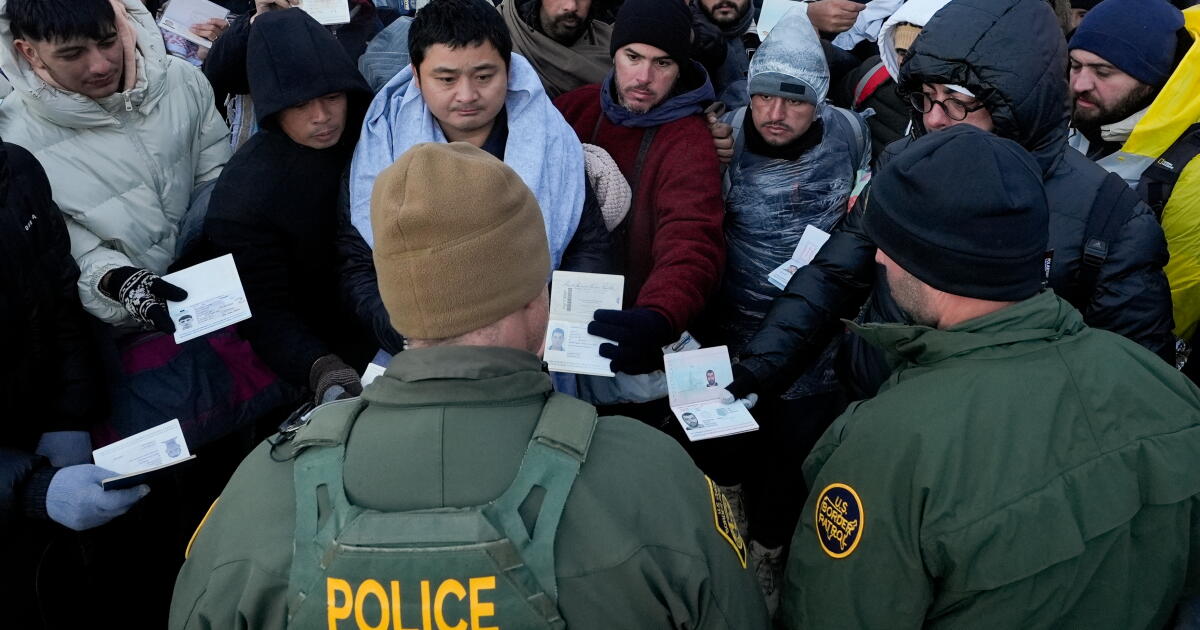
The family’s struggle is an extreme example of what migrants and asylum seekers across the United States are enduring, as federal officials rapidly expedite hearings, send cases to far-flung judges and use every tool in their legal toolbox to prioritize mass deportations without, immigration attorneys protest, any semblance of due process.
asserted
attorneys → endure → process
“It’s like: ‘Your hearing’s been moved up.
asserted
hearing → ’ → ?
Oh, now your hearing’s cancelled.
asserted
hearing → cancel → ?
Oh, now you have a new judge.
asserted
you → have → judge
Oh, that judge just quit, so now here’s another one.
asserted
one → quit → ?
Oh, we’re randomly going to move it to this other judge just because,’” said Genevra Alberti, a lawyer in Kansas City.
asserted
Alberti → go → City
“It doesn’t make any sense.
asserted
It → make → sense
Immigrants without attorneys are faring just as poorly, if not worse, with hearing dates set for next year suddenly pulled forward to just a few weeks’ time, giving them almost no notice to seek legal representation or prepare, according to a source with knowledge of the situation, who could not be named for fear of government retribution.
uncertain
who → fare → retribution
In this hostile environment for applicants, the rate of US immigration judges granting asylum has already plummeted, with 94% of cases denied in June, according to the Transactional Records Access Clearinghouse, in stark contrast with the Biden administration, when at certain times asylum grants eclipsed denials.
uncertain
grants → grant → denials
Children and some nationalities targeted by the second Trump administration, including Somali immigrants whom as a group Donald Trump has called “garbage” in past xenophobic rants, have been harmed even more than others, a number of attorneys said.
asserted
number → target → attorneys
Meanwhile, the administration’s aggressive tactics have plunged immigration courts into chaos as they collide with the reality of large-scale personnel departures, after a whopping 279 judges – 38% of the bench – resigned or were fired between October 2024 and the end of September 2026.
asserted
judges → plunge → September
Those experienced officials are now being replaced by the administration’s “deportation judges”, as the government refers to the role in some of its recruitment literature – often former military lawyers, immigration enforcement attorneys or prosecutors whose tenure has predictably coincided with an abundance of removal orders.
asserted
tenure → replace → orders
“The job has become so non-neutral that they can’t find anybody that wants to keep the job unless it’s these judges that they’re appointing to the ‘Somali rocket docket’ or to the kids’ dockets,” said Hannah Sullivan, an attorney outside St Louis, referring to expedited proceedings for Somalis and in many children’s cases, in front of a small number of chosen judges.
asserted
Sullivan → become → judges
“They’re known to deny and move cases as quickly as possible.
asserted
They → know → cases
The ones that were good and wanted to, you know, be a neutral arbiter have not stayed around,” she added.
asserted
she → want → ?
Sullivan said that the court where she practices in Kansas City lost two veteran judges back-to-back in recent months.
asserted
she → say → months
And even newer ones – Scott Ison who was appointed in April and Katherine Estes who was appointed in March – left almost as soon as they arrived.
asserted
they → appoint → March
“It’s been very difficult to get information from the court because nobody’s available to answer phones or emails,” Alberti said.
asserted
Alberti → get → phones
Sometimes she receives an answer to her urgent questions weeks later, and other times she never hears back, she said.
asserted
she → receive → questions
As short-staffed courts nevertheless contend with the administration’s pressure to rush immigrants on to deportation flights, many people are being ping-ponged to judges across the country, often nowhere near where they live, and sometimes outside the court circuits with specific case law that should apply to their situations.
asserted
that → staff → situations
That includes children.
asserted
That → include → children
A new plan has those who came to the US unaccompanied by a parent or legal guardian appearing before a select bench of judges who are not necessarily even hearing juvenile cases in their own courts, but instead adjudicating remotely across time zones and state lines.
“I don’t understand why they’re messing with the kids.
asserted
they → have → kids
It doesn’t make any sense to me.
asserted
It → make → me
But that’s what’s happening,” Alberti said.
asserted
Alberti → ’ → ?
Children will still have to show up in-person to their home courts, despite judges being virtual and based elsewhere, and adjudicators are being double-booked to funnel through two courts’ full caseloads at once, said a source familiar with the situation who could not be named for fear of government retaliation.
uncertain
who → have → retaliation
“It’s insane.
asserted
It → ’ → ?
Just insane,” the source said.
asserted
source → say → ?
The latest onslaught comes amid a barrage of legal attacks against these children, even as a growing army of lawyers rallies to try to protect them.
asserted
army → come → them
The children are being denied the time they need to access pathways to citizenship for which, a number of advocates stressed, they qualify, as the administration sets what appear to be arbitrary deadlines for judges to end their cases – while also defunding many of their attorneys.
asserted
judges → deny → attorneys
All this can mean immigration lawyers having to rush to the point where children are being pulled out of class at school so that they can practice describing some of their greatest life traumas that are at the heart of their asylum cases.
asserted
that → mean → cases
Sometimes, lawyers recounted, they may not have processed the effects of what happened to them yet but still have to confront those memories in preparation for an accelerated court hearing that could change their whole life.
uncertain
that → recount → life
“[Government officials] are not giving us the chance to build the record.
asserted
officials → give → record
They’re not giving us time to prepare the cases.
asserted
They → give → cases
…and 4 more, not listed.
 The Aporia