A New York woman who says she has cared for a thin strip of land next to her house for almost 30 years can move forward with a lawsuit over who owns it, despite her neighbors trying to stop her claim.
uncertain
neighbors → say → claim
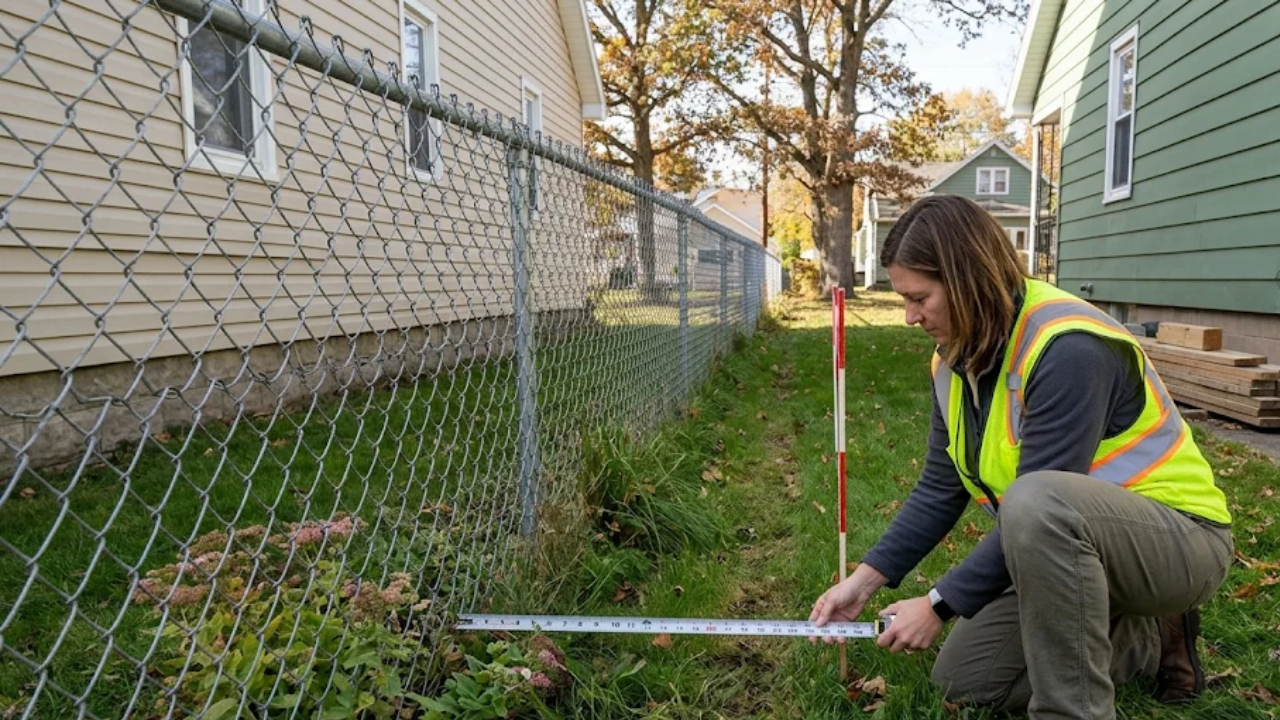
The strip of land is only 18 to 24 inches wide, yet it runs about 165 feet along the line between the two yards.
asserted
it → run → yards
Lauren Sullivan says she has used, cared for, and improved the space for around 29 years, arguing that taking care of the land for so long gives her the legal right to own it.
asserted
taking → say → it
Her neighbors, Lisa Walts and John Walts III, disagree, saying the issue is just a small border mistake involving a chain-link fence.
asserted
issue → disagree → fence
In a ruling dated 12 November 2026, New York Supreme Court Justice Elizabeth Snyder Fortino refused to throw out Sullivan's lawsuit and turned down the neighbors' request to decide the case right away without a full trial, known as summary judgment.
asserted
Fortino → date → judgment
This lets the fight continue so the court can look closer at the facts.
asserted
court → let → facts
The ruling does not mean Sullivan owns the land; instead, it means her claims raise enough legal and factual questions to keep the case going.
uncertain
claims → mean → case
The decision was posted on Justia as Sullivan v Walts, under the citation 2026 NY Slip Op 51905(U).
asserted
decision → post → citation
Dispute centres on a narrow boundary strip
asserted
Dispute → centre → strip
According to Sullivan's lawsuit, the land in question sits right along the shared border of the two homes in Oneida County, New York.
uncertain
land → accord → County
She states that she has controlled the strip openly, on her own, and without a break for about 29 years, keeping up and improving the space while treating it as part of her own yard.
asserted
she → state → yard
Sullivan is asking the court to declare her the owner under Article 15 of New York's Real Property Actions and Proceedings Law (RPAPL).
asserted
her → ask → Law
Her case relies on a legal rule called adverse possession, which lets a person gain legal ownership of land after using it for a set number of years under specific rules.
asserted
person → rely → rules
The lawsuit also includes separate complaints for trespassing and private nuisance.
asserted
lawsuit → include → trespassing
Sullivan claims that building work done by her neighbors got in the way of her property and pushed rainwater runoff onto her yard, making up her first legal complaint separate from the fight over who owns the strip.
uncertain
who → claim → strip
The neighbors challenged the land ownership claim before they even filed their official response to the lawsuit.
uncertain
they → challenge → lawsuit
According to the court's summary, they argued that Sullivan only mowed the grass, planted flowers, and did basic upkeep on the small strip, stating that these simple tasks are not enough to win ownership under New York law.
uncertain
tasks → accord → law
Neighbours challenge ownership claim
uncertain
Neighbours → challenge → claim
To back up their side, the neighbors used a land survey dated 15 July 2026, made by Bradley G. Pcolinsky.
asserted
neighbors → back → Pcolinsky
As noted in the court ruling, the survey showed that Sullivan's chain-link fence went past the official property line and onto a thin piece of the neighbors' yard.
asserted
fence → note → yard
The neighbors also handed in photos and a sworn written statement describing the strip, proving that there were no major buildings or upgrades on the land besides a four-foot chain-link fence.
asserted
neighbors → hand → fence
They argued that cutting grass, planting flowers, and doing normal yard work do not count as the type of control needed to gain ownership through adverse possession.
asserted
cutting → argue → possession
The court agreed that New York judges have turned down ownership claims based only on small border crossings or basic yard care, yet Justice Fortino said the proof shown so far is not enough to end the fight at this early point.
uncertain
proof → agree → point
What the law says about adverse possession
Under the version of New York's adverse possession law that applies to Sullivan's case, anyone trying to claim land must prove several things.
uncertain
anyone → say → things
Their use of the land must be without permission, under a claim of right, actual, open for all to see, exclusive to them, and unbroken for the required number of years.
uncertain
all → see → years
If the person does not have a written deed for the land, they must also prove the space was usually farmed, improved, or blocked off by a solid fence or wall.
asserted
space → have → fence
The court pointed to past cases, including Walling v Przybylo (2006) and Estate of Becker v Murtagh (2012), to explain these legal rules.
asserted
court → point → rules
Sullivan specifically states that her ownership rights were locked in before changes to Article 5 of the RPAPL took effect in 2008.
asserted
changes → state → 2008
This detail matters because the judge has to use the laws that were in place during the years Sullivan says she earned ownership.
asserted
she → matter → ownership
Justice Fortino decided that Sullivan had properly listed all the needed parts of an adverse possession claim in her initial paperwork.
uncertain
Sullivan → decide → paperwork
However, writing a valid complaint is different from proving a case in court, and Sullivan will still have to back up her claims with clear and convincing proof at trial.
uncertain
Sullivan → write → trial
Judge says more evidence is needed
A main reason the judge let the case continue was that the court did not yet have all the facts.
asserted
court → say → facts
Justice Fortino noted that several big questions still needed answers, including when the chain-link fence was put up, who built it, and whether past owners of both homes treated it as the true property line.
asserted
owners → note → line
The court also said it was not clear how much work or improvement Sullivan had actually done on the strip over the decades, or whether she had permission to use the land or took it over without asking.
asserted
she → say → it
This difference matters because simply using or caring for someone else's yard does not automatically make it yours.
asserted
it → matter → yard
The judge also questioned whether the strip was farmed or improved enough to meet the old law's rules, and whether the chain-link fence counts as a solid enclosure.
asserted
fence → question → enclosure
To explain why more digging was needed, the court looked at Estate of Becker v Murtagh, which had proof of decades of upkeep, landscaping, building, and other actions that matched true ownership.
asserted
that → explain → ownership
The judge also looked at a 2026 Court of Appeals ruling involving the Genesee County Fish and Game Protective Association, where the group proved long-term care of a disputed road by plowing, paving, patching, and fixing it.
asserted
group → look → it
Justice Fortino pointed out that Sullivan's case is different because the two sides have not yet gone through the formal evidence-gathering phase, called discovery.
asserted
sides → point → phase
The judge noted that Sullivan has not yet been questioned under oath, and the court has not heard from past owners of the homes, meaning the court cannot yet decide if her yard work is enough to win ownership.
Trespass and nuisance claims also survive
The fight over who owns the strip is not the only part of Sullivan's lawsuit moving forward.
uncertain
who → note → lawsuit
…and 11 more, not listed.
 The Aporia