Photo via Reason

New PBS Documentary Explores the History of Criminal Justice in the U.S.

Read the original at Reason ↗
Cite

Ciaramella, C. (2026, November 16). New PBS Documentary Explores the History of Criminal Justice in the U.S. Reason. https://reason.com/2026/11/16/new-pbs-documentary-explores-the-history-of-criminal-justice-in-the-u-s/

Dated from the outlet's own feed. Check the original for its byline.

Reason · collected 2026-11-16 · by C.J. Ciaramella

Quick Summary

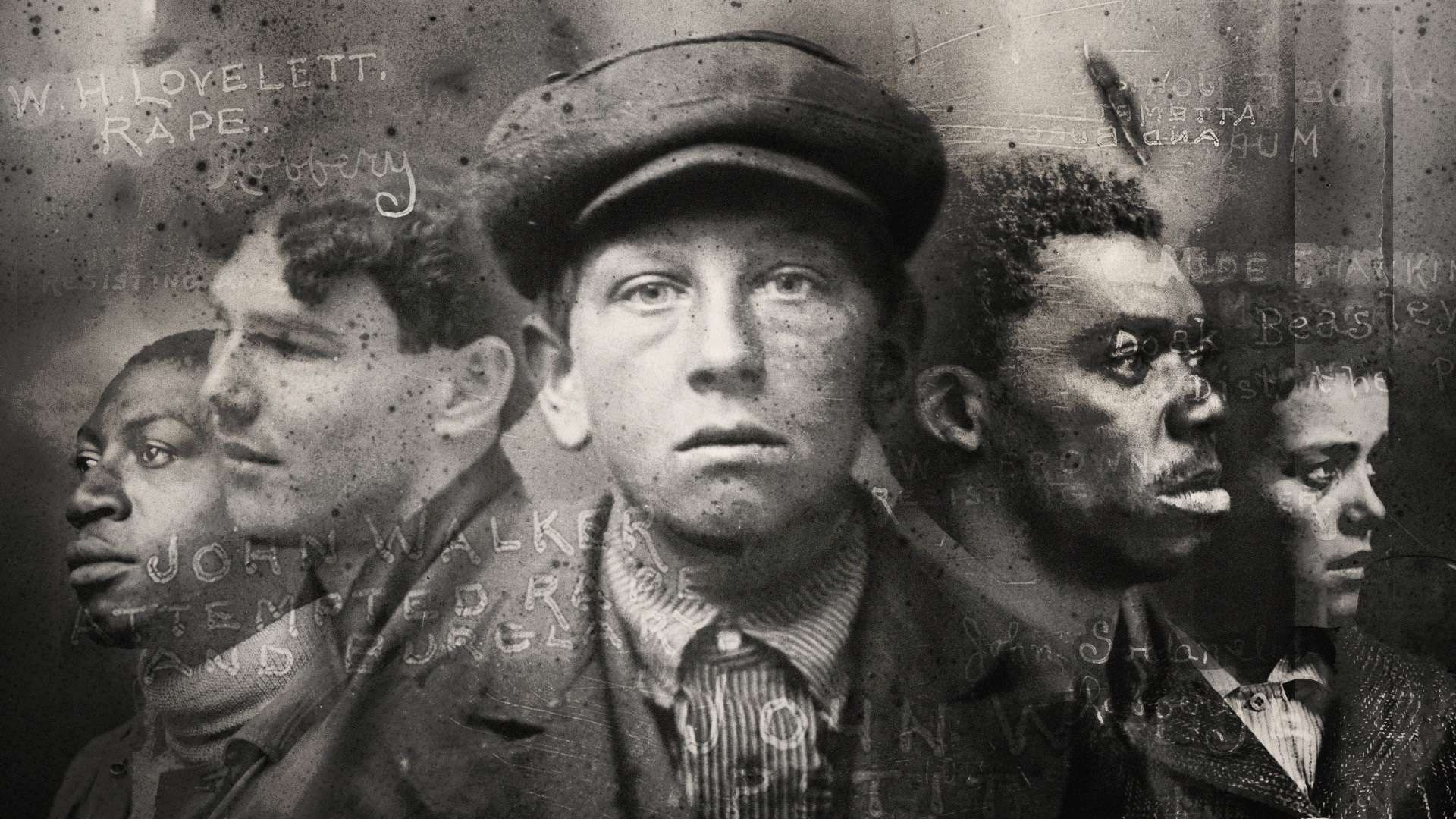
A new PBS documentary series, "Crime and Punishment in America," premieres tonight, offering a comprehensive history of the U.S. criminal justice system. Written, directed, and produced by Lynn Novick, the series explores the development of the penitentiary system in the early 19th century and the subsequent waves of prison reform over the last 250 years. Featuring interviews with key figures such as Bryan Stevenson and Larry Krasner, the series combines archival materials and expert commentary to trace the evolution of criminal punishment in America.
Written by AI on 2026-11-17, from this article's own text only (the story summary below draws on all the coverage).

AI analysis

Story summary

A new four-episode PBS documentary series, Crime and Punishment in America, debuted on November 16, 2026, offering a historical exploration of the U.S. criminal justice system. Produced and directed by Lynn Novick and executive produced by Ken Burns, the series examines the development of the modern penitentiary in the early 19th century as a move away from England's harsh public punishments and frequent executions. The documentary covers significant milestones such as the Attica prison riot in 1971, the passage of the Rockefeller drug laws, and the construction boom in prisons during the 1980s. Novick highlights the surprise of discovering that the penitentiary concept was a relatively recent innovation in criminal justice history.

Written for “PBS Documentary on Criminal Justice History” on 2026-11-21, grounded in this article and the 0 other(s) covering the same event.

Compared with similar articles

Nothing to compare against. No article is close enough to this one for the pipeline to have linked or judged the pair.

Story

PBS Documentary on Criminal Justice History
Crime & Law · 1 article(s) covering the same event.
How this article was measured signals, leaning charts, publisher record, byline, topics and claims

Signals How these are calculated →

Claims extracted
19
sentences that state something as happening or true
Uncertain
11%
2 of 19 hedged ("reportedly", "may", "according to")
Leaning
not political
takes no side on a contested political question
Publisher signals
67/100
Reason's corrections and hedging, across everything collected from it. Not a measure of accuracy.
Outlets on this story
1
Crime & Law
Same framing elsewhere
1
articles that frame the event the way this one does
Analyzed 2026-11-17 · how these are computed

How this is being covered How these are calculated →

Article leaning vs. publisher reliability
Source leaning vs. consistency

Publisher

Reason · 1464 article(s) · 4 correction(s) detected
Running correction rate · 4 correction(s)

Who wrote this

C.J. Ciaramella
13 article(s) here · 1 carrying a prediction
"I just couldn't really quite believe it, that this thing that seems so normal to us and has always been here—the prison, a place where you send people who have committed a crime for a period of time—that construct really didn't exist," Novick says.
"For 196 years, Virginia's Constitution has carried forward a Jim Crow-era policy excluding people from democracy because of a felony conviction," Sheba Williams, founder and executive director of Virginia nonprofit Nolef Turns, said in a press release.
If he wins on Tuesday, Donalds will have gone from a backbench congressman to Florida's first black governor in roughly six years, inheriting an office that has swelled in power under DeSantis.
We hope that sharing our story will bring attention to their reckless and unconstitutional attacks on our communities."
The Department of Justice (DOJ) announced Monday that it will investigate living conditions inside the Washington, D.C. Jail following years of reports of filth, medical neglect, and brutality.
It's unsporting to make jokes about a children's book written by teenagers, especially when proceeds from sales are going to a nonprofit for homeless kids, but take your pick of complaints: nepotism, pork-barrel politics, or the fact that Larra Mullin's DHS-chief father now oversees a massive network of human detention centers, which would be like if Ozzie's dad ran the dog pound.
Temporary fees tend to be like "temporary" emergency measures, but the judiciary says the extra revenue will cover the cost of completing a long-awaited modernization of the clunky and frustrating system, which it estimates will require $700 million to $800 million over six years.
The ACLU released the video, along with a declaration by Demster, as supplemental material in a lawsuit filed in mid-May alleging First Amendment retaliation by the Memphis Safe Task Force—a task force of local, state, and federal agencies that has occupied Memphis since last September at the order of President Donald Trump and Tennessee Gov. Bill Lee.
The government also argues that Moorman should not be allowed to discover the identities of those officers because it would risk "exposing those officers to serious harm." The ACLU of Ohio says the government is trying to shield the officers from accountability, not retaliation.
The OIG couldn't confirm or refute those allegations.
Also by C.J. Ciaramella
Nothing else under this byline is closely related to this article, so these are simply their most recent.
All 13 articles by C.J. Ciaramella →

Topics

America American England PBS Reason

Subjects

American NORP · 5× Novick PERSON · 4× Attica GPE · 3× Reason ORG · 3× PBS ORG · 2× America GPE · 1× England GPE · 1× Ken Burns PERSON · 1× Lynn Novick PERSON · 1× Rebecca McLennan PERSON · 1×

Narrative

One preview episode shared with Reason, "Episode IV: Getting Tough on Crime," begins with the infamous Attica prison riot in 1971 and moves through the passage of the Rockefeller drug laws and other harsh mandatory minimum sentences, the boom in prison construction during the 1980s, the creation of the victims' rights movement, through the tough-on-crime 1990s.
framing: assertive · carried by 1 article(s) · first seen 2026-11-17
"I just couldn't really quite believe it, that this thing that seems so normal to us and has always been here—the prison, a place where you send people who have committed a crime for a period of time—that construct really didn't exist," Novick says.

Claims (19 extracted, 2 hedged)

A new four-episode PBS documentary series, Crime and Punishment in America, debuts tonight and offers a deeply researched and engaging history of the country's efforts to create a fair and humane justice system. asserted
series → debut → system
Written, directed, and produced by Lynn Novick and executive produced by Ken Burns, the documentary explores one of the most interesting but lesser-explored angles of our country's history. asserted
documentary → write → history
Like Reason's recent cover story on the history of American prisons, the documentary recognizes that the question of what criminal punishment in a constitutional republic should look like has been, outside of the problem of race, perhaps the country's most consequential and enduring debate over the last 250 years. asserted
punishment → recognize → years
America was in fact where the modern penitentiary was created in the early 19th century, in an effort to move away from the public punishments and frequent executions that the nascent American states had inherited from England's criminal code. asserted
states → create → code
In an interview with Reason, Novick says the fact that the penitentiary was a relatively recent invention was one of the most surprising things she learned during her research. asserted
she → say → research
"I just couldn't really quite believe it, that this thing that seems so normal to us and has always been here—the prison, a place where you send people who have committed a crime for a period of time—that construct really didn't exist," Novick says. asserted
Novick → believe → time
The first generation of American prison reformers had noble intentions, but they also had an oversized confidence in their theories that resulted in macabre and fatal experiments with extreme solitary confinement. asserted
that → have → confinement
Novick says that one of her favorite quotes in the series comes from historian Rebecca McLennan, who says that the Founding Fathers had "a narcissistic self-regard that they could perform surgery on the souls of men. uncertain
they → say → men
The first wave of American prisons failed spectacularly, and the subsequent waves would continue failing in 40- to 50-year cycles, as the national mood swung back and forth between disgust over prison scandals and anxiety and outrage over crime. asserted
mood → fail → crime
The series features PBS' instantly recognizable documentary style of combining voluminous archival materials, A-list voice acting, immersive sound editing, and interviews with historians and firsthand sources to lead viewers through the historical arc of a big subject. asserted
series → feature → subject
The series features a who's-who of major figures in criminal justice over the past 50 years, from civil rights lawyer Bryan Stevenson to Philadelphia District Attorney Larry Krasner to former California Gov. Jerry Brown, as well as former correctional officers and inmates. asserted
series → feature → Brown
One preview episode shared with Reason, "Episode IV: Getting Tough on Crime," begins with the infamous Attica prison riot in 1971 and moves through the passage of the Rockefeller drug laws and other harsh mandatory minimum sentences, the boom in prison construction during the 1980s, the creation of the victims' rights movement, through the tough-on-crime 1990s. asserted
episode → share → 1990s
The documentary style is particularly effective in the case of more recent events, like the Attica riot and the retaking of the prison by state police, which left 30 incarcerated men and nine hostages dead. asserted
which → leave → men
One of the Attica negotiators recalls in an interview with the filmmakers that, when the negotiating team was pulled out, many of the inmates, sensing that the standoff was only going to end one way, started handing him pieces of paper with phone numbers of loved ones to call if they died. asserted
they → recall → ones
The biggest challenge for the series is that criminal justice intersects with so much of American history that there is too much material to conceivably cover. asserted
justice → intersect → history
At times the documentary zips through sections that could be entire episodes, such as the failure of prohibition, the creation of Japanese internment camps during WWII, and the criminalization of abortion pre-Roe. uncertain
that → zip → abortion
Still, Novick, who previously collaborated with Burns on The Vietnam War, Jazz, and Baseball, has a sure hand, and the depth of research and excellent interviews keep the material compelling, even for viewers familiar with many of the incidents the series covers. asserted
series → collaborate → incidents
The story of how America created the modern prison system, maintained it despite its repeated failures, and exported it to the rest of the world is rarely told, though. asserted
America → create → world
For many viewers, Crime and Punishment in America will be an eye-opening look into some of the darker corners of American history. asserted
Crime → open → history

Give feedback · no sign-in needed

No sign-in needed for now. Your note is sent without a name, so it cannot be answered.

History Support