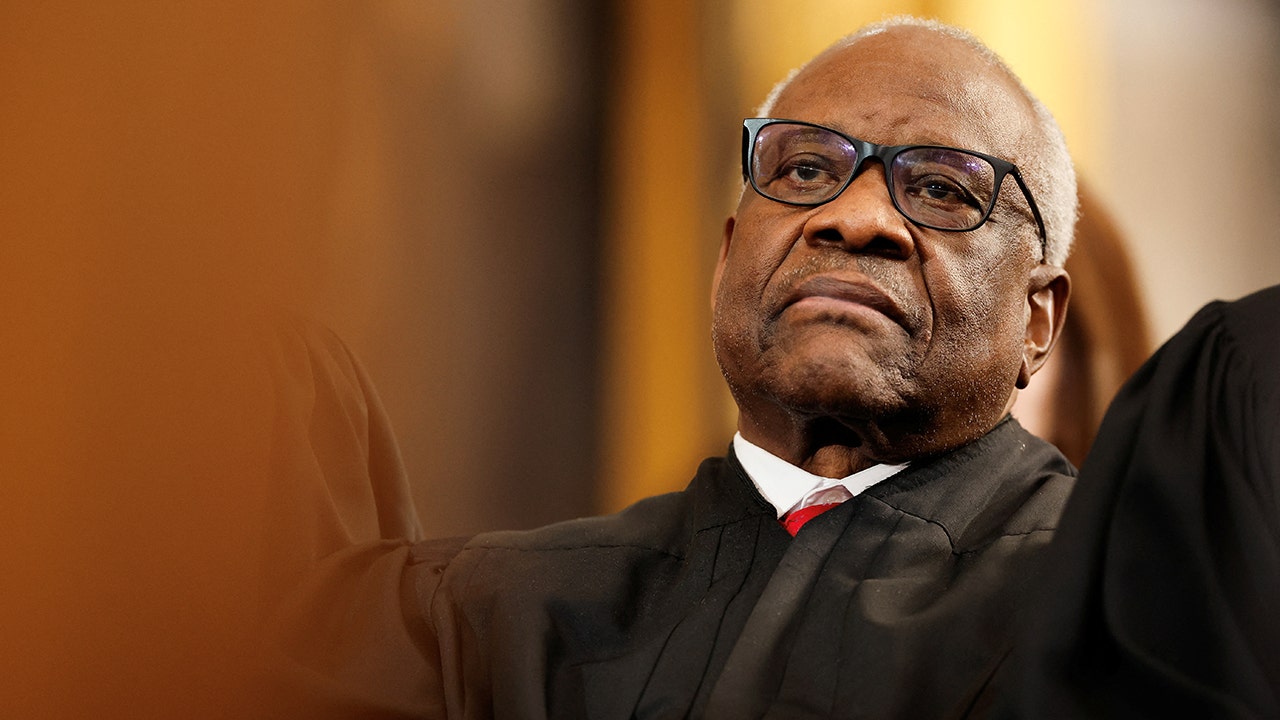
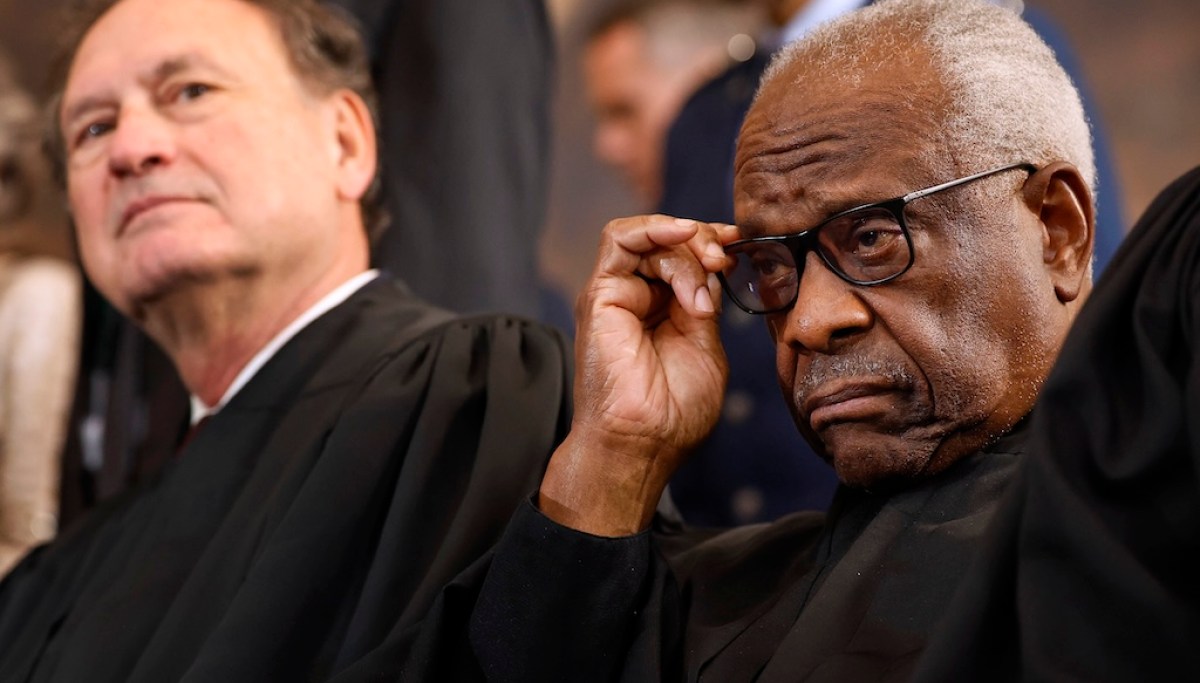
Justices Thomas and Alito on State Requirements That Continuing Professional Education Discuss Certain Topics

Read the original at Reason ↗
Cite

Volokh, E. (2026, November 16). Justices Thomas and Alito on State Requirements That Continuing Professional Education Discuss Certain Topics. Reason. https://reason.com/volokh/2026/11/16/justices-thomas-and-alito-on-state-requirements-that-continuing-professional-education-discuss-certain-topics/

Dated from the outlet's own feed. Check the original for its byline.

Reason · collected 2026-11-16 · by Eugene Volokh

Quick Summary

Justices Thomas and Alito disagree with the Ninth Circuit's decision in Khatibi v. Yip, which ruled that California's requirement for continuing medical education (CME) courses to discuss implicit bias does not violate the First Amendment. The justices argue that the CME requirement should be considered private speech, not government speech, and that the Ninth Circuit misapplied the Supreme Court’s Shurtleff v. Boston test, which determines whether speech is government speech or private speech. California mandates that CME courses cover implicit bias to improve healthcare outcomes, but Justices Thomas and Alito contend this infringes on First Amendment protections by treating private speech as government speech.
Written by AI on 2026-11-17, from this article's own text only (the story summary below draws on all the coverage).
See how they differ ↓

AI analysis

Story summary

On November 16, 2026, the Supreme Court declined to hear a case challenging California's requirement that physicians complete implicit bias training as part of their continuing medical education (CME). Justices Clarence Thomas and Samuel Alito strongly dissented, arguing that the mandate forces doctors to adopt government-approved viewpoints, thereby violating the First Amendment. The case, Khatibi v. Yip, was brought by Dr. Azadeh Khatibi and the right-of-center nonprofit Do No Harm, who argued that the training compels private instructors to convey a government-favored message. Thomas and Alito contended that the Ninth Circuit's decision to dismiss the case erred in finding that First Amendment scrutiny does not apply to compelled speech requirements, stating that heavy regulation should not override constitutional protections.

Written for “Conservative Justices Criticize California Bias Training” on 2026-11-21, grounded in this article and the 4 other(s) covering the same event.

How they differ

4 outlets covered “Conservative Justices Criticize California Bias Training”.

What each outlet says

One AI summary per outlet of its latest article on this story, written from that article alone and checked against it. Open the article for the outlet's own words.

ReasonThis outlet16 Nov

Justices Thomas and Alito disagree with the Ninth Circuit's decision in Khatibi v. Yip, which ruled that California's requirement for continuing medical education (CME) courses to discuss implicit bias does not violate the First Amendment. The justices argue that the CME requirement should be considered private speech, not government speech, and that the Ninth Circuit misapplied the Supreme Court’s Shurtleff v…

Justices Thomas and Alito on State Requirements That Continuing Professional Education Discuss Certain Topics (this article)
New York Post17 Nov

Justices Clarence Thomas and Samuel Alito criticized California's requirement for medical license renewals to include "implicit bias" training, arguing it is a form of compelled speech that violates free speech protections. They issued a dissent after the Supreme Court declined to hear an appeal from Dr. Azadeh Khatibi, who challenged the training requirement as censorship. The dissent asserts that the Ninth Circuit…

Conservative Supreme Court justices slam California’s use of ‘implicit bias’ training as ‘cover for censorship’ →2 articles from New York Post on this story
Washington Examiner16 Nov

On Monday, the Supreme Court declined to review a case, Khatibi v. Yip, which challenged California’s requirement for doctors to complete “implicit bias training” as part of their license renewal process. Justice Clarence Thomas, joined by Justices Samuel Alito and Neil Gorsuch, issued a dissent arguing that the mandatory training violates the First Amendment by compelling doctors to adopt certain viewpoints. The…

Justices Thomas and Alito slam high court for rejecting challenge to ‘implicit bias’ training for doctors →
Fox News16 Nov

Justice Clarence Thomas has criticized the Supreme Court's decision to not review a case involving a California law that requires physicians to teach about implicit bias in their continuing education courses. In his dissent, Thomas, joined by Justice Samuel Alito, argued that the law could compel private citizens to express viewpoints they disagree with, potentially violating the First Amendment. The case involves…

Clarence Thomas calls foul on California ruling he says could turn citizens into government mouthpieces →

Compared with similar articles

This article reads leans strongly right and hedges 13% of its claims. Each row says how that neighbour differs.
Washington Examiner
Hedges 1 of 4 claims Outlet record 67/100
New York Post
Hedges 6 of 29 claims Outlet record 66/100
New York Post
Leans strongly right Hedges 2 of 12 claims Outlet record 66/100

Story

Conservative Justices Criticize California Bias Training
Politics · 5 article(s) covering the same event. See how they differ ↑
How this article was measured signals, leaning charts, publisher record, byline, topics and claims

Signals How these are calculated →

Claims extracted
77
sentences that state something as happening or true
Uncertain
13%
10 of 77 hedged ("reportedly", "may", "according to")
Leaning
Leans strongly right
of the writing, not the subject · beta estimate
Publisher signals
67/100
Reason's corrections and hedging, across everything collected from it. Not a measure of accuracy.
Outlets on this story
5
Politics
Same framing elsewhere
1
articles that frame the event the way this one does
Analyzed 2026-11-17 · how these are computed

How this is being covered How these are calculated →

Article leaning vs. publisher reliability
Source leaning vs. consistency

Publisher

Reason · 1464 article(s) · 4 correction(s) detected
Running correction rate · 4 correction(s)

Who wrote this

Eugene Volokh
220 article(s) here · 1 carrying a prediction
{[N]otwithstanding the ordinary meaning and usage of "actual malice," "allegations of ill-will, improper motive or personal animosity play no role in determining whether a defendant acted with actual malice," which "does not concern ill-will, improper motive, or personal animosity," a conclusion which appears correct, in law if not elsewhere in the English language or in the common understanding.
She may "[d]iscuss [her] religious beliefs with interested colleagues," "[s]hare why [her] faith is meaningful to [her]," "[p]olitely invite coworkers to religious services or events," "[e]xpress religious viewpoints during appropriate conversations."
Under Maryland law, an individual may not carry a firearm in public demonstrations, mass transit, places of amusement, healthcare facilities, locations that sell alcohol for onsite consumption, and tens of thousands of acres of state park and forest land.
I would have granted certiorari to clarify the government-speech doctrine.
"In the limited circumstance where a business requires nudity as a central purpose of the business," the addition reads, "such business may maintain a rule that entry to spaces where nudity is required be based on genital characteristics."
As the Church grew, Gioia began to look for a new space that could accommodate a larger group.
From Judge W. Scott Hardy in Doe v. Blank Rome LLP, the opinion was issued under seal in May, but just unsealed last week (at my behest): Plaintiff is an attorney who filed a detailed, 197-paragraph Complaint under the pseudonym "Jane Doe" against Defendant Blank Rome LLP …, her former employer, alleging claims for sex discrimination, hostile work environment, and retaliation pursuant to Title VII ….
{The Government was clear that any search of the contents of the phone would utilize a taint team to protect privileged information.}
Like it would not have had the legs it had if he hadn't posted about it.
Also by Eugene Volokh
Open Thread
2026-11-18 · Reason
Open Thread
2026-11-17 · Reason
Nothing else under this byline is closely related to this article, so these are simply their most recent.
All 220 articles by Eugene Volokh →

Topics

CME California First Amendment State The Ninth Circuit

Subjects

California GPE · 6× Shurtleff PERSON · 4× State ORG · 3× The Ninth Circuit ORG · 3× Alito PERSON · 2× CME ORG · 2× Do No Harm ORG · 2× Khatibi PERSON · 2× Thomas PERSON · 1× Yip PERSON · 1×

Narrative

From Justice Thomas's dissent from denial of certiorari today in Khatibi v. Yip, joined by Justice Alito (Justice Gorsuch voted to grant the petition, but didn't sign on to the dissent): In 2022, California began requiring private instructors in privately run and privately accredited continuing medical education (CME) courses to discuss how so-called implicit bias affects healthcare outcomes.
framing: assertive · carried by 1 article(s) · first seen 2026-11-17
I would have granted certiorari to clarify the government-speech doctrine.

Claims (77 extracted, 10 hedged)

From Justice Thomas's dissent from denial of certiorari today in Khatibi v. Yip, joined by Justice Alito (Justice Gorsuch voted to grant the petition, but didn't sign on to the dissent): In 2022, California began requiring private instructors in privately run and privately accredited continuing medical education (CME) courses to discuss how so-called implicit bias affects healthcare outcomes. asserted
bias → join → outcomes
The Ninth Circuit held that First Amendment scrutiny did not apply to this compelled-speech requirement because the breadth of California's CME regulation renders the content of any CME course government speech, not private speech. asserted
breadth → hold → speech
That logic fundamentally misunderstands this Court's precedents and the Constitution. asserted
logic → misunderstand → precedents
First Amendment protections do not give way simply because a State heavily regulates speech. asserted
State → give → speech
I would have granted certiorari to clarify the government-speech doctrine. asserted
I → grant → doctrine
At a minimum, the Ninth Circuit misapplied Shurtleff v. Boston (2022), which instructs courts to identify government speech by considering (1) "the history of the expression at issue," (2) "the public's likely perception as to who (the government or a private person) is speaking," and (3) "the extent to which the government has actively shaped or controlled the expression." asserted
government → misapply → expression
The Ninth Circuit collapsed those distinct inquiries, focusing on the breadth of the government's regulatory scheme at each step. asserted
Circuit → collapse → step
More fundamentally, however, Shurtleff is leading courts astray. asserted
Shurtleff → lead → courts
I joined Justice ALITO's concurrence in Shurtleff, which warned that the majority's three-factor test could cause courts to conclude that extensive government regulation transforms a private message into government speech exempt from First Amendment scrutiny. uncertain
regulation → join → scrutiny
As the Ninth Circuit's decision shows, those concerns were prescient. asserted
concerns → show → ?
This Court should reconsider whether the Shurtleff test is the proper mode of analysis for identifying government speech… California-licensed physicians are required to complete 50 hours of approved CME every two years. Credit-eligible CME courses are often organized by private entities, certified by private accreditors, and taught by private instructors. asserted
courses → reconsider → instructors
The State does not preapprove course content but reserves the right to audit courses for compliance with its CME standards. asserted
State → preapprove → standards
The Medical Board of California "adopt[s] and administer[s] [CME] standards," few of which relate to course content. asserted
few → adopt[ → content
In addition, the State requires that CME courses broadly relate to the medical profession. asserted
courses → require → profession
They must "serve to maintain, develop, or increase the knowledge, skills, and professional performance that a physician and surgeon uses to provide care, or to improve the quality of care provided to patients." asserted
physician → serve → patients
In 2019, however, the California Legislature added a requirement that after January 1, 2022, all CME courses must "contain curriculum that includes the understanding of implicit bias." asserted
that → add → bias
To satisfy that requirement, CME courses must contain "[e]xamples of how implicit bias affects perceptions and treatment decisions of physicians and surgeons, leading to disparities in health outcomes" or "[s]trategies to address how unintended biases in decisionmaking may contribute to health care disparities. uncertain
biases → satisfy → disparities
Petitioners Dr. Azadeh Khatibi and Do No Harm do not want to speak California's preferred message on implicit bias, and they challenged § 2190.1(d) as compelling speech in violation of the First Amendment. asserted
they → Do → Amendment
Dr. Khatibi, a California-licensed ophthalmologist, creates and teaches CME courses. asserted
Khatibi → license → courses
She "disagrees that implicit bias is the primary factor driving disparities in healthcare" and does not want to devote time to the subject during her courses. asserted
bias → disagree → courses
At least one of its members teaches CME courses and believes that implicit bias trainings "have not been shown to successfully reduce barriers to healthcare, and instead risk infecting healthcare decisions with divisive and discriminatory ideas." asserted
trainings → teach → ideas
Yet, California's implicit-bias-training requirement leaves petitioners no choice but to discuss the topic in a way that affirms the State's view that implicit bias causes "disparities in health outcomes….. asserted
bias → leave → outcomes
The Ninth Circuit held that all three Shurtleff factors indicate that "CMEs eligible for Board credit constitute government speech." asserted
CMEs → hold → speech
At every step of the analysis, the Ninth Circuit emphasized the breadth of the State's regulation. asserted
Circuit → emphasize → regulation
Considering history, the court noted that California "has long regulated the practice of medicine as an exercise of the police power" and has "adopted, updated, and enforced CME standards." asserted
California → consider → standards
Considering the public's likely perception of the speaker in a CME course, the court reasoned that "licensees could attribute approved CMEs' content to California" because "their profession is heavily regulated." uncertain
profession → consider → California
Considering the extent to which the government has shaped the expression, the court cited "California's extraordinary control over accredited CMEs." asserted
court → consider → CMEs
As Judge VanDyke explained in his dissent from the denial of rehearing en banc, the panel's "approach boil[ed] down to a single-factor analysis: does the government 'heavily' or 'actively' regulate CMEs?" asserted
government → explain → CMEs
In its blinkered application of the Shurtleff factors, the Ninth Circuit lost sight of the core government-speech inquiry: whether the government is "speak[ing] for itself or … regulat[ing] private expression." asserted
government → lose → expression
The government-speech doctrine occupies a narrow corner of our First Amendment jurisprudence. asserted
doctrine → occupy → jurisprudence
The First Amendment protects the people's right of free speech against government interference; it does not prevent the government from speaking for itself. asserted
it → protect → itself
"But courts must be very careful when a government claims that speech by one or more private speakers is actually government speech." uncertain
speech → claim → speakers
"If private speech could be passed off as government speech by simply affixing a government seal of approval, government could … muffle the expression of disfavored viewpoints," or, as here, require private speakers to convey government messages without facing any constitutional scrutiny. uncertain
government → pass → scrutiny
This Court has thus exercised "great caution" before characterizing a message as government speech. asserted
Court → exercise → speech
In Johanns v. Livestock Marketing Assn (2005), we held that government-sponsored beef ads constituted government speech because the government determined "the overarching message" of the ads, helped develop proposals for the ads, reviewed every ad "for substance and for wording," and the Secretary of Agriculture "exercise[d] final approval authority over every word used in every" ad. asserted
Secretary → hold → ad
In Pleasant Grove City v. Summum (2009), we held that the permanent display of monuments in a public park was government speech because the City "effectively controlled the messages sent by the monuments in the Park by exercising final approval authority over their selection." asserted
City → hold → selection
And, in Walker v. Texas Div., Sons of Confederate Veterans, Inc. (2015), we held that the messages on government-issued license plates, over which the State "maintain[ed] direct control," were government speech. asserted
State → hold → control
Since Walker—which we have described as the "outer boun[d] of the government-speech doctrine," Matal v. Tam (2017)—we have been careful to distinguish between government control over messages and government control over the broader scheme through which the messages are communicated. asserted
messages → describe → which
We held, for example, that trademarks are private speech, notwithstanding the government's substantial involvement in the registration process. asserted
trademarks → hold → process
And, this Court held that flags flown outside of Boston's City Hall did not constitute government speech in part because the city regularly permitted private groups to freely fly their own colors. asserted
city → hold → colors
…and 37 more, not listed.

Give feedback · no sign-in needed

No sign-in needed for now. Your note is sent without a name, so it cannot be answered.

History Support