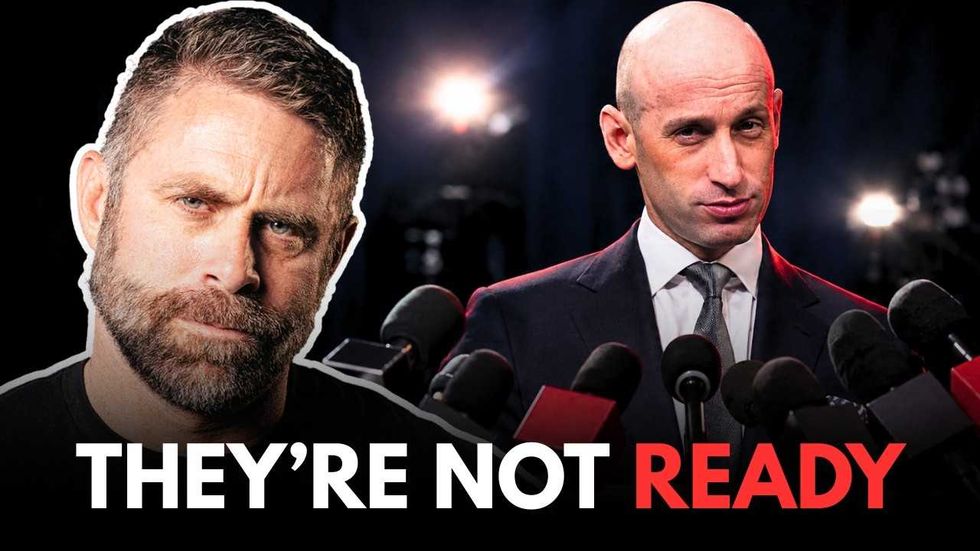
Photo via The Guardian

How the rightwing operative David Horowitz shaped Stephen Miller | Sidney Blumenthal

Read the original at The Guardian ↗
Cite

Blumenthal, S. (2026, November 17). How the rightwing operative David Horowitz shaped Stephen Miller | Sidney Blumenthal. The Guardian. https://www.theguardian.com/commentisfree/2026/nov/17/david-horowitz-stephen-miller

Dated from the outlet's own feed. Check the original for its byline.

The Guardian · collected 2026-11-17 · by Sidney Blumenthal

Quick Summary

Sidney Blumenthal examines how Stephen Miller, a key figure in the Trump administration, embodies and amplifies the president's toxic leadership style. Blumenthal highlights Miller's extreme rhetoric and tactics, such as dismissing critics as enemies and using inflammatory terms like "invasion" to describe immigration. The piece argues that Miller's ideological stance and rhetorical approach are rooted in a sense of superiority and a narrative of existential threat, drawing on white nationalist themes.
Written by AI on 2026-11-17, from this article's own text only (the story summary below draws on all the coverage).

AI analysis

Story summary

Stephen Miller has risen to a prominent position in the White House following Donald Trump's defeat in the midterm elections. Trump has elevated Miller, despite the repudiation, as his ideal enforcer. This move by Trump is seen as a denial of his own failure, according to Sidney Blumenthal's analysis in The Guardian. Trump's decision reflects his preference for those who share his worldview, rejecting any adults who might seek to negotiate with the new congressional leadership. In an interview with 60 Minutes, Trump expressed his wish to avoid "hell" and stressed his unwillingness to forgive his critics, describing some of them as "terrible enemies." Miller, with his superiority complex, complements Trump's narcissism, fulfilling a role that aligns with Trump's vision of himself.

Written for “David Horowitz's Influence on Stephen Miller” on 2026-11-21, grounded in this article and the 0 other(s) covering the same event.

Compared with similar articles

This article reads leans strongly left and hedges 9% of its claims. Each row says how that neighbour differs.
Blaze Media
Hedges 1 of 27 claims Outlet record 94/100
“The articles describe different aspects of Stephen Miller's role in the Trump administration and do not focus on the same specific event or incident.”
Mother Jones
Leans strongly left Hedges 8 of 91 claims Outlet record 60/100
“The articles discuss different aspects of President Trump's comments on CBS’ 60 Minutes and do not focus on the same specific event or incident.”
The Daily Wire
Leans strongly right further right than this Hedges 2 of 42 claims Outlet record 60/100
“The articles discuss Stephen Miller's rise and actions in the White House, but they describe different aspects and do not clearly refer to the same specific incident or time frame.”

Story

David Horowitz's Influence on Stephen Miller
Politics · 1 article(s) covering the same event.
How this article was measured signals, leaning charts, publisher record, byline, topics and claims

Signals How these are calculated →

Claims extracted
79
sentences that state something as happening or true
Uncertain
9%
7 of 79 hedged ("reportedly", "may", "according to")
Leaning
Leans strongly left
of the writing, not the subject · beta estimate
Publisher signals
64/100
The Guardian's corrections and hedging, across everything collected from it. Not a measure of accuracy.
Outlets on this story
1
Politics
Same framing elsewhere
1
articles that frame the event the way this one does
Analyzed 2026-11-17 · how these are computed

How this is being covered How these are calculated →

Article leaning vs. publisher reliability
Source leaning vs. consistency

Publisher

The Guardian · 2657 article(s) · 9 correction(s) detected
Running correction rate · 9 correction(s)

Who wrote this

Sidney Blumenthal
4 article(s) here · 1 carrying a prediction
Appointing Miller is Trump’s denial that he is the worst thing he could possibly imagine: a loser.
Moynihan wrote:“Here is a theory that clearly implies that there are circumstances in which society will choose not to notice behavior that would be otherwise controlled, or disapproved, or even punished.”
If Donald Trump could, he would fly to Munich to sign away Ukraine to Vladimir Putin, and return to wave the document as “peace in our time”, hoping to claim at least the second Fifa peace prize.
Obsessed with his fortune hunting, he couldn’t care less about the political consequences for ill-fated Republican candidates in the midterm elections who must face the music for the harm he is doing to their states.
Also by Sidney Blumenthal
Nothing else under this byline is closely related to this article, so these are simply their most recent.

Topics

60 Minutes America Congress the Department of Homeland Security the White House

Subjects

Miller PERSON · 18× Trump PERSON · 14× America GPE · 2× Stephen Miller PERSON · 2× 60 Minutes ORG · 1× Congress ORG · 1× Donald Trump’s PERSON · 1× Miles Taylor PERSON · 1× the Department of Homeland Security ORG · 1× the White House ORG · 1×

Narrative

After Miller graduated from Duke, where he used the Horowitz front group, Students for Academic Freedom, to attack multiculturalism and liberalism as the campus crank, Horowitz secured for him a series of jobs, first as press secretary for the representative Michelle Bachmann, of Minnesota, a Tea Party radical, and then with the senator Jeff Sessions, of Alabama.
framing: assertive · carried by 1 article(s) · first seen 2026-11-17
Appointing Miller is Trump’s denial that he is the worst thing he could possibly imagine: a loser.

Claims (79 extracted, 7 hedged)

Stephen Miller has risen to the top of the White House in the downdraft of Donald Trump’s abject defeat in the midterm elections. asserted
Miller → rise → elections
It is no irony to Trump that he has elevated Miller as his ideal bullying enforcer only after Trump’s own thorough repudiation. asserted
he → elevate → repudiation
Appointing Miller is Trump’s denial that he is the worst thing he could possibly imagine: a loser. uncertain
he → appoint → Miller
Trump has no more time for adults in the room who might want to negotiate with the new powers-that-be in the Congress. uncertain
that → have → Congress
He has searched his soul, as he explained in his interview on 60 Minutes, entertaining his wish to ascend to heaven. asserted
he → search → heaven
“I don’t want to go to hell,” he said. asserted
he → want → hell
Asked about “forgiveness” of his critics, Trump disparaged “forgiveness”. asserted
Trump → ask → forgiveness
“I can use the word hate, I do hate some of my enemies. asserted
I → use → enemies
I think they’re – they’ve been terrible. asserted
they → think → ?
Look what they’ve put me through, the weaponization. asserted
they → look → me
I got indicted–” asserted
I → indict → ?
Miller’s superiority complex neatly complements Trump’s malignant narcissism. asserted
complex → complement → narcissism
His life has led to this consummation. asserted
life → lead → consummation
Miller feels most superior, most himself, servicing Trump’s megalomania. asserted
Miller → feel → megalomania
Miles Taylor, the chief of staff at the Department of Homeland Security in the first Trump term, recalls being present when, after a lower federal court decision went against the administration, Trump banged his desk. asserted
Trump → recall → desk
“We need to get rid of the judges,” he reportedly said. uncertain
he → need → judges
In Taylor’s account, Miller piped up: “Yes sir, a country without judges would help. asserted
country → pip → judges
Miller projects his superiority complex as more than the lament of the lonely truth-teller. asserted
Miller → project → teller
He debases opponents as “dumb”, “stupid”, “ignorant” and“foolish”. asserted
He → debase → opponents
He construes every issue as Manichean, zero-sum and existential. asserted
He → construe → issue
Those who disagree with him are not only illegitimate but also threaten the survival of the nation. asserted
who → disagree → nation
“If it wasn’t for President Trump, the United States of America would not exist right now. asserted
States → exist → America
This man saved America,” he said this month. asserted
he → save → America
Miller’s technique of vicious denigration denies that his opponents have any credibility without ever engaging their arguments. asserted
opponents → deny → arguments
His absolutism wraps him in total authority in order to intimidate and dominate any discussion. asserted
absolutism → wrap → discussion
His vehemence signals he is fighting a righteous crusade against nefarious enemies, from “wokeism” to “diversity” to the “deep state”. asserted
he → signal → state
Miller’s sophistry echoes the “great replacement theory”, still another expression of his superiority complex, which recycles white nationalist tropes. asserted
which → echo → tropes
He is a fan of the 1973 neo-fascist, racist novel The Camp of the Saints, in which third-world masses invade a decadent Europe. asserted
masses → invade → Europe
Miller uses the word “invasion” routinely to characterize immigration. asserted
Miller → use → immigration
“We are being conquered,” Miller has said. asserted
Miller → conquer → ?
“This is a complete resettlement of America in real time … a generation from now … people will not know the country that they are living in.” asserted
they → know → that
Once again, Miller uses the word “invasion”: birthright citizenship is “the biggest, costliest scam in financial history … it is the number one magnet for illegal immigration and invasion.” asserted
it → use → immigration
“The powers of the president to protect our country are very substantial and will not be questioned,” Miller said. asserted
Miller → protect → country
His fuhrerprinzip inferentially includes the leader’s shadow, Miller himself, who also “will not be questioned”. asserted
who → include → shadow
Miller’s fanaticism has its sources in obvious rightwing motivation, but in his case his tutelage took place under an unusual mentor in the Bolshevik style of invective. asserted
tutelage → have → invective
If ever there is a classic contemporary example of status anxiety as the origin of radical right resentment, it is that of Stephen Miller. asserted
it → be → Miller
Miller’s father, a real estate investor, lost money, and the family moved from a luxurious home in Santa Monica to a smaller one in a more diverse neighborhood. asserted
family → lose → neighborhood
Instead of attending a private school, Stephen went to Santa Monica High, highly ranked with a large Latino student presence. asserted
Stephen → attend → presence
“Hi, I’m Stephen Miller, some of you may or may not know who I am,” Miller said to an assembly when he ran for the student council. uncertain
he → ’m → council
“I’m the only candidate up here who stands out … asserted
who → ’m → ?
…and 39 more, not listed.

Give feedback · no sign-in needed

No sign-in needed for now. Your note is sent without a name, so it cannot be answered.

History Support