Photo via NPR

Can Google win the AI race without killing its cash cow?

Read the original at NPR ↗
Cite

Rosalsky, G. (2026, November 17). Can Google win the AI race without killing its cash cow? NPR. https://www.npr.org/sections/planet-money/2026/11/17/g-s1-153933/can-google-win-the-ai-race-without-killing-its-cash-cow

Dated from the outlet's own feed. Check the original for its byline.

NPR · collected 2026-11-17 · by Greg Rosalsky

Quick Summary

The article explores whether Google can maintain its dominance in the AI era without undermining its core search advertising business. Google's search engine has generated over $280 billion in annual revenue by 2022, but now faces challenges from AI competitors and must invest heavily in AI development. Former Google executive Marissa Mayer notes that Google played a key role in inventing transformative AI technologies, yet the company's stock price dropped significantly after recent earnings, raising concerns about the potential risks of its AI pivot.
Written by AI on 2026-11-17, from this article's own text only (the story summary below draws on all the coverage).

AI analysis

Story summary

Google, now part of parent company Alphabet, faces a significant challenge as the growing use of "AI Mode," its chatbot-style search feature, is contributing to slower growth in search advertising revenue. Executives acknowledged this during the company's earnings call. While AI Mode earns less per query than traditional search, Google must embrace this disruptive technology to stay competitive. Former Google executive Marissa Mayer, who joined the company in 1999 when it had just seven employees and generated $200,000 annually, recalls the company's humble beginnings. By 2022, Google was generating over $280 billion in revenue, a millionfold increase from its early days. The question remains whether Google can adapt to the AI revolution without harming its core business model.

Written for “Google AI Strategy” on 2026-11-21, grounded in this article and the 0 other(s) covering the same event.

Compared with similar articles

This article reads unscored and hedges 15% of its claims. Each row says how that neighbour differs.
The Hindu
Hedges 3 of 14 claims Outlet record 78/100
“The articles discuss different companies and contexts within the broader topic of AI, and do not describe the same specific incident or time.”

Story

Google AI Strategy
Technology · 1 article(s) covering the same event.
How this article was measured signals, leaning charts, publisher record, byline, topics and claims

Signals How these are calculated →

Claims extracted
182
sentences that state something as happening or true
Uncertain
15%
27 of 182 hedged ("reportedly", "may", "according to")
Leaning
not political
takes no side on a contested political question
Publisher signals
60/100
NPR's corrections and hedging, across everything collected from it. Not a measure of accuracy.
Outlets on this story
1
Technology
Same framing elsewhere
1
articles that frame the event the way this one does
Analyzed 2026-11-17 · how these are computed

How this is being covered How these are calculated →

Article leaning vs. publisher reliability
Source leaning vs. consistency

Publisher

NPR · 1372 article(s) · 5 correction(s) detected
Running correction rate · 5 correction(s)

Who wrote this

Greg Rosalsky
6 article(s) here · 1 carrying a prediction
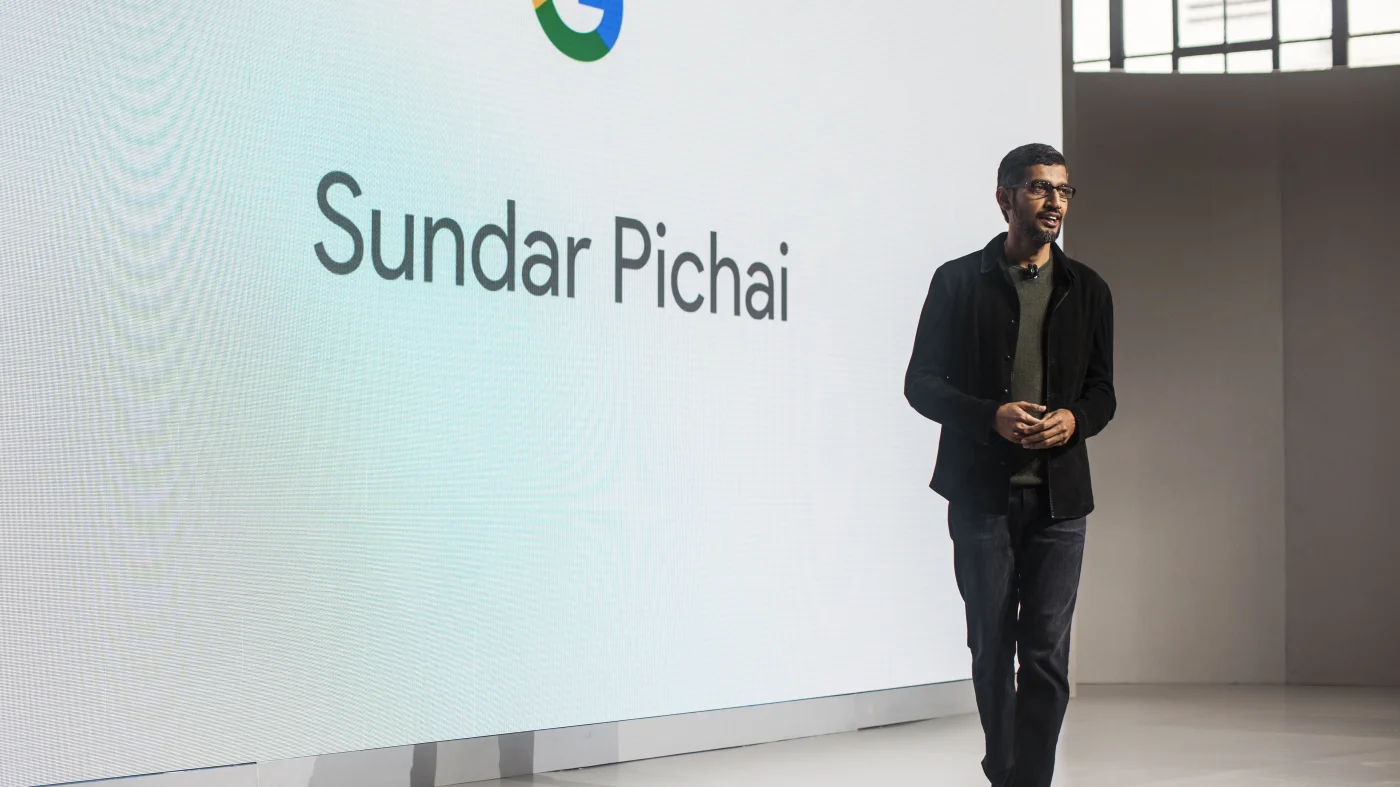
Former Google executive Marissa Mayer remembers when the company was just a scrappy startup, working out of a small office above a bike shop in Palo Alto, Calif.
Last week, they disagreed on what this wealth tax on billionaires would do to California's economy and tax revenue.
Now, Californians are voting on Proposition 40, which could prove to be just as revolutionary — but in the opposite direction: it would create America's first-ever wealth tax targeted at billionaires.
Who will win the 2026 Nobel Prize in economics?
2026-10-07 · assertive framing · Who will win the 2026 Nobel Prize in economics?
Economists, tax analysts, and policymakers couldn't get a complete picture of how the rich were making their money.
2026-09-14 · assertive framing · The powerful millionaires hiding in plain sight
In other, more extreme cases, these products may not even include the healthier ingredients they're charging you a premium for.
2026-08-04 · assertive framing · The sneaky economics of healthwashing
Also by Greg Rosalsky
Nothing else under this byline is closely related to this article, so these are simply their most recent.
All 6 articles by Greg Rosalsky →

Topics

Alphabet Google Palo Alto Stanford Yahoo

Subjects

Google ORG · 18× Mayer PERSON · 3× Alphabet ORG · 2× Planet Money ORG · 2× Yahoo ORG · 2× Dazzle ORG · 1× Marissa Mayer PERSON · 1× Palo Alto GPE · 1× Stanford ORG · 1× U.S. GPE · 1×

Narrative

On the company's earnings call, executives acknowledged that the growing use of "AI Mode," its chatbot-style search feature, was contributing to slower growth of search advertising revenue because it earned less per query than traditional search.
framing: assertive · carried by 1 article(s) · first seen 2026-11-17
Former Google executive Marissa Mayer remembers when the company was just a scrappy startup, working out of a small office above a bike shop in Palo Alto, Calif.
2026-11-17 · NPR
Can Google win the AI race without killing its cash cow? · assertive framing

Claims (182 extracted, 27 hedged)

Can Google win the AI race without killing its cash cow? asserted
Google → win → cow
Google became one of the most valuable companies in the world by revolutionizing how humanity finds information. asserted
humanity → become → information
Now, a new generation of AI rivals is challenging its dominance and pushing Google to spend a fortune to secure its future. asserted
generation → challenge → future
Can Google embrace this disruptive technology without breaking the business that made it rich? asserted
it → embrace → business
Former Google executive Marissa Mayer remembers when the company was just a scrappy startup, working out of a small office above a bike shop in Palo Alto, Calif. asserted
company → remember → Alto
She joined the company back in 1999, fresh out of nearby Stanford with a master's in computer science. " asserted
She → join → science
When I interviewed at Google, there were just seven people there," Mayer tells Planet Money. asserted
Mayer → interview → Money
By the time she got hired, a month or two later, she became its 20th employee. asserted
she → hire → time
That year, Google brought in just over $200,000 in annual revenue. asserted
Google → bring → revenue
By 2022, the eve of the AI boom, the company — by then reorganized under a parent company called Alphabet — was generating more than $280 billion. asserted
2022 → reorganize → billion
Google made its fortune selling ads next to its search results. asserted
Google → make → results
It monopolized internet searches so thoroughly that its name became a verb. asserted
name → monopolize → searches
And its search business became like an unstoppable money machine. asserted
business → become → machine
In 2012, Mayer left and became the CEO of Yahoo, trying to revive a competitor that Google had blown out of the water. asserted
Google → leave → water
But neither Yahoo nor any other rival managed to dethrone King Google. asserted
Yahoo → manage → Google
The company's dominion just kept expanding. asserted
dominion → keep → ?
Its share of the U.S. search-engine market grew from 80% in 2009 to nearly 90% in 2020. asserted
share → grow → 2020
For a time, it seemed like the only forces that could cut this juggernaut down to size were politicians or antitrust lawyers. uncertain
that → seem → size
The biggest threat to Google was maybe coming from inside the house! asserted
threat → come → house
From what it was developing in its own labs — and the industrial race it would unleash. asserted
it → develop → labs
Google plowed the profits from its search business into research and development of AI. asserted
Google → plow → AI
And, in 2017, a team of eight Google employees developed the transformer, a breakthrough technology that made today's AI chatbots possible. asserted
chatbots → develop → transformer
Mayer, who is now CEO of the AI startup Dazzle and remains a Google shareholder, sees Google's pioneering AI work as a reason for optimism about the company's future. asserted
who → remain → future
"This is not a technology that's happening to Google," she says. asserted
she → happen → Google
"They helped invent this new technology." asserted
They → help → technology
Yet, today, Google is spending enormous amounts to build its AI capabilities and fend off rivals. asserted
Google → spend → rivals
And it's overhauling its search business, using AI to answer questions directly instead of just providing links. asserted
it → overhaul → links
Wall Street is getting nervous. asserted
Street → get → ?
In late October, Alphabet released its most recent earnings report. asserted
Alphabet → release → report
The company's stock price plummeted more than 12% the next day — the biggest single-day percentage decline since the company went public in 2004. asserted
company → plummet → 2004
If this whole AI transition goes sideways for the company, it's a bit like a mother giving birth to a baby and then that baby slapping her in the face and stealing money from her wallet. asserted
baby → go → wallet
Which brings us to… a classic business theory we've been thinking about recently: the innovator's dilemma. asserted
we → bring → theory
The late Harvard Business School professor Clayton Christensen developed the theory in his 1997 book, The Innovator's Dilemma: When New Technologies Cause Great Firms to Fail. asserted
Firms → develop → book
Christensen theorized that the very thing that makes a business wildly successful can lead to its downfall in the face of a "disruptive" technology. asserted
business → theorize → technology
He helped put disruption in Silicon Valley's vocabulary, long before it became a cliché. asserted
it → put → vocabulary
The core innovator's dilemma is basically this: embrace a disruptive technology, and risk the profits you're making today. asserted
you → embrace → profits
But if you fail to embrace it and let others run with it, you may end up risking your company's health tomorrow. uncertain
you → fail → health
Today in the Planet Money newsletter we ask: has Google been caught in the innovator's dilemma? asserted
Google → ask → dilemma
And can it pivot to a new technological era without sacrificing its enormous profits? asserted
it → pivot → profits
Did Google squander its AI head start? asserted
Google → squander → start
…and 142 more, not listed.

Give feedback · no sign-in needed

No sign-in needed for now. Your note is sent without a name, so it cannot be answered.

History Support