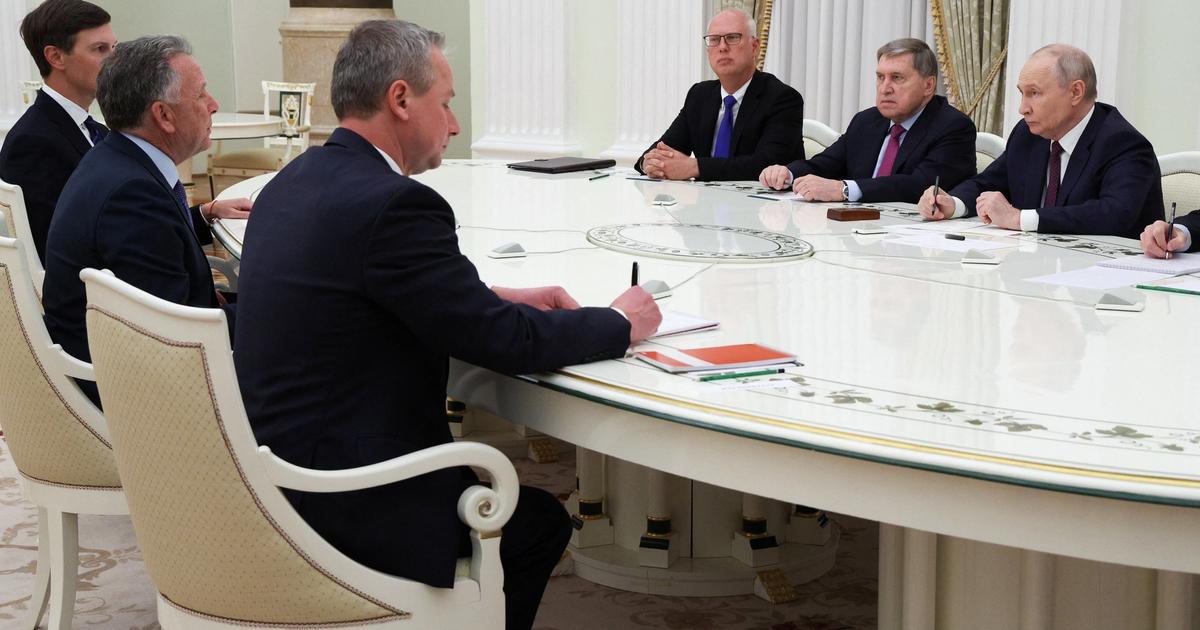
During talks on ending the war in Ukraine, Russian representatives in Abu Dhabi presented a document containing far-reaching demands, The New York Times reports.
asserted
Times → end → demands
Dated November 10, the document reportedly calls not only for an end to Western arms deliveries to Ukraine but also for NATO to withdraw its troops and bases and move them back to where they were in 1997.
uncertain
they → date → 1997
What does Russia mean by 1997?
asserted
Russia → mean → 1997
The year 1997 refers to the NATO alliance before its first eastward expansion, according to the Kremlin.
uncertain
year → refer → Kremlin
At the time, NATO had 16 members.
asserted
NATO → have → members
Poland, the Czech Republic and Hungary had already been invited to join but did not formally become members of the defense alliance until two years later.
asserted
Poland → invite → alliance
In the following years, more countries in Central, Eastern and Southeastern Europe joined, followed most recently by countries in Scandinavia.
asserted
countries → follow → Scandinavia
Today, NATO has 32 member states in Europe and North America.
asserted
NATO → have → Europe
According to the report, Russia is not explicitly demanding that Central and Eastern European countries leave , but rather that the NATO alliance end its military presence in those countries.
uncertain
alliance → accord → countries
A withdrawal of NATO troops and bases from member states that joined the alliance after 1997 would significantly weaken their defense capabilities.
asserted
that → join → capabilities
For example, since 2004, NATO allies, including Germany, have taken turns policing the airspace over Estonia, Latvia and Lithuania.
asserted
allies → include → Estonia
Because the Baltic states do not have fighter jets of their own for independent air policing, NATO provides the capability.
asserted
NATO → have → capability
The planned deployment of the German Lithuania Brigade, which is expected to be fully operational by the end of 2027, would also have to be halted.
asserted
which → plan → 2027
In Romania, meanwhile, the Mihail Kogalniceanu Air Base near Constanța on the Black Sea is currently being expanded.
asserted
Base → expand → Sea
Once completed, it is set to become Europe's largest NATO air base by area — even larger than Ramstein in Germany.
asserted
it → complete → Germany
"Under no circumstances will we allow anyone to establish new security rules for this part of the world over the heads of Poland and Europe," Polish Prime Minister Donald Tusk told TVP World.
asserted
Tusk → allow → World
His Bulgarian counterpart, Rumen Radev, called a NATO withdrawal "unthinkable and unrealistic."
asserted
counterpart → call → withdrawal
No country should be forced by external pressure to reverse its decision on which alliance to join.
asserted
country → force → alliance
Estonian Prime Minister Kristen Michal also rejected any Russian say in changes to Europe's security order: "We have nothing to discuss with Russia about Europe's security order; it is working well."
asserted
it → reject → order
The strong rejection from the capitals of NATO's eastern members, however, masks fears along the alliance's eastern flank that a deal between Washington and Moscow could turn their security into a bargaining chip.
uncertain
deal → mask → chip
In the event of an armed attack on a NATO member, the other alliance members are obligated under Article 5 to come to its aid.
asserted
members → obligate → aid
Each member decides for itself what measures it considers necessary, which may include the use of military force.
uncertain
which → decide → force
For the mutual defense commitment to deter a potential aggressor, that country must believe NATO can intervene militarily quickly and effectively in a crisis.
asserted
NATO → deter → crisis
The deployment of allied troops along the eastern flank serves precisely this purpose.
asserted
deployment → ally → purpose
A withdrawal would make defense more difficult and could lead Russia to believe that an attack on NATO territory would involve fewer risks for Moscow.
Who decides which alliances a country can join?
As part of their security framework, European countries have agreed that states are free to decide which alliances they wish to join.
uncertain
they → make → alliances
points to Article 10 of its founding treaty, which enshrines its open-door policy for European countries.
asserted
which → point → countries
The 1997 NATO-Russia Founding Act also explicitly stated that neither side had the right to veto the other's decisions.
asserted
side → state → decisions
Back in November 1990, the participating states of the Conference on Security and Cooperation in Europe (CSCE), including the Soviet Union, had already agreed in the Charter of Paris to respect each country's freedom to choose its own security arrangements.
asserted
states → participate → arrangements
During the negotiations surrounding German reunification, then-US Secretary of State James Baker and German Foreign Minister Hans-Dietrich Genscher used language that suggested putting limits on NATO's eastward expansion.
uncertain
that → surround → expansion
Their remarks came during discussions about unified Germany's membership in NATO and the possible deployment of NATO forces on the territory of the former East Germany.
asserted
remarks → come → Germany
However, no written, legally binding general promise was ever agreed that NATO would never expand to include other former Warsaw Pact countries.
asserted
NATO → write → countries
In the 1997 NATO-Russia Founding Act, both sides declared that they no longer considered each other adversaries.
asserted
they → declare → Act
NATO stated that, under the security conditions prevailing at the time and in the foreseeable future, it intended to ensure its collective defense through reinforcement rather than the additional permanent stationing of "substantial combat forces."
asserted
it → state → forces
The agreement explicitly gave Moscow no veto over NATO decisions.
asserted
agreement → give → decisions
In the 1994 Budapest Memorandum, Russia, the United States and the United Kingdom reaffirmed their commitment to respect Ukraine's independence and existing borders and to refrain from the use of force.
asserted
Russia → reaffirm → force
These assurances were linked to Ukraine's decision to give up its nuclear weapons.
asserted
assurances → link → weapons
However, the memorandum did not oblige the United States or the United Kingdom to defend Ukraine militarily in the event of an attack.
asserted
memorandum → oblige → attack
NATO membership was not addressed at the time.
asserted
membership → address → time
Just over two months before Russia's full-scale invasion of Ukraine, the Kremlin presented two draft treaties to the United States and NATO.
asserted
Kremlin → present → States
In them, Russia demanded an end to further NATO enlargement.
asserted
Russia → demand → enlargement
…and 7 more, not listed.
 The Aporia