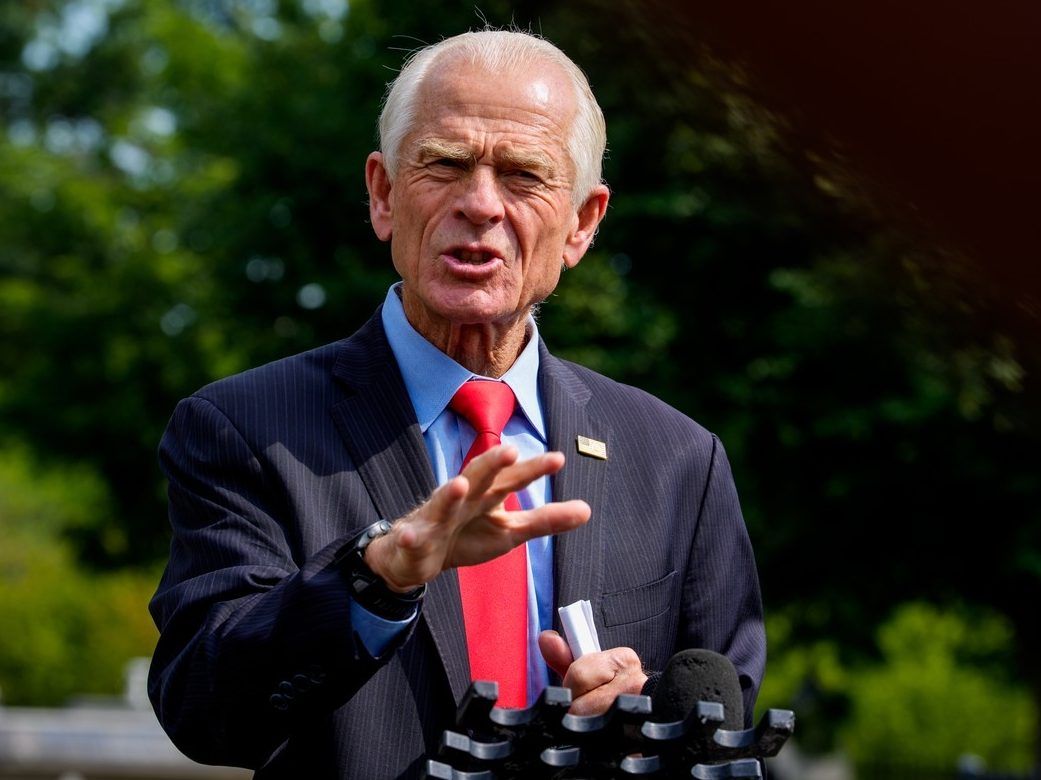
Photo via Blaze Media

Is Mark Carney choosing China over a trade deal with Trump?

Read the original at Blaze Media ↗
Cite

Krayden, D. (2026, November 17). Is Mark Carney choosing China over a trade deal with Trump? Blaze Media. https://www.theblaze.com/lifestyle/is-mark-carney-choosing-china-over-a-trade-deal-with-trump

Dated from the outlet's own feed. Check the original for its byline.

Blaze Media · collected 2026-11-17 · by David Krayden

Quick Summary

Canadian Prime Minister Mark Carney is deepening economic ties with China, including a January agreement to allow 49,000 Chinese electric vehicles into Canada annually with reduced tariffs. This move has drawn warnings from the U.S., including a threat of a 100% tariff on Canadian goods if Canada continues to strengthen its relationship with China. On November 16, Carney suggested Canada might turn to Chinese automakers if trade negotiations with the U.S. fail, emphasizing that Canada will proceed with its plans regardless of U.S. reactions.
Written by AI on 2026-11-17, from this article's own text only (the story summary below draws on all the coverage).
See how they differ ↓

AI analysis

Story summary

Prime Minister Mark Carney arrived in Shenzhen, China on November 15, 2026, for a meeting with Chinese President Xi Jinping on the sidelines of the APEC summit. Carney aimed to deepen economic and trade ties between Canada and China, particularly in the auto industry, expressing willingness to build relationships with Chinese automakers if U.S. trade talks fail. On November 17, Canada and China announced the relaxation of trade restrictions, including granting greater access to Chinese steel and aluminum products. This decision has raised concerns within the Canadian steel sector, with some arguing that it leaves domestic producers exposed to unfair competition from China. Despite these concerns, Carney reaffirmed Canada's commitment to expanding its partnership with China during a speech at the APEC summit in Shenzhen on November 18.

Written for “China Canada Trade Deal Developments” on 2026-11-21, grounded in this article and the 30 other(s) covering the same event.

How they differ

15 outlets covered “China Canada Trade Deal Developments”.

What each outlet says

One AI summary per outlet of its latest article on this story, written from that article alone and checked against it. Open the article for the outlet's own words.

The BlazeThis outlet17 Nov

Canadian Prime Minister Mark Carney is deepening economic ties with China, including a January agreement to allow 49,000 Chinese electric vehicles into Canada annually with reduced tariffs. This move has drawn warnings from the U.S., including a threat of a 100% tariff on Canadian goods if Canada continues to strengthen its relationship with China. On November 16, Carney suggested Canada might turn to Chinese…

Is Mark Carney choosing China over a trade deal with Trump? (this article)
Toronto Star17 Nov

Prime Minister Mark Carney is participating in the Asia-Pacific Economic Cooperation summit in Shenzhen, China. During the summit, Carney will give a speech, attend a leaders’ dinner, and hold a press conference. He is meeting with business leaders from across the Pacific Rim region.

Carney addressing Pacific Rim business leaders at APEC summit in China →7 articles from Toronto Star on this story
CBC17 Nov

Prime Minister Mark Carney has secured a new trade deal with China during the APEC summit in Shenzhen, aiming to alleviate issues caused by tariffs and red tape for Canadian sectors. However, the deal has raised concerns among China hawks who point to past incidents like the detention of Canadians during the Meng Wanzhou affair and the 2024 foreign interference inquiry that identified China as the most active…

Carney secures another China trade deal — but at what cost? →5 articles from CBC on this story
Global News17 Nov

Prime Minister Mark Carney and President Xi Jinping announced on Tuesday that Canada will grant greater access to Chinese steel and aluminum products in exchange for China reducing tariffs on certain Canadian agricultural exports, which are valued at approximately $400 million annually. This move is seen as an attempt to balance Canadian producers' concerns about unfair competition with the economic benefits of…

What could more Chinese steel and aluminum mean for Canadians? →3 articles from Global News on this story
The Hindu17 Nov

On November 17, 2026, Chinese President Xi Jinping and Canadian Prime Minister Mark Carney met to discuss deepening economic ties amid strained relations between Canada and the United States. The leaders emphasized the strategic partnership they agreed to earlier in the year, focusing on a tariff reduction agreement that allows up to 49,000 Chinese electric vehicles into Canada annually, with reduced tariffs from…

Xi, Carney call for deeper ties as Canada looks beyond U.S. for trade →2 articles from The Hindu on this story
The Straits Times16 Nov

Mark Carney, Canada's Prime Minister, will meet with Chinese President Xi Jinping on Tuesday in Shenzhen to discuss deepening ties in food, energy, and financial services. This is Carney's third meeting with Xi since taking office, reflecting his strategy to diversify Canada's economic relationships beyond the United States. Carney's visit also addresses concerns about Canadian security and the implications of…

Carney to meet Xi on Tuesday to talk food, energy and financial services →2 articles from The Straits Times on this story
Show 9 more outlets
Toronto Sun17 Nov

Mark Carney, Canada’s trade commissioner in China, recently agreed to extend tariff remissions on Chinese steel and aluminum products, effectively making them tariff-free. This decision contradicts earlier promises to help Canadian steel producers and protect them from unfair competition. Carney had previously announced a $5.43-billion fund to assist steel companies in diversifying their products, but by removing…

LILLEY: Canadian steel sector left exposed by Mark Carney’s China deal →2 articles from Toronto Sun on this story
The Globe and Mail18 Nov

Prime Minister Mark Carney gave a speech at the APEC summit in Shenzhen, China, on Wednesday, where he pledged to expand Canada's partnership with China. The article does not provide additional details or numbers beyond this statement.

Carney pledges to widen Chinese partnership →2 articles from The Globe and Mail on this story
The Guardian16 Nov

Mark Carney, the prime minister of Canada, stated that the country might collaborate with Chinese automakers if negotiations with the US fail to preserve the North American auto industry's integration. Carney made these comments in Cambodia before a meeting with Chinese leader Xi Jinping, where auto manufacturing could be discussed. He emphasized that Canada would prioritize negotiations with the US but could…

Canada could work with Chinese automakers if US trade talks fail, says Carney →
Just the News16 Nov

Canadian Prime Minister Mark Carney stated that Canada may develop relationships with Chinese automakers if U.S. trade talks fail, as reported by the Associated Press. Carney made this statement in Cambodia on Monday, ahead of a meeting with Chinese President Xi Jinping in Shenzhen, where they previously agreed to reduce tariffs on electric vehicles from China. Carney emphasized that maintaining a viable auto…

Carney says Canada could build relationships with Chinese automakers if U.S. trade talks fail →
ABC News (US)17 Nov

Chinese President Xi Jinping and Canadian Prime Minister Mark Carney met in Shenzhen to discuss deepening economic ties between their countries, amid tensions between Canada and the United States. The leaders emphasized the strategic partnership between China and Canada, highlighting recent tariff reductions on Chinese electric vehicles entering Canada and Canadian agricultural products entering China. The meeting…

Xi and Carney call for deeper ties as Canada looks beyond US for trade →
The Hub17 Nov

Prime Minister Mark Carney stated that Canada's openness to Chinese investment in the automotive sector will depend on the outcome of ongoing tariff negotiations with the United States. Speaking in Phnom Penh, Cambodia, Carney outlined conditions for Chinese automakers, including substantial manufacturing in Canada, adherence to labour standards, and development of local supply chains, particularly for electric…

Carney ties Chinese auto investment to outcome of U.S. tariff talks →
Semafor17 Nov

Canadian Prime Minister Mark Carney, aiming to reduce trade reliance on the United States, secured an agreement with China to lower tariffs on some Canadian imports. This move comes after meetings between Carney and Chinese leader Xi Jinping, where they discussed enhancing predictability and stability in their trade relationship. Despite Carney’s efforts, Canada’s exports to the US have actually risen recently…

China agrees to cut some Canada tariffs →
BBC17 Nov

Prime Minister Mark Carney is exploring opportunities for Canada's struggling auto sector during his visit to China for the Apec summit. Carney suggested that Canada could attract European and Asian car manufacturers, including Chinese companies, if a favorable trade deal with the US cannot be secured. He met with Chinese President Xi Jinping, and although vehicles were not specifically mentioned in their…

Carney eyes 'other options' for embattled Canadian auto sector on China trip →
Al Jazeera17 Nov

Canadian Prime Minister Mark Carney and Chinese President Xi Jinping met on the sidelines of the APEC summit in Shenzhen, where they agreed to expand tariff relief between their countries. China will reduce tariffs on approximately 400 million Canadian dollars (about $280 million) worth of Canadian goods, such as frozen pork and seafood. In return, Canada will extend tariff exemptions for specific Chinese steel and…

China, Canada expand tariff relief after Carney-Xi meeting →

Where they agree and split

Agreed

Reported by outlets on both sides of the middle

“We have the best auto workers in the world, and we want them fully deployed, full opportunity, in an integrated North American market,” Mr. Carney told reporters in Cambodia.

5 outlets
Show 3 more

“That market has become less integrated because of U.S. trade actions.”

4 outlets

The deal drew criticism from Ontario Premier Doug Ford, whose province is the centre of Canada's auto industry.

4 outlets

Trump's tariffs have disrupted Canada's auto industry, which relies heavily on cross-border production.

4 outlets

Framing

How the first headlines put it

Attributed to a source3
Stated as fact2
The headlines (5)

Carney says Canada could turn to Chinese automakers if Trump trade talks fail Toronto Star · attributed to a source

Carney says Canada could turn to Chinese automakers if Trump trade talks fail The Hindu · attributed to a source

Canada could work with Chinese automakers if US trade talks fail, says Carney The Guardian · attributed to a source

Carney sets out to deepen ties with China. Has the threat landscape changed? CBC · stated as fact

Canada Prime Minister Carney eyes auto partners beyond US as meeting with China President Xi looms The Straits Times · stated as fact

The full story: what happened, how it changed, and all 31 articles →

Compared with similar articles

This article reads leans right and hedges 13% of its claims. Each row says how that neighbour differs.
Times of India
Hedges 3 of 29 claims Outlet record 59/100
“The articles discuss different aspects of Canada's trade negotiations with the US and its efforts to expand ties with Asia, but do not describe the same specific incident or occurrence.”
Toronto Star
Hedges 1 of 3 claims Outlet record 64/100
“Article A reports on a specific statement made by Canadian Prime Minister Mark Carney in Cambodia, while Article B discusses broader implications and previous actions regarding Carney's stance on trade relations with China and the US.”
Toronto Star
Hedges 2 of 33 claims Outlet record 64/100
“The articles discuss different aspects of Canada's trade policies and relations with the US and China, without clearly describing the same specific incident or occurrence.”
The Hub
Hedges 6 of 48 claims
“The articles describe different aspects of Canada's trade policies, not the same specific event or negotiation.”
ABC News (US)
Hedges 1 of 11 claims Outlet record 66/100
“The articles discuss different aspects of the relationship between Canada and China, with Article A focusing on a specific meeting and call for deeper ties, while Article B discusses broader implications and potential trade conflicts with the US.”
CBC News
Leans right Hedges 2 of 47 claims Outlet record 72/100
The Straits Times
Leans right Hedges 3 of 23 claims Outlet record 64/100
“The articles describe Canada's diplomatic efforts with China and the US but focus on different aspects and times of the same broader trend, not a single specific event.”
The Globe and Mail
Hedges 2 of 32 claims Outlet record 51/100
“The articles describe different aspects of Canada's trade policies and relations, not the same specific event or incident.”
The Globe and Mail
Hedges 0 of 4 claims Outlet record 51/100
“Article A discusses Carney's general approach to trade relations, while Article B covers a specific visit to China and trade talks with China and the US.”
Toronto Sun
Hedges 2 of 21 claims Outlet record 96/100
“The articles discuss different aspects of the relationship and trade negotiations between Canada and the United States, rather than describing the same specific incident or event.”

Story

China Canada Trade Deal Developments
Economy/Business · 31 article(s) covering the same event. Compare every outlet's account →
How this article was measured signals, leaning charts, publisher record, byline, topics and claims

Signals How these are calculated →

Claims extracted
52
sentences that state something as happening or true
Uncertain
13%
7 of 52 hedged ("reportedly", "may", "according to")
Leaning
Leans right
of the writing, not the subject · beta estimate
Publisher signals
94/100
Blaze Media's corrections and hedging, across everything collected from it. Not a measure of accuracy.
Outlets on this story
31
Economy/Business
Same framing elsewhere
1
articles that frame the event the way this one does
Analyzed 2026-11-17 · how these are computed

How this is being covered How these are calculated →

Article leaning vs. publisher reliability
Source leaning vs. consistency

Publisher

Blaze Media · 304 article(s) · 1 correction(s) detected
Running correction rate · 1 correction(s)

Who wrote this

David Krayden
1 article(s) here · 1 carrying a prediction
U.S. Ambassador to Canada Pete Hoekstra told Blaze News in October that Carney had already walked away twice from “the best trade agreement” Canada could ever expect from the Trump administration.
The only article under this byline in the corpus.

Topics

Canada Canadian China Chinese Washington

Subjects

Carney PERSON · 15× Canada GPE · 12× Canadian NORP · 8× China GPE · 7× the United States GPE · 7× Beijing GPE · 5× Chinese NORP · 5× Washington GPE · 5× U.S. GPE · 4× American NORP · 3×

Narrative

With Trump imposing tariffs on China and battling Federal Reserve Chairman Jerome Powell over interest rates, Carney advocated reducing the dominance of the U.S. dollar through a more diversified international monetary system, including the possibility of a new “synthetic hegemonic currency.”
framing: assertive · carried by 1 article(s) · first seen 2026-11-17
U.S. Ambassador to Canada Pete Hoekstra told Blaze News in October that Carney had already walked away twice from “the best trade agreement” Canada could ever expect from the Trump administration.
2026-11-17 · Blaze Media
Is Mark Carney choosing China over a trade deal with Trump? · assertive framing

Claims (52 extracted, 7 hedged)

The Canadian prime minister is deepening ties with Beijing despite Washington's warnings. asserted
minister → deepen → warnings
Is Canadian Prime Minister Mark Carney deliberately jeopardizing yet another trade deal with President Donald Trump and the United States? asserted
Carney → jeopardize → Trump
U.S. Ambassador to Canada Pete Hoekstra told Blaze News in October that Carney had already walked away twice from “the best trade agreement” Canada could ever expect from the Trump administration. uncertain
Canada → tell → administration
Just as Carney's criticism of the United States has been on public display, so has his enthusiasm for closer relations with China. asserted
enthusiasm → have → China
Carney cited a number of reasons for rejecting the proposed deal, including claims that it would compromise Canadian sovereignty and threaten French-language protections and Quebec culture. uncertain
it → cite → protections
American officials disputed those claims, but Carney has steadfastly refused to publicly reveal the details of the deal to Canadians. uncertain
Carney → dispute → Canadians
Now Carney's growing relationship with China is threatening to complicate negotiations with Washington. asserted
relationship → grow → Washington
In January, Carney reached an agreement with Beijing allowing up to 49,000 Chinese electric vehicles into Canada annually at a tariff rate of just 6.1%, exempting them from the additional 100% tariff imposed in 2024. asserted
Carney → reach → 2024
In return, China agreed to lower tariffs on Canadian agricultural products. asserted
China → agree → products
Trump responded by threatening a 100% tariff on Canadian goods if Canada pursued a broader trade deal with Beijing. asserted
Canada → respond → Beijing
And in July, U.S. Trade Representative Jamieson Greer explicitly raised concerns about Canada's deepening economic ties with China as Washington resisted renewing the existing North American trade agreement. asserted
Washington → raise → agreement
Greer warned that Chinese automakers could use Canadian operations to gain access to the American market, circumventing restrictions designed to protect U.S. manufacturers and workers. uncertain
automakers → warn → manufacturers
Now Carney is raising the possibility of bringing even more Chinese investment into Canada's automobile industry. asserted
Carney → raise → industry
On Monday, November 16, Carney said Canada could turn to Chinese automakers if negotiations with Washington fail to preserve an integrated North American automotive industry. uncertain
negotiations → say → industry
He said such investment would need to involve substantial manufacturing in Canada, rather than simply assembling imported vehicles. asserted
investment → say → vehicles
Asked whether potential Chinese investment was leverage against Washington, Carney replied: “It's not leverage. asserted
It → ask → Washington
He insisted that negotiations with the United States remained his priority. asserted
negotiations → insist → States
But he was equally clear that Canada would pursue alternatives if those talks failed. asserted
talks → pursue → alternatives
“Canada is going to move forward either way,” he said. asserted
he → go → ?
Risky business Carney is also wandering into treacherous diplomatic waters with his remarks about the security implications of Canada's growing partnership with China. asserted
Carney → wander → China
On November 10, he made a startling comparison between the security risks of Canada's relationship with Beijing and those facing the United States in its own dealings with China. asserted
he → make → China
“Yes, I will be meeting with President Xi Jinping next week at APEC,” Carney told Canadian reporters. asserted
Carney → meet → reporters
“We will discuss many things. asserted
We → discuss → things
We'll discuss security situation around the world. asserted
We → discuss → world
We'll discuss our economic partnership, which is something that is deepening but has clear guardrails in terms of the areas in which we're involved.” asserted
we → discuss → which
He then added: “In terms of the security risks of our partnership, they are much, much, much, much less than the security risk, for example, of the United States.” asserted
they → add → States
The remarks drew accusations that Carney considered the United States a greater security threat than China, although his comparison appears to have concerned the risks arising from the two countries' respective economic relationships with Beijing. asserted
comparison → draw → Beijing
It sounded much like the Carney who spoke fondly of the War of 1812 while criticizing American threats against Canadian sovereignty. Or the Carney who savaged U.S. economic policy during a major speech to the World Economic Forum. asserted
who → sound → Forum
Just as Carney's criticism of the United States has been on public display, so has his enthusiasm for closer relations with China. asserted
enthusiasm → have → China
During a January 2026 visit to Beijing, he welcomed a renewed strategic partnership with the communist dictatorship and invoked the prospect of a “new world order.” asserted
he → welcome → order
“The world has changed much since that last visit,” Carney said. asserted
Carney → change → visit
“I believe the progress that we have made in the partnership sets us up well for the new world order.” asserted
we → believe → order
His words shocked critics who wondered why Canada's prime minister was so eager to deepen relations with Beijing while relations with Washington were deteriorating. asserted
relations → shock → Washington
But Carney's enthusiasm for a greater Chinese role in the international financial system stretches back years, including his time as governor of the Bank of England. asserted
enthusiasm → stretch → England
Carney has long advocated reducing the dominance of the U.S. dollar in the global financial system and allowing the Chinese yuan, or renminbi, to play a larger international role. asserted
yuan → advocate → role
Canada killed this family's ostriches. asserted
Canada → kill → ostriches
One year later, they fight back. asserted
they → fight → ?
In a March 2024 interview with China's 21st Century Business Herald, Carney argued that the international reserve-currency system would benefit from better reflecting China's growing weight in the world economy. asserted
system → argue → economy
He said expanding the renminbi's international use would be an important step toward establishing it as a reserve currency, although China would also need greater currency convertibility and more open capital markets. asserted
China → say → convertibility
He made a similar argument in 2019, during Trump's first presidency, at the Jackson Hole Economic Symposium. asserted
He → make → Symposium
…and 12 more, not listed.
Give feedback · no sign-in needed

No sign-in needed for now. Your note is sent without a name, so it cannot be answered.

History Support